Butter Glossary
Terms & Definitions: R & S
Butter terms beginning with R & S, including rum butter, shortening, sweet butter, and sweet cream butter. If you’d like to suggest other terms, use the Contact Us link on this page. This is Page 6 of a seven-page glossary. Click on the black links below to visit other pages. Enjoy a wealth of food knowledge in our 100 different food glossaries.
RACREME
See clotted cream.
RANCIDITY
Development of any off or disagreeable flavors in a fat. The four types of rancidity in fats are absorption of odors, the action of microorganisms, the action of enzymes (lipases), and atmospheric oxidation. Butter primarily tends to become rancid due to the action of atmospheric oxygen, light, heat, water, metals, enzyme, and microorganisms. Rancid butter becomes yellow to brown and the flavor becomes harsh.
RUM BUTTER
A compound butter made to sauce hot puddings. Butter is flavored with sugar, cinnamon, nutmeg, and rum. A pat is placed atop the steaming pudding, where it melts into a sauce. This is known as a “hard sauce,” because it starts out in a solid-state.
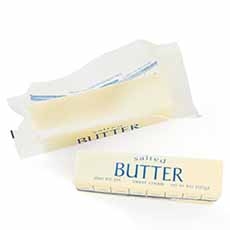
SALTED BUTTER
Salt is added to butter to extend freshness. Unsalted butter typically lasts about one month in the fridge. Adding salt extends that time by two months. When baking, avoid salted butter unless the recipe so specifies it. Usually, salt is given as a separate ingredient.
SAUTÉ
In French, sauté means “to jump,” and describes the method in which food is cooked quickly in a small amount of butter or oil. The food “jumps” as it is rapidly stirred or shaken over the heat.
SCORE
Refers to the grade of butter. Butter is graded, or scored, by government inspectors on the basis of its flavor, aroma, body, and texture.
SEASONAL VARIATIONS
Because butter is an all-natural product made from the milk of cows, natural seasonal variations in the fatty acid composition occur based on the diet of the animals. These variations, however, do not affect the quality of the butter.
SHORTBREAD
A rich, crumbly cookie made of butter, flour, and sugar. The classic way of making shortbread is to press the dough into flat decorative molds and cut it into wedges after baking. Enjoy this shortbread cookie recipe from one of New York’s prominent pastry chefs.
SHORTENING
Though the term most often refers to vegetable shortening, a solid fat made from vegetable oil such as soybean or cottonseed oil, any animal or vegetable fat can be used as shortening, including butter, margarine, lard, or drippings.
SMOKING POINT or SMOKE POINT
The temperature at which butter begins to scorch and burn. Higher fat content in butter yields a higher smoking point. To avoid smoking, clarified butter is used.
SOUR CREAM
Sour cream is not spoiled sweet cream: it is a dairy product made by adding a lactic acid culture to pasteurized sweet cream, producing a thick, creamy texture and a tangy flavor. Commercial sour cream contains from 18% to 20% butterfat and often contains additional ingredients such as gelatin, rennin, and vegetable enzymes.
SPREADABLE BUTTER
While it’s easy enough to bring standard butter to room temperature to make it spreadable, there are ready-to-spread butters that have added oil, giving them all-natural butter flavor while still being easy to spread on bread, straight from the fridge. Just make sure to look for real butter, and not an artificial spread, like margarine.
SWEET BUTTER
A term often used for butter that has no salt, but this is a misnomer because any butter made with sweet cream instead of sour cream is sweet butter. The appropriate terms to use are unsalted butter and sweet cream butter.
SWEET CREAM BUTTER
Any butter made with sweet, as opposed to sour, cream. Both unsalted and salted butter can be labeled sweet cream butter; additionally, they will be labeled unsalted, salted, or lightly salted.
Continue To The Next Page: Terms Beginning With T
Go To The Article Index Above
Some content courtesy of Cornell University School of Agriculture, Wisconsin Milk Marketing Board, U.S. Department of Agriculture.

|