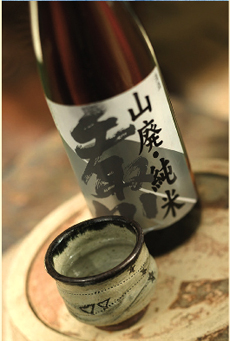
 Quality sake does not emerge from a bulk box in a heating unit box, but from an elegant bottle—like a fine wine. Photo courtesy of Tedorigawa Brewing Company.
|
Wine columnist R. VERONIQUE FITZGERALD is a wine consultant and writer based in New York City.
|
|
November 2007 |
|
Product Reviews / Main Nibbles / Wine
Discover Good Saké
Fine Sakés You Will Love
CAPSULE REPORT: If you’ve had saké, you’ve probably had bad saké—heated to cover the flaws in the beverage. Hot sake is the equivalent of jug wine. Fine saké is drunk chilled, like white wine (although since saké is a distillate, it is not quite correct to refer to it as “rice wine”). Discover some wonderful sakés below. You can enjoy them not only with sushi and sashimi, but with other foods you’d pair with white wine.
Introduction
Remember the warm saké you sipped reluctantly while watching the teppan yaki chef catch a scallop in his breast pocket? While your dinner may have been entertaining and tasty, did you like that ceramic carafe of saké as much as you thought you should?
If not, you’ve got a lot of company. The saké served hot is the cheapest form of saké, and while some brands are better than others, think of it as the cheapest house wine. You deserve better, a walk on the finer side of saké, the Junmai side. Although premium saké makes up a mere 6% of all the saké on the U.S. market, it is not difficult to find as its popularity grows. Futsushu, the variety that is thinned out, pumped up by the addition of cheap alcohol, and served to you hot, makes up the other 94%.
In the world of premium saké, Honjozo-shu is made with a much smaller amount of added alcohol than Futsushu, which in this case, helps to reveal aromas and flavors. Junmai is pure rice, with no added alcohol.
Indeed, sakés that fall into these premium categories are served cold—although in traditional tiny cups, and possibly in a carafe if you don’t order a whole bottle, so the 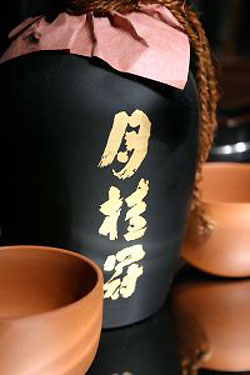 presentation can look identical to a serving of Futsushu. Not surprisingly, there exists a quality scale inside the premium saké category, dictated by the degree to which the rice (a particular strain called sakamai, which is grown only for saké production and packs a much higher starch content than normal table rice) is polished before it is cooked. Midori Roth of Joto Saké (JotoSake.com), an importer of fine saké, helped me navigate my way through enjoying a variety of diverse and delicious Junmai. presentation can look identical to a serving of Futsushu. Not surprisingly, there exists a quality scale inside the premium saké category, dictated by the degree to which the rice (a particular strain called sakamai, which is grown only for saké production and packs a much higher starch content than normal table rice) is polished before it is cooked. Midori Roth of Joto Saké (JotoSake.com), an importer of fine saké, helped me navigate my way through enjoying a variety of diverse and delicious Junmai.
Photo by Lukasz Krzyzanowsk | SXC.
Chef Shehu Fitzgerald and Eisuke Kusumi, resident sushi chef at Katen Sushi Bar at the New York Marriott Marquis, were also aboard to create and present a beautiful selection of sushi and sashimi, including avocado and crab roll, eel roll and spicy tuna roll, plus fatty tuna, salmon and yellowtail sashimi. Interesting highlights were black and blue rib-eye steak sliced sashimi style and drizzled with a sweet thai miso glaze and chamomile and cardamom-spiced jackfish with a light peanut butter sauce. We tried a variety of sakés; the tasting notes follow.
Once you find sakés you like, don’t confine them to sushi and sashimi. Try them with “raw bar” items like oysters and shrimp, with simply-grilled fish and seafood, with grilled vegetables or instead of a glass of white wine when you’re just relaxing with a glass. Feel free to enjoy a glass of saké in stemware instead of traditional saké cups. Saké has also become a popular base for sophisticated cocktails—take a look at these saké cocktail recipes.
The Sakés
While we tasted from smaller-size bottles and have given prices for the 300ml size, you can also find these sakes in 750ml bottles, and even 1800ml large formats.
Hou Hou Shu & Hana Hou Hou Shu
$10.00 to $12.00, 187ml
Hou is the Japanese word for bubble, and this is a fun pair of bubblies. Regular Hou Hou Shu is a sweet thing with a fun cotton candy and tangerine profile. The Hana Hou Hou Shu is a new-release pink sparkler in a drier style, that gets its color from the petals of rosehip and hibiscus flowers.
Shichi Hon Yari Junmai Gingo
$22.00, 300ml
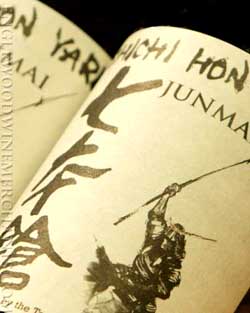 This Junmai is from the Tomita Shuzou, one of the oldest and smallest breweries in Japan, founded in the 1540s. The name comes from Japan’s legendary seven brave spearmen—you’ll be able to identify the Shichi Hon Yari by the warrior on the label wielding a long spear. This is an earthy saké, with wild mushroom aromas (particularly chanterelles and cèpes) and a rich, gamy palate. It is long and mouth-filling, a perfect complement for the black and blue rib eye. This Junmai is from the Tomita Shuzou, one of the oldest and smallest breweries in Japan, founded in the 1540s. The name comes from Japan’s legendary seven brave spearmen—you’ll be able to identify the Shichi Hon Yari by the warrior on the label wielding a long spear. This is an earthy saké, with wild mushroom aromas (particularly chanterelles and cèpes) and a rich, gamy palate. It is long and mouth-filling, a perfect complement for the black and blue rib eye.
Shichi Hon Yari is available in the 750 ml size from EnglewoodWineMerchants.com, $44.00.
Kasumi Tsuru Kimoto Extra Dry
$12.00, 300ml
Kasumi Tsuru Yamahai Ginjo
$17.00, 300ml
This brewery was founded in 1725 and is now run by the ninth generation of the Fukumoto family. Kasumi Tsuru means “the crane of Kasumi”; the saké is named in celebration of the small, remote, coastal resort town of Kasumi located in the Hyogo region. Kasumi is known for its fresh seasonal crabs (hopefully there are some lovely cranes fishing for those crabs, too), hot spring baths and hand-made sakés. Saké made in the Kimoto method tends to be light, layered and rich in flavor. This Kimoto is indeed complex, with herbaceous and mineral flavors. Consuming a bit of wasabi on a piece of salmon sashimi revealed a spiciness in the Kimoto that wasn’t apparent before. Yamahai is a traditional method of production that makes a saké that is earthy, smoky and gamey in character. This Yamahai is the oaked Chardonnay to the Kimoto’s Sauvignon Blanc vibe, with somewhat gamey flavors peppered with hints of tea leaf and baking spice.
Chikurin Fukamari Junmai
$17.00, 300ml
Chikurin Fukamari Junmai Ginjo
This pair comes from the 140-year-old Marumoto Brewery at the base of the Chikurin-ji Mountains in Okayama-ken. The Marumoto Brewery is also a national cultural landmark, managed by the sixth generation of the Marumoto family. The Chikurin brand was introduced in 1990. Fukamari means “depth,” and I would agree with that descriptor for these sakés. The company actually suggests warming this particular saké. It also makes sakes called “grace” and “lightness,” to be drunk chilled.
The Junmai has a silky mouthfeel, a somewhat extra virgin olive oil texture and actually has the aroma of cooked rice. The flavor is of rice, but also of rosemary and sage. The Ginjo is more floral with aromas of citrus zest, avocado, pear and lychee flavors on a complex and elegant palate. Both were delicate yet aromatic, and nice with the avocado and crab rolls.
The company that makes Chikurin, which is located in the agricultural area where saké rice is grown, actually grows its own rice, achieving a high-quality, low yield to ensure hardy rice. They use a method called San’ou, which means three-yellow: They let rice wither and “yellow” three times: first as seedlings, then in the rice paddy by starving the rice, and finally, when it is reaped, it dries and yellows for the third time. This method produces a strong, hardy rice.
Learning About Saké
The making of saké is a long and complex process and as a result, saké quality is much more heavily dependent on the skill of the toji, or brewmaster, than wine quality is on the skill of a winemaker (although similarly, the skills are been handed down from generation to generation). As Midori put it, saké quality is 80% toji and 20% rice, while wine quality is 80% grapes and 20% winemaker dependent.
Just as with wine, there are many lessons to be learned when you get enjoying into saké; and you can study it as intensely as, say, the communes of Burgundy. Here are my saké tips:
- If you learn a few key terms for quality levels and a few brand names, selecting and drinking saké becomes much easier and more enjoyable.
- Key words to look for include Junmai, Ginjo and Daiginjo. The rice for the Daiginjo has been polished more than that for Ginjo and Junmai, and so the resulting saké is more delicate and nuanced.
- Study our Saké Glossary to become more familiar with terms. Shu is the Japanese word for saké. It is often seen as a suffix for nomenclature on saké labels. See our Saké Glossary for more definitions.
- Learn more about how saké is made, and how to read restaurant saké lists, in our article, Saké 101.
- Finally, relax with some of those saké cocktails.
Lifestyle Direct, Inc. All rights reserved. Images are the copyright of their respective owners.
|