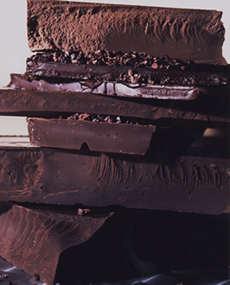
Blocks of chocolate made from raw cacao beans by Pierre Marcolini are then transformed into the exquisitely beautiful—and exquisitely delicious —bars below.
.
|
PETER ROT was first schooled in chocolate by his German mother. After an epiphanic taste of Valrhona Le Noir Amer 71%, his passion for chocolate became a full-fledged scholarly pursuit. Peter is a moderator of a discussion forum of international chocolate connoisseurs and a reviewer for the international chocolate community. He is pursuing a graduate degree in the cultural significance of food.
Peter welcomes your comments and questions: click here to e-mail him.
|
May 2005
|
 |
A Trip With Pierre Marcolini
Go “Bar Hopping” with the Master Belgian Chocolatier
THE NIBBLE’s chocolate expert visits one of the world’s great chocolate makers the way any connoisseur would—one bar at a time. He shares his tasting notes with us.
While it’s tempting to dig into a gorgeous box of bonbons, chocolatiers should be evaluated by the quality of their bar the purest expression of their chocolate. Pierre Marcolini makes beautiful bonbons and truffles; but we start at the beginning: with his extensive selection of bars.
Most Americans will not know the name Pierre Marcolini: he is a true boutique chocolatier, a Belgian patissier who expanded into making his own chocolate from raw bean. A young man who began with one shop in Brussels, he immediately rose to rank with the greatest chocolate houses in the world—large companies with worldwide distribution like Valrhona and Michel Cluizel.
Yet, if you did not know Pierre Marcolini from his shops in Belgium or the satellite shops in London, Paris, Moscow and Tokyo, you would not likely come across his chocolate. Fortunately, a New York City shop opened in 2005 at 485 Park Avenue (between 58th and 59th Streets).
Now, let’s bar hop.
Day 1: Venezuela
Milk Chocolate Bar
(shown in all photos)
Today, I tried the Venezuela 72% cacao bar, and I have some suspicions that this is Sur del Lago¹. Even before tasting it, I had a slight feeling: the dark brown, almost black color and the dark aroma of coffee, nuts, cocoa, and vanilla certainly aroused my interest and indeed my taste buds. Such a promising aroma surely couldn’t lead to a disappointing flavor, could it? Well, first the snap: clean, crisp, and even. Now for flavor. I popped some in my mouth. Immediately, this chocolate has a very dark tone², one that is neither subtle nor gentle. The flavors start off with a brief cashew and almond nuance, and then coffee comes in swiftly, leading to a lovely combined flavor of cream and hazelnuts. Slight tones of cinnamon and nutmeg enter the picture too. All this is eventually underscored by a pink floral tone accompanied by strawberries, both of which seem to “lighten” the dark picture that this chocolate is painting in my mouth. Indeed, it’s an interesting contrast—one that accentuates and complements rather than battles or exists in defiance. All these flavors finally dissolve at the end of the length into a pure coffee flavor that lasts well into the finish.
The finish has a slight bitterness and is actually quite short, but this is extremely dismissible and adds no negative value to the chocolate whatsoever. The texture is slightly thick in the mouth but still rather enjoyable. Overall, it’s an excellent chocolate that has typical flavors associated with Sur del Lago. The pink floral and strawberry tones lend a unique gentleness to this otherwise assertive and dark toned chocolate. The impression I get while eating this is that of a dark chocolate version of Nutella® with a splash of strawberry jam. How can you go wrong with that? Dark, bold, and full-bodied: if you like your chocolate dark, and I mean dark, this is your bar.
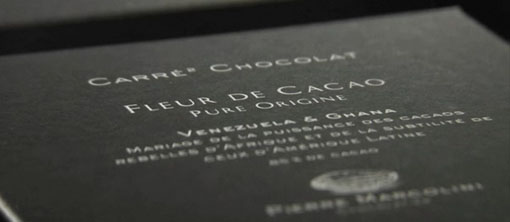
Venezuela Bar Summary: Dark-toned, bold, and assertive; a very masculine chocolate with robust flavors of hazelnut and cream, finishing with pink floral tones, strawberries, and coffee. Refreshing bitterness at the end.
¹Since Venezuela has so many distinct growing regions, flavors vary tremendously and are prized for this. Sur del Lago is a blend of Trinitario and Criollo beans and has typical flavors of pure cocoa, red fruits, and a very dark tone.
²A dark tone is analogous to French Roast coffee—full-bodied flavor with pure cacao strength. Note: it’s a tone and not a flavor. A fruity bean can possess a dark tone if roasted too long and if combined with more robust and darker-toned beans.
Day 2: Java
I just tasted the Java 72% cacao bar, and it really is something else! In one word, I would call this chocolate “intriguing.” The aroma alone is an intrigue: interesting sweet twang of citrus, smoke, and cedar wood chips. The color is medium brown with bright orange tints. It started off curiously sweet with flavors of Lebkuchen, the German spice cake (but this flavor had a dominant mace and cardamom emphasis), strong lemon, and a splash of orange. Then, leather and smoke emerged and persisted throughout, lending an interesting tone to the bar. However, they were not dominating, but existed in the background and allowed more of the lemon to shine through. In this respect, the smoke tone is similar to Pralus’ Java bar; but Marcolini’s is much more delicate, more refined. The texture is incredible—smoother than the Venezuela, and not possessive of the thickness or pastiness. I suspect top-grade Criollo beans were used. The flavor is so delicate, yet the smokiness provides a darkness that will satisfy anyone seeking a dark yet delicate bar. The lemon fruitiness was in the foreground and was merely accented by the leather. The end of the length allowed the leather to become a bit more dominant but not overly so, and the finish is clean, with lingering tones of smoke and leather and a touch of lemon. There is no bitterness at all in this bar, but the finish is fairly short.
That is what makes this bar so intriguing. I ate some, then I was so intrigued, I ate more, and well...the rest is history (literally, as the bar is all gone). The comparison to Pralus’ Java bar strikes me: it is bold, assertive, single-sided³. Marcolini’s Java bar is both delicate and bold, and has more variations in overall flavor. The seemingly opposing flavors (Lebkuchen and lemon on one side, smoke on the other) dominate, but they raise the eyebrow and make one question, “Do these flavors work in combination? In chocolate, even? Let me eat more. Yes! They do work but in their own particular way.”
Needless to say, it’s a good bar. Subtle yet dark, smoky and sweetly spiced, this bar has night-and-day flavors that complement each other quite well.
Java Bar Summary: Subtly dark; smoky and sweetly spiced. A lemon-like freshness adds to the delicacy of this bar.
³Single-sided = no fruitiness, just dark leather, smoke and mushrooms—all masculine flavors, lacking the finesse and gentleness of the Marcolini bar.
Day 3: Grand Cru Cabosse
Cabosse day, a 70% cacao made from a bland of cacaos from Grand Cru plantations. The aroma is really interesting. I smell orange, buttermilk, and vanilla. The color is light brown with orange tints, which also adds to the appeal. Breaking the chocolate yields a resonating “snap,” another good sign. Now it enters the mouth. First, there’s a malt flavor, almost similar to a vanilla cookie. An orange tartness gradually emerges and is followed shortly by a buttermilk tone. These flavors persist throughout the length and eventually dwindle to a very slight coffee tone at the end. There is a lingering orange tang, minus the buttermilk, into the short finish.
The overall impression I get from this bar is that of a malted orange Creamsicle® with a slight tanginess. It’s really quite good, and definitely an interesting journey. It’s a little thick in the mouth, more so than the Java bar and closer to the Venezuela in this regard. The texture is more along the lines of the Venezuela bar but not quite as thick. This chocolate is nice and refreshing in the mouth; it’s quite uplifting and reminds me of children scurrying up to the ice cream truck for a Creamsicle® on a hot summer day. Sharp, slightly acidic, and no bitterness whatsoever.
Grand Cru Cabosse Bar Summary: Sharp, slightly acidic, and refreshing. Cool in the mouth with a cheerful flavor of orange, buttermilk, and malt.
Day 4: Madagascar
Today is Madagascar’s turn. The 72% bar’s color is lighter brown with a bright orange tint, which is fairly common for a Madagascar. The aroma is tart, with scents of spice and coffee, both of which is underscored by a cedar woodiness; which is fairly uncommon for a Madagascar. Snap is, as usual, crisp and clean. When I put it in my mouth, a very faint vodka flavor emerges immediately and is quickly followed by an interesting spiciness accompanied by a cool orange sharpness. All this is underscored by a cedar-like woodiness, then a very slight vanilla tone pops in about halfway through, and these flavors persist throughout the length until they decline into dry cocoa with traces of very mild coffee. The finish is clean with lingering flavors of cocoa and orange with a cheese-like sourness. The texture is quite smooth, being neither pasty nor thick. Also, the chocolate wasn’t as tart as other Madagascar chocolate; but rather the citrus was fairly mild and pleasant instead of dominating and assertive. The spiciness and cedar woodiness were fairly unusual for a Madagascar chocolate, but these flavors complemented the orange tartness rather well. It was quite a nice and pleasant change from the norm, and indeed it’s an all-around good Madagascar bar. Fresh, slightly tart, and spicily wood, this bar offers a decent chocolate strength but remains more on the finesse side. Indeed, it’s an interesting trip through Madagascar.
Madagascar Bar Summary: Light, soothing, mild, and easy to eat. Delicate in the mouth without the tartness common to most Madagascar bars. A spicy orange sharpness with an interesting woodiness.
Day 5: Equateur
I just opened the Equateur (Ecuador) 72% bar, and the aroma is wonderful: strong scents of coffee, cocoa, and hazelnuts. Its color is dark brown accented by maroon and purple tints. The snap is clean, with a sharp sound. After putting some in my mouth, I immediately taste a robustly dark and almost sweet tone. A pure cocoa tone emerges with hints of mild molasses and brown sugar. This is a very straightforward cocoa flavor without much variation, but it also has a tropical feel to it, an interesting and very subtle character. These flavors last throughout the entire length, offering no change in variation. The texture is smooth with a slight pastiness but still enjoyable nonetheless. Hearty and robust, yet calm and relaxing. The sheer non-complexity of this chocolate invites you to embrace the darker tones it possesses. No bitterness whatsoever, with a very clean and pleasant tasting finish. It’s not as assertive or complex as the Venezuela, its neighbor to the north; but the tone is just as dark. The flavors are actually quite mild and gracious on the palate but also very straightforwardly dark and robustly defined. It’s an extremely approachable chocolate, one that leans to the dark side of the spectrum. Dark, round, and pleasant, this is a very one-sided chocolate that is sure to please anyone seeking a deep chocolate experience with a solid and round flavor of pure cacao, undistracted by other flavor complexities.
Equateur Bar Summary: Dark, round, and non-challenging. Hearty and robust, yet calm and relaxing. Flavors of pure cacao with slight caramelized tones that are easy on the palate, yet strong enough to convey its dark essence.
Day 6: Fleur de Cacao
As we speak, I am opening the Fleur de Cacao 85% bar, a blend of cacaos from prime growing regions. The aroma escapes the wrapper and overwhelms me with its sweet tone of cinnamon, cocoa, and vanilla underscored by mild wood tones and slightly tart fruity peaks. The color is light for a chocolate of this class: medium brown hue with light orange tints. Another clean snap. Now for the moment of truth: into the mouth it goes. The flavors immediately flow in, with a strong hint of sweet butter. Then an overall milk chocolate tone develops accented by a hint of sweet cinnamon. This flavor persists throughout the entire length with a slight tartness peeking in ever so quietly towards the end. The overall flavor is so mild and reserved and hides underneath the milk chocolate mirage of the chocolate. The length ends with mild cocoa and a slight coffee touch and slips into a milky finish of sour dairy. Texture is slightly thick, but it still possesses a milky creaminess that further adds to the milk chocolate delusion. Wow! Is this an 85% chocolate? It’s hard to believe. It tastes exactly like a dark-milk chocolate, i.e. a high cocoa content milk chocolate. However, it’s not necessarily “sweet,” per se; but rather, the mild and gentle nature of the chocolate might convey that impression. It still possesses a dark tone—one that is still indicative of a high cocoa content chocolate. This is by far the most palatable 80%-class chocolate I have ever tried; and indeed, this should appeal to anyone who likes milk chocolate or even sweeter dark chocolate. Strong in overall flavor, yet mild and reserved, this chocolate is a definite crowd pleaser.
Fleur de Cacao Bar Summary: Strong in overall flavor, yet mild and reserved in strength. An extremely approachable chocolate that delivers great flavor and a mild richness uncommon for its class.
Day 7: Blanc
The Blanc bar, white chocolate, is next on the agenda. This bar is calling to me: the vanilla flecks are tantalizing my taste buds, begging me to “eat of the fruit.” I submit. The chocolate has a lovely cream color with a yellow tint, the appearance made even more appetizing by those flecks of Tahitian vanilla scattered throughout. The aroma is not too sweet and has a very pleasing quality. When I break the chocolate, it doesn’t snap, but rather it gives a thud.4 It’s rather chunky and soft as well, crumbling rather than splintering. Immediately, I taste a brief flavor similar to sweet spice cake; then a lemon tone quickly takes over. Caramel nuances emerge too, and complement the lemon rather nicely; but they eventually fade away. The sweet lemon tone lasts throughout the length and ends with a clean finish. The texture is pasty and thick in the mouth. This white chocolate is fairly sweet, actually, and has some interesting flavors that I really enjoy.
Blanc Bar Summary: Fresh, round, and sweetly crisp; a pleasing aura of pure cocoa butter with a slight touch of caramelized dairy.
4 White chocolate has no cocoa solids—in the cacao content terminology of the other bars, it has 0% cacao. Its composition is largely cocoa butter plus added milk. Milk chocolate has less cocoa solids than dark chocolate, plus added milk. Thus, the bars are correspondingly softer: they have less snap. White chocolate will characteristically have a “thud” instead of a snap.
Day 8: Milk
Today, I give the 35% cacao Milk Chocolate bar a spin. It has a light brown color, which is very typical of a milk bar. The aroma is sweet with hints of caramel. The snap is fairly clean, actually, despite the low cocoa content and the addition of milk solids. After putting some in my mouth, an immediate butterscotch tone appears which is eventually accented by a sharp dairy bite. This tone persists throughout the length until it fades into a fresh milk tone towards the end and into the finish. The finish is clean without any immediate sour dairy flavors, but as the finish lengthens, the dairy becomes much more noticeable by its increasing sourness (this tends to be common in most milk bars). The texture is smooth yet slightly fudge-like, which is characteristic of a typical creamy milk chocolate. The actual chocolate flavor is practically absent, and indeed, this bar would definitely appeal to butterscotch lovers in addition to those who prefer their milk chocolate sweet. However, the sweetness is recompensed by the lovely butterscotch and fresh dairy tones. Indeed, the butterscotch is the special highlight of this chocolate, and it made me want to eat more.
Milk Chocolate Bar Summary: Refreshing, candy-like tone of butterscotch with a sharp dairy bite; a bountiful bouquet of dairy flavors ranging from caramelized to tangy to fresh.
COMING SOON: Reviews of the Limited Edition Porcelana Bar and the even more rare Chuao (available in palets only).
Bar Review
In addition to taste sensation, these may be the most beautiful plain bars made. Square and modern in design, they are beautiful to look at—but not so intimidating that you’d hesitate to eat them.
Pierre Marcolini makes 17 different chocolate bars, which we’ve listed in the chart below. You may wish to order the ones we’ve discussed and taste along with these notes; or enjoy the encrusted bars, milk and dark bars filled with nuts, chips, and other delights. You can also purchase a Malline®, an assortment of 32 palets (5g tasting squares) of 75% cacao from 8 different origins—including the rare Chuao, which is not made in bar.
Let us know how you’ve enjoyed them.
Single Origin Bars |
Blended Bars |
Encrusted Bars |
- Equateur 72%
- Java 72%
- Madagascar 72%
- Mexican Porcelana 100%
(limited edition)
- Venezuela 72%
|
- Coffee
- Fleur de Cacao 85%
- Grand Cru Cabosse 70%
- Milk Chocolate
- White Chocolate
|
- Caraibes Nougat
- Chocolate Chips
- Ghana Hazelnuts
- Milk Chocolate Nougatine
& Praliné
- Milk Chocolate Pecan
- Milk Chocolate Puffed
Rice & Orange
- Venezuela Pecan
|
|
|
|
Click here for a further discussion of Pierre Marcolini’s chocolate in Peter Rot’s article, “House Tour: The Great Chocolate Houses of the World.”
Click here for a review of the complex flavors and aromas in fine chocolate.
PIERRE MARCOLINI
- Chocolate Bars
80g (2.82 ounces)
Milk, White, Coffee and Encrusted
$9 each
Single Origin, Fleur de Cacao & Grand Cru Cabosse
$10
Mexican Porcelana
$12
- Malline
Box of 32 5g tasting squares
160g, 5.64 ounces
$45
Applicable taxes and shipping additional. Prices and flavor availability subject to change. |
 |
Purchase online at MarcoliniChocolatier.com.
You can order by phone at 1.212.755.5150 (Monday through Saturday, 10 a.m. to 7 p.m.). Fax 1.212.755.5175.

Chocolatier Pierre Marcolini
© Copyright 2005-2008 Lifestyle Direct, Inc. All rights reserved. Images are the copyright of Pierre Marcolini.

|
 |
|
|