|
KAREN HOCHMAN is the Editorial Director of THE NIBBLE.
|
|
January 2006
Updated February 2009
|
|
Tasting 101-Part 2: How to Taste Chocolate
Page 2: The Aroma, Mouthfeel & Taste Of Chocolate
This is Page 2 of a two-page review. Click on the black links below to visit Page 1.
Aroma
The aromas of chocolates vary widely: the different varieties of beans have different characteristic aromas, as do beans grown in different parts of the world (and different regions within the same part of the world). There is a parallel to wine: just as Cabernet Sauvignons from different producers will have very different aromas, so will chocolates from different producers. To extend the analogy, chocolates made by the same producer with beans of different areas will bear the distinctive aromas (and flavors) of their terroir.
As with wine, there are hundreds of aromas of chocolate. In THE NIBBLE Guide to Chocolate Descriptors, we have categorized them as alcoholic, bready, colors (e.g. green as in grass, brown as in dried), dairy, floral, fruity, herbaceous, nutty, spicy, sugary, vegetal and woody. An experienced taster will also learn the scent of roasts, and will be able to tell what kind of roast the beans underwent.
In addition, each chocolate-growing area produces beans with distinctive regional aromas. In Venezuela, the Criollo bean generates aromas of strawberries, cream and butter notes in the genetically pure Porcelana strain; in Madagascar, the Criollo bean can yield aromas of vodka and white wine plus spice, cedar and other woody notes.
- Review the list of regional chocolate descriptors.
Now, inhale the aroma of the bar and try to distinguish the different scents.
Mouthfeel
Mouthfeel is the technical term for (literally) how a food or beverage feels in the mouth. With chocolate, we look at the texture and other sensations the chocolate provides as it dissolves in the mouth and is chewed. In general, good chocolate will liquefy in the mouth without being chewed: the cocoa butter melts at at around 97°F, and normal body temperature is 98.6°F.
- Chocolate texture can be smooth, or it can be grainy or gritty. It can feel velvety or creamy, or it can be waxy or greasy. Waxy chocolate is often an indicator that a cheaper vegetable fat has been substituted for the cocoa butter.
- Chocolate producers can add extra cocoa butter to create a smoother, richer product; however, this is not to everyone’s taste. If you find that a brand of chocolate is too unctuous, it is probably not a problem with the chocolate but the style of chocolate that you don’t like. You should seek a less lush, more austere style.
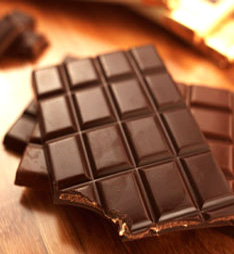
To evaluate the mouthfeel, break off a small piece of chocolate and place it on your tongue. Run your tongue over the surface; but tempting as it is to begin to chew it, let it begin to melt on its own and examine the texture. Then, pop in another piece of chocolate and chew it, evaluating the consistency.
Taste
The tastes of fine chocolate parallel the aroma descriptors that you can study in the charts—i.e., caramel and blueberry, which are descriptors in the chart, can be both smelled and tasted in certain chocolates; although sometimes they only can be smelled and sometimes they only can be tasted. Smelling a component does not mean you will taste it.
Allow the chocolate to slowly melt on the tongue. Different tastes will reveal themselves initially, at mid-palate, and in the aftertaste (what is known in wine-tasting as the finish, although the finish in chocolate refers to the surface gloss of the tempered product). As with wine, the aftertaste may be short, or it may be long and lingering—which is desirable, assuming you enjoy the taste!
- The more you taste chocolate and compare one bar to another, the more your palate will become acclimated to the nuances, and the more you will be able to discern the differences among chocolates.
- It helps to taste with other people. As each mind comes up with different concepts in a brainstorming session, each palate will find different nuances and will contribute to the learning of the group as a whole.
- Always taste within a related group of chocolates (milk, Venezuelan, Madagascan, Criollo, Trinitario, 50% cacao, 85% cacao, single origin beans from different producers, etc).
- Taste the lowest percentage cacao chocolates first.
Just because chocolate is a familiar product, expertise does not come easily. As with wine, there’s a lot to master. But, it’s a most enjoyable course of study. Get a group together for a chocolate-tasting party.
Go To The Article Index Above
Lifestyle Direct, Inc. All rights reserved. Images are the copyright of their individual owners.
|