|
Wine columnist R. VERONIQUE FITZGERALD is a wine consultant and writer based in New York City.
|
|
September 2007
Updated March 2009 |
|
Product Reviews / Main Nibbles / Wine
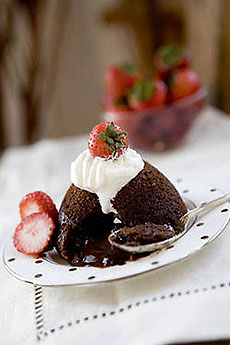
Chocolate Molten Lava Cake
Page 4: Wines To Serve With The
Cake ~ Port
This is Page 3 of a 4-page article. Click the black links below to visit the other pages.
Wines To Serve With Chocolate Lava Cake
My husband, Chef Shehu, and I tasted a small selection of wines. We drew from recommendations in THE NIBBLE’s article, Pairing Wine with Chocolate, and we threw in a wild card. We found that the alcohol level of some of the recommended wines became an issue, possibly because of the temperature of the cake (piping hot!); wines with higher alcohol levels did not work as well as they might have with chocolate served at room temperature.
Our first group of wines were fortified. Experts often turn to fortified wines with rich chocolate desserts. Chocolate is so rich, even tannic, that it seems to work better with wines that are fuller bodied. A dessert wine like Sauternes is sweet and viscous, but its properties don’t pair well with chocolate, especially chocolate desserts. (See also our article on wine and dessert pairings.)
Port
Port is sometimes referred to as Porto, to distinguish it from imitations made in the 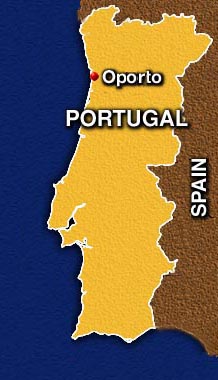 U.S., South Africa and countries other than Portugal. The real thing comes from Portugal’s Douro Valley and is named after the country’s second largest city, Oporto, located on the Atlantic coast at the mouth of the Douro river. U.S., South Africa and countries other than Portugal. The real thing comes from Portugal’s Douro Valley and is named after the country’s second largest city, Oporto, located on the Atlantic coast at the mouth of the Douro river.
Port is a fortified wine made from a melange of indigenous red grapes, the most prominent of which are Touriga National, Tinta Francesa and Tinta Cao. These grapes are picked, crushed, pressed and vinified in the same manner as other wines, but the fermentation is stopped by the addition of grape spirit (brandy); the high alcohol in the spirit kills the yeast cells before all the sugar is fermented out. The resulting wine is sweet and usually weighs in at around 20% alcohol by volume. Here are some good values that are delicious with chocolate molten lava cake—and some that didn’t work.
Tawny Port. Tawny Port becomes tawny as it ages for very long periods in large barrels, and loses some of its color. When an age is indicated (note that this is an age indication rather than a vintage date), the Port is blended from barrels that average that age. Thus, a 10-year-old tawny is a blend from barrels that are variously older and younger than 10 years of age.
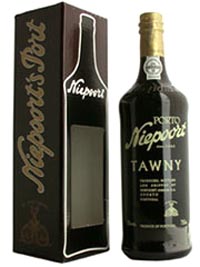 Taylor Fladgate 10 year old Tawny Port (around $24.00; best price is $21.00 at Wine Commune in Berkeley, California). Taylor’s is an elegant tawny with nutty, somewhat cheesy (specifically Camembert-like) aromas and flavors. Sadly, it turned out to be too dry to pair well with the cake and might have been happier with some savory foods (we’ll try that in another tasting). Enjoy it after dessert, instead. Niepoort’s 20-year-old Tawny, a sweeter wine, would have made a better match for the sweet, heavy lava cake. Taylor Fladgate 10 year old Tawny Port (around $24.00; best price is $21.00 at Wine Commune in Berkeley, California). Taylor’s is an elegant tawny with nutty, somewhat cheesy (specifically Camembert-like) aromas and flavors. Sadly, it turned out to be too dry to pair well with the cake and might have been happier with some savory foods (we’ll try that in another tasting). Enjoy it after dessert, instead. Niepoort’s 20-year-old Tawny, a sweeter wine, would have made a better match for the sweet, heavy lava cake.
Late Bottled Vintage Port. Like Champagne, vintage Port is not made every year. Late Bottled Vintage, or LBV Ports, are from a single vintage. They are aged in barrels and bottled between the fourth and sixth years after harvest; they are ready to drink earlier than vintage Port. Most are fined and filtered at the winery and so do not require decanting, unlike vintage Ports, which are aged in bottles rather than barrels and are known to throw off lots of sediment in the process. Some LBVs are aged in bottles like vintage Port. These are labeled Envelhecido em Garrafa (“aged in bottle”), have not been filtered and are aged for a minimum of three years in the bottle before release. These do need to be decanted. LBVs are a personal favorite of mine due to their price. For a mere $20.00, you can experience a little of the magic of expensive vintage Port.
 Croft 2001 Late Bottled Vintage Port ($17.99). This rich Port is redolent of red berry and cherry flavors. The fruit flavors worked nicely with the chocolate, although the sweetness of the cake made the wine taste dryer than it is. The high alcohol stood out awkwardly and detracted from the experience somewhat. If you have it, drink it; but also try LBVs from Quinta Santa Eufemia, Portal and the venerable house of Dow. Older vintages of Croft’s LBV from the late 1990s are still around at similarly attractive prices. Croft 2001 Late Bottled Vintage Port ($17.99). This rich Port is redolent of red berry and cherry flavors. The fruit flavors worked nicely with the chocolate, although the sweetness of the cake made the wine taste dryer than it is. The high alcohol stood out awkwardly and detracted from the experience somewhat. If you have it, drink it; but also try LBVs from Quinta Santa Eufemia, Portal and the venerable house of Dow. Older vintages of Croft’s LBV from the late 1990s are still around at similarly attractive prices.
Continue To Page 4: Wines To Serve With The Cake ~ Muscat, Banyuls & Lacrima di
Morro
Go To The Article Index Above
Lifestyle Direct, Inc. All rights reserved. Images are the copyright of their respective owners.
|