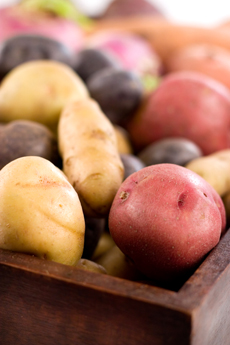
Yukon Golds, Fingerlings, Viking Purples and Red Bliss demonstrate how a good-tasting food like the potato can taste even better. Photo by Kelly Cline | IST.
|
|
Gourmet Vegetable Products & Reviews
Plus Articles, Glossaries & Recipes
Introduction
We are often baffled by the vegetables offered at our farmers’ market. How can there be that many varieties of squash? Will our salad really be more interesting if we use exotic Japanese microgreens instead of romaine? How will we pair these “new” gourmet vegetables with the foods we eat everyday, and how should we prepare them for our special-occasion menus?
Here we present interesting specialty vegetables as well as expanded uses for those that are familiar. We’d love to hear about your favorite vegetables. Use the Contact Us link on this page.
The Difference Between Fruits & Vegetables
Fact: Your favorite vegetables may actually be fruits! Tomatoes are fruits, avocados are fruits, hot chiles are fruits, cucumbers and squash are fruits. Because they aren’t sweet, people think of them (and classify them in recipes and produce departments) as vegetables.
But by botanical definition, fruits have their seeds on the inside; the only exception is the strawberry. With fruits, the seeds, or pits, are contained in the fruit’s ovary sac. True vegetables have no “pit” or seed sac.
So, beets and other root vegetables, celery, lettuces, herbs, and the anti-carcinogen cruciferous family Brassicaceae (also called Cruciferae)—arugula, bok choy, broccoli, Brussels sprouts, cabbage, cauliflower, collard greens, cress, daikon, horseradish, kale, kohlrabi, mizuna, mustard, radish, rutabaga and turnips—are all legitimate veggies.
See our separate section on Rice, Beans & Grains. And find more to nibble on Blog.TheNibble.com.
| Articles About Vegetables |
Gourmet Vegetable Product Reviews |
|
|
|
| Vegetable Recipes |
Salad Recipes |
|
|
Green Salads
Potato Salad & Cole Slaw
Salads With Protein (Main Or First)
Vegetable Salads
|
Nibble Tip
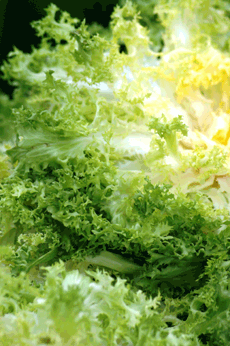
One of our favorite salads, not seen often enough in the U.S., is the classic French frisée (curly endive) salad. Traditionally served with Roquefort and lardons—crisp, browned chunks of pork belly, 1½" x ¼" (you can substitute pork bacon or pancetta). Toss with a classic vinaigrette. Optionally, add fan-sliced red pear and walnuts halves.
Photo of frisée by Nathalie Dulex | SXC. |
 |
|