November 2006
Updated April 2009
|
|
Butter Tips
Page 1: Butter Storage
CAPSULE SUMMARY: Whether cow butter, goat butter or other milk-giving mammal, butter is one of the most delicate foods in the refrigerator. It easily picks up flavors and odors. You can do a lot to keep your butter fresh. This is Page 1 of a two-page article. Click on the links below to visit Page 2.
Storing Butter
- Contrary to what refrigerator designers lead us to believe, butter should not be left unwrapped in the convenient butter tray on the refrigerator door. It should be kept in its original wrapper (the paper or foil around the bar) and box, and stored in the coldest part of the refrigerator—which is the meat and vegetable drawers at the bottom. However, while extra butter can be stored there, this is admittedly not the most convenient storage space for an item many people use frequently. So, follow the rest of these tips.
- If you prefer to keep the bar in the butter tray, wrap it tightly in the paper or foil it came in. We use an extra layer of plastic wrap. For the freshest flavor, don’t stock up, but purchase butter more frequently.
- If you’re not a big butter user, look for Half Sticks, pioneered by Land O Lakes (we expect other companies will follow). By unwrapping one small half-bar instead of a full bar, your butter will stay fresher longer—the protective covering helps to preserve freshness. Don’t keep more butter in your refrigerator than you plan to use in a two-week period. The butter will say fresher longer if you freeze it until you need it. See the last bullet for freezing tips.
- Do not store butter near foods with strong odors, such as onions or garlic. Further protect bars that are not in immediate use by keeping them in their original cartons and putting them in heavy-duty plastic storage bags. Snack-size bags work for single bars.
|
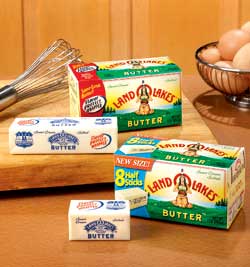
Land O Lakes was the first to introduce “Half
Sticks” (in the foreground) for greater
convenience and freshness. |
- Salt acts as a preservative: Salted butter can be refrigerated for up to a month. Unsalted butter should be used within two weeks. Will it go bad in more than this time? No, but just as you want the freshest food in any category, the fresher the butter is, the better it will taste. Freshness is noticeable in butter sauces and baked goods, not to mention when using butter as a spread.
- Butter can be frozen for up to six months. To protect it from absorbing flavors and odors in the freezer, place the original carton in double plastic freezer bags.
Salted Versus Unsalted Butter
The only difference between the two butters is that one has salt added and one does not: It’s a personal taste preference.
- Generally in savory dishes, you can use salted or unsalted butter interchangeably because salt is added to the recipe to taste. In sweet baked goods, salted butter should not be substituted because the sweet flavor of unsalted butter should shine through.
- When one or the other is specified in a recipe, it is because the recipe was developed with it and the amount of salt has been adjusted accordingly. If you enjoy the added salt in salted butter, you generally won’t notice the added amount of salt in the recipe.
Continue To Page 2: How To Soften Butter
|