THE NIBBLE (TM) - Great Finds for Foodies (tm)


RSS feed
(What’s this?)
Christopher Elbow Chocolates
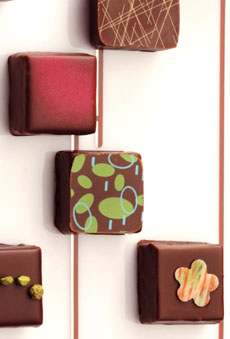
The Venezuelan cacao-based chocolate (from El Rey) that enrobes these bonbons by Christopher Elbow Artisanal Chocolate, Kansas City, MO, bears zero resemblance to the chocolate first experienced by the Spanish Conquistadors. These: among the most delicious confections in America, filled with fondant flavors like Grand Marnier, fresh mint, lavender, saffron, Earl Grey, and Chinese Five Spice. Then: a bitter, unsweetened beverage mixed with pepper, chili pepper, musk, vanilla and cornmeal—enjoyed by the Aztecs but so unpalatable to the Europeans, they spat it on the ground.
MENU


Chocolate

Category Main Page
Articles & Reviews


Main Nibbles

Main Page
Articles & Reviews Of Foods From A To Z


Product Reviews

Main Page
Food, Beverages, Books,
News & More


ABOUT THE AUTHOR

KAREN HOCHMAN’s first word was not cacahuatl...but as her mother will attest, it was pretty close.


August 2005

Product Reviews / Main Nibbles / Chocolate

From Pod to Palate

A Chocolate Bar’s Journey


Part I: A Brief History of Chocolate

Forget what it takes for Christopher Elbow and other masters crafters of “brown gold” to make a brilliant box of chocolate bonbons that looks and tastes like great art. Even the simplest chocolate bar we take for granted is, like many things in the food chain, the result of back-breaking work and hundreds of hours of labor of many nameless people.

Watch the journey of the cacao pods, from trees on plantations in the tropical forest clearings of Africa, South America, the Caribbean and Malaysia, as they become the chocolate you buy. The next time you take a bite you’ll have a deeper appreciation of the long trip that bar, truffle, or other delight has taken.
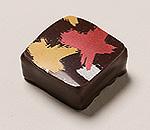
Vosges Saffron
Christopher Elbow chocolates are
made of Venezuelan criollo cacao
beans–among the finest in the world.
This bonbon is filled with Spanish
saffron-flavored fondant.

Before the trip begins, let’s correct the biggest typo in chocolate history. Cocoa is a transposition of cacao, the original name of the tree and its fruit (the pods that bear the seeds, or beans, that are harvested and roasted to start the chocolate-making process).

The misspelling probably happened on an African trading ship manifest in the 18th century.  But for some merchant’s mistake, we’d be drinking a nice hot cup of cacao and mixing cacao with butter, sugar and eggs to make brownies.

Meanwhile, Back in the Amazon Rainforest...

The words cacao and chocolate come from our ancient neighbors in Central America, who first sampled its joys. Cacao trees, which originated in the Amazon region, grew wild in the rainforests of ancient Mexico. They were cultivated by the native Olmecs and the Mayas who followed them. While the sweet white fruit of the cacao pod was initially sought by the Amazonian natives, they ultimately found that grinding and mixing the seeds with water produced an even greater treat.

Mankind has been enjoying chocolate for millennia: We know that more than 2500 years the Maya were making the cacao beverage; and perhaps as early as 1200 B.C.E. the Olmec were doing so. The Maya believed that the cacao tree its fruit were a gift of the gods; the tree was worshipped as a symbol of fertility and life. Elaborately decorated drinking vessels almost 2000 years old have been found illustrating chocolate ceremoniesand still containing traces of chocolate. Note the reference to drinking vessels: Chocolate has been a beverage for most of its history, as you’ll discover shortly. Cacao beans were so precious, they were used as currency: a turkey cost 200 beans, a tomato, 3 beans.

Called xocoatl by the Mayas and cacahuatl by the Aztecs, chocolate was a ritual beverage on the Yucatan, reserved for the nobility, priests, high officials, warriors and rich traders, who believed it to have restorative and aphrodisiac powers. The Aztec developed a taste for chocolate after trading with their Mayan neighbors to the south. Montezuma used it as a medicinal revitalizer, believing it nourished strength, stimulated potency and fertility, and abetted longevity.

Theobroma
A cacao pod, fruit, and seeds.

Hardly the sweet treat we know today, xocoatl was served as a cold, unsweetened drink—beans crushed into a paste and whipped until foamy with pepper, vanilla, chili pepper, cinnamon, musk and cornmeal. Still, it was fatty and bitter; the foam was considered to be the best part. Christopher Columbus and his officers, offered the elixir as a great honor, found the bitter concoction unpalatable and couldn’t even choke it down. He had no idea the locals were offering him their most valuable goods for trade. Thinking the product abominable, he brought only a few beans back to Spain. Seventeen years later, Hernan Cortes understood its value, and promoted plantations run by Europeans. Today’s descendants of the Maya and Aztec still prepare cacao and corn-based drinks that are similar to those enjoyed by their ancestors.

According to Michael D. Coe, Professor Emeritus of Anthropology at Yale University, history is incorrect in crediting the Spanish conquistador Hernán Cortès for recognizing the potential of cacao upon his arrival in 1509. According to Professor Coe in a presentation at the University of Guatemala about chocolate in Guatemalan culture, neither Cortès nor Christopher Columbus had anything to do with it. Rather, it was a delegation of Kekchi Maya nobles from Alta Verapaz who introduced the beverage drink to the Spanish court. However, when when Cortès returned to Spain in 1527, he brought back beans.  You can read more of the presentation by clicking here. Some sources credit the nuns of Oaxaca, Mexico with being the first to add sugar to the bitter cacao, making it a palatable drink. Sugar was unknown in the New World: Both sugar, and later honeybees, were brought by Europeans.

The Spanish: From Bitter to Bonanza

The Spanish knew how to cook. They sweetened the chocolate beverage, first with honey and then with cane sugar. They replaced the Aztec spices with anise seed and orange blossom water, plus almonds or hazelnuts. They added cinnamon, cloves, egg yolks and Madeira. They used boiling water instead of cold water to create a hot drink. They served it with a side of fried bread. And chocolate was a huge hit, drunk night and day instead of water or wine.

Chocolate was so popular that the government decided to keep it as a pleasure of the rich and powerful by imposing very high taxes. They also kept a monopoly by prohibiting export (although by 1615 it had managed to migrate to France and Italy). In England, tea from China, coffee from Africa via the Middle East trade routes, and chocolate from South America arrived in seventeenth century Europe at roughly the same time, but chocolate remained costly and out of reach long after coffee and tea became affordable indulgences.

No wonder it took almost 150 years from the first arrival of the beans for the beverage to be transformed into a solid food. In until 1674 chocolate was made into both pudding and pastilles. London’s first chocolate shop (for drinking and socializing, like a tea salon) opened in 1657. Finally, chocolate could be experienced by people other than nobles.

With the industrial revolution of the latter 18th and early 19th centuries, chocolate became more accessible to everyman. The invention of labor-saving machines meant faster, cheaper production; there were inexpensive transportation and lower taxes. One labor-saver ground cacao nibs into paste. In Dorchester, Massachusetts, an Irish importer of cacao beans, John Hannon, and American, Dr. James Baker, built one of the first chocolate manufacturing plants to produce cakes of ground cacao bean paste for drinking chocolate. The first commercial eating chocolate was made and sold in blocks by François-Louis Cailler in 1819.

But solid chocolate was not yet the smooth, velvety confection that we know today. It had a rough flavor, although people developed a taste for it. It took more than 25 years for Dutch chemist Coenrad Van Houten and others to solve that problem. In 1828 Van Houten received a patent for his method of pressing about half the cocoa butter out of ground cacao nibs with hydraulic pressure, creating hard cakes called “dutch cocoa” which were pulverized into cocoa powder.* By adding alkali to reduce the acidity, he removed the roughness of natural chocolate. Cocoa powder enabled the quick preparation of beverages and easy combination with other ingredients. Van Houten mixed the cocoa butter with sugar and cocoa powder to create the first chocolate candies.

*History has been generous to Van Houten: He actually did not invent the first press, but was the first to patent it.

The First Chocolate Bar

The first chocolate bars date to 1847 to Joseph Fry & Son in Bristol, England. In 1789, Fry had purchased a Watts steam engine to grind cacao; but it wasn’t until 58 years later that his great-grandson thought to see what happened if he mixed some of the pressed cocoa butter back along with some sugar back into the dutch cocoa cakes. He pressed the mixture into a mold, and the chocolate bar—then called “eating chocolate” to distinguish it from “drinking chocolate” was born.

Continued industrial inventions enabled an expansion in efficient production of chocolate bars, which increased their availability and variety (including the inspired addition of nuts). Cocoa powder enabled the addition of chocolate to recipes: In 1866 chocolate cream desserts and cookies appeared in British shops. Milk chocolate was invented in 1875 by Daniel Peter of Vevey, Switzerland, who finally solved the problem that had vexed many by mixing chocolate with powdered milk instead of whole milk or cream.

Vosges Naga
The milk chocolate Naga truffles from
Chicago’s Vosges Haut Chocolat is flavored
with sweet Indian curry and coconut.

By the 20th century, chocolatiers had mastered the transformation of chocolate into the sophisticated repertoire we enjoy today. The first filled chocolates were created by Séchaud Fils in Montreaux, Switzerland in 1913. The first white chocolate was manufactured by Nestlé in the 1930s. Truffles, bonbons with fillings, ganache (mixed cream and chocolate), chocolate bars in myriad varieties, chocolate-covered specialties from glazed fruit to coffee beans, molded and sculpted chocolates of every description, filled the chocolate shops of the world.

With the complexity of flavors and aromas in fine chocolates (as many as 400 different aromas and flavors have been identified), chocolate connoisseurship now can be equated to wine connoisseurship on several levels.

As with vineyards, the soil and microclimate of each plantation or growing area provide distinct flavors and aromas, which also are impacted by the harvest’s particular weather conditions. In 1984 the first chocolate bars to designate the region of origin of the bean were introduced. Now the best bars of some fine manufacturers are designated by their specific plantations (“pure origin”); and some are even designated by their harvest years. As Americans have developed their preferences for wine beyond “red” and “white,” so too are chocolate lovers educating themselves beyond “dark” and “milk.”

The century ended with the celebration of “nouvelle” chocolates. Chocolatiers have provided chocolate-lovers with combinations beyond the traditional additions of fruits and nuts.  Now, there you can have both couverture and fillings infused with international flavors like wasabi, saffron, lavender, anise, paprika, curry, peppercorns and Ancho chili—proving that everything old is new again.

Continue to Part II: The Birth Of The Bar

© Copyright 2005-2008 Lifestyle Direct, Inc. All rights reserved. Images are the copyright of their respective owners.


Spread The Word: Each icon below links to a site where you can bookmark, share and comment on this article:
Dine52    del.icio.us    ma.gnolia    Newsvine    Yahoo Myweb    BlinkList    simpy    reddit


.