Hundreds of thousands of fishing vessels across the globe extract millions of tons of fish from the ocean every year. Photo courtesy of MorgueFile.com.
October 2005
Last Updated June 2010
|
|
Seafood Watch: Sustainable Seafood Choices
Understanding The Health & Environmental Issues Surrounding the Seafood You Eat
Plus A Free Pocket Guide To “Good Eating”
Overview
Part of the Monterey Bay Aquarium Foundation in Monterey, California, Seafood Watch is keeping a pulse on important issues surrounding the seafood we eat. To most people, the issues are, "How much does it cost a pound?” and “How am I going to prepare it?”
However, they’re a bit more serious than that, and they’re global. Worldwide demand is ever-increasing due to growing populations and consumers preferences. Once it seemed that the oceans would supply an endless supply of seafood for the taking, but we have reached the limits.
Between 1950 and 1994, ocean fishermen increased their catches 400% by doubling the number of boats and using more effective fishing gear. In 1989, the world’s catch leveled off at just over 82 million metric tons of fish per year. That’s all the ocean can produce. Sending more boats won’t yield more fish.
Raising Fish Like Chickens
To help supply the global demand, fisheries are raising fish, shrimp and oysters like farmers raise chickens. Today, nearly one-third of our seafood comes from fish farms. Some of the most popular types of seafood, including salmon and shrimp, are farm-raised to supplement those that are caught in the wild. Some seafood, such as tilapia and catfish, are almost exclusively farmed.
Some types of fish farming (also referred to as aquaculture) have more impact on the environment than others. The ecological impact depends on what species is being raised, what type of farming method is being used, and where the farm is located.
Sustainable seafood—meaning methods that can be sustained by the environment—comes from sources, either fished or farmed, that can maintain or increase production into the long-term without jeopardizing the affected ecosystems.
Why It’s So Important
Part of THE NIBBLE’s mission is to educate, to introduce you to sources of information that enable you to be aware of issues. Seafood Watch is an important resource for concerned consumers of seafood. Its focus includes environmental as well as health awareness. In their information-packed website, you will learn that:
- The choices we make as consumers drive the marketplace. With more than 75% of the world’s fish sources either fully fished or overfished, your choices are important. As with our other resources, if we don’t conserve them now, we may not have any to enjoy down the road. Your concern, even passive (i.e., not purchasing a fish on the “avoid” list (on the SeafoodWatch.org website) can make a difference.
- Some experts feel strongly against eating certain farmed fish for health reasons. Given the popularity of salmon and how much of the salmon in the marketplace is farmed, you should understand the issues and decide for yourself.
- Many consumers and their children are concerned with both the environment and the provenance of the foods they eat. Issues like dolphin-safe tuna and consuming foods from healthiest sources are of growing interest in households nationwide.
Seafood Watch is an aggregator of information and a link to many other organizations that deal with these issues (e.g. the National Environmental Trust, ocean conservation groups, sustainable fisheries, and organizations that assist chefs and restaurants).
Free Pocket Guides To Best Choices
Seafood Watch has downloadable pocket-size guides to the best seafood choices available in every region of the U.S. By using the guide at a supermarket or restaurant, you’re making choices that support environmentally friendly fisheries and aquaculture operations.
The pocket guide lists are inclusionary rather than exclusionary: In our region, there are 43 fish and seafood items that are “Best Choices” or “Good Alternatives,” and only 20 on the “Avoid” list. The latter are explained as “Avoid these products, at least for now. These fish come from sources that are overfished and/or fished or farmed in ways that harm other marine life or the environment.” For example, Bluefin Tuna is on the “Avoid” list, but all of the other varieties—Albacore, Bigeye, and Yellowfin—are “Best Choices” or ”Good Alternatives.”
It seems an easy thing to do.
SEAFOOD WATCH
SeafoodWatch.org
Monterey Bay Aquarium
886 Cannery Row
Monterey, CA 93940
1.877.229.9990
|
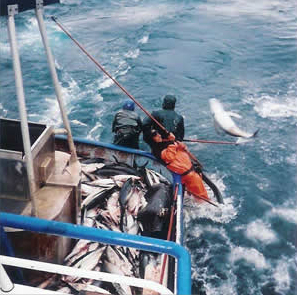 Salmon fishing. Photo courtesy of HeritageFoodsUSA. Salmon fishing. Photo courtesy of HeritageFoodsUSA.
|
Lifestyle Direct, Inc. All rights reserved. Images are the copyright of their individual owners.
|