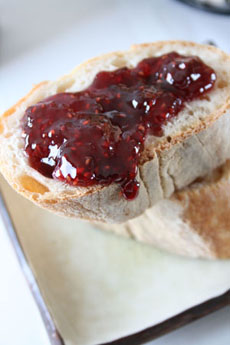
Raspberry Jam from Paumanok Preserves, a NIBBLE Top Pick of The Week. Photo by Hannah Kaminsky | THE
NIBBLE.
July 2006
Last Updated June 2014
|
|
Spread Sheet: Types Of Jelly, Jam & Preserves
A Jam & Jelly Glossary Including Chutney, Conserve, Curd, Marmalade & Related Terms
Page 1: Terms C To F
Overview
“It Must Be Jelly (‘Cause Jam Don’t Shake Like That)” was a big hit for the Glenn Miller Orchestra. But there’s a more scientific way to tell the difference between sweet fruit spreads, and the difference among these spreads is largely one of consistency. For the first three definitions in our glossary—jelly, jam and preserves—product standards are established by the Food and Drug Administration, so consumers will know what they’re buying. This is Page 1 of a two-page glossary. Click on the link below to visit Page 2. Also explore your favorite foods in our many other food glossaries.
CHUTNEY
Chutney is a spiced condiment of Indian origin (chatni is the Hindi word for strongly spiced) made of fruit or vegetables. It is typically served as an accompaniment to food, not as a spread. The spice level can range from mild to hot, and the consistency from a fine relish to a preserve or conserve. Fruit chutney consists of chopped fruit, vinegar, spices and sugar cooked into a chunky sweet-tart-spicy mix: according to one explanation, it “blurs the Western distinction between preserves and pickles.”
CONFITURES
The French word for jam, found on jars imported from France and some other European countries.
CONSERVE
Conserve is a generally mixture of more than one fruit, often with added nuts and raisins, that is cooked until it becomes thick. It is used as a spread for breads, pastries and meats, and in the latter use is closest to chutney. Other producers refer to a thickly-stewed preserve as a conserve. Tomato conserves can be more savory.
FRUIT BUTTER
Fruit butter, such as apple butter or prune butter, is fruit purée or pulp combined with sugar, lemon juice and spices, slowly cooked down to a soft, smooth consistency. The “butter” refers to its spreadability: there is no actual butter in the product.
|
|
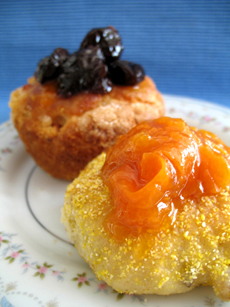
Frog Hollow Farms, a NIBBLE Top Pick Of The Week, refers to its delicious, thickly-stewed single fruit products as conserves. Photo by Melody Lan | THE NIBBLE.
|
FRUIT CURD
Fruit curd is a creamy spread made with sugar, eggs and butter, generally flavored with citrus juice and zest. Lemon curd is the classic variety, but lime curd and blood orange curd can be found, as can other fruit curds such as the strawberry. A citrus curd is refreshingly tart, as opposed to more sugary jams and preserves. Unlike lemon custard, for example, lemon curd contains more lemon juice and zest, which gives it a more piquant flavor. The butter creates a smoother and creamier texture than jam. Curd also can be used to fill tart shells, and as a garnish.
FRUIT SPREAD
Fruit spread is generally a reduced-calorie product made with fruit juice concentrate and low-calorie sweeteners replacing all or part of the sugar. |
|
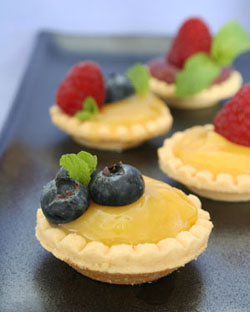
Four flavors of Curdelicious fruit curd, used to fill dessert tarts. Photo by Hannah Kaminsky | THE NIBBLE. Read our review of Curdelicious, a NIBBLE Top Pick Of The Week. |
Continue To Page 2: Terms With G ~ Z
|
|