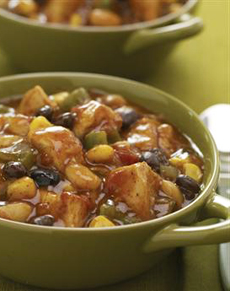
Cannellini beans, also known as white kidney beans, are one of the many nutritious, delicious beans that are also beautiful. Photo by Tanya Shkondina | IST.
June 2005
Updated October 2007
|
 |
Beans & Grains Glossary
Learn Your Legumes (And Other Family Members)
There are hundreds of terms to learn: here’s a start! We have so many rice terms, we created a separate Rice Glossary. If you’d like to suggest additional words, click here.
Click on the letter of the alphabet in this bar to get to a term
without having to scroll manually:
a b c d e f g h i j k l m n o p q r s t u v w x y z
This material is copyrighted and cannot be reproduced in whole or in part
without written permission. Write to Editors at TheNibble.com.
ADZUKI BEANS
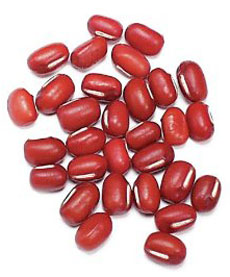
Also known as: asuki beans, azuki beans, field peas and red oriental beans, these reddish-brown beans with a white stripe are native to China and used in many Asian dishes (especially desserts) and with rice dishes in the U.S.
AMARANTH
An 8,000-year-old crop, once an abundant part of the ancient Aztec empire’s agricultural base. The crop was regarded so highly that each year bushels of amaranth were presented to their leader, Montezuma. Because the crop figured so prominently in Aztec culture and religious ceremonies, the conquering armies of Cortez burned the fields to the ground. As European crops replaced indigenous ones, amaranth slowly fell out of use. Amaranth contains large amounts of dietary fiber, iron, and calcium as well as other vitamins and minerals. Amaranth also has naturally high amounts of lysine, methionine and cysteine combined with a balance of amino acids.
ANASAZI BEANS
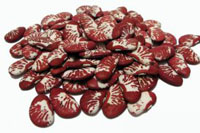
Originating in New Mexico, these pretty reddish-brown beans with white markings are popular in Southwestern recipes, including soups and refried beans. When cooked, the bean becomes light beige or pink in color with a somewhat sweet taste and meaty texture. They are also known as the appaloosa bean, Aztec bean, Jacob’s cattle bean and New Mexico cave bean.
Photo by Luciano S. | SXC.
BAGELS
A chewy bread baked in a round form with a whole in the middle. Basic bagels are made from high-protein flour, water, sugar, yeast and salt. The term water bagel refers to the process of boiling the bagel before baking. History credits a baker from Vienna, Austria for creating the first bagel in 1683. The name bagel is derived from the German word for stirrup, “bugel.” Austrian Jews brought the bread to America in the 1920s, and the name evolved to bagel.
BARLEY or PEARL BARLEY
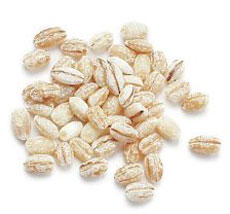
One of the major cereal crops in the world (in 2005 it ranked fourth in amount cultivated), barley is a small, spherical grain grown worldwide and usually pearled to remove its outer husk. The white grain has a slightly sweet, nutty, earthy flavor, chewy texture and high starch content. It has been used since ancient times: It was a staple cereal of ancient Egypt, where it was used to make bread and beer.
BEAN
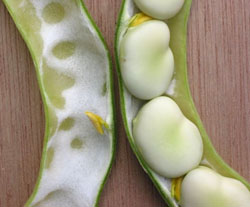
Bean originally meant the seed of the broad bean, but the definition was later expanded to include members of the genus Phaseolus such as the common bean or haricot and the runner bean and the related genus Vigna, which includes the mung bean, the rice bean and the black-eyed pea. The term is now applied in a general way to some 15 other genuses which include such varieties as soybeans, peas, lentils, chickpea (garbanzo), pea, lentil, lima, common bean (including the black bean, pinto bean and kidney bean), soybean and guar. Broad beans in the pod. Photo of broad bean, a.k.a. fava bean, by Rasbak Gebruiker.
BESAN or CHICK PEA FLOUR or GRAM FLOUR
Made by milling split Bengal gram to a fine flour, it is a fine, pale yellow flour made from roasted chana dal (cictrarietinum). Besan is used as a batter for deep-frying and in soups. It is traditionally used in batters for vegetable fritters (pakoras) as a binding agent. Many Indian sweets are made from besan. It is to an Indian kitchen what egg is to a western kitchen. Indian besan has been roasted prior to milling.
BLACK BEAN or BLACK SPANISH BEAN or COMMON BEAN or TAMPICO BEAN or TURTLE BEAN or SPANISH BEAN or VENEZUELAN BEAN
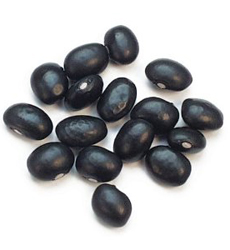
The black bean, or common bean, is thought to have originated in southern Mexico and Central America over 7,000 years ago. Evidence of its use has been found in excavations of prehistoric dwellings. The common bean has since spread around the world. Black beans are small in size with a cream-colored flesh and black skin. They are used throughout Latin America, the Caribbean, and the southern United States (especially Florida and the Southwest). Black bean soups, stews and sauces are very common in Latin American countries. Black beans are becoming more popular in the U.S., in part due to increased immigration from Latin American countries.
Photo by Nadia Arai | SXC.
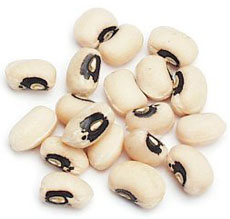
BLACK-EYED PEA
Also known as the cherry beans, China pea, cowpea, frijole and Indian pea, this ivory bean with its big black and white oval coloration (the “eye”) is perhaps best known as a Southern dish, where it is often served with ham and rice. It is also commonly used in bean cakes, casseroles, curry dishes, fritters and salads. The “eye” is where the bean is attached to the pod; variations are yellow, brown or red in color. It originated in Asia.
Photo by Leonardo Borlot Valentim | SXC.
BORLOTTI BEAN
See Cranberry Bean.
BULGUR
Bulgur is a quick-cooking form of whole wheat that has been cleaned, parboiled, dried, ground into particles and sifted into distinct sizes. Often confused with cracked wheat, bulgur differs in that it has been pre-cooked.
CANNELLINI BEAN
A glossy white, oval bean with a thin skin and mild flavor. See photo at the top left of the page.
CEREAL, BREAKFAST
Processed grains that are generally 75 to 80 percent carbohydrates. Can be commercially processed or homemade.
CEREAL GRAINS
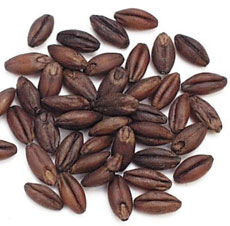
Cereal includes any plant from the grass family that yields an edible grain (seed). These include barley, corn, millet, oats, quinoa, rice, rye, sorghum, triticale, wheat and wild rice, plus lesser-known grains. Because cereals are easy to raise and inexpensive, are a readily available source of protein and have more carbohydrates than any other food, they are a staple throughout the world.
Photo of barley grains by Luis Rock | SXC.
CHANNA DAL or BENGAL GRAM/SPLIT or KADALE BELE or KADALAI PARUPPU)
This is a robust and versatile lentil or dal, a split and husked relative of chickpeas (Cicer grietinum). It looks somewhat like toor dal (which is a different dal altogether). Channa dal refers to the hulled, split chickpea, and is used often with sweeter vegetables, such as pumpkin and zucchini. Easy to cook, it is the most popular legume in India.
CHICKPEA
See Garbanzo.
COUSCOUS
Pronounced KOOS-koos, this wheat product is more than 1000 years old. The Berbers, native to the mountains of Algeria, Morocco and Tunisia, would go down to the valleys to gather and conserve wheat. Over generations, they learned that by grinding the wheat and making couscous, it would keep for years, insurance from drought and famine. Long a staple of North African cooking, it is now widely available in most supermarkets. Couscous is not a grain but yellow granules of semolina, made from durum pasta wheat, which are precooked and then dried. The word can mean the pasta itself, as well as refer to the prepared dish. North African stews (tagines) traditionally served over it. Like pasta or rice, couscous is versatile and has numerous preparations. It is simple to prepare: Just add boiling water and let it sit. It can be flavored with exotic spices or served plain. The photo shows regular couscous at the left, and the larger Israeli style at the right. The large grains are the original. They were made by hand-rolling semolina grains with olive oil, water salt on screens, letting the small grains fall though, and rolling them again until a consistent size grain was formed. The grains are then coated with olive oil salt and sun-dried, giving them a toasty flavor when cooked.
Photo by Meghan Anderson-Colangelo |SXC.
CRANBERRY BEAN or BORLOTTI BEAN
The cranberry red shelled of this bean covers a beige-colored bean flecked with cranberry streaks. It is known for its nutlike flavor. In Italy it is called the borlotti, a name by which it can be found in the U.S. as well.
DURUM WHEAT
Indigenous to North Africa, durum serves as a main cereal grain for many of the food preparations in these countries. A hard variety of wheat, it is used to manufacture pasta because its texture enables the pasta to be cooked to an al dente state where other varieties of wheat would become overly soft. Semolina is milled durum.
EDAMAME
The cooked green soybean is very popular as a snack, squeezed from the pod. It is also served as a side dish and used as an accent in casseroles, salads, soups, rice and pasta dishes.
FARINA or SOOJI
A fine meal prepared from cereal grain and various other plant products. The texture is almost like coarse grains of sand. It is used in everything from hot breakfast cereals to exotic Indian desserts. Farina is ground into a fine consistency (farina is the Italian word for flour), and is best known in the U.S. as the branded Cream of Wheat and Cream of Rice porridges. As a hot cereal, farina has been compared to grits; however, farina is finely ground, while grits, made only from corn, are of a coarser texture. Wheatena, a brand of toasted wheat porridge, also is of a coarser texture than farina cereals.
FARRO or SPELT
See Spelt.
FAVA BEAN or BROAD BEAN or FABA or HORSE BEAN
Fava beans originated in ancient Egypt and spread throughout the Mediterranean, where they were cultivated as both human and animal food. In ancient Greece, Pythagoras forbade his followers to eat them because, according to legend, they were said to contain the souls of the dead. More likely, Pythagoras discerned the connection between eating undercooked fava beans and the anemic blood disorder now called favism. Traces of the fava’s cultivation have been found in Bronze Age sites in Switzerland and in Iron Age sites in England. Until Spanish explorers brought Phaseolus vulgaris to Europe in the 15th century, favas were the only bean in town. And then, of course, it was Hannibal Lecter, in “Silence of the Lambs,” who claimed to have eaten the liver of a census taker “with some fava beans and a nice Chianti.” These fat broad beans can now be found fresh in ethnic groceries, distinctive in their long, tough pods; unshelled, they look like larger, rlatter, squared-off lima beans. They are enjoyed as side dishes and in stews.
FLAGEOLET BEANS
Small beans that can be found in black, green, red, white and yellow varieties. Flageolets, about a half inch in length, are often mistaken forsmall kidney beans.
GARBANZO BEAN or CECI or CHANNA or CHICKPEA
One of the oldest cultivated legume species known, garbanzos go back as far as 5,400 B.C.E. in the Near East. While high in carbohydrate, their nutty flavor, minimal fat, nutrition and versatile culinary qualities have pushed garbanzos to the forefront in American cooking over the past 30 years—not just in hummus, minestrone and salads but in the ever-expanding vegetarian cuisine. They are pale and light brown and are used whole, popular in North Indian, Mediterranean and Middle Eastern cuisine. In North India they are made into the popular chola/channa masala (chili) dish and are made into fritters. In the Middle East they are made into hummus, falafel, and added to pilafs. In North Africa they are added to couscous. Now they have found their way into Mexican, Cuban and other Latin American cuisines. Garbanzo is also available as chickpea powder.
GREAT NORTHERN BEAN
A mild, white, oval bean, similar to the white kidney bean.
GRITS
Grits are corn kernels, soaked to remove the casing (at which point it is known as hominy—hence the term, hominy grits). The hominy is left to harden and then is ground to the texture of tiny pellets, the “grits.” These are boiled with water, into a cereal similar to cream of wheat. See also Polenta.
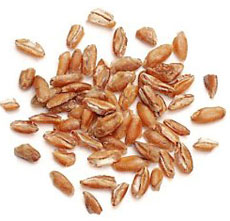
KAMUT
Kamut is the Ancient Egyptian word for wheat. It is considered one of the original strains of wheat and was used in ancient times for bread making. It is believed to have originated in the Nile Valley in Egypt about 6000 years ago. Kamut has a larger kernel than wheat and contains higher levels of protein and slightly higher levels of lipids and minerals. It is grown organically and can be purchased for use as a breakfast cereal and for bread baking.
KIDNEY BEANS or RED KIDNEY BEANS
Familiar to almost every American, these beans find themselves in chili, refried beans, three bean salad (along with string beans and wax beans), Cajun bean dishes and stews.
Photo by Steve Ford Elliott | SXC.
LEGUME or PULSE
The edible seed of certain leguminous plants, a class of vegetables that includes beans, peas and lentils. Legumes are typically low in fat, high in fiber, cholesterol-free and high in folate, iron, magnesium and potassium. They’re also a good source of protein and can be a fat- and cholesterol-free substitute for meat. Examples include beans, chickpeas, lentils, peas and split peas. Beans and lentils are very low in fat, high in fiber and are frequently referred to as “wonder food.” Examples include adzuki beans, anasazi beans, black beans, black-eyed peas, chickpeas, edamame, fava beans, lentils, lima beans, red kidney beans and soy nuts.
LENTIL
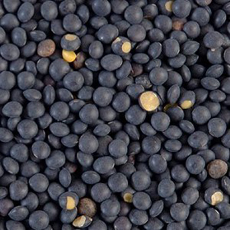
Tiny, flat and round, lentils are the fastest cooking of all dried beans that yield a rich, earthy flavor when cooked. The three major varieties are Le Puy, the most intensely-flavored lentil; the common green or brown lentil; and yellow or red lentils, which are a staple in Indian cooking, from the spicy Indian dish daal or dal, lentil cury, to the lentil bread daal poori. Lentils supply a large dose of folate (folic acid), which fights heart disease and prevent birth defects; as well as providing fiber, protein, potassium and magnesium. Lentils are fat-free and absorb spices easily. Versatile, they are used in soups, stews, salads, side dishes. Photo of lentils by Gokhan Okur | IST.
LIMA BEAN or BUTTER BEAN or MADAGASAR BEAN
Among the most popular shell beans in the U.S., these smooth, flat shaped, sweet-tasting beans have a rich, starchy, meaty texture and a creamy, distinctive flavor. Lima beans are nutrient-dense and their richness generates feelings of satiety. Often referred to in some southern states as “butter beans,” lima beans date back to around 5,000 B.C.E. along the coastal regions of South America. They are believed to have originated in Guatemala and Southern Mexico and were traded along routes that led into North America; eventually they were carried to Europe, Asia, and Africa. Early explorers stored dry lima beans for long periods on their ships, recognizing that lima beans were a nutritious and highly concentrated food source. In fact, lima beans are a good source of B vitamins (vitamin B6, niacin, folate), protein (including the important amino acid lysine), fiber (especially soluble fiber in the form of pectin), iron, potassium, and magnesium; and they have very little fat. Studies suggest that intake of beans can help to lower LDL cholesterol levels, probably due to their soluble fiber content. Lima beans also contain the phytochemicals coumestrol and saponin, compounds that may impart anticancer benefits. Fresh varieties sold in their pods can sometimes be found in local markets. Before European settlers reached the Americas, a type of bean believed to be similar to or related to the lima bean was grown by Native Americans in the southwestern and East Coast regions of the U.S. These beans were commonly inter-cropped by Native Americans with corn; hence, the origin of succotash, a side dish that combines lima beans and corn. One of the most widely available beans, lima beans come in two sizes: large, flat lima beans, called Fordhooks or butter beans, and baby limas, which are not young lima beans but a smaller, milder-tasting variety. Both are sold frozen as well as dried and canned. Beyond Fordhooks and baby limas, there is wide variety of seed sizes, shapes, and color combinations among lima beans, but they are less available. Baby lima beans are less starchy than the larger Fordhook variety. Generally, the greener the inner bean, the better the texture and flavor. The famous dish, succotash, combines lima beans and corn. Limas are also used in casseroles, soups and salads.
MASOOR DAL or ORANGE/SPLIT RED LENTILS or ULUNDHU
Split red lentils have a delicate, nutty taste and are commonly used in India to make spicy dals. They cook very quickly, and are easy to digest. In the West, these lentils are used in soups, stews, bakes, sauces for pasta and salads. Photo of red lentils by Steve Ford Elliott.
MOONG DAL or DHULI MOONG or YELLOW LENTILS WITHOUT SKIN or PAYATHAM PARUPPU
These are whole yellow lentils (moong) that are split and hulled. Native to India, they are tiny cylindrical seeds, easy to cook and to digest (in Ayurveda, split moong dal is recommended for children, elderly people and convalescents as it is easily digested). The whole moong beans and split ones are quite different and seldom interchangeable. Their preparation is similar to masoor dal, the split red lentils.
NAVY BEAN or YANKEE BEAN
A pea-sized, off-white, oval bean, so-named because it has been a staple food for the U.S. Navy since the mid-1800s in soups, pork and beans and other bean dishes.
PINTO BEAN
An oval, beige-colored bean distingyished by its tan splotched surface. It is popular in Mexican dishes including chili, refried beans, rice and beans, soups and stews.
POLENTA
Polenta is simply coarsely-ground corn, also known as cornmeal, that is cooked with stock or water. It is known in America as cornmeal mush. See also Grits. |

Photo of pinto beans by Scott Bauer, U.S.
Agricultural Research Service. |
QUINOA
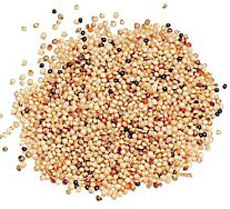
Pronounced KEEN-wa or KEE-noo-ah. Quinoa contains more high-quality protein than any other grain. A broad-leafed, annual herb, quinoa grows wild in the Andes Mountains of South America. It also has been cultivated for thousands of years, dating back to the Incas, who called it the “mother grain.” When mature, this tall, handsome plant is topped with large plume-like seed heads that range in color from vivid red, orange or yellow to black or white. Before being eaten, quinoa seeds must be processed to remove their bitter coating of saponin. After washing or dry polishing, the ready-to-cook seeds are white or beige in color. Quinoa’s spinach-like leaves and its seeds are highly nutritious. The leaves, which unfortunately seldom reach the consumer, may be eaten raw in salads or cooked like spinach. They are high in vitamin A. The more readily available seeds are rich in protein, high in fiber, and particularly rich in the amino acid lysine. Quinoa seeds are also good sources of calcium, phosphorus, and vitamins B and E. Cooked quinoa is delicious and extremely versatile because it may be used in the place of almost any other grain, including rice, to make everything from appetizers to desserts. You can even substitute it in your favorite recipe for rice pudding!
RED BEAN or SMALL RED BEAN
A redish-brown bean which can easily be mistaken for the adzuki bean, except that it has a white eye instead of a white stripe. They are commonly used for Mexican refried beans.
RICE
The staple grain of two-thirds of the world’s population, rice is a grass that originated in southeast Asia and Africa. Domesticated rice comes from two species in the Poaceae (“true grass”) family, Oryza sativa and Oryza glaberrima. O. sativa appears to have been domesticated from wild Asian rice around the foothills of the Himalayas, yielding the short-grained “japonica” or “sinica” varieties (Japanese rice), the long-grained “indica” varieties (basmati rice) and the broad-grained “javonica” varieties. O. glaberrima comprises the native African rices, which are being replaced in Africa by the introduction of the preferred Asian species. See our complete Rice Glossary for more than 45 rice terms.
SCARLET RUNNER BEAN
A beautiful tan and black bean, this bean looks handsome on a plate or in a jar as kitchen decor.
SEMOLINA
Semolina is the gritty, coarse particles of wheat left after the finer flour has passed through a bolting machine, and is used to make pasta. Also known as rava in South India, an essential product in an Indian kitchen, called Indian semolina.
SOY NUTS or ROASTED SOYBEANS
These soybean seeds are enjoyed as snacks or to garnish salads or vegetable dishes.
SPELT or FARRO
Another ancient and an ancestor of modern wheat. The small, light brown grain looks like a cross between brown rice and barley and has long been a staple in Northern Italy. Its distinctly nutty taste and sturdy texture make it a good partner to blend with hearty ingredients in soups, stews—and salads.
TEFF or ANNUAL BUNCH GRASS or LOVEGRASS
Believed to have originated in Ethiopia between 4,000 and 1,000 B.C.E., teff seeds were discovered in a pyramid thought to date back to 3,359 B.C.E. The grain has been widely cultivated and used in the countries of Ethiopia, India and its colonies and Australia. Teff is grown primarily as a cereal crop in Ethiopia, where it is ground into flour, fermented for three days then made into enjera, a sourdough-type flat bread. It is also eaten as porridge and used as an ingredient of home-brewed alcoholic drinks. The grass is grown as forage for cattle and is also used as a component in adobe construction in Ethiopia. At this time it is not widely known or used in the U.S., though it is cultivated in South Dakota and Idaho and is available in many health food stores. The word teff is thought to have been derived from the Amharic word teffa which means lost, due to small size of the grain and how easily it is lost if dropped. It is the smallest grain in the world, measuring only about 1/32 of an inch in diameter and taking 150 grains to weigh as much as one grain of wheat. Because the grains of teff are so small, the bulk of the grain consists of the bran and germ. This makes teff nutrient-dense, as the bran and germ are the most nutritious parts of any grain. Teff has a very high calcium content, and contains high levels of aluminum, barium, copper, iron, phosphorous and thiamin. It is considered to have an excellent amino acid composition, with lysine levels higher than wheat or barley. Teff is high in protein, carbohydrates and fiber. It contains no gluten so it is appropriate for those with gluten intolerance.
URAD DAL or BLACK LENTILS or ULUTHAM PARUPPU
These are black lentils that have been split and skinned (becoming off-white in color), a popular legume which is widely used all over India for making dal or soups. Urad dal, along with rice, is used to make dosas, the crisp pancakes of southern India and also to make pappadums. In South India, urad dal is used as a seasoning with mustard seeds and for curries.
YANKEE BEAN
See Navy Bean.
WHOLE GRAIN
Products made with the whole kernel or grain, which consists of three components: the bran, endosperm and germ. The bran (outer layer) contains the largest amount of fiber, the endosperm (middle layer) contains mostly protein and carbohydrates along with small amounts of B vitamins, and the germ (inner part) is a rich source of trace minerals, unsaturated fats, B vitamins, antioxidants and phytochemicals.
Content researched from:
© Copyright 2005-2008 Lifestyle Direct, Inc. All rights reserved. Images are the copyright of their respective owners.

|
 |
|
|