Advertisement
THE NIBBLE (TM) - Great Finds for Foodies (tm)
  Sign Up | Contact Us | Email To A Friend  
       
RSS feed What’s This?


Champagne
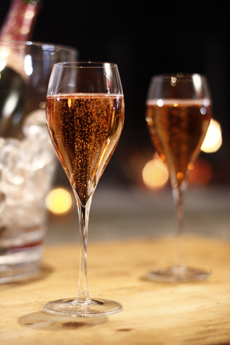
Call them bubblies, call them sparklers—they’re celebration wines. Photo by Kilián Zsuzsanna| IST.
MENU


Wine

Category Main Page
Articles & Reviews


Main Nibbles

Main Page
Articles & Reviews Of Foods From A To Z


Product Reviews

Main Page
Food, Beverages, Books,
News & More


ABOUT THE AUTHOR


R. VERONIQUE FITZGERALD is wine consultant and writer in New York City.


December 2007

Product Reviews / Main Nibbles / Wine

Champagne & Sparkling Wine

Holiday Sparkle


CAPSULE REPORT: If you’re planning to purchase some sparkling wine for the holidays or New Year’s Eve, read this before shopping.

Introduction: Sparkling Wine

Traditionally, Champagne is the preferred sparkling wine for celebration. While they can vary in style and be delicious, don’t limit yourself to the world’s most famous bubbly. There is a host of alternatives from all over the wine world that can grace your parties and fill your glasses raised in toast; and in most cases, they are a lot less expensive than Champagne.

How to Sparkle

All bubblies start out as still wine, usually known as a base wine. Various traditions specify a particular art in blending the base wine. The quality of that wine is all-important, because once the wine is made to sparkle, its characteristics (good or bad) are amplified. While they all involve trapping carbon dioxide to be absorbed into the wine and bottling under pressure, there are several different methods to achieve the finished product. 

Traditional Method

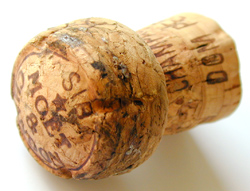
Also known as the Champagne Method, Methode Traditionnel or Methode Champenoise, the difference between sparkling and still wine involves a second fermentation that takes place inside the very bottle you purchase the wine in. Once Champagne Corkbottled, the base wine is inoculated with a mixture of sugar and additional yeast and sealed with the crown cap used for beer bottles. Just as in the first fermentation, the yeast eats the sugar and creates alcohol and CO2 as byproducts. In the process, the alcohol level is boosted another 1% or so, and unlike in the first fermentation, the CO2 is trapped and allowed to dissolve into the wine. A period of bottle aging follows, during which time the dead yeast cells, known as lees, contribute another layer of flavor. Bottle aging can last anywhere from 9 to 15 months to as long as 5 to 10 years. The lees are subsequently removed in a process called disgorgement, the Champagne is topped up with a mixture of wine and sugar syrup known as dosage and the familiar mushroom-shaped cork is inserted with a wire cage to hold it down. 
Photo courtesy of freeimages.co.uk.

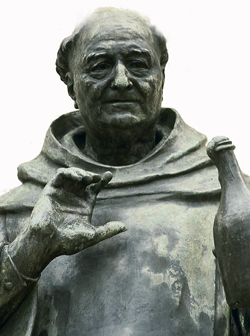
The popular myth that the monk Dom Pierre Pérignon created sparkling wine in the Champagne region by accident (picture exploding wine bottles in a well-stocked cellar) is just that. A hundred years after his death, marketing people created the story, with the good father taking his first sip and stating, “I am drinking the stars.” Nonetheless, Dom Pérignon did devote his life to improving the quality of the region’s still wines, introducing vineyard and winery practices still in use worldwide today. The widow (or in French, Veuve) Clicquot Ponsardin perfected the Champagne method by creating the process called remuage, which makes it possible to remove the dead yeast from the bottles without losing a lot of wine in the process. 

While other regions of the world can use the same process. Champagne is known for its toasty, yeasty flavors, achieved because of its unique terroir—the limestone strata underneath the topsoil of the region. Caveat emptor: Champagne is a product of an eponymous region in France. In the European Union, it is illegal for any sparkling wine made anywhere else to have the word Champagne on its label, even bubblies from other parts of France. But this law doesn’t apply outside Europe; so do read labels carefully when buying Champagne. 

Guidelines For Buying Champagne

  • The rule of thumb: If it’s imported from France and it says Champagne, its Champagne.
  • Vintage Champagne is usually more expensive than its nonvintage (NV) counterparts. Three great vintages currently on the market are the classic 1996 and the very good 1997 and 1998. Classic means it was a textbook vintage: All of the elements are in place and harmonious. If you can find it, 1990 was also a classic vintage. Krug 1990 is still around, usually for a mere $250.00. 
  • Rosé Champagne, the only rosé in France that can be made from blending red and white wines (other rosés are made strictly from red grapes whose skins are removed from the juice before all the color has infused), also tend to be more expensive and more full-bodied than their white counterparts. Don’t confuse these with “Pink Champagne,” which is not French and is colored pink, rather than allowing a natural color extraction from the grape skins.

Rose Champagne
Dom Pérignon Rosé Champagne.

  • Blanc de Blanc Champagne is 100% Chardonnay. It tends to be very austere—lean and dry—because it is the blending of the Pinot Noir grape with the Pinot Chardonnay grape that contributes the fruitiness to Champagne. 
  • Blanc de Noir Champagne can be made exclusively from Pinot Noir, or a blend of Pinot Noir and Pinot Meunier. Blanc de Noir (“white of black”) is a white wine, sometimes with a very slight blush to it.   
  • Champagne varies in sweetness. The sweetness of the dosage that is added before corking creates the level of sweetness (or dryness) of a Champagne. The word brut on the label means dry. Brut, Extra Brut and Brut Nature (little or no dosage) are the driest styles. Sweet Champagnes are hard to find, but they can be identified by the words Extra Sec (Extra Dry) Sec, Demi Sec and Doux. They go well not just with dessert, but with courses like foie gras that are traditionally paired with sweeter wines. By the same token, a very dry Champagne is not a good match for a sweet dessert. It would pair with anything a dry white wine would go with.
  • Champagne house styles vary; so one house’s Brut can be another house’s Extra Dry. Each has its own blending recipes, so the best way to discover a style you like is to taste various brands. 

Recommended Champagnes


Here’s a delicious selection; prices will vary by marketplace and retailer. Buy one of each and have a tasting on New Year’s Eve. Be sure to try a Champagne you haven’t tried before. If you start your selection before Thanksgiving, all of the selections may not yet be out. Talk to your retailer about what will be stocked for the holidays. Don’t feel the need to purchase a vintage year. True wine connoisseurs appreciate the nonvintage (NV) years equally. In a vintage year, by law, the wine can only be made from the grapes of the vintage; that’s why the taste varies from vintage to vintage. In a nonvintage year, the vintner carefully blends wines from different years to create “the perfect blend.” It’s always enjoyable to taste a vintage Champagne next to its nonvintage sibling. The only challenge is, since there’s no date on the bottle, you have no idea how old the wine is if you lay it down in your cellar. Nonvintage Champagnes from top houses benefit from bottle age as well.

Taittinger Prelude NV Champagne
$50.00
TaittingerFrom the well-respected house of Taittinger comes this special bottling. A little more elegant than the ubiquitous non-vintage brut, Prelude is light and crisp, slightly creamy with lovely fruit and gorgeous balance. I highly recommend this one to start a holiday meal, as the refreshing acidity can stimulate the palate in preparation for the inevitable onslaught of flavors that are sure to follow. 
Available at 800wine.com.

Alfred Gratien Brut Classique NV
$40.00

There are scores of small producers whose Champagnes are competitively priced with the big brands; they often offer better quality at better prices. Alfred Gratien is certainly one for great quality for the buck. It has a pretty floral nose with crisp green apple on a silky palate. Gratien ages this NV brut in 15-year-old barrels to achieve a creamy texture without the intrusion of oak flavor. 

Alfred Gratien Millésime (Vintage) 1998
$90.00 to $100.00

Aged in its natural cork (not a crown cap), this vintage brut also has lovely fruit and crisp acidity. The complexity is impressive and it has the body to contribute to a main course dish of game or red meat.  The 1998 is not in stores just yet, but using WineTracker.com, we found the equally delicious 1997 vintage is available in three states. Table and Vine in Northampton, Massachusetts has both the 1990 and 1996 vintages for $90.00—a bargain for these classic vintages, if they were stored well. 

Sparkling Wines

Some wineries in California, upstate New York and other places in the U.S. continue to use the word Champagne on their labels, instead of calling their products sparkling wine, despite the fact that Champagne has Protected Designation of Origin (PDO) status from the European Union. While the U.S. recognizes this, a statute* allows longtime domestic producers to continue to use the term under specific circumstances. However, it is the public that is ultimately misled, when trying to reconcile the flavors and aromas of true Champagne with so-called products from other companies. While the only grapes permitted into PDO Champagne are Chardonnay, Pinot Noir and Pinot Meunier, American “Champagne” (and that made in other countries besides France) can be made from any grape the producer chooses. They do not have to be made by the traditional method.

*Section 5388(c) of Title 26 of the United States Code.

Yet, there are some fantastic American bubblies made in the traditional method, often from the traditional grape varieties, some by Champagne houses who have set up wineries abroad. These wines will not have the word Champagne on their labels, out of Carnerosrespect for the PDO, and can be relatively less expensive than the “real thing” while offering a quality experience. Here are a few of them. 

Domaine Carneros by Taittinger
Brut 2003
$22.00
to $28.00
Made in Napa, California by the great French Champagne house of Taittinger, and aged in bottle three years before release, Domaine Carneros Brut is consistently complex and rich with great mineral and earthy characters layered with berry fruit. The 2003 vintage is no exception. Vintages as late as 2004 are available, and a Tarzana, California store still has the 1997 in stock. If you’re headed to Napa, a visit to the Domaine Carneros château in Carneros is an event. Sit on the terrace overlooking manicured landscape in the front and vineyards all around and live the good life vicariously for a few hours.  You also can taste their line of Pinot Noirs, some of which are not available outside of the winery. 

Roederer Estate Anderson Valley NV
$16.00 to $20.00

The great French Champagne house of Louis Roederer (makers of the iconic tète de cuvee Cristal) set down roots in California decades ago. This non-vintage brut made from grapes grown in Mendocino County shows the forward fruit of a California wine, but all the elegance and balance of a good Champagne.

Roederer Estate Vintage Brut, L’Ermitage
$40.00 to $60.00
The vintage brut, L’Ermitage, is definitely a step up in complexity and elegance. Vintages ranging from 1998 to 2000 are available for around $40.00. Cellar 91 in Portland, Oregon has the 1996 in Magnum for $89.00. 

Gruet New Mexico NV
$13.50

The French firm of Gruet et Fils had been in the Champagne business for 31 years when Gilbert Gruet happened upon a golden opportunity in Engle, New Mexico. Near the town of Truth or Consequence (we don’t make this up), there lay acres of inexpensive land that had already been tried and proven for grapevines by other winemakers. In 1984, Gruet planted an experimental vineyard and subsequently relocated two of his children to New Mexico to supervise their winemaking tradition. The result is a very reasonably-priced, traditional-method bubbly, medium bodied and silky, with citrus fruit and a toasty finish. Half bottles are available for around $7.00. The wine is widely available in the northeast and California (and, of course, New Mexico). 

Cava
Spain
Traditional method wines outside Champagne are epitomized by Cava, the Catalan bubbly sold at a fraction of the price of Champagne. Freixenet, recognized by its iconic black bottle, is the number one brand of Cava in the U.S. Other names worth finding are Segura Viudas, Raventos and Cristalino. These usually don’t have as much character and body as Champagne does, but at $10.00 or so a bottle, are the best choice for mimosas and Bellinis.  See the recipe below.

FIND IDEAS FOR COCKTAILS IN OUR
COCKTAILS & SPIRITS SECTION


Bellini Recipe

Try this Bellini recipe from The Ultimate A-To-Z Bar Guide by Herbst & Herbst.

Ingredients

  • 1 medium ripe peach, peeled and puréed or 3oz peach nectar
  • 4 to 6 ounces ice-cold dry sparkling wine

Preparation

  1. Pour the peach purée into a chilled Champagne flute. 
  2. Slowly pour the sparkling wine over the peach purée. Pouring the bubbly over the back of a teaspoon, so it floats on top of the peach purée creates, a beautiful layered effect. Stir once, gently, before drinking—vigorous stirring breaks the wine bubbles. 

More Traditional Method Wines


Gratien & Meyer Saumur Blanc Brut NV
$15.00
From Alfred Gratien’s Loire Valley winery comes a selection of sparklers, properly classified as Crement de Loire. The Saumur Blanc Brut NV, made from Chenin Blanc, is mineral and earthy, not as silky as the Champagne, but well balanced and intriguing nonetheless. 

Penley Estate Coonawarra Traditional Method 2001
$25.00 to $33.00
Here’s a great traditional method rosé sparkler from Australia’s Limestone Coast Zone, a blend of 85% Pinot Noir and 15% Chardonnay. Salmon colored with ripe strawberries on the nose and a light, fruity profile, this bubbly is beautifully balanced and very tasty. It provided a great contrast to the pepperoni pizza I was dining on the evening I tasted it: It cleaned the palate after every rich, salty bite with fresh fruit and crisp acidity. Beware of older vintages; the 2001 seemed to be drinking at its peak this year, a 1997 might be in good condition if it were carefully stored. 

Prosecco

Prosecco is made by the Tank Method, also known as the Charmat process (named for its inventor), bulk method, cuve close (French for sealed tank), granvas (Spanish) or autoclave (Italian). The second fermentation happens in a stainless steel tank and the result is bottled under pressure. This is a much less expensive way to do the job, and wines made by this method are less expensive than traditional method bubblies. The bubbles tend to be less integrated, larger and coarser, and they usually dissipate faster.  

One of the most fun tank method bubblies to drink is Prosecco. Hailing from northeast Italy’s Veneto region just west of the township of Conegliano, Prosecco is also the name of the grape variety from which the wine is made. It is often labeled Prosecco di Conegliano Valdobbiadene, after its appellation. The wine can be frizzante (just slightly fizzy, sometimes bottled with a regular cork to be opened with a corkscrew) or spumante (very fizzy, bottled with the mushroom-style cork and cage or something similar), like Moscato di Asti and Asti, respectively. 

Fantinel Prosecco Extra Dry NV
$10.00 to $15.00

This Prosecco is fresh and crisp, with a typical lavender-laced aroma and just a spot of sweet blueberry and blackberry fruit. It’s widely available at around $10.00 a bottle. Other great Prosecco brands include Carpene Malvolti, Zardetto, Riondo, Mionetto and Bartenura (which is kosher—the company also makes kosher Asti).

Many of these Prosecco houses also make pink bubblies that cannot be labeled Prosecco. Prosecco is a white grape; the pink bottlings are often made from Pinot Noir. The rosés tend to be as much as $5.00 more per bottle, still cheaper than rosé Champagne by far.

If it’s red bubbly you want for Christmas, see my June 2007 article, Summer Red Wines to learn about Brachetto d’Acqui.  Also, try a sparkling Shiraz from Paringa or Fox Creek. While these are normally dry, they usually have that jammy Shiraz fruit that makes them nice to drink. Expect to spend $13.00 to $18.00 a bottle on sparkling Shiraz. 

Enjoy these bubblies at your holiday parties and dinners and to toast the New Year! 


© Copyright 2005-2008 Lifestyle Direct, Inc. All rights reserved.  Images are the copyright of their respective owners.


.