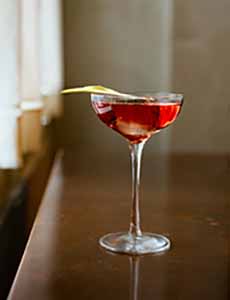
 Simple syrup is used for sweet cocktails. Sanding sugar can be used to decorate the rim. (photo © Edward Howell | Unsplash). Simple syrup is used for sweet cocktails. Sanding sugar can be used to decorate the rim. (photo © Edward Howell | Unsplash).
November 2006
Last Updated July 2026
|
|
Types Of Sugar List: A Glossary Of Sugar & Syrup Types
Page 6: Simple Syrup (Sugar Syrup) & Other Terms With S
This is Page 6 of a seven-page glossary, a list of types of sugar. Click on the black links below to visit other pages. And find many more food glossaries—learn more about your favorite foods.
This material is copyrighted and cannot be reproduced in whole or in part
without written permission. You are welcome to link to it.
SANDING SUGAR or DECORATING SUGAR or NIBBED SUGAR or PEARL SUGAR or SUGAR NIBS
A granulated sugar processed to have granules that sparkle, for use on cookies, cupcakes, candies (most famously, Marshmallow Peeps), sweet breads, and other baked goods. It is made in white as well as a rainbow of colors.
Like sparkling sugar (below), it is a decorating sugar. But there are differences, primarily in the size of the grain. Sanding sugar is much finer, with a smaller grain.
|
|
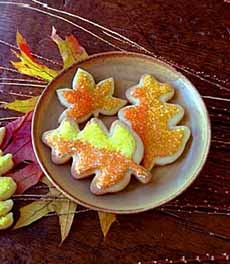
Sanding sugars (both photos © India Tree). |
The most noticeable difference is the physical size of the grain. Sparkling sugar is chunkier and provides a more substantial crunch, whereas sanding sugar is finer and offers a gentle crystalline finish. Sanding sugar is the go-to for professional-looking, refined finishes on delicate pastries and holiday cookies, while sparkling sugar is typically used for heavy-duty toppings that need to stand out on rustic baked goods. Bakers choose between them based on the specific look they want: soft and shimmering (sanding) versus bold and bright (sparkling).
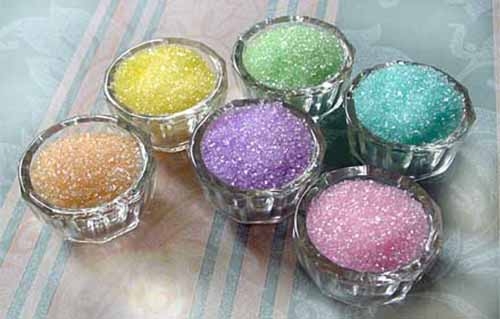
A rainbow of sanding sugars from India Tree.
SIMPLE SYRUP or SUGAR SYRUP or BAR SYRUP
Simple syrup is used in cocktails instead of granulated sugar (even superfine sugar), which does not dissolve well in cold liquids. It is made with a 1:1 proportion of sugar to water. There are many flavored sugar syrups on the market. You can flavor your own with vanilla, liqueur, etc. for drinks, to brush on cake for more flavor, and to sweeten tea and coffee—iced or hot. Here’s a simple syrup recipe so you can make your own. See also bar syrup.
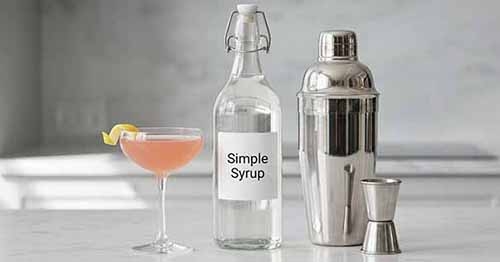
Simple syrup: a simple mix of half sugar, half water (photo: The Nibble).
There are two more versions of simple syrup. The first is rich simple syrup, also called double simple syrup: a very thick, high-concentration simple syrup, with a concentration of 2:1 sugar to water ratio. It’s used for the texture and viscosity; a lesser proportion of water prevents the drink from becoming over-diluted as the crushed ice melts.
There’s also semi-rich syrup, a 1.5:1 ratio of sugar to water.
SORGHUM SYRUP or MOLASSES
Sorghum is a grain similar to corn that makes a syrup similar to molasses that is popular in the southern United States. It is used as a condiment as well as in recipes instead of molasses.
SPARKLING SUGAR
Sparkling sugar is large crystals of granulated sugar that are processed to add sparkling beauty and crunch—plus a touch of sweetness—to cakes, cookies, muffins, quick breads, scones, and sweet breads. They can be added to a pie crust as well. The large-grained sugar won’t melt and disappear as it bakes. See Sanding Sugar, above, for the difference between the two.
SPECIALTY SUGAR
A term given to all of the sugars beyond the traditional supermarket types (brown, cube, confectioner’s, granulated, and superfine sugars). These include the raw sugars such as demerara, muscovado, and turbinado; decorated sugar cubes; and other products.
|
|
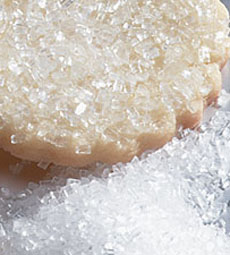
Sparkling sugar from King Arthur Flour.
|
SPUN SUGAR
Spun sugar turns granulated sugar, corn syrup, and water into gossamer threads that are used to decorate cakes, pastries, and other desserts. The firm, slender strands are like crunchy caramel candy in the mouth.
SQUASH or CORDIAL
In the U.K. and Ireland, this is a concentrated, usually fruit-based, syrup to which water is added to produce a drink of the same name. Apple, blackcurrant, lemon, lime, and orange are popular flavors, followed by kiwi, peach, and strawberry. (In the West Indies, “squash” refers to a lime juice drink, similar to lemonade.)
|
|
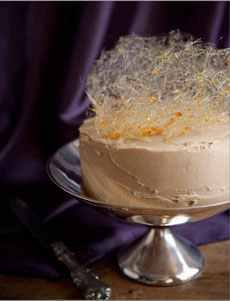
Spun sugar atop a layer cake. Photo courtesy Birthday Cakes | Rizzoli.
|
STEVIA
Stevia is the product made from Stevia rebaudiana, a perennial herb in the sunflower family, native to South America. It has been used for centuries as a natural, zero-calorie sweetener. The first brand to enter the U.S. market was SweetLeaf in 1982 through health food stores. The largest brands in the U.S. are Truvia, owned by Cargill, and PureVia, owned by PepsiCo. Like saccharine and some other sweeteners, stevia is available in liquid, tablets, loose powder, and packets of powder. Here’s more about artificial sweeteners.
| |