Gourmet Chocolate House Tour
A Guide To The World’s Great Chocolate Houses
On our first tour, in 2005, we visited these great chocolate producers (in alphabetical order):
Amedei (Italy), Chocovic (Spain), Domori (Italy), El Rey (Venezuela), Michel Cluizel (France),
Pierre Marcolini (Belgium), Pralus (France), Scharffen Berger* (U.S.), and Valrhona‡ (France).
*Kosher †Organic ‡Some Organic Items
In 2006, our tour took us to Bonnat* (France) Dagoba*† (U.S.), Guittard* (U.S.),
Plantations (U.S.) and Santander* (Colombia).
ON THIS PAGE:
 United States United States
 Scharffen Berger Scharffen Berger
Fruity • Smooth • Light Roast • Kosher
Historic Capsule
Scharffen Berger was founded by long-time friends Robert Steinberg and John Scharffenberger. Robert, previously a family physician, quit his practice and studied with patissier-chocolatier Jean Louis Bernachon in Lyon to fulfill his culinary curiosity. John, owner of the successful winery Scharffenberger Cellars, sold his business. The two joined forces with the sole intent of creating American chocolate that rivaled the best from Europe. In 1996, they started to experiment in the kitchen, roasting over 30 varieties of cacao and producing crude chocolate with a coffee grinder, mortar and pestle, and a hair dryer. The following year, they produced their first batch of chocolate using vintage European equipment. Further experiments finalized a consistent formulation. Relying solely on word-of-mouth advertising, Scharffen Berger has grown into a huge name in the chocolate industry and indeed produces chocolate that rivals the best from Europe.
 What To Know Before You Go What To Know Before You Go
Scharffen Berger’s flavor profile is light, sharp, and fruity—all characteristics of a light roaster. A common red fruit tone is shared by the bars, but the flavor varies according to percentage of cacao. For those who really appreciate fruity chocolate, Scharffen Berger will hit the spot. The texture is excellent, with a smoothness that rivals Smooth Champion Valrhona.
Points of Interest
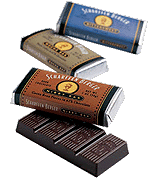
Scharffen Berger offers bars made of of complex blends from beans sourced from various locations.
- The 62% is sweet, with a round and fresh flavor; while the 70% is intense and sharp, for those who prefer a stronger approach. The 82% is deep and vibrant with an exceptional bitterness. The 41% bar is “dark milk chocolate,” for the milk chocolate lover seeking the depth of dark chocolate with the creaminess of a milk chocolate.
-
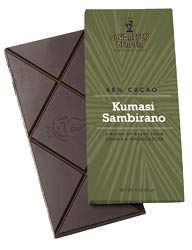 Scharffen Berger produces single origin bars in extremely limited quantities. Past selections have included Cuyagua 75%, Jamaica à l’Ancienne 70% and Porcelana 75%. If you’re lucky enough to come across them, do not hesitate to pick one up because it might be your only chance (while they are in stock, they are always available on the company website). In 2006, Jamaica à l’Ancienne 70% has returned along with two other bars. Kumasi Sambirano 68% is a Pan African bar, highlighting the different flavors of beans sourced from the Ashanti region of Ghana and the Sambirano Valley of Madagascar. The flavors are well-balanced, with low tannins and an earthiness characteristic of Ghanaian cacao. The Madagascar beans bring a hint of brightness and mild acidity. The Las Islas 72% bar is a blend of Caribbean beans from the Dominican Republic, Jamaica and Trinidad, yielding citrus notes with hints of orange peel and a long, smooth finish. Scharffen Berger produces single origin bars in extremely limited quantities. Past selections have included Cuyagua 75%, Jamaica à l’Ancienne 70% and Porcelana 75%. If you’re lucky enough to come across them, do not hesitate to pick one up because it might be your only chance (while they are in stock, they are always available on the company website). In 2006, Jamaica à l’Ancienne 70% has returned along with two other bars. Kumasi Sambirano 68% is a Pan African bar, highlighting the different flavors of beans sourced from the Ashanti region of Ghana and the Sambirano Valley of Madagascar. The flavors are well-balanced, with low tannins and an earthiness characteristic of Ghanaian cacao. The Madagascar beans bring a hint of brightness and mild acidity. The Las Islas 72% bar is a blend of Caribbean beans from the Dominican Republic, Jamaica and Trinidad, yielding citrus notes with hints of orange peel and a long, smooth finish.
Not to be Missed
The 41% milk chocolate bar. Its strength and flavor are awesome, comparable even to some of the finer dark bars.
If you’re in San Francisco, be sure to take the tour of the Scharffen Berger factory in Berkeley and watch chocolate being made. You can dine at their delicious Cafe Cacao as well. Make reservations on the website.
Learn more about Scharffen Berger
and purchase the chocolates at Scharffenberger.com.
Scharffen Berger chocolate is certified kosher by the Orthodox Union. |
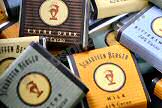
Instead of breaking up bars, five-
gram squares, also called palets,
are good for taste comparisons.
|
 Dagoba Dagoba
Organic • Dried Fruits • Caramelized • Kosher
Historic Capsule
 Dagoba (pronounced duh-GO-buh) was founded in 2001 by its “head alchemist,” Frederick Schilling. With a philosophy that states, “You can deprive the body, but the soul needs chocolate,” Dagoba produces some of the most outstanding organic chocolate this side of the cacao tree.* This Oregon-based company uses exclusively Certified Organic ingredients, paying great care to the cacao, which is sourced from the Caribbean and Latin America. The cacao is forest grown, meaning that it is cultivated among a diverse ecosystem of indigenous rainforest plants so that some of the world’s most vulnerable and biodiverse environments are preserved. In addition, Dagoba works directly with cacao producers to ensure equitable prices and ethical trade. In fact, Dagoba was the first U.S. chocolate manufacturer to offer Fair Trade Certified products. Although young in years, the company has received much attention. Dagoba (pronounced duh-GO-buh) was founded in 2001 by its “head alchemist,” Frederick Schilling. With a philosophy that states, “You can deprive the body, but the soul needs chocolate,” Dagoba produces some of the most outstanding organic chocolate this side of the cacao tree.* This Oregon-based company uses exclusively Certified Organic ingredients, paying great care to the cacao, which is sourced from the Caribbean and Latin America. The cacao is forest grown, meaning that it is cultivated among a diverse ecosystem of indigenous rainforest plants so that some of the world’s most vulnerable and biodiverse environments are preserved. In addition, Dagoba works directly with cacao producers to ensure equitable prices and ethical trade. In fact, Dagoba was the first U.S. chocolate manufacturer to offer Fair Trade Certified products. Although young in years, the company has received much attention.
*For further enlightenment, a dagoba is a a dome-shaped Buddhist shrine that contains relics.
What to Know Before You Go
Dagoba’s chocolate is characterized by a medium tone, highly indicative of its Central/South American and Caribbean origins and preference for a medium, roast. Whichever bar you taste, your palate will not be weighed down by thickness or dark flavors. Dagoba produces an impressive array of flavored bars, either infused or studded with ingredients ranging from chai spice to coconut to cranberries. Unflavored bars, both blended and single origin, enable the student of chocolate to study and contrast Dagoba’s world of fine chocolate. Cacao aside, perhaps the most noticeable and important ingredient in each bar is stated last on the list of ingredients: “love.”
Points of Interest
Blends and Flavored Bars
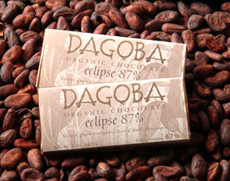 If Dagoba didn’t already delight the world with its fine-quality organic chocolate, the flavored specialty bars would have captured the imagination and the heart. The Mint 59% bar has not just mint but rosemary; the Hazelnut 37% bar adds rice crisps. Roseberry 59% has raspberries and rosehips, Lavender 59% has blueberries, Lime 59% adds macademia nuts. Chai 37% has not just chai spices but crystallized ginger. To taste the cacao in its unadulterated splendor, Dagoba offers a wide selection of unflavored dark bars. The Dark 59% bar, which is the base for all of the flavored dark bars, is gentle and offers notes of dried fruits, while the New Moon 74% is slightly sharp and fruitier. Eclipse 87% is their strongest offering, with an intense flavor with natural accents of cloves and mint. If Dagoba didn’t already delight the world with its fine-quality organic chocolate, the flavored specialty bars would have captured the imagination and the heart. The Mint 59% bar has not just mint but rosemary; the Hazelnut 37% bar adds rice crisps. Roseberry 59% has raspberries and rosehips, Lavender 59% has blueberries, Lime 59% adds macademia nuts. Chai 37% has not just chai spices but crystallized ginger. To taste the cacao in its unadulterated splendor, Dagoba offers a wide selection of unflavored dark bars. The Dark 59% bar, which is the base for all of the flavored dark bars, is gentle and offers notes of dried fruits, while the New Moon 74% is slightly sharp and fruitier. Eclipse 87% is their strongest offering, with an intense flavor with natural accents of cloves and mint.
Singling out the Best in Organic Chocolate
Four single origin chocolates are also available. Conacado 73% from the Domincan Republic. It is Fair Trade Certified from the Conacado Cooperative and is made without soy lecithin to highlight its rustic origins. Pacuare 68%, a Costa Rican cru, shares head notes of olives and is followed by caramel, yellow raisins, and hints of tropical fruits; Milagros 68%, hailing from Peru, is the most delicate and has dominant sweet orange notes with accents of banana, dried fruits, and spice; and finally, Los Rios 68%, an Ecuadorian Arriba, has a hearty mystique of burly leather and strong floral tones. Each chocolate varies in roast, since some are heavier than others, but the lighter nature of the beans certainly shines through; it’s a delicate touch on the tongue that reflects the gentle and fragile biodiversity from whence the cacao was grown. This is truly forest cacao in its purist glory.
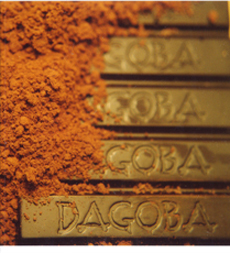
Dagoba also produces a vast array of other products, such as natural* cocoa powder, some of the best cacao nibs on the market, plain and coated, made from Arriba Nacional beans, various hot chocolate mixes, dragées, and chips and couverture for baking and making one’s own chocolates.
*Natural cocoa powder is cocoa powder that has not been Dutched, i.e., treated with an alkaline to remove acidity and bitterness. Non-Dutched cocoa powder possesses a heartier and more natural chocolate flavor.
Not to be Missed
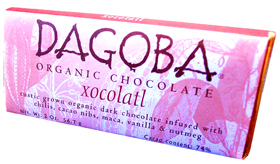 Xocolatl. This 74% chocolate possesses a fiery kick, wonderful flavor and a crunchy texture caused by the added cacao nibs, chilies, maca (a Peruvian root), nutmeg and vanilla. One of the better spiced chocolates available. (Xocolatal, pronounced cho-ko-LA-tel, is the Nahuatll (Aztec language) word for chocolate. The Aztecs drank their chocolate, spiced with chiles, nutmeg and vanilla and thickened with starch like maca—but they had no indigenous sweetener! Honey didn’t arrive until the Conquistadors and European colonists; sugar cane came later, from Asia to Spain to the West Indies.) Xocolatl. This 74% chocolate possesses a fiery kick, wonderful flavor and a crunchy texture caused by the added cacao nibs, chilies, maca (a Peruvian root), nutmeg and vanilla. One of the better spiced chocolates available. (Xocolatal, pronounced cho-ko-LA-tel, is the Nahuatll (Aztec language) word for chocolate. The Aztecs drank their chocolate, spiced with chiles, nutmeg and vanilla and thickened with starch like maca—but they had no indigenous sweetener! Honey didn’t arrive until the Conquistadors and European colonists; sugar cane came later, from Asia to Spain to the West Indies.)- Los Rios. A wonderful interpretation of this oft-attempted origin, Dagoba does Arriba justice by delivering a truly delicious chocolate with lavender and berry top notes.
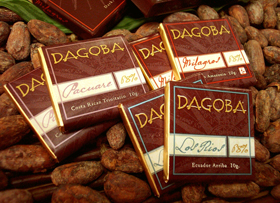
Tasting squares of Dagoba’s origin chocolates. |
Learn more about Dagoba
and purchase the chocolate at DagobaChocolate.com.
Dagoba chocolate is certified kosher by the
Orthodox Union.
|
 Guittard Guittard
Classic • Diversified• Complex • Kosher
Historic Capsule
Guittard is a giant in today’s chocolate world and one of America’s oldest companies producing from the bean. In 1860, Etienne Guittard immigrated to America from France, and at the young age of 22, he was already a skilled chocolatier. Seeking to continue the French tradition of chocolate-making in America, Etienne traveled for provisions and supplies, importing beans from Peru. In 1868, he opened Guittard Chocolate on Sansome Street in San Francisco. As years passed, the company continuously grew, thriving on the success their products achieved in the retail, confectionary and pastry markets. Now, fourth-generation Gary Guittard continues the tradition begun by his great-grandfather almost 140 years ago.
What to Know Before You Go
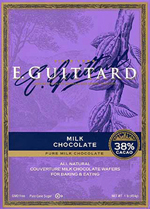 The first thing one might notice in Guittard’s chocolate is the texture. It is not as velvety as other bars on the market, which could be attributed to lower amounts of cocoa butter or less conching. However, the intensity and complexity of the chocolate are not subdued at all, which clearly shows Guittard’s mastery of balance and control. Each chocolate is teeming with its own unique flavor profile, which in the end makes Guittard an excellent choice for practically any dessert application. In fact, while the company is a relative newcomer in the bars-for-eating market, it has been a favorite among artisan chocolatiers. As a couverture chocolate, it is exquisite. The first thing one might notice in Guittard’s chocolate is the texture. It is not as velvety as other bars on the market, which could be attributed to lower amounts of cocoa butter or less conching. However, the intensity and complexity of the chocolate are not subdued at all, which clearly shows Guittard’s mastery of balance and control. Each chocolate is teeming with its own unique flavor profile, which in the end makes Guittard an excellent choice for practically any dessert application. In fact, while the company is a relative newcomer in the bars-for-eating market, it has been a favorite among artisan chocolatiers. As a couverture chocolate, it is exquisite.
Points of Interest
To honor Guittard’s founding father, Etienne, the company launched the E. Guittard line, which celebrates the traditional French methods and original formulas on which the business was established (the label proudly proclaims, “vintage chocolate making in the French tradition.” After five years of extensive tasting and research, the first chocolates of the E. Guittard line was introduced in May 2001, with further additions in the following years. Chocolate in this line comes in various types and sizes, ranging from 2oz. bars to 1lb. boxes of chips to 2.2lb. couverture blocs. Some of these offerings are available for retail sale in the form of 2oz. bars, while others are sold in larger quantities for confectionary applications.
Single Origin
The single origin chocolates come in four varieties, each of which is of 65% cocoa content. Ambanja, a Madagascan, is light on the palate with blueberry and spice head notes; Chucuri is a Colombian with enchanting jasmine notes balanced by a strong chocolatiness; Sur del Lago, a Venezuelan, is spicy and dark, highlighted by red fruits, floral notes, nuts, and raisins; and finally, Quevedo, an Ecuador, is the boldest offering, with a heavier body and notes of pound cake and blackberries. All of these chocolates are exceptional in every way conceivable and display a varied representation of American chocolate making.
Blends
Of course, blends are available as well, and come in a dizzying array of formats. L’Harmonie is a 64% blend of Criollo and 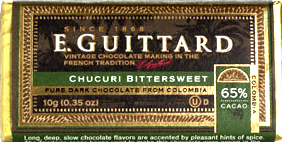 Trinitario beans and displays a comforting flavor of dried fruits, nuts, caramel, and a soothing chocolatiness. Soleil d’Or is a 38% milk chocolate with an incredible fresh cream flavor and matching texture to create an utterly unctuous experience. Also available are a Semisweet 61%, a Bittersweet 72%, and a Milk 38%. Additionally, chocolate drops of various blends are available mainly for confectionary use, but due to their convenient size, they are excellent choices for tasting or snacking purposes. In fact, the boxes state that they are “wafers for baking and eating.” Trinitario beans and displays a comforting flavor of dried fruits, nuts, caramel, and a soothing chocolatiness. Soleil d’Or is a 38% milk chocolate with an incredible fresh cream flavor and matching texture to create an utterly unctuous experience. Also available are a Semisweet 61%, a Bittersweet 72%, and a Milk 38%. Additionally, chocolate drops of various blends are available mainly for confectionary use, but due to their convenient size, they are excellent choices for tasting or snacking purposes. In fact, the boxes state that they are “wafers for baking and eating.”
Not to be Missed
-
Chucuri 65%. From the E. Guittard line, the definition of feminine chocolate, but the chocolaty backbone speaks boldly where the delicate jasmine flavor does not. Indeed, this is the best of both worlds, and a total delight to taste.
- Chocolate chips made of truly superb chocolate.
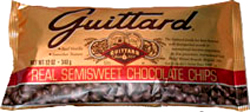
Finally: chocolate chips worthy of
your
baking efforts. |
Learn more about Guittard and purchase the chocolate at Guittard.com.
Guittard chocolate is certified kosher by the Orthodox Union.
|
 Vintage Plantations Vintage Plantations
Arriba Nacional • Floral • Rustic
Historic Capsule
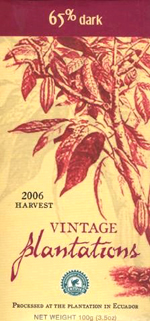 Plantations is a project coordinated by the combined efforts of Vintage Chocolates and the Rain Forest Alliance. Founded in 1993 by Pierrick Chouard, Vintage Chocolates started with a goal to protect heirloom cacao varietals, encourage rain forest preservation, and guarantee equitable wages to cacao farmers. The Rainforest Alliance is a conservation organization that strives to protect ecosystems and the people and wildlife that depend on them. Their social and environmental standards are strict so that the farmers can gain better access to healthcare, food, and education. As a result, the cacao is grown in harmony with the rainforest, without the use of pesticides or other harmful chemicals. Plantations’ cacao is exclusively grown in Ecuador. Plantations is a project coordinated by the combined efforts of Vintage Chocolates and the Rain Forest Alliance. Founded in 1993 by Pierrick Chouard, Vintage Chocolates started with a goal to protect heirloom cacao varietals, encourage rain forest preservation, and guarantee equitable wages to cacao farmers. The Rainforest Alliance is a conservation organization that strives to protect ecosystems and the people and wildlife that depend on them. Their social and environmental standards are strict so that the farmers can gain better access to healthcare, food, and education. As a result, the cacao is grown in harmony with the rainforest, without the use of pesticides or other harmful chemicals. Plantations’ cacao is exclusively grown in Ecuador.
What to Know Before You Go
Plantations’ chocolate is produced from Arriba Nacional* cacao, grown solely in Ecuador. Both vanilla and lecithin are excluded from the chocolate in order to present the cacao in the most unadulterated, “natural” form. Arriba has a naturally lower fat content than other flavor cacaos. As a result, it produces a slightly drier texture in the finished bar. To combat this, most manufacturers add extra cocoa butter, but in so doing, they usually reduce the chocolate’s intensity. The tone is almost as dark as one will encounter, with an intense, bold and hearty flair. The flavor is usually quite predictable but can vary according to roast, since shorter roasts leave the more delicate notes intact. In general, expect to find flavors of flowers, red fruits, berries, spice, coffee, cocoa and nuts. Only the 100% and 90% bars are produced without the addition of extra cocoa butter. The rest of the bars have only a slight amount added for smoothness.
*NOTE: Sometimes this cacao is referred to as Arriba, sometimes Nacional, sometimes both. Regardless, it is a subspecies of the Forastero bean, unique for presenting the fine qualities of a Criollo bean with the hardiness of a Forastero. It is found only in Ecuador.
The arriba bean is the only cacao varietal that has a perfumed floral scent prior to roasting the bean. Because it has no bitterness or acidity, it has more of a natural sweetness than other beans. At higher percentages of cacao, the bars are naturally sweeter. If you’ve never eaten 90% or 100% cacao chocolate, this is a good place to start.
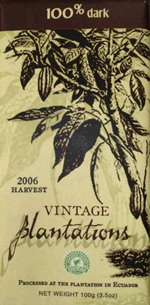 Points Of Interest: 100% Arriba Nacional Cacao Points Of Interest: 100% Arriba Nacional Cacao
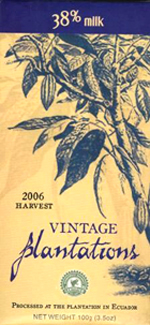
Five unflavored bars are available: 65%, 75%, 90%, 100% and a 38% Milk. Although each bar is made from the same Arriba cacao, the experience each one presents is entirely different. Start your journey with the 65% and end with the 100%. After experiencing how sugar and varying amounts of cocoa butter can affect the flavor of Arriba, taste the 38% milk to discover that dairy and Arriba were meant to be together.
Other bars are available as well, such as a 65% with Cacao Nibs, a 75% with Quinoa, or a 75% with Quinoa and Aji (Quinoa is an indigenous Andean grain, and aji is a mild pimento). If you like nuts, then try the 75% with Macadamia Nuts or the 38% Milk with Macadamia Nuts. And for those with milk allergies, a 43% Soy Milk bar is on hand for worriless consumption. Cacao nibs, atomized chocolate, and bonbons/ganaches can also be enjoyed when desire goes beyond bar affectation.
Not to be Missed
-
 100% Ganache Bonbon. Although not a bar, this 100% cocoa content ganache delivers the ultimate in bonbon thrills. Also of interest is the peanut butter ganache. 100% Ganache Bonbon. Although not a bar, this 100% cocoa content ganache delivers the ultimate in bonbon thrills. Also of interest is the peanut butter ganache.
-
38% Milk Chocolate. Ironically, this is perhaps Plantations’ most successful bar, as Arriba is among the most suitable cacaos to withstand the dilution of milk solids. Despite the rough texture, this could very well be one of the best milk chocolate bars on the market.
-
100% Cacao Bar. If you have an interest in tasting chocolate at its purest, with absolutely no sugar, try this 100% cacao bar. There are others on the market, but the lack of bitterness or acidity in the Arriba Nacional bean makes this one a more welcoming experience for first-timers.
Learn more about Vintage Plantations
and purchase the chocolate at EChocolates.com.
 Belgium Belgium
 Pierre Marcolini Pierre Marcolini
Exquisite • Creative • Pure
Historic Capsule
If you thought Belgium was synonymous with high quality chocolate before, Pierre Marcolini has truly put the nation on the map. He is here to reawaken your taste buds. Born in Italy 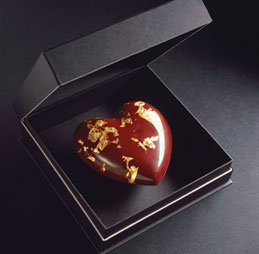 but raised in Belgium, Marcolini began his love affair with cacao during childhood. Feeding his passion, he trained as a pastry chef and chocolatier. His extraordinary skills were rewarded when, barely thirty, he won the World Champion of Pastry competition in 1995. He opened his first shop in Brussels in 1994; and in order to satisfy the appetite the world has developed for his chocolate, he now has shops in Paris, London, Tokyo, Moscow, and most recently, New York City. Marcolini’s chocolates are packaged in elegant paper boxes designed by the Belgian luxury leather goods designer, Delvaux (luxurious chocolate demands no lesser presentation). Despite the small size of his operation and the demands on his time, Marcolini’s extreme passion to showcase cacao in a pure, unadulterated form motivates him to personally hand select the beans used for his chocolate. One can admire his devotion; but in order to truly appreciate it, one must taste his bars. but raised in Belgium, Marcolini began his love affair with cacao during childhood. Feeding his passion, he trained as a pastry chef and chocolatier. His extraordinary skills were rewarded when, barely thirty, he won the World Champion of Pastry competition in 1995. He opened his first shop in Brussels in 1994; and in order to satisfy the appetite the world has developed for his chocolate, he now has shops in Paris, London, Tokyo, Moscow, and most recently, New York City. Marcolini’s chocolates are packaged in elegant paper boxes designed by the Belgian luxury leather goods designer, Delvaux (luxurious chocolate demands no lesser presentation). Despite the small size of his operation and the demands on his time, Marcolini’s extreme passion to showcase cacao in a pure, unadulterated form motivates him to personally hand select the beans used for his chocolate. One can admire his devotion; but in order to truly appreciate it, one must taste his bars.
What to Know Before You Go
Marcolini’s bars all have a very slight dark tone that persists throughout. It is most evident towards the end of the length and especially in the blend of Criollo and Trinitario), properly reflects the region’s typical dark-toned flavor profile; whereas Java, from the Pacific, with its naturally lighter flavors of lemon and sweet spice, appropriately provides the stark contrast to Marcolini’s overall dark tone. The lengths are long, though the finishes are not: if one would have a complaint, this is it. The textures range slightly, from faintly thick in the Venezuela bar to ultra smooth in Java; but this can be attributed to fat content of bean and not necessarily to manufacturer’s style. This variation in texture suggests one of two implications: either no cocoa butter is added to the chocolate; or careful attention is paid to the addition of extra butter in order to prevent flavor submission. Either way, the texture is smooth and melts evenly and flowingly.
Points of Interest
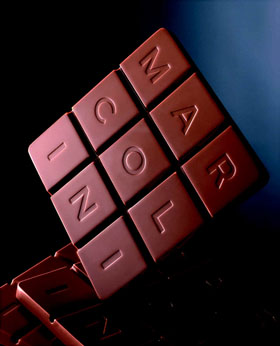
Marcolini produces several types of bars. All are well worth knowing. For a detailed evaluation of each bar, read A Trip With Pierre Marcolini.
- The single origin bars are all 72% cacao content and hail from their respective countries of Venezuela, Madagascar, Java, and Ecuador.
- A limited edition Porcelana bar with a cacao content of 72%—the only Porcelana we know that comes from Mexico rather than Venezuela—is sometimes available.
- Also of interest are Grand Cru Cabosse, a 72% blend of Venezuela and Java beans; and Fleur de Cacao, an 85% blend of three Venezuelan varietals.
- The 35% butterscotch-like milk chocolate bar is superb, as is the refreshing and visually stunning, Tahitian vanilla-flecked Blanc white bar. If you’ve never been a fan of milk or white chocolates, these bars may change your mind.
-
A large assortment of exquisite and creatively-flavored truffles and bonbons include an intensely spicy Champagne truffle to the unique, cake-like bonbon, Câlin, made with puff pastry and creme caramel, a fusion homage to Marcolini’s training as a patissier.
-
And, although you can’t eat it all in one day, a cornucopia of gourmandises—chocolate-covered orange peel, dragèes, marshmallows, mendiants (chocolate with embedded nuts and dried fruits), pâte de fruits, rochers (silvered almond clusters coated in chocolate), nougatine, sablés and more—awaits you.
- Not to be Missed: Fleur de Cacao 85%, undeniably the most palatable 80%-class chocolate ever. Its gentleness and milk chocolate-like nature will astound the taste buds.
Learn more about Pierre Marcolini and purchase online at:
MarcoliniChocolatier.com
Purchase at the Pierre Marcolini boutique in New York City:
- Phone: 1.212.755.5150 (Monday through Saturday,
10 a.m. to 7 p.m.)
- Fax: 1.212.755.5175
- E-mail: 485Park@marcolinichocolatier.com
- In person: 485 Park Avenue between 58th and 59th Streets,
New York City; Monday-Saturday, 10 a.m. to 7 p.m.
|
 |
Our House Tour is now at an end. But there are many more great chocolate articles on THE NIBBLE.
Thanks for joining us!
©Copyright 2005-

|
 |
|