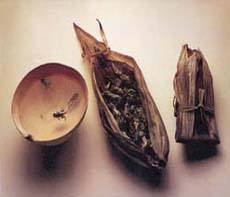
The indigenous people ate what they had available including beans, corn, tomatoes, potatoes, cacao, chiles, turkey, capsicums, vanilla, squash, avocados and tropical fruits. Insects were an indispensable element in their diets. These foods were highly nutritious, and high in vitamins, minerals and proteins. Fats were used from animals such as wild boar, turkeys and armadillos. [From the online exhibit at The Tamale Museum]
May 2006
Last Updated July 2011
|
|
Museum Tamal 26: The Tamale Museum
Celebrate Cinco De Mayo With A Virtual Tour
Near the galleries of Newport Beach, California, this serious culinary arts museum has exhibits and events focusing on the diverse history of tamales, a food dating back thousands of years.
When we first wrote this article, there were wonderful online exhibits that could be enjoyed by those of us who can’t get to Southern California. As of this revision, the online exhibits are gone.
The 10 permanent exhibits at the museum include:
- Comidas Prehispanicas
The Pre-Columbian cooking and indigenous ingredients of Mesoamerica.
- Maize - In the Beginning
Exploring corn's culinary history and cultural relevance.
- Metate
The technology, technique and folklore of Latin America's most fundamental kitchen tool.
- Angeles de la Cocina
A historical gallery of Mexico's nuns and their culinary inventions.
- Dia de los Muertos
Culinary traditions and legends surrounding Mexico's annual Day of the Dead celebration.
- Chileology
Everything there is to know about every chile around the world.
- Tamale Technology
A hands-on exhibit on how tamales are made, from cornstalk to table.
- Cooking Amphitheatre & Interactive Kitchen Experience
- Beber el Fuego
“Drinking the Fire,”a survey of maguey, mescal, tequila, cerveza and other vital beverages.
- Xocolat
From Pre-Columbian roots to present day, the history, science, lore and artistry of chocolate.
For more information, visit MuseumTamal.org.
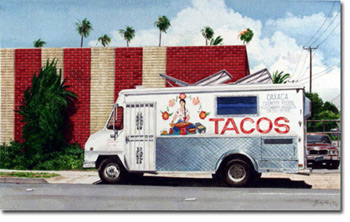
One of the watercolors by John Baeder in the 2006 exhibit,
L.A. Taco Trucks. |
© Copyright 2005-
2026
Lifestyle Direct Direct, Inc. All rights reserved. Images are the copyright of their respective owners.
|