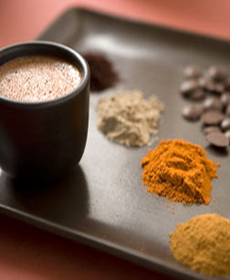
 Spice up your hot chocolate with anything from curry to ginger. Photo courtesy Recchiuti Confections. Spice up your hot chocolate with anything from curry to ginger. Photo courtesy Recchiuti Confections.
|
|
|
STEPHANIE ZONIS is a contributing editor of THE NIBBLE.
|
|
December 2006
Last Updated January 2026
|
|
Cocoa & Hot Chocolate ~ The Difference
Page 3: A “Cocoa Glossary”
This is Page 3 of a six-page article. Click on the black links below to visit other pages.
- January 31st is National Hot Chocolate Day.
- December 13th is National Cocoa Day.
What’s The Difference Between Hot Cocoa And Hot Chocolate?
Good question! Hot cocoa, hot chocolate, drinking chocolate, sipping chocolate...the terms are often used interchangeably, but there are differences. The term “drinking chocolate” didn’t seem to exist in the U.S. prior to the end of the 20th century. Since the enormous surge in gourmet chocolate (known in the industry as “prestige,” European imports of “drinking chocolate” as well as contenders from American artisan chocolatiers have proliferated.
A Glossary Of Drinkable Chocolate
- Cocoa. While cocoa is technically the powdered product, many people use the term “cocoa” to mean the drink, “hot cocoa.” Cocoa beans are about 50% fat. To make cocoa powder, roasted cocoa beans are ground to a thick paste and pressed between hydraulic plates, which squeeze out about half of the excess cocoa butter; the hard disk of cocoa powder that results is typically between 20% and 22% fat. The disk is then pulverized into a fine powder. Drinking chocolate, by contrast, contains all the cocoa butter, and some brands even add extra cocoa butter for richness and mouthfeel.
- Drinking Chocolate. A European term for hot chocolate. Often, the package has relatively large pieces of chocolate (disks or pellets, but also beads, shavings, etc.) that are then melted into a cup of boiling water or milk (this is the original Swiss method of making hot chocolate, by the way—they simply broke up chocolate bars and added hot water).
- Dutched, Dutch-processed or Dutch-process Cocoa Powder. Cocoa powder that has been processed with alkaline salts. The process was patented in the Netherlands in 1828 by Coenrad J. Van Houten. Dutching made the cocoa powder easier to blend into liquids than non-Dutched cocoa powder (which is called natural or non-alkalized cocoa powder). It also creates a milder chocolate flavor than does natural cocoa powder.
|
|
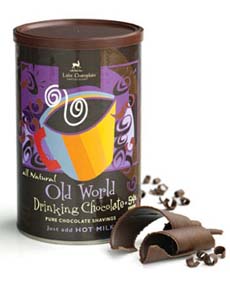
Drinking chocolate, the original European hot chocolate, is made from shaved chocolate. Photo courtesy Lake Champlain. |
- Hot Cocoa. A chocolate beverage made by mixing cocoa powder with water or milk and a sweetener. The cocoa powder may be Dutched or natural.
- Hot Chocolate. A chocolate beverage made by mixing shaved, ground or other form of actual chocolate with water or milk, plus a sweetener. Many products made from cocoa powder are called “hot chocolate,” but they are not. As chocolate contains far more cocoa butter than cocoa powder, hot chocolate will be smoother and richer than hot cocoa, all things being equal (e.g., if both products are made with the same type of liquid—milk, half and half, water, etc.) The chocolate can be ground, shaved, made in small beads or pellets (pistoles), tablets, and other forms. If you were to eat it, it would taste just like chocolate from a chocolate bar.
- Instant Hot Chocolate. Cocoa powder mixed with powdered milk (or other dairy ingredients) that’s mixed with boiling water; no additional milk is required. The mixture includes thickeners and stabilizers that prevent the cocoa powder from separating from the liquid. It is typically found in single-serve packets.
- Natural or Non-alkalized Cocoa Powder. See dutched cocoa powder, above.
- No Sugar Added Cocoa. These products may not contain table sugar (sucrose), but might substitute other naturally occurring sugars such as dextrose, maltose, fructose, sorbitol, or lactose. All of these are simple carbohydrates that can raise blood sugar levels and have calories. See our article on natural and artificial sweeteners.
- Sipping Chocolate. A variation of the term drinking chocolate (see definition above).
- Sugar-Free Cocoa. Uses calorie-free (or low-calorie) artificial sweeteners to sweeten the beverage. See our article on natural and artificial sweeteners.
- Swiss Hot Chocolate. Another term for hot chocolate. An unrecorded innovator in Switzerland invented the technique of melting pieces of chocolate bars in hot milk to create the beverage. This term is often misused by product manufacturers, who apply it to cocoa powder-based drinks.
- Unsweetened Cocoa. Plain cocoa powder with no sugar added. This is the cocoa product used in recipes, and also by people who want to sweeten their hot cocoa with a noncaloric or lower glycemic sweetener.
Cocoa Confusion
If only everyone used these terms properly! But even restaurants and manufacturers of the products themselves fail to observe the proper definitions.
- For example, of the products we reviewed in Part 2 of this article, Ghirardelli Premium Hot Cocoa (Double Chocolate) lists “sweet ground chocolate” as its first ingredient.
- Vosges Haut-Chocolat Couture Cocoa is made of beads of chocolate. Both should call themselves hot chocolate or drinking chocolate.
- By contrast, Nature’s First All Natural Hot Chocolate (Milk Chocolate) has no actual chocolate in it at all, though it does contain cocoa powder.
If you’re in doubt and the issue matters to you (especially if you want a richer or a less rich beverage), don’t go by the name of the product, but check the ingredient list.
Cocoa Vs. Hot Chocolate: The Image
Technical issues aside, there’s the issue of image. To me, at least, hot cocoa is something family-oriented and wholesome. It’s soothing when life hands you a lemon, it’s nostalgic (something your mom or grandmother made for you when you were a kid), it’s what Flopsy and Mopsy and Cottontail had for supper if they were good little bunnies. Hot chocolate, to me, is more grown-up and not too sweet.
- Drinking Chocolate. A European term for hot chocolate. Often, the package has relatively large pieces of chocolate (disks or pellets, but also beads, shavings, etc.) that are then melted into a cup of boiling water or milk (this is the original Swiss method of making hot chocolate, by the way—they simply broke up chocolate bars and added hot water).
- Dutched, Dutch-processed, or Dutch-process Cocoa Powder. Cocoa powder that has been processed with alkaline salts. The process was patented in the Netherlands in 1828 by Coenrad J. Van Houten. Dutching made the cocoa powder easier to blend into liquids than non-Dutched cocoa powder (which is called natural or non-alkalized cocoa powder). It also creates a milder chocolate flavor than does natural cocoa powder.
|
|
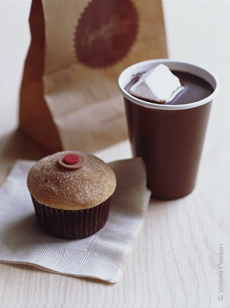
Is it cocoa or hot chocolate? Just look at that dark elixir: It’s definitely hot chocolate, with a homemade marshmallow, from artisan bakery Sprinkles. Photo courtesy Sprinkles. |
Clearly, however, some manufacturers are doing their best to alter the “safe,” down-home image of hot cocoa. While Wegman’s Instant Hot Cocoa Mix urges you to “Warm up the gang as they return from their cold weather adventures,” and Nestlé Rich Chocolate Hot Cocoa Mix has family scenes on the back of the box, Swiss Miss Hot Cocoa insists that its product is “the sweet, indulgent sensory experience you’ve been craving.” Harry and David Euro Dark Hot Cocoa bills itself as “Hot dark chocolate European style: dark, rich, and bittersweet!”
It’s up to you to sort out the hype and find a good-quality product you really enjoy. This may involve some extensive research on your part; you’ll likely have to try more than one hot chocolate or hot cocoa. But think of it as research in the true spirit of science and the interest of your taste buds. And your image: if you want to create an atmosphere of sophistication and worldliness, then drinking chocolate or sipping chocolate may be for you.
Continue To Page 4: The Health Benefits Of Cocoa
Go To The Article Index Above
Lifestyle Direct, Inc. All rights reserved. Photos are the copyright of their respective owners.
|