THE NIBBLE (TM) - Great Finds for Foodies (tm)


RSS feed
(What’s this?)

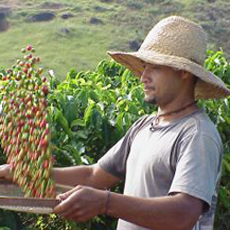
Organic CoffeeJust-picked coffee beans. All coffee plantation photos by Ana Labate.

MENU


Coffees

Category Main Page
Articles & Reviews


Beverages

Category Main Page
Articles & Reviews


Main Nibbles

Main Page
Articles & Reviews Of Foods
From A To Z


Product Reviews

Main Page
Foods, Beverages, Books,
News & More


November 2006

Product Reviews / Main Nibbles / Coffee

The Best Organic Coffees

What You Drink Can Change The World


CAPSULE REPORT: Coffee is a heavily sprayed crop, and for many people who want to avoid pesticides, that means organic coffee. But there are many other reasons to drink organic: environmental concerns and concerns for the welfare of the coffee workers are two. Ultimately, however, people buy coffee because it tastes good. We tasted a bunch of organic coffees, and our product reviews are below. We liked quite a few organic coffees, many of which have a way to go to reach mainstream standards. Our favorites include Arbuckle’s, Dean’s Beans, Don Francisco’s, Jim’s and Green Mountain. Dean’s Beans was the best value at $7 a pound (it’s kosher-certified, too). Jim’s Organic Coffee won for the highest percentage of “editors’ favorite picks” (two of three entries).

While this is an article about organic coffee, not about social reform, it’s hard to write about one without the other. When you talk about organic milk, it means that the cows enjoy better living conditions. When you talk about organic coffee, it means that entire villages of people are able to rise from acute poverty to a living wage...that they have health care and education for their children. So if you just want to read the coffee reviews, skip to the organic coffee product reviews. If you want an earful about the social movement behind organic coffee, start here.

For most coffee drinkers, having a morning cup of java every day is so routine that it’s easy to forget the beans you choose affect the lives of coffee growers and workers all across the developing world. According to industry statistics, for every pound of coffee sold in the United States, which is typically priced for retail between five and nine dollars, the average coffee farmer receives less than thirty-five cents and pickers receive less than fourteen cents.

The price disparity for coffee sold ready-to-drink at restaurants and coffee shops is even greater. A crop of beans sold in the United States that will be sold by the brewed cup is estimated to be worth about $750,000. From that small fortune, the small farmers and the field pickers who work for large concerns don’t earn enough to scrape by; the majority live in a cycle of poverty that most people enjoying a $4 latte will never know about.

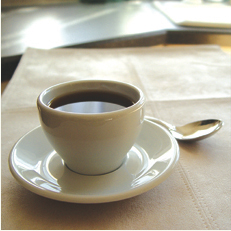
Cup Of CoffeeSome consumers who are aware of this make a socially-conscious choice when buying coffee, but to others, it’s all about the taste. At the end of the day, taste will always be the most important factor in what coffee people drink. Consumers who care about health and the environment choose organic coffee, which is grown pesticide-free and with concern for the land and the environment. People who are concerned for the benefit of the workers and the environment choose Fair Trade coffee. Most “aware” people seek products that are both organic- and Fair Trade-certified. Let’s start with an overview of these classifications.
Photo courtesy of Revival.

Fair Trade

The Fair Trade movement aims to mitigate this situation. A fairly young movement, Fair Trade Logobegun in 1997, twenty nations—17 European countries plus the United States, Canada and Japan—formed Fair Trade Labeling Organizations International (FLO). Each nation has its own Fair Trade associations; in the United States, the association is called TransFair USA, and it issues the seal at the right for products it certifies (the European Union has its own seal, as do Japan and Canada).

Coffee (and other commodities, including cacao) certified as Fair Trade must comply with a number of conditions economic, social, and environmental. The middleman who under the traditional model paid little for the beans and sold them at high profit is eliminated. Under Fair Trade:

  • Coffee growers, generally small farmers, own and work their farms (as opposed to working under low wages for large corporate entities).
  • They must belong to cooperatives that are run on a democratic basis.
  • The importers must pay a price that covers production costs, plus a “social premium” that can help improve the farmers’ working and living conditions. The price is set by FLO (currently $1.41 per pound, and if the coffee is organic there is a $.015 premium per pound).
  • Producers must pursue ecological goals, conserving natural resources and limiting chemical use.

According to a recent estimate, Fair Trade coffee farmers are earning an annual income of $2,000, as opposed to the $500 they would otherwise have earned. More than 80% of Fair Trade coffee sold in the United States is also Certified Organic.

The increased income Fair Trade creates allows cooperatives to re-invest in their farms, making them more ecologically sound and increasing coffee quality. Read more about Fair Trade in Stephanie Zonis’s article, Grounds For Confusion, Grounds For Change: The Complex World Of Organic Coffee.

Certified Organic

Most people buy organic products because they want to avoid pesticides; but organic farming is also better for the land and the environment. To be Certified Organic:

  • The coffee must be grown on land that has not been treated with synthetic pesticides or other prohibited substances for three years.
  • There must be a sufficient buffer space between the organic coffee and the nearest conventional crop.
  • The farmer must have a sustainable crop rotation plan to prevent erosion, depletion of soil nutrients and pests.

All of these factors contribute to making a better cup of coffee. Less chemicals andCoffee Cherriesbetter soil means a healthier and tastier crop. Because it helps to reduce the need for pesticides and fertilizers, a majority of organic coffee is shade grown, which is another factor that often improves taste. The shade has a similar effect on coffee as growing coffee at high altitudes, and it ensures that the birds and animals who live in the trees don’t lose their habitat. These factors slow down the growth of a coffee, which results in the production of more sugars and natural chemicals in the bean responsible for the desired acidity in the coffee.

Quality Assurance InternationalBuying Certified Organic coffee isn’t just good for the consumer and the environment; it’s good for the farmers who grow it as well. It fetches a higher export price, an agrochemical-free farm is a safer environment for farm families and workers, it lowers expenditures for synthetic inputs and it helps protect the local water. There are a variety of organic certifying organizations: the USDA and numerous state authorities certify products grown here, and Quality Assurance International and other organizations certify products grown in other countries.

Choosing A Coffee

There are some critics of Organic and Fair Trade certification. These individuals feel that many farmers whose coffee is perfectly deserving of being Certified Organic, are suffering because they simply cannot afford certification fees. Though the fees of $350 may sound reasonable to us, they are a lot of money to a third-world farmer earning only $2,000 annually. Critics of Fair Trade worry that it will hurt the very people and countries that it means to help by pricing them out of export markets. Others have criticized Fair Trade’s price-driven model, claiming it unfairly rewards coffee with low production costs instead of coffee that tastes better. Many small organic farmers are excluded from Fair Trade because they are not a part of a co-op. For the farmers who are included, Fair Trade prices are still not necessarily high enough to bring them out from poverty.

At the end of the day, however, buying Fair Trade and Certified Organic is an excellent Coffee Pickerway to do your part to ensure that you are helping farmers and the environment. But for people who want to know that they are drinking the best tasting coffee that is also the most socially responsible, there is just no replacement for taking advice from those who know. Buy your coffee from distributors who have direct relationships with the farmers, or listen to the people whose job it is to research this stuff all day. Obviously, we’re talking about ourselves here at THE NIBBLE. So read on to find out what we think are the best Organic and Fair Trade coffees on the market today.

Coffee Reviews

Coffees were received in bean form and were ground fresh immediately before brewing in an automatic brewer with a gold filter (as opposed to paper filters). Coffees were tasted black. Each coffee was tasted on two different, but not consecutive, mornings.

We found in our tastings that our own descriptions often varied significantly from what the seller described on the website. We can attribute that to a number of factors. Professional coffee sellers use different brewing equipment than we have at home: different grinders, hotter water, charcoal-filtered water or spring water, and professional skill will produce a better cup of coffee than we lay folk can make. However, we used a good home grinder, a good coffee machine and excellent tap water—as good a set-up as most people will have at home. It may be that the professional coffee shop will get a better body from brewing its beans than we got; however, we did experience a range of light to full bodies in our brews, so we are comfortable that what we produced will mirror most people’s home experience.

Note that each company has a full line of coffees, not just the varieties shown here. The companies made their own selections about which varieties to send us. Prices and flavor availability were verified prior to publication but are subject to change. In most cases, shipping is additional.

Company

Arbuckle’s
Organic & Fair Trade

All of the Arbuckle’s coffee we reviewed are Organic and Fair Trade Certified, and some of their roasts go far beyond that. The Café Femenino Blend is the result of a venture to help poor and culturally disenfranchised women in rural Northern Peru. The project involves 464 women coffee farmers, who are involved in all farm activities, as well as in the harvesting of the coffee. They are also involved in the decisions as to how the money from the coffee sales will be used. The mission of the project is to raise self-esteem and to change the view of women’s roles in Northern Peru.

  • Café Femenino Blend: The cause is very special, but taste-wise the coffee is a very straightforward medium roast, which will appeal to most Americans. Some tasters likened it to Dunkin’ Donuts; overall, a very good cup of coffee.
  • Ariosa Coffee Blend: Nothing too fancy here either, but this is the Platonic form of good old-fashioned strong coffee. Not too complex, but a very fine cup.

Arbuckle's Coffee
Ariosa Coffee Blend, right, and Café Femenino,
left.


  • Arbuckle’s Organic Coffee
    One-Pound Bag
    $14.15 to 15.95

ArbuckleCoffee.com


Dean’s Beans
Organic & Fair Trade

Of all the companies we reviewed, Dean’s Beans seems to be the most committed to making their coffee as ethically and ecologically responsible as possible. A founding member of Cooperative Coffees, not only is all of their coffee Fair Trade and Organic Certified, but they also demand it to be doubly Fair Trade certified by a third-party inspector. Their reason for this diligence is to pressure larger coffee companies, who are less transparent about their practices, to do the same. In addition, Dean’s Beans is working to become a 100 percent Carbon Neutral business (attained when a company’s net carbon emissions are zero)—which is extremely impressive considering that it imports beans from Africa and South America. All their coffee is shade grown, and kosher certified too (by the Vaad Hakashruth of Springfield, Mass.).

  • Marrakesh Express: While listed as one of Dean’s dark roasts, this mixture of Ethiopian Harrar and Timor beans produces a moderate French Roast with a medium body, and a taste that, despite this roast’s name, is familiar and homey. It’s not the ultimate French Roast for those who like a dark-roasted coffee, but it’s satisfying from the first sip through the finish. It would work especially well as an after-dinner coffee.
  • Moka Sumatra: With barely any bitterness, this is an extremely easy-to- drink coffee. There’s an innate sweetness and smoothness. It finishes softly on the palate. A blend of Nicaraguan and Indonesian Sumatran, it’s Dean’s best seller.

Dean's Beans
Uprising Breakfast Blend, left; Marrakesh Express, right.

  • Rattlesnake Gutter Brew: An unappealing name, but this was our favorite of the Dean’s Beans selections we tried. A full-bodied cup that combines sweet Peruvian, smoky Guatemalan and sharp Costa Rican French Roast beans, it starts sweetly on the tongue, but then shows its nice, sharp bite.
  • Uprising! Breakfast Blend: A Vienna roast blending three beans: hearty Costa Rican, bold Nicaraguan and sweet Peruvian. The overall effect is a bit light for those of us who have been trained on Starbucks, but if you like a mild coffee, this might be your cup.
  • There are many other options on the website, including decafs and the ability to design your own custom blend (and custom-label it for gifts and party favors, too!).
  • Dean’s Beans
    One-Pound Bag
    $7.00

DeansBeans.com


Don Francisco’s
Organic

Don Francisco’s is a retail brand of F. Gavina & Sons, a company more than 130 years old that is now one of the largest coffee businesses in the western United States. The Don Francisco’s coffee we tried is 100 percent organic, but not Fair Trade. The company also sells coffee that is not organic.

  • Organic French Roast: This is a perfect example of a great French Roast. A little smoky, a little tart and fruity, and very masculine tasting, this roast is a definite keeper.
    10-Ounce Bag
    $7.95
  • Organic Mayan Blend: The flavors in this coffee are huge and playful. There is a definite taste of chocolate, and the style is feminine and elegant—but rich and wonderful.
    12-Ounce Bag
    $7.95

Don-Francisco.com

Don Francisco's Coffee
Organic Mayan Blend, at left, and Organic French Roast, at right.
   

Green Mountain
Organic & Fair Trade

A large specialty coffee company, Green Mountain carries a wide variety of Free Trade and Certified Organic coffees, though is not a 100 percent organic company. The company co-brands for other food companies, as you can see in the photo at the right with the Wild Oats Organic French Roast, and the Newman’s Own blend we tasted.

  • Organic House Blend: A nutty and earthy flavor with medium body. A solid, simple coffee that would do very well iced.
  • Newman’s Own Organic Blend: Stylistically like a thin French Roast, this is a mild coffee with good flavor but not much body.  Sales of this coffee help support a variety of educational and charitable non-profit organizations through the Newman’s Own Organics organization.
  • Organic French Roast: A lighter-body coffee with very smoky flavors and charming aromas of bananas.
  • Organic Sumatran Reserve: A distinctively musty and earthy taste, not at all what one would expect of a Sumatran, which is typically heavy, almost syrupy, in body and concentrated in flavor. Perhaps warehouse problems with this batch?

Green Mountain Coffee
Left, French Roast; right, Sumatran Reserve.

  • Organic Ethiopian Yirgacheffe: An especially wonderful fragrant and flowery aroma, typical of this bean, with bright flavors. Lively, lemony notes and a light acidity. Not as strong as a French Roast, but it would appeal to those who like French Roast as well as those who like a medium roast. One of our favorites.
  • Green Mountain Organic Coffee
    12-Ounce Bag
    $7.29 to $8.69

GreenMountainCoffee.com


Jim’s Organic Coffee
Organic & Fair Trade

Jim’s is a 100% organic coffee company that has imported directly from small farmers for the past seventeen years. Jim’s was one of the first companies to deal exclusively in Certified Organic coffees. That the coffee isn’t Fair Trade Certified is a political choice Jim’s has made, because they don’t think that Fair Trade helps enough. Jim pays above Fair Trade minimums for all his coffee, and remains committed to the long-term best interests of the farmers and to the organic coffee industry as a whole. In terms of taste, Jim’s coffees were across-the-board the best, including two of our favorites in the entire tasting.

  • Guatemalan Atitlan: A lot of big flavors here, and a rich, even taste on the palate. A truly great all-around cup of coffee. Definitely one of our favorites!
  • JoJo’s Java™: A light and lemony cup of coffee with high acidity. It reminds us of a Chardonnay, both in taste and as a probable crowd pleaser.

Jim's Organic Coffee
At left, Jo-Jo’s Java; at right, Guatemalan Atitlan.

  • Blend X™ a.k.a. Witch’s Brew: Another favorite, Blend X has a clean finish and a spicy aftertaste reminiscent of Mexican food. Going down, the coffee is slightly bitter, and has notes of woodiness in it too. If you like strong roasts, you’ll want to check this out.
  • Jim’s Organic Coffee
    12-Ounce Bag
    $9.20 to $9.70

JimsOrganicCoffee.com


Read About Coffee

Coffee Coffee Coffee Book
Coffee: A Guide to Buying, Brewing, and Enjoying, by Kenneth Davids. Dazed by the myriad of coffee choices? This book will set you straight, teaching you everything you need to know about the humble cup o’ joe. $10.37. Click here for more information or to purchase. Espresso Coffee: The Science of Quality, by Rinantonio Viani and Andrea Illy. Get down to the nuts and bolts of coffee with this intriguing read. $84.95. Click here for more information or to purchase. The Coffee Book, by Gregory Dicum and Nina Luttinger. Follow your favorite beverage from the pod to your mug. $11.02. Click here for more information or to purchase.
Uncommon Grounds Coffee World Encyclopedia of Coffee
Uncommon Grounds, by Mark Pendergrast. An in-depth look at the rich history of coffee and how it transformed our world. $12.92. Click Here for more information or to purchase. Coffee—A Dark History, by Antony Wild. This informative book covers the many ups and downs of coffee’s past 500 years. $17.13. Click Here for more information or to purchase. The World Encyclopedia of Coffee, by Mary Banks. Explore coffee’s many different uses from aromatic beverage to indispensable cooking ingredient. $22.05. Click here for more information or to purchase.


Recent Articles From Our NutriNibbles™ News Feed:

Subscribing notifies you whenever there are
new additions to the NutriNibbles™ section.


Subscribe to THE NIBBLE™ NutriNibbles™ by Email


© Copyright 2005- 2008 Lifestyle Direct, Inc. All rights reserved.  Images are the copyright of their respective owners.


Spread The Word: Each icon below links to a site where you can bookmark, share and comment on this article:
Dine52    del.icio.us    ma.gnolia    Newsvine    Yahoo Myweb    BlinkList    simpy    reddit


.