THE NIBBLE (TM) - Great Finds for Foodies (tm)


RSS feed

Cheese Grater
Get ready to grate! You can send your favorite cook a selection of fine grating cheeses from igourmet. Photo by Y. Yang | IST.

MENU


Cheese

Category Main Page
Articles & Reviews


Cheese-Butter-Yogurt

Category Main Page
Articles & Reviews


Main Nibbles

Main Page
Articles & Reviews Of Foods From A To Z


Product Reviews

Main Page
Food, Beverages, Books,
News & More


ABOUT THE AUTHOR


STEPHANIE ZONIS focuses on good foods and the people who produce them. KAREN HOCHMAN is Editorial Director of THE NIBBLE.


September 2007

Product Reviews / Main Nibbles / Cheese-Butter-Yogurt

Grating Cheese: It’s Great To Grate

The Italian Grating Cheeses—Asiago, Grana Padano, Parmigiano-Reggiano & Pecorino


  • Click here to read other months’ Whey To Go columns

My name is Stephanie Zonis, and welcome to Whey to Go! Every month, we’ll delve into a new cheese-related subject, and I’ll offer a recommendation on a cheese I love. This month’s column was co-written with a fellow cheese-lover, THE NIBBLE’s editorial director, Karen Hochman.

Grating Cheese Overview

It shouldn’t take long to deduce that this month’s column is about grating cheeses. Specifically, we’ll discuss four Italian cheeses often used for grating: Asiago, Grana Padano, Parmigiano-Reggiano and Pecorino Romano. All have been made for centuries—one for 1,000 years, one for 2,000 years. Although they range in complexity, and three are cow’s milk cheeses while one is a sheep cheese, they can be substituted one for the other. Although some people have strong preferences (e.g. Parmigiano-Reggiano with risotto), others might not know if Grana Padano or Asiago were being grated over their pasta. Still other people prefer the saltier and more pungent Pecorino Romano.

Which is the right cheese to use for your food? What else can you do with these cheeses besides grating them over pasta? As always, your palate will be your guide, but we’ll provide some basic information about each type of cheese. And yes, these graters are also great table cheeses.* For those seeking truly special specialty cheeses, there are an authentic kosher Parmigiano-Reggiano and Grana Padano, and an organic Parmigiano-Reggiano.

*A table cheese is, simply, a cheese eaten at the table—as part of a cheese board, on a sandwich or burger.

Name Protection
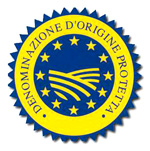
D.O.P. LogoAll four cheeses are D.O.P. (Denominazione d’Origine Protetta) name-protected. This is a legal protection for the consumer that guarantees that you are buying an authentic Asiago, Grana Padano or Parmigiano-Reggiano, made by a trained artisan to exacting specifications. The consortium of producers that applies for name protection does so to protect the quality that the brand stands for, from imitators. In Italy, the D.O.P. mark guarantees, among other things, that:

  • The cheese was produced within a specific geographical area, from milk from specific herds of animals raised in the same area.
  • The cheese was made using strictly defined methods that have been handed down over several centuries.
  •  The characteristics of the cheese that have been precisely defined: Its size, type of rind, texture and minimum fat content are adhered to strictly.
  • The producers submit themselves to review by a control commission or consorzio, which guarantees the authenticity and quality of the products (and rejects those which are not up to standard).

Other European countries, including Portugal, use the D.O.P. designation—for wine, olive oil, meat, condiments and other food products in addition to cheese. In France, the analogous designation is known as A.O.C. (Appellation d’Origine Contrôlée), and in Spain it is D.O. (Denominación de Origen).

Buying Pre-Grated Cheese (Don’t!)

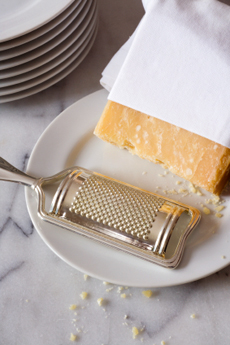
Another important note: Please don’t buy cheeses pre-grated. First, you don’t knowParmigiano And Graterhow long they’ve been sitting there. The best flavor comes from freshly grated cheese, not that which has been drying out (that’s why at the finest Italian restaurants, the waiter grates the cheese freshly onto your dish). Equally as important, unless you see the brand on the rind, you don’t know that you’re getting a genuine D.O.P. product. You can easily be getting a lower-quality cheese with less flavor, while you pay a high premium for the “convenience.” Cheese takes almost no time to grate, especially if you have one of the terrific graters that are readily available.

While some people report freezing grated cheese with less than stellar results, others do it all the time and are very pleased. Grated cheese can actually be frozen more successfully than whole cheese. The problem with defrosting whole cheese is that the texture changes and the cheese will flake; with grated cheese, flaking obviously isn’t a problem! Try a fine grate rather than large curls; and of course, use an airtight container, not a plastic bag. (We are told, but have not put to the test, that a small metal canister works best to keep out moisture.) If you like the result, you’ll always have a tablespoon of delicious, quality grated cheese to enliven eggs, pasta, salads, soups, vegetables—anything!

Along the same lines, although it should go without saying, pre-grated shelf-stable cheese that comes in shaker tins or jars has as much to do with Parmigiano-Reggiano—or any real cheese—as Velveeta has to do with Cheddar. We suggest that it is better to do without, than to put such artificial flavors on your food!
Photo of Parmigiano-Reggiano and grater, courtesy of Umami Information Bureau, UmamiInfo.com.

Grating Versus Shaving

All of these cheeses can be grated or shaved—you’ll see an example of both in the photos in this article. When should you grate versus shave the cheese?

  • In general, if you want something to blend in thoroughly, as in a soup or stew, the dressing of a Caesar salad, or a pasta you want to toss, grate the cheese.
  • If you want it to be a garnish or stand-alone ingredient that can be eaten separately with a fork, shave it. You can shave the cheese as a garnish on top of the soup, stew, Caesar salad or pasta as well.

Comparing The Cheeses

We’ll go into depth on all of the cheeses below, but here’s a quick comparison:

  Style Price/Pound†

Parmigiano-Reggiano

Cow’s Milk

Considered by many to be the top grating cheese for its complexity of flavors, it is also saltier and costlier than its cousin, Grana Padano. For those with money, Vacche Rosse is the supreme Parmigiano, priced higher and worth it.
CHOOSE THIS IF you are serving the cheese in a dish where its complex, nutty flavors can stand out—i.e., they won’t be drowned out or covered up by the preparation. Think risotto, carpaccio or light pasta preparations.
$13.00 to $20.00, according to age; Vacche Rosse $25.00

Grana Padano

Cow’s Milk

Grana is sweeter (less salty) and subtler (less complex) than Parmigiano, but most people wouldn’t know the difference. For the money, a good Grana is a value cheese—and many restaurants use it instead of Parmigiano-Reggiano.
CHOOSE THIS IF you want “value Parmigiano,” or if you want a Parmigiano-like flavor but  with less less sharpness and saltiness. Italians know a bargain: Grana Padano is the best-selling hard cheese in Italy.
$12.00 to $13.00

Asiago

Cow’s Milk

While the first three can be eaten as table cheeses, with a glass of wine, only Asiago could be mistaken for a table cheese, with buttery notes and normal levels of salinity. While a hard cheese, it has a much softer paste than the other three cheeses, more the consistency of an aged cheddar. (There is also a lesser-aged version of Asiago, Mezzano, made for eating.)
CHOOSE THIS IF you want a sweet, buttery grating cheese without significant saltiness. Asiago cubes nicely for a salad.

Vecchio (aged up to 9 months), up to $16.99

Mezzano (3 to 5 months), $11.00 to $13.00)

Pecorino Romano

Sheep’s Milk

Sharp and salty, only a true salt lover would want to eat most of these as a table cheese, except for the few “genuine” Pecorinos still made in Rome, not Sardinia. The saltiness makes it an excellent grating cheese: no more seasoning is needed.
CHOOSE THIS IF you like sharp, salty flavors, appreciate a bargain, or are lactose-intolerant—sheep’s milk is much more easily digestible.
$9.00 to $10.00

†Prices will vary by region and retailer.

Pecorino RomanoDeciding on which of these cheeses to purchase may ultimately come down to your unique taste buds. Will you be pairing it with wine and bread, cubing it for a salad, mixing it into a recipe? While this article focuses on grating, these cheeses make for a quick, rustic meal when matched with wine, bread, salami and fruit. See the websites in the Sources section for recipes for each cheese.

These are great cheeses: Keep experimenting to see which you like best for what purposes. No matter which of these cheeses you select, you’ll be consuming a food with a venerable past, made by artisans who care passionately about it and cherished by consumers. Even a small quantity of a high-quality, flavorful grated cheese goes a long way in a dish, meaning that you’ll be able to stretch your dollar with these harder-textured favorites. So grab your grater and be prepared for some “grate” food!  
Photo of Pecorino Romano courtesy of PDPhoto.org.

Parmigiano-Reggiano

If you’re a regular reader of this column, you know that we previously featured an article entirely about Parmigiano-Reggiano, which cheese experts consider one of the Parmigiano Brandgreat cheeses in the world (first made in the 15th century, it has vied with Roquefort for the title, “King of Cheeses,” for hundreds of years). Italy’s most famous D.O.P.-designated cheese, true Parmigiano-Reggiano is a raw cow’s milk cheese that can only be produced in the towns of Parma and Reggio Emilia in the Italian region of Emilia Romagna by a skilled cheese maker, who is a member of a self-governing body of dairies called the Consorzio Formaggio Parmigiano-Reggiano. Regulations for producing Parmigiano-Reggiano are quite strict. For example, the milk must be heated in copper kettles, the starter culture for the cheese must be made in each dairy from the previous day’s whey† and the certified cheese makers, who can oversee a maximum of seven kettles at a time, have all undergone apprenticeships for at least ten years. The minimum aging period for Parmigiano-Reggiano is 12 months; most is aged for at least 18 months. We like it best between 20 and 30 months. By then, the café au lait-colored insides have dried to crunchy perfection: nutty, spicy, salty (but not too much so) and floral, with a distinct caramel finish. Don’t be tempted by super-aged Parmigianos—they can be found up to five years old, but they tend to be dried out and salty.

†A fun food fact: The excess whey from producing Parmigiano-Reggiano is fed to the hogs whose legs will become prosciutto di Parma.

Incidentally, please do not confuse Parmigiano-Reggiano with “Parmesan.” Anyone, anywhere can make “Parmesan” cheese. It may vaguely resemble Parmigiano-Reggiano, but if someone tries to tell you they’re the same thing, don’t buy a used car from that individual! Parmesan is much cheaper than genuine Parmigiano-Reggiano and invariably of lesser quality. It doesn’t have the distinct aroma or glorious flavor of the real McCoy, although it can be used for grating. Parmesan is often excessively salty, and it lacks the “nutty” quality of and flavor nuances of an authentic Parmigiano-Reggiano. 

Pairing Parmigiano-Reggiano

One rarely needs an excuse to grate delicious cheese over a dish, but here are some of our favorite uses.

Parmigiano Romano
Photo courtesy of MurraysCheese.com.
  • Always grate the cheese onto the food right before serving. As appropriate, let people grate the cheese themselves at the table: onto eggs, Caesar and other salads, soups, casseroles, stews, risotto, pasta, potatoes and other vegetables.
  • You can cook it into sauces, soups, stews and eggs as well. The entire rind is edible and should not be wasted—toss it into the soup or pasta sauce pot (but remove it before serving).
  • These applications are true for all of our grating cheeses: They easily substitute for one another. Although there are significant differences in flavor and cost when they are stacked shoulder-to shoulder (or rind-to-rind), the beauty is that, like Barbera, Barbaresco, Barolo and Chianti, when you don’t have one, you’ll happily use what you do have.

A Great Alternative To Grating

Parmigiano-Reggiano is considered one of the world’s great table cheeses. Italians are Parmigiano WIth Pruneschagrined that Americans limit the King of Cheeses to grating on pasta. In Italy and elsewhere, it has a place of honor, along with Brie and Roquefort, on the cheese plate. The Italian gourmet will crave only a few chunks of aged Parmigiano, some fine balsamic vinegar or artisan honey for dessert. It can be served with fruit (especially figs, pears, grapes or dried fruit such as prunes, as shown in the photo at right); but no bread is needed. Or, add it to the cheese board along with a variety of different cheeses—a young chèvre, a semisoft cheese like Brie and a washed rind cheese, for example.

Wine Pairing: Profound Parmigiano needs a substantial red wine. Any of the robust wines of Italy will do—the big-bodied Barolos and Chiantis (and California Cabs) and the robust  Barbaresco, Barbera, Brunello and others. For dessert, we also enjoy it with Tawny Ports.

Specialty Parmigiano-Reggiano

Fanticini kosher-certified Parmigiano-Reggiano is made in Italy under the supervision of the Beth-Din of Milano and is available from igourmet.com. Read our full review. They also carry an organic Parmigiano-Reggiano. Vacche Rosse (pronounced VAHK-kay ROHS-say, “red cows”), the crema de la crema of Parmigianos, is made in very limited quantity from a small herd of cows that were brought back from near-extinction over the last 20 years. Their milk is much richer, and the Parmigiano made from it is well worth the extra money. It’s a table cheese rather than a grating cheese—unless you’re grating it over a truffle risotto.

To add to your knowledge of the King of Cheeses, read the history of Parmigiano-Reggiano, a cheese enjoyed by the nobility 700 years ago, accessible to everyone today.

Grana Padano

Grana Padano is Parmigiano’s cousin: It is almost the same recipe, but is produced outside of Reggio Emilia. The cheese was created around 1,000 C.E. by the Cistercian monks of the Abbey of Chiaravalle, near Milan, and predates its cousin, which began to be produced in the 1400s in Benedictine Grana Padanomonasteries of Bologna, Modena, Parma and Reggio Emilia. Between 1150 and 1200, a large number of cheese makers began to produce Grana Padano; by 1477, according to the website ItalianMade.com, when Parmigiano was a mere newborn not known beyond Reggio Emilia, Grana “was held to be the most famous cheese of Italy.” Today it certainly is the best-selling Italian cheese.
The knife shown in the photo is a special Parmigiano knife, or cotello per Parmigiano. It is used to chip away smaller pieces of Parmigiano-style cheeses, or to cut smaller wedges.

While Grana, like Parmigiano, can only be made within a certain region of Italy, that region is enormous, spanning 32 provinces in northern Italy, from Lombardy on the northwest coast, all the way across the country to the Veneto on the northeast coast. This is also known as the Po River Valley—the Po River flows cross-country from west to east. “Padano” means “of the Po River” (from the river’s Latin name, Padus) and “grana” means grainy, the characteristic of the cheese. Unlike today’s fancy marketing names, customers of yore asked for things by origin: Give me the grainy cheese from the Po River, give me the cheese from Parma and Reggio (i.e., Parmigiano-Reggiano) or the cheese from Asiago.

Parma and Reggio, the only town where authentic Parmigiano-Reggiano can be made, are also Po Valley towns, so it’s “all in the family.” Because Grana is made in a much larger area, there is twice as much cheese for sale: four million wheels of Grana are made per year versus two million wheels of Parmigiano, according to Lou DiPalo of DiPalo’s Fine Foods in New York City, a specialist in Italian cheeses. This is why Grana is so much more affordable (and the best-selling cheese).

Like Parmigiano-Reggiano, Grana Padano has its own consortium of producers, the Consorzio Tutela Grana Padano, founded in 1954 to guarantee Grana’s quality, place of origin and method of production. Experts visit each dairy, check each wheel of cheese for proper aroma, texture and taste, and stamp each wheel of cheese with the Consorzio’s mark (you can see it in the photo above).

Both Grana and Parmigiano begin with raw cow’s milk and end up as 80-pound wheels with a straw-colored paste (the interior of a cheese), suitable for grating or eating. The Grana Padanoonly difference is that with Grana, the cows are milked in the evening and the milk stands until morning, which allows the cream to rise; it is then partially skimmed off and the cheese is made. The cheese is made a second time in the afternoon using morning milk. Parmigiano is made only once a day using the cold evening milk blended with the warm morning milk (also a combination of whole milk and partially skimmed milk). As with Parmigiano-Reggiano, there is a minimum 12 months of aging, and fine aged Granas can be found here that are 22 months or more. A stravecchio is a Grana that has been aged 15 to 20 months.
Grana Padano available from igourmet.com.

It’s not easy competing when your cousin has already beaten thousands of cheeses in the world to the title, “King of Cheeses.” But the finest Grana Padano is considered by some to be as flavorful as a top Parmigiano—although most would concur that in a blind tasting of the greatest Grana and the greatest Parm, Parm would have the edge. Parm fans say Grana is “less complex”; Grana fans counter that the complexity of Parm tires the palate, while Grana can be snacked upon all day. Like Parm, it is served at every course from appetizers (try it with carpaccio or crudités) to desserts (with berries or melon). The rivalry and debate have been ongoing for centuries, and since taste is subjective, it will never stop.

A good Grana can certainly be complex, offering both sweet and savory flavors. According to GranaPadano.com, though, Grana is more than the best-selling cheese in Italy—it’s “the best selling cheese in the world.” Next time you’re at the cheese counter, try a piece of Grana side-by-side with Parmigiano. However, note that all cheeses are not created equal: Even if you like one better than the other, your cheese monger may be carrying a better quality of one. So, keep trying, every time you have the chance.

Pairing Grana

In addition to grating Grana, Parmigiano and Asiago, you can shave the cheeses for a totally different visual effect and mouthfeel.

  • Shave or grate it over the same foods you’d pair with Parmigiano-Reggiano (see the list above).
  • Also as with Parmigiano, add it to the cheese board or serve it with as dessert.

Wine Pairing: You can use the wine pairings from Parmigiano-Romano above. But because Grana can be less sharp than Parmigiano, it can also take a less robust red.

Specialty Grana Padano

A kosher-certified D.O.P. Grana Padano is also available—you can find one at igourmet.com.

Beef Carpaccio With Shaved Grana Padano
Carpaccio di manzo,
or beef carpaccio: thin slices of raw beef topped with arugula and shaved slices
of Grana Padano, drizzled with olive oil. Photo by
S. Hyman |IST.


Asiago

The alpine township of Asiago lies on a plateau of the same name in the province of AsiagoVicenza, in the Veneto region of Northeastern Italy. The semi-cooked cow’s milk cheese known as Asiago has been made there since the 16th century, when cows were brought on to the plateau to meet local preferences for cow’s milk cheese (prior to then, only sheep grazed the meadows). The neighboring region of Trentino, in the Po River Valley, has become part of the D.O.P.-designated production area for Asiago cheese.

Asiago is almost petite compared to the big boys, Parmigiano and Grana: It’s made in mere 20-pound wheels. Asiago also differs in the variety of ripeness in which it is sold: There is a fresh Asiago, called Asiago pressato, which is a semisoft. It can be sliced for sandwiches; the paste melts well for cheese omelets or as a sauce for vegetables.

The more mature Asiago d’allevo is the grating cheese. Asiago d’allevo is sold in three “stages”: fresco (aged for two to three months), mezzano (aged three to five months) and vecchio (aged for at least nine months). Although Asiago has a straw-colored paste similar to Parmigiano and Grana, its interior contains a good number of small holes, such as you might see in a Gruyère. People from the northeastern part of Italy, more familiar with “alpine” or “mountain” cheeses such as Gruyère, may favor Asiago as their grating cheese.

Unlike the grainy Parmigiano and Grana Padano, Asiago has a smooth paste, rather like a mature Cheddar. In flavor, it is a milder cheese than Parmigiano, Grano or Pecorino, with milky notes. Younger Asiagos can have aromas of yogurt and butter, the more aged Asiagos are buttery rather than sharp, with noses of yeast and dried fruit.  In this way, it’s more like a mountain cheese in personality.

Linguine
Linguine with olive oil, fresh parsley and roasted red peppers, garnished with grated Asiago and a fresh rosemary spear. Photo by Adam Kulesza | IST.

Wine Pairing: If you want a dry white wine option in addition to the reds above, try an Orvieto or a Soave.

Pecorino Romano

The last cheese in our “grate” foursome is pecorino. Pecorino Romano is Italy's oldest cheese, dating back more than two thousand years, to ancient Roman times. The first recorded description dates back to the 1st century C.E.; we know that one ounce of Pecorino Romano was part of the Roman legionaire’s daily rations (one ounce seems pretty paltry for a fighting man!).

Pecorino RomanoPecorino is a hard, hearty sheep’s milk cheese of southern Italian origin, typically aged for one year and used as a grating cheese. It is now produced in various regions of Italy, each producing a slightly different variation. Pecorino is not a designation-protected cheese; while the three preceding cheeses specify an area in which they must be produced—Parma, the Po Valley or the township of Asiago—“pecorino” comes from the Italian word for sheep, pecora.

Pecorino Romano was traditionally produced in and around Rome, although by the 19th century, increasing consumer demand, the development of the land around Rome and the existence of an established tradition in Sardinia of making sheep’s milk cheeses, prompted some of the major manufacturers to relocate their production to the island of Sardinia. Other Pecorinos are now marketed, such as Pecorino Toscano, Pecorino Sardo and Pecorino Siciliano. Each has a different, though also sharp, taste. And, Romano cheese, a grating cheese made in the U.S., can further confuse many people. It is a commercial cheese generally made from cow’s milk, with not much in common with a Pecorino Romano, except that it grates.

As a sheep’s milk cheese, Pecorino is somewhat whiter in color than the golden-to-amber aged cow’s milk grating cheeses. It’s also the sharpest and strongest of the group, and often the most salty, too—although the least nuanced in flavor.

Made in 65-pound wheels, Pecorino is aged for about eight months if it’s to be used as a grating cheese, less time if it is to be used as a table cheese. Cheese expert Steven Jenkins notes that only four brands—Fulvi, Locatelli (yes, this is a brand, and not the name of a cheese), Brunelli and Lopez—are true “Romano” Pecorinos  (a.k.a. “genuine” Pecorino Romano cheeses); that is, they are still made in the province of Rome. The Roman cheeses are never as hard or dry as the Sardinian-made cheeses, and can be enjoyed as table cheeses.

The longer a Pecorino Romano is aged, the sharper it becomes; and the bold, pungent flavor of this cheese enlivens dishes. For those not seeking the complexities of a Parmigiano or a Grana  or the subtleness of Asiago, it adds a different but very pleasing personality to pasta.

Caesar Salad
A Caesar salad is traditionally made with Parmigiano-Reggiano. But for value, substitute Pecorino Romano. And, try this “deconstructed” Caesar, with half a head of romaine, shaved cheese, prosciutto and garlic bread, instead of torn lettuce, grated cheese, anchovies and croutons, Photo courtesy of the Consorzio di Prosciutto di Parma.

Anyone raised in southern Italy may well swear by Pecorino, as it’s the most often-used grating cheese (perhaps, the most often used cheese, period) in that part of the country.

Wine Pairing: Whatever food you are serving will likely dictate your choice of wine here. A nice suggestion is Montepulciano d’Abruzzo or Velletri Rosso.

Cheese Graters

If you get only one grater, we recommend purchasing one of the first two, which offers a choice of a fine and coarse grates. You may also want to pick up a cheese shaver.

Zyliss Cheese Grater Box Grater Microplane Grater
Zyliss Cheese Grater. We have one of these at THE NIBBLE offices, and love that it spares knuckles and fingertips from contact with the grating surface. Just pop the piece of cheese in and turn the handle. It’s easy and fun. Click here for more information. Kitchen Aid Box Grater. An improvement on the original box grater, here the grater can sit atop the storage container for neatness. Grate right into it; if you want to store your grated food, just snap on the lid. Click here for more information. Microplane Grater-Fine. Many people enjoy the ease of using the newer microplane graters—the long handles provide leverage. You’ll want a basic fine grater for finely-grated cheese. If you have space, get a medium or coarse-grater as well. Click here for more information.

Taste Test  ~ Tasting Party

iGourmet Grating Cheeses
If you can’t find the cheeses locally, you can get excellent-quality varieties from igourmet.com. They’ll also send lovely gift packages to your favorite Italian cook.

Perhaps the best way to determine which of the four cheeses to use is to conduct a tasting. You may want to organize a tasting party, and assign different people dishes or wines to bring to taste with the cheeses.

  • Buy a quarter pound‡ each of Asiago, Grana Padano, Parmigiano-Reggiano and Pecorino Romano from a good cheese store or e-tailer.
  • Grate a little of each cheese and cut a few small chunks of each.
  • Taste the cheeses plain, both chunked and grated. Clear your palate between tastes with water and plain Italian bread or a baguette (don’t use flavorful breads—they just add more flavors when you’re trying to clear your palate).
  • Then, taste each with the same food. If you’re having a party, you can make all of these dishes:
    — Caesar salad
    — Minestrone or other soup
    — Pasta with olive oil or butter
    — Pasta with marinara, tomato basil or other simple tomato sauce
    — Your favorite complex pasta dish
    — Risotto
    — Cheese plate with honey, aged balsamic vinegar, strawberries or other seasonal fruit
    — Italian wines (Barbaresco, Barbera, Barolo, Chianti, etc.)

Be sure to keep notes: Amid the festivities, you may not remember what cheese you felt paired best with what food. And then you’ll have to have another tasting party to be sure!

‡Amount will vary based on the number of tasters.

Sources

© Copyright 2005- 2008 Lifestyle Direct, Inc. All rights reserved. Images are the copyright of their respective owners.


Spread The Word: Each icon below links to a site where you can bookmark, share and comment on this article:
Dine52    del.icio.us    ma.gnolia    Newsvine    Yahoo Myweb    BlinkList    simpy    reddit


.