THE NIBBLE (TM) - Great Finds for Foodies (tm)


RSS feed

Ketchup
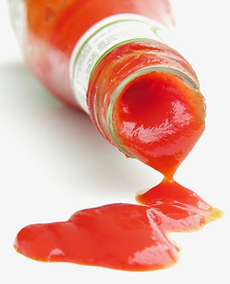
All ketchups are hardly created equal, as you’ll see in our review of 42 different brands. Photo © Claudio Beldini |Fotolia.

MENU


Condiments
Category Main Page
Articles & Reviews


Main Nibbles
Main Page
Articles & Reviews Of Foods From A To Z


Product Reviews

Main Page
Foods, Beverage, Books
News & More


ABOUT THE AUTHOR


STEPHANIE ZONIS is a Contributing Editor at THE NIBBLE.


October 2007

Product Reviews / Main Nibbles / Condiments

A Fresh Look At Ketchup

Both Tomato Ketchup & Non-Tomato Ketchup (Cranberry, Mushroom, Plum...Banana Ketchup, Anyone?)


CAPSULE REPORT: In perhaps the most exhaustive tasting of ketchups you’ll find, intrepid food writer Stephanie Zonis tasted 42 ketchups, 32 tomato-based and 10 others ranging from banana to mushroom (as you’ll read, the original ketchups were not made from tomatoes). The results may surprise you. In the tomato ketchup category, some of the best-known names in specialty food were bested by little-known companies such as Appledore Cove, Catsup à la Tomate (from France), Happy Girl (organic), June Taylor (organic ingredients) and Tracklements (from the U.K.). The good news is that one of our favorites, Muir Glen, is one of the least expensive, the most widely available at retail (at most stores that sell natural and organic foods) and is both organic and kosher. There were clear favorites in the non-tomato category as well. These top ketchups are worthy stocking-stuffers and house gifts; and if you put together a collection, you’ll make your favorite ketchup lover very happy.


You Say Tomato, I Say Banana: A Fresh Look At Ketchup

Upon hearing that I’d been assigned an article on ketchup, a friend expressed astonishment. She thought I only wrote about upscale specialty foods. Why was I writing about an inexpensive condiment available in any convenience store? And there are only two or three brands, so what’s the point?

The point is that none of the common ideas about ketchup are necessarily true. If you live in the U.S., most likely, the ketchup you’ve been exposed to is tomato-based, relatively cheap, and easy to find anywhere. It lends color and a salty-sweet-vinegary flavor to hamburgers and French fries. You might use it on meatloaf or scrambled eggs. And most people think that’s about it. As it turns out, though, there can be a lot more to ketchup.

What’s In a Name: Ketchup, Catsup Or Catchup?

Perhaps a good place to start would be with the product’s name. FDA standards allow any of the above as legal names for this condiment. But which is really correct?

Heinz KetchupAccording to Andrew Smith, author of Pure Ketchup: A History of America’s National Condiment there is a great etymological confusion over the origin of this condiment’s name. Suggestions have ranged from corruptions of the French term escaveche, meaning “food in sauce,” to a variation of the Indonesian word kecap, to the claim by the editors of the Oxford English Dictionary that ke-tsiap (“the brine of pickled fish”) was the forefather. Each of these etymologies has its supporters and detractors, and, like much food history, the true past of our modern term is shrouded in the mists of time.
Photo © J.L. Hennaux | Fotolia.

No matter. All three words are used to describe the product today. Because “ketchup” is the most common spelling, it will be used throughout this article, except where particular product names are spelled differently.

The History Of Ketchup: Preserve Us!

Having at least one good method of preserving food has been vital to civilizations for millennia. Lacking modern methods of processing and refrigeration, earlier societies often turned to salting, brining (soaking foods in a mixture of salt and water) and/or pickling (immersing foods in a diluted vinegar solution). Sometimes, salting and pickling were used in combination. The idea here was to prevent harmful bacteria from entering into, and growing on, the food.

ColaturaSauces have been used on foods since ancient times. Early sauces in Greek and Rome were often made from salting or fermenting fish, while those in Asia were made from fish or soybeans. They survive today in the form of the Thai fish sauce nam pla (the same type of sauce goes by a different name in each Asian country); and the Romans’ favorite condiment, garum, an expensive fish sauce used by the wealthy the way we use table salt, survives as a costly specialty food called colatura (photo at left).


In the medieval era, sauces often had an acidic base, such as vinegar, ale or wine. But in the late 1600s and early 1700s, sauces became less fashionable; they were replaced by pickled vegetables, especially mushrooms and walnuts. These pickles, in addition to vinegar, contained spices. The liquid from a mushroom pickle, with a deep brown hue from the vegetable and flavored by spices, came to be seen as a condiment by itself.

Andrew Smith writes that the British initially ran into ketchup in Southeast Asia, during the years when Britannia was first attempting to rule the waves. What they found, however, was not one product, but several. There were a handful of different sauces made from fermented soy beans or fish, with varying textures, thicknesses and levels of saltiness (and even sweetness). Smith states that ketchups were being imported into England prior to 1680. The first known recipe for ketchup in English was published in 1727 by a female author surnamed Smith. Part of a volume entitled Compleat Housewife; or, Accomplished Gentlewoman’s Companion, the condiment was spelled as “kachop.” Ingredients included anchovies, shallots, white wine vinegar, two types of white wine, mace, ginger, cloves, whole peppers, a whole nutmeg, lemon peel and horseradish—a kind of early Worcestershire sauce.

Watkins' Mushroom Ketchup
Watkins Mushroom Ketchup, a rich cooking sauce, was the “secret of success” of many Victorian cooks in England. Made with dried mushrooms, roasted barley malt extract and spices, it is still used today, as we use tomato ketchup, to enhance steak and roast meats. Similar in consistency to Worcestershire sauce, a dash added while cooking also enhances soups and stews. Try it for yourself at iGourmet.com. It was one of our favorites in the non-tomato ketchup category.

By the mid-1700s ketchups were a staple in British shops. There were three basic types: mushroom, walnut and fish. Naturally, British recipes and food preferences were predominant among colonists in the soon-to-be United States. If tomato ketchup was being made during this era, it does not seem to have been sold commercially. Although U.K. citizens were eating tomatoes by this time, there were still many in the fledgling U.S. (as well as in Europe) who believed that tomatoes (also called love apples and wolf peaches), as members of the nightshade family, were poisonous.

In fact, only famine in Italy caused the peasants to eat tomatoes. Although yellow cherry tomatoes had been brought back from the New World by Christopher Columbus at the turn of the 16th century and then by Hernando Cortez in 1529, only lean times drove people to eat the fruit. No one died, and the first documented tomato sauce recipe in Italy is from 1839.

The first known recipe for tomato ketchup was published in 1804 by James Mease, a Philadelphia physician and scientist. The next 25 years saw a great rise in the condiment’s popularity, although tomato ketchup shared the spotlight with the three traditional British mainstay varieties, as well as ketchups made from a host of other foods (including oysters, lemons, cucumbers, and elderberries). Cookbook upon cookbook printed recipes for homemade ketchups. As Smith notes, good keeping quality was an important reason for ketchup’s popularity. And because most ketchups were concentrated products, only a small quantity was required to add a lot of flavor.

Ketchup And Tomatoes
It’s hard to believe, but tomato ketchup didn’t
appear until 1804. It was homemade—commercial ketchup debuted in the late 1800s. Photo © Monika Adamczyk | Fotolia.

Early tomato ketchups were not sweetened per se (they contained some sweet spices, but not sugar or other sweeteners). When sugar started to be added to ketchup (in the mid-1800s), only a small quantity was used at first. This resulted in fermentation, which meant sour-tasting ketchup. When more sugar was added to sweeten the sour taste, a greater quantity of vinegar was added to keep the sweetness in check. The larger amount of vinegar resulted in a chemical reaction that created “invert” sugars (a process whereby sucrose, or table sugar, is broken down into its component simple sugars, glucose and fructose), which made the ketchup sweeter still.

Homemade ketchup remained a well-loved staple until commercial ketchup began to take over in the late 1800s. Ketchup-making at home was time-consuming, tedious and involved many steps, while mass production capability and improved techniques made commercial ketchups less and less expensive.

Ketchup As We Know It

In the late 1800s and early into the twentieth century, commercially-made tomato ketchup was confronted with many of the same issues then affecting other foods produced by professional manufacturers, some of whom were rather less professional than could be desired. Boric acid, benzoic acid and sodium benzoate, once widely used as preservatives in ketchup, were increasingly believed to produce adverse health effects. Ketchups were made from rotted, decomposed or unripe tomatoes; some contained artificial coloring, which was often based on coal-tar. They contained starches or other unsuitable ingredients, such as pumpkin. The passage of the Pure Food and Drugs Act, in 1906, was a big first step in forcing tomato ketchup manufacturers to clean up their act. But how could they guarantee the keeping and eating qualities of ketchup without preservatives?

The H.J. Heinz Company set out to prove that this was not an impossible task. According to Andrew Smith, Heinz began the ketchup-making process with red, ripe Ripe Tomatotomatoes, not the green, underripe fruit or the overripe fruit so often used in that era. Ripe tomatoes contain more pectin, a gelling agent, and pectin content was crucial in creating a higher-density product that had more body. Heinz’s ketchup had far more solids, in it, too. It “contained more salt and almost twice as much sugar and vinegar” as other ketchups manufactured commercially. And, thanks to the keeping qualities of higher amounts of vinegar, sugar and salt, Heinz ketchup did not require preservatives. The company guaranteed its product against spoilage, in fact. Because of effective advertising campaigns and lobbying by Heinz and other manufacturers, and more studies showing the downsides of using benzoate and benzoate-related products, virtually all ketchups on the market were preservative-free by 1911.   
Photo of tomato by A. Kotz | SXC.

Today’s ketchup industry differs greatly from what it once was. Many of the small manufacturers that produced tomato ketchup in the twentieth century are gone, bought out or forced out of business by poor sales (although a number have sprung up in more recent years). Tomato varieties specifically geared toward ketchup production have been developed. More tomatoes are now grown in China than anywhere else in the world. Changes in transportation and manufacturing processes have been enormous. There have been alterations in the basic Heinz formula, too, but not that many. Most notably, those changes have been in the sweetener used. Instead of sugar, almost all mass-produced ketchup now uses corn syrup, high fructose corn syrup or a combination of the two.

More Modern Ketchup

Perhaps the silliest moment in ketchup’s history came in 1981, at a time when the Reagan administration attempted to declare ketchup as a vegetable. Doing so would allow the government to save money on the federally-funded school lunch programs. President Reagan attempted to defend this classification by noting that ketchup is made from tomatoes. Among howls of protest from parents, nutritionists and almost everyone else except schoolchildren, however, the undertaking was hastily shelved…until 1995, when a GOP-controlled Congress gave it another try, for the same reason. It is interesting to note that the last laugh of this incident may be on the American public. In the Food and Drug Administration’s standards (Title 21), revised in April of 2006, ketchup is indeed listed under the “Canned Vegetables” subheading.

The 1981 declaration had serious consequences for one of the “Big Three” ketchup manufacturers at that time. Heinz and Hunt’s spelled their condiment “ketchup,” so they were fine. But Del Monte had been using the “catsup” spelling. With the government’s decision that “ketchup” was a vegetable, Del Monte was out in the cold. Given the speed with which the ketchup declaration was revoked, this amounted to no big deal. Soon afterward, however, Del Monte changed the spelling of their product to “ketchup,” and it’s been that way ever since.

How Ketchup Is Manufactured

Large-scale ketchup making begins with the selection of tomatoes. Enotes.com asserts that only tomatoes superior in color, flavor, texture and yield are used. Consistency is of great importance, too, as consumers want their ketchup to be the same, bottle after bottle. Tomatoes are harvested mechanically, graded, sorted, washed and chopped. They’re precooked in stainless steel vats, a process called “scaling,” which preserves them and eliminates any bacteria.

  • Machines called cyclones separate the precooked tomato pulp from any stems, seeds or skins. The pulp is screen-filtered; some portion of it is usually saved for use after the harvest is over.
  • KetchupThe filtered pulp is pumped into cooking vessels and heated to boiling. While it cooks, a process that takes some 30 to 45 minutes, sweetener, vinegar, spices, salt and flavorings are added in exact quantities. When these ingredients are added often depends upon their form. Enotes.com states that “most spices are added early in the cooking process,” but if spice oils are used instead of actual spices, these “volatile” oils must be added later in the process. Sugar and salt can be added at any time, but if sugar is added later, it’s less likely to burn. The cooking mixture is kept moving by mechanical stirring blades. The cooking temperature is monitored carefully; too high a temperature will result in an overcooked, flat-tasting product.
    Photo by Scott Bauer, courtesy of U.S. Agricultural Research Service.
  • Once the cooking process is complete, the ketchup is again filtered, creating a smoother consistency. Any excess air is removed from the ketchup, as it might allow for darkening of the product or the growth of bacteria. The ketchup is pumped into a filling machine at a temperature of 190°F or higher (again, to avoid any bacterial contamination). Bottles or other containers are filled and sealed immediately.
  • The sealed containers must be cooled to prevent a condition called “stack burning,” which occurs if ketchup remains at high temperatures for too long after the cooking process is finished. Cold air or cold water provide a chilly environment in which the temperature of the ketchup can safely decrease.

Ketchup Today

The sheer volume of ketchup sold worldwide in the 21st century is staggering. While Heinzthe Big Three of the industrial ketchup world are Heinz, Hunt’s and Del Monte, it is indisputable that Heinz retains the lion’s share of the market. Heinz Tomato Ketchup is sold in 150 countries, according to their U.K. foodservice website. The company sells 11 billion bottles of this condiment every year, and Heinz has dominant market share in almost every nation where it competes with one or more other brands. Given multiple types of popular diets and eating styles and the surging popularity of salsa, however, even this tomato titan has had to do some innovating. In addition to their old standby, Heinz now produces Organic; No Salt; Reduced Sugar; and Hot and Spicy Ketchup Kick’rs varieties. Heinz even allows consumers to purchase bottles of ketchup with custom-worded labels, through the MyHeinz.com website.

If you look at the ingredient list of any tomato ketchups produced by the Big Three, you’ll notice that the first ingredient is “tomato concentrate.” But what is tomato concentrate? Upon checking FDA identity standards for tomato concentrate, it turns out that this substance is “a concentrated form” of at least one of the following: “the liquid obtained from mature tomatoes of the red or reddish varieties”; “the liquid obtained from the residue from preparing such tomatoes for canning, consisting of peelings and cores with or without such tomatoes or pieces thereof”; and/or “the liquid obtained from the residue from partial extraction of juice from such tomatoes.” Further, the FDA notes that “such liquid is obtained by so straining the tomatoes, with or without heating, as to exclude skins (peel), seeds and other coarse or hard substances in accordance with good manufacturing practice.” When ketchup is mass-produced, manufacturers seek to find a form of tomato that is easy to produce, easy to store, and a convenient “first step” in the manufacturing process. Tomato concentrate fills that need.

Tomato Concentrate vs. Tomato Paste

One of the added bonuses—for those in quest of True Food Knowledge—is that when you write articles like this, you get to find so much Truth. After researching the part above, about the meaning of tomato concentrate, it begged the question: How does tomato concentrate differ from tomato paste, and tomato puree? You can google this question and get bad information—as you’ve been told, there’s a lot of bad information online. We went straight to the FDA Title 21 legalities for these definitions (and for the information about tomato concentrate above):

  • A product can be called tomato purée or tomato pulp if the food contains not less than 8.0% but less than 24.0% tomato soluble solids.
  • A product can be called tomato paste if the food contains not less than 24.0% tomato soluble solids.
  • The name tomato concentrate may be used in lieu of the name tomato purée, tomato pulp or tomato paste whenever the concentrate complies with the requirements of such foods; except that the label shall bear the statement “for remanufacturing purposes only” when the concentrate is packaged in No. 10 containers (3.1 kilograms or 109 avoirdupois ounces total water capacity) or containers that are smaller in size.

So tomato concentrate could be tomato paste, but isn’t necessarily.

Ketchup Sales

Ketchup’s popularity is enough to produce a state of condiment envy among all other products of its kind. While salsa surpassed ketchup in gross sales in 1990, ketchup is still found in 97% of American households. The fast-food chain McDonald’s uses 250 million pounds of ketchup annually, a figure equal to 11% of Heinz sales worldwide. (If this is accurate, it would mean that annual sales of Heinz ketchup total over 2.25 billion pounds.)

Americans consumed about $435 million worth of ketchup in 2006, almost $77 million of it was in private label brands (your own supermarket’s own label, for example), a smattering in the boutique brands discussed below, and the bulk of the remaining $358 million divided among Heinz, Del Monte and Hunt’s. Not surprisingly, households with kids use the most ketchup, and sales spike around key “barbecue holidays” such as Memorial Day, Independence Day and Labor Day.

I Want My Umami and More Matters of Taste

Until fairly recently, Americans were taught that there are four defined, basic tastes in the human palate: sweet, salty, sour and bitter. In fact, there are five fundamental Professor Kidunae Ikedatastes that have been identified. The fifth is umami. In 1909, a Japanese professor of physics, Kidunae Ikeda (shown in the photo at right), isolated a compound which gave broths a meaty, full, savory presence, even when they lacked meat. Ikeda called this sensation “umami,” which translates as both “deliciousness” and “savory.” Technically, the compound is called glutamate, the basis of the flavor enhancer, monosodium glutamate (MSG). It rouses taste receptors on the tongue, as do sugar and salt. Glutamates occur naturally in foods such as fish stock, cured meats, soy sauce, mushrooms and cooked tomatoes. When Henry John Heinz made the change to ripe tomatoes in his ketchup, increasing the quantity of tomato solids, the ketchup became a powerful provider of umami. (For more information about “the fifth taste,” read our in-depth article on umami.)

H.J. Heinz’s new formulation for ketchups had other sensory impacts, too. The condiment had always been both bitter and salty. But by greatly increasing the amount of vinegar in ketchup, it was now sour as well. And after the Heinz reformulation it contained twice the quantity of sugar, so it was sweet, too. In a single condiment, Heinz managed to touch on all five fundamental tastes—not an inconsequential matter. No wonder ketchup became America’s condiment of choice.

The “Davids” of Ketchup

The Big Three mass-marketed ketchup brands are the Goliaths in the world of ketchup—served at fast-food and chain restaurants, your local diner...and your own kitchen. But given that (we’ll have to estimate, here) 90% of ketchup sold in the U.S. French Fries And Ketchupis made by Goliath(s) and mass-marketed private label brands (from your regional supermarket chains to Trader Joe’s), the number of small-scale ketchup manufacturers is simply astounding. A little online research yielded ketchup makers from Maine to Louisiana to Pennsylvania to California—not to international  producers. While many of these specialty ketchups are tomato-based, others use different fruits or vegetables, including apples, bananas, cranberries, mushrooms, pears, and plums. These “ketchupstarts” can get very creative in their use of flavorings. A good number are spicy-hot, reflecting the increasing American interests in consuming spicy foods. Some use basil, curry, dill, garlic or onions. I even found “ketchup” that’s really mustard sauce in a bottle.
Photo © A.G. Photographer | Fotolia.

How do you know that a small-scale producer isn’t just making mass-quality ketchup on a lesser scale? First of all, there would be little point in doing so. Small producers have to struggle to make themselves known and get “brand identity” established, so the best way to do that is to make your ketchup truly different from the mass-produced stuff. Also, you can look at the ingredient list. At least in the US, makers of mass-production ketchups all make only tomato ketchup. The first ingredient in a mass-produced ketchup will be tomato concentrate; the sweetener (unless the ketchup is organic) will be corn syrup, high fructose corn syrup, or both.  By contrast, the first ingredient in a tomato ketchup produced by a smaller manufacturer is likely to be tomatoes, tomato paste or water (if it’s water, tomato paste will be the second ingredient). The sweetener for a specialty ketchup will likely not be a form of corn Ketchup Swirlsyrup (in my taste-tests, I found only two small-scale producers, Johnny Midnite and Cherry Republic, who use corn syrup). Instead, it will be anything from organic sugar to brown sugar to honey to maple syrup. Sodium levels are often much lower for upscale ketchups, too. There are specialty ketchups that contain no nutrition information on their labels (this is quite legal, as long as they list ingredients and fall under a certain dollar figure in sales per year), but those that do list sodium content can have up to 70% less sodium than regular Heinz. Ketchups produced by the “little guys” tend to have less of a powerful vinegar aftertaste, if they have any at all. I find many of these ketchups to have more flavors, and those flavors are often in excellent balance, as opposed to the overwhelming sweet-salty-vinegar experience of ketchups produced by one of the Big Three. Specialty ketchups will be more expensive than the brands with which we’re all familiar, too.
Photo © Doug Olson | Fotolia.

We all know that different doesn’t necessarily mean better. But if it’s time for you to try something new in ketchup, there are some wonderful products available. I hope you’ll see fit to taste some of them and broaden your ketchup horizons.

Ketchup Evaluations

Here, the Davids take on the Goliaths. The reader is cautioned that the ketchups listed below represent only a percentage of those available to consumers. No spicy-hot ketchups were purposely tried, simply because the author of this piece is an utter spice wimp.

All ketchups were tasted by themselves, from a spoon. No more than four ketchups were tasted at one sitting, with at least three minutes allowed to elapse between samples for palate-cleansing. If a ketchup bottle provided a “use by” or “best by” date, that information is noted; bottles without this information are listed as “No date code.” Where such information was provided, per-serving calories and sugar and sodium contents are listed. Tomato-free ketchups are listed in a separate category. Within each category, ketchups are listed in alphabetical order.  (*) indicates a favorite, (†) indicates a kosher product, (‡) indicates an organic product.

Tomato-Based Ketchups

  • Appledore Cove Ketchup*Appledore Cove Sweet Country Ketchup (photo at right). Aroma: tomatoes and sweet spices (cinnamon and clove). Taste: definite but not excessive sweetness, followed by a good tomato flavor, then by spices. Slightly chunky texture. A favorite. Per one tablespoon serving: 20 calories, 4g sugars, 70mg sodium. First ingredient: tomatoes. Sweetener: cane sugar. No date code.
  • Annie’s Naturals Organic Ketchup. Aroma: vinegar and cooked tomatoes. Taste: cooked tomatoes, sweet sharp, salty, with some vinegar aftertaste. Per one tablespoon serving: 20 calories, 2g sugars, 150mg sodium. First ingredient: water (organic tomato paste is second). Sweetener: organic sugar. Date coded.
  • Barry Farm Tomato Catsup. Aroma: bell peppers and tomatoes. Taste: tomatoes, a little salt and a little sweetness, some vinegar aftertaste. Slightly chunky texture, much thicker consistency than most. Per one ounce serving: 20 calories, sugars not listed, 114mg sodium. First ingredient: tomatoes. Sweetener: honey. No date code.
  • Brooks Rich & Tangy Ketchup.  Aroma: less than most, but some vinegar with a little tomato. Taste: sweet, salty, tomato, with some vinegar aftertaste. Per one tablespoon serving: 20 calories, 5g sugars, 160mg sodium. First ingredient: tomato concentrate (tomato paste and water). Sweetener: high fructose corn syrup. No decipherable date code.
  • Burpee Gourmet Ketchup (Basil). Aroma: tomato and basil. Taste: tastes like a pasta sauce, with no vinegar or spice notes, but good tomato and basil flavors. Thicker consistency than most. Chunky texture, with visible bits of basil. Per one tablespoon serving: 10 calories, 2g sugars, 50mg sodium. First ingredient: tomato paste. Sweetener: Vermont maple syrup, sugar. Date coded.
  • Burpee Gourmet Ketchup (Dill). Aroma: tomatoes and dill. Taste: strong sweetness of tomatoes with a good note of dill. The dill is visible in this ketchup, which is of a slightly chunky texture. Per one tablespoon serving: 10 calories, 2g sugars, 50mg sodium. First ingredient: tomato paste. Sweetener: Vermont maple syrup, sugar. Date coded.
  • Burpee Gourmet Ketchup (Onion). Aroma: tomato paste. Taste: tomato paste and onion. Thicker consistency than most. Again, this seems more like a pasta sauce. Slightly chunky texture, with some larger pieces of onion. Per one tablespoon serving, 10 calories, 2g sugar, 50mg sodium. First ingredient: tomato paste. Sweetener: Vermont maple syrup, sugar. Date coded.
  • Burpee Gourmet Ketchup (Tomato). Aroma: red peppers and tomatoes. Taste: tomato paste. Thicker consistency than most. This seems like slightly thinned tomato paste.  Per one tablespoon serving: 10 calories, 2g sugars, 50mg sodium. First ingredient: tomato paste. Sweetener: Vermont maple syrup, sugar. Date coded.
  • Catsup a la Tomate*Catsup à la Tomate (Tomato Catsup) (photo at the right). Aroma: intense tomato. Taste: tomatoes! The sweetness of tomatoes with not much of a sugar or spice flavor and some vinegar aftertaste. Thinner consistency than most. A pain to open, but a favorite for flavor. No nutrition information. Imported from France. First ingredient: tomatoes. Sweetener: sugar. Bottle is corked, then capped with wax, although there is another sealing mechanism once the catsup is opened. No date code.


  • Cherry Republic Cherry Ketchup. Aroma: cooked tomato, slight spice. Taste: sweet, salty, tomato, spice, but without the strong vinegar afterburn prevalent in many tomato-based ketchups. Contains dark sweet cherries. Thicker than most. No nutrition information. First ingredient: tomato paste. Sweetener: corn syrup. No decipherable date code.
  • Del Monte Ketchup. Aroma: faint, cooked tomatoes and vinegar. Taste: sweet, salty, sour, tomato, with a powerful vinegar aftertaste. Per one tablespoon serving: 15 calories, 4g sugars, 190mg sodium. First ingredient: tomato concentrate. Sweetener: corn syrup. Date coded. Certified kosher by Triangle K Kosher Supervision.
  • Gold’s Ketchup with a Hint of Horseradish. Aroma: vinegar and horseradish/peppery. Taste: tomato, vinegar, and horseradish, with a strong vinegar/horseradish aftertaste. Slightly chunky texture. Per one tablespoon serving: 5 calories, 1g sugar, 60mg sodium. First ingredient: tomato paste. Sweetener: sugar. No decipherable date code. Certified kosher by The Union of Orthodox Jewish Congregations.
  • Happy Girl Ketchup*‡Happy Girl Kitchen Company Certified Organic Heirloom Tomato Country Ketchup (photo at right). Aroma: nose-filling tomato aroma. Taste: Intense tomato with the sweetness of the fruit predominant, just a trifle of sharpness. Neither seeds nor skins are filtered out of this ketchup. A favorite. No nutrition information. First ingredient: organic heirloom tomatoes. Sweetener: honey.No date code.


  • Hawkshead Relish Company Spicy Tomato Ketchup. Aroma: bell peppers and tomatoes. Taste: bell peppers, with a strong flat, almost metallic note. Despite the name, this ketchup is not really spicy, though there is an afternote of chile pepper. Thicker than most, with a slightly chunky texture. No nutrition information. Imported from the U.K. First ingredient: tomatoes. Sweetener: sugar. Date coded.
  • Hela Gewurz Ketchup Delikat (Mild Curry Ketchup). Aroma: curry, spices. Taste: sweet, mild curry with other spices, no real tomato presence. Somewhat thicker than most. No per-serving nutrition information. Imported from Germany. First ingredient: tomato juice. Sweetener: sugar, dextrose. Date coded.
  • Heinz No Salt Added Tomato Ketchup. Aroma: cooked tomatoes and vinegar. Taste: tinny and flat, intense tomato, overwhelmingly vinegary aftertaste. Absolutely awful. Certified kosher by The Union of Orthodox Jewish Congregations. Date coded. Per one tablespoon serving: 15 calories, 4g sugars, 0mg sodium. First ingredient: tomato concentrate. Sweetener: high fructose corn syrup, corn syrup.
  • ‡†Heinz Organic Tomato Ketchup. Aroma: vinegar. Taste: sweet, salty and sharp, with an overwhelmingly vinegary aftertaste. Per one tablespoon serving: 20 calories, 4g sugars, 190mg sodium. First ingredient: organic tomato concentrate. Sweetener: organic sugar. Date coded. Certified kosher by The Union of Orthodox Jewish Congregations.
  • Heinz Reduced Sugar Tomato Ketchup. Aroma: vinegar. Taste: intense tomato flavor, salty, with powerful vinegar aftertaste. Per one tablespoon serving: 5 calories, 1g sugars, 190mg sodium. First ingredient: tomato concentrate. Sweetener: sucralose. Date coded. Certified kosher by The Union of Orthodox Jewish Congregations.  
  • Heinz Tomato Ketchup. Aroma: vinegar. Taste: salty, sweet and sharp, with an overwhelmingly vinegary aftertaste. Per one tablespoon serving: 15 calories, 4g sugars, 190 mg sodium. First ingredient: tomato concentrate. Sweetener: high fructose corn syrup, corn syrup. Date coded. Certified kosher by The Union of Orthodox Jewish Congregations.
  • Henry’s Grandma’s Catsup. Aroma: gentle vinegar and a bit of spice. Taste: quite sweet, intense tomato and a bit of spice, with some vinegar aftertaste. Thicker consistency than most, with some chunks of onion. No nutrition information. First ingredient: tomatoes. Sweetener: sugar. No date code.
  • Hill Country Homestyle Canning Mild Jalapeño Ketchup. Aroma: jalapeño, vinegar and garlic. Taste, jalapeno, sweet, tomato and salt flavors. Definite heat “afterburn,” but not scorching. This may be mild by Texas standards, but it isn’t so by mine! Thinner than most, with a slightly chunky texture. No nutrition information. First ingredient: tomato sauce. Sweetener: sugar. No date code.
  • Hunt’s Tomato Ketchup (No Salt Added). Aroma: vinegar. Taste: sweet and intense tomato but flat, with some vinegar aftertaste. Per one tablespoon serving: 20 calories, 4g sugars, 0mg sodium. First ingredient: tomato concentrate. Sweetener: high fructose corn syrup, corn syrup. Date coded. Certified kosher by The Organized Kashrus Laboratories.
  • Johnny Midnite Coyote Ketchup. Aroma: like a barbecue or steak sauce. Taste: Very salty, a bit of a spice kick, vinegar and spice aftertaste. Much thinner June Taylor Ketchupconsistency than most. No nutrition information. First ingredient: tomato paste. Sweetener: corn syrup, sugar. Date coded.
  • *‡June Taylor Tomato Ketchup (photo at right). Aroma: tomatoes, sweet spices, and vinegar. Taste: intense tomato, with sweet notes; also sweet spices and some vinegar aftertaste. Somewhat thicker consistency than most. A favorite. No nutrition information. First ingredient: organic tomatoes. Sweetener: organic sugar. Note: The ingredients are organic but the product has not applied for USDA organic certification. No date code.
    Photo of June Taylor ketchups ©  Perry Small.


  • Muir Glen Ketchup*†‡Muir Glen Organic Tomato Ketchup (photo at right). Aroma: cooked tomatoes and sweet spices. Taste: tomatoes, cloves, and cinnamon, with some vinegar aftertaste. Very high sodium level, but a favorite for flavor. Per one tablespoon serving: 20 calories, 3g sugars, 230mg sodium. First ingredient: organic tomato purée (organic tomato paste and water). Sweetener: naturally milled sugar. Date coded. Certified kosher by The Organized Kashrus Laboratories.
  • Stonewall Kitchen Country Ketchup. Aroma: tomatoes, onions and a bit of vinegar. Taste: sweet, tomato-y, slight salt, some vinegar and a touch of heat. Multiple flavor levels. Chunky texture and thicker than most others. Per one tablespoon serving: 20 calories, 4g sugars, 99mg sodium. First ingredient: tomatoes (tomato juice, citric acid and calcium chloride) and tomato paste. Sweetener: cane sugar. Date coded.
  • Tracklements Ketchup*Tracklements Tomato & Pepper Ketchup (photo at right) Aroma: sharp but not vinegary, tomatoes. Taste: sweet, tomatoes and vinegar, with a little heat at the back of your throat. Somewhat chunky texture.  No nutrition information. First ingredient: tomatoes. Sweetener: sugar. A favorite, made in the U.K.—“tracklement” is a British term meaning an accompaniment to the centerpiece of a meal. Date coded.
  • Wegman’s Tomato Ketchup (no online sales). Aroma: vinegar, some tomato. Taste: sweet, salty, some tomato, some vinegar aftertaste. Per one tablespoon serving: 15 calories, 4g sugars, 190mg sodium. First ingredient: tomato concentrate. Sweetener: high fructose corn syrup, corn syrup. Date coded. Certified kosher by The Union of Orthodox Jewish Congregations.
  • Westbrae Natural Fruit Sweetened Ketchup. Aroma: tomato, vinegar, and spices. Taste: tomato, sharp with definite vinegary aftertaste. Thicker consistency than most, almost like tomato paste. Per one tablespoon serving: 10 calories, 2g sugars, 70mg sodium. First ingredient: tomato paste. Sweetener: fruit juice concentrate (apple and/or pear). Aroma: tomato, vinegar, and spices. Taste: tomato, sharp, with definite vinegary aftertaste. No date code. Thicker consistency than most, almost like tomato paste. Certified kosher by The Union of Orthodox Jewish Congregations. 
  • Westbrae Natural Unsweetened Ketchup. Aroma: faint tomato-spice, but not much aroma at all. Taste: tomato, sharp, and rather flat. Thicker consistency than most, almost like tomato paste. Per one tablespoon serving: 5 calories, less than 1g sugars, 70mg sodium. First ingredient: water (tomato paste is the second ingredient). Sweetener: none added. No date code. Certified kosher by The Union of Orthodox Jewish Congregations.  
  • Whole Foods Market 365 Organic Tomato Ketchup (no online sales). Aroma: cooked tomatoes and vinegar. Taste: sweet, salty and sharp, with tomatoes lurking in the background. Somewhat vinegary aftertaste. Per one tablespoon serving: 20 calories, 4 g sugars, 160 mg sodium. First ingredient: organic tomato puree. Sweetener: organic sugar. No date code.
  • Whole Foods Market 365 Tomato Ketchup (no online sales). Aroma: vinegar and cooked tomatoes. Taste: salty, sweet, and sharp, with an overwhelming vinegar aftertaste. Per one tablespoon serving: 20 calories, 4g sugars, 160mg sodium. First ingredient: tomato purée. Sweetener: evaporated cane juice. No date code.

Non-Tomato-Based Ketchups

  • Barry Farm Apple Horseradish Catsup. Aroma: faint apple, some spices, and vinegar. Taste: some apple sweetness, some salt, some horseradish/vinegar. Per one ounce serving: 20 calories, sugars not listed, 114 mg sodium. First ingredient: apples. Sweetener: cane juice crystals. Tomato-free. Powerful sharp aftertaste. No date code.
  • *Barry Farm Cranberry Catsup. Aroma: sharp and vinegary, faint berry scent. Taste: cranberry, with sour and sharp notes and a little hit of vinegar at the end. A favorite. You’ll know there are cranberries in this, both from the appearance and the flavor. Much thicker consistency than most, almost preserve-like. No nutrition information. First ingredient: cranberries. Sweetener: cane juice crystals. Tomato-free. Chunky texture. No date code.
  • Barry Farm Pear Catsup. Aroma: vinegar and spice. Taste: sharp, salty and with spices, but it also includes the delicate sweetness of pears. Vinegar punch at the end. Slightly chunky texture. Per one ounce serving: 20 calories, sugar content not listed, 114 mg sodium. First ingredient: pears. Sweetener: cane juice crystals. Tomato-free. No date code.
  • *Barry Farm Plum Catsup. Aroma: spices. Smells like autumn with a little sharpness. Taste: beautiful, indefinable fruit sweetness, sweet spices, and some vinegar aftertaste. Thinner consistency than most. A favorite. No nutrition information. First ingredient: plums. Sweetener: brown sugar. Tomato-free. No date code.
  • Barry Farm Rhubarb Catsup. Aroma: vinegar and spices. Taste: slightly sour, with some tomato flavor, some element of spice and sweetness, and a vinegar “kick” aftertaste. No nutrition information. First ingredient: rhubarb. Sweetener: cane juice crystals. Surprisingly, this does contain tomatoes, but they are not the predominant ingredient. No date code.
  • *†Chef Allen’s Mango Ketchup (click on “Gourmet Gifts”). Aroma: mangos and a bit of spice. Taste: the sweetness of mangos, with an aftertaste of spice that curls around the edges of your tongue. Thinner consistency than most. A favorite. Per one tablespoon serving: 20 calories, 4g sugars, 25mg sodium. First ingredient: mangos. Sweetener: sugar. Tomato-free. Bright orange color. Certified kosher by The Union of Orthodox Jewish Congregations. No date code.
  • *Geo. Watkins Mushroom Ketchup. Aroma: sweet spices and vinegar (here called “acetic acid”). Taste: salt, salt and more salt. Some mushroom flavor, with a powerful vinegar aftertaste. See the “Preserve Us!” section of this piece; this is an old-style ketchup, pre-dating tomato ketchups. Much thinner consistency than most, with a dark brown color. No nutrition information. First ingredient: water (second ingredient is salt). Sweetener: technically, none, though the corn-based maltodextrin in the mushroom powder may provide a very modest amount. Date coded.
  • Love Family Farms Banana Ketchup. Aroma: sharp, vinegary. Taste: indefinable fruit, sharp, sour and spice. Definite vinegar flavor as well as aftertaste. Really interesting flavor, but you wouldn’t know it was made from bananas. Slightly thinner consistency than most. No nutrition information. First ingredient: Hawai’ian grown bananas. Sweetener: honey, brown sugar. Tomato-free. No date code.
  • Nomato Ketchup by Norine. Aroma: carrots, gentle vinegar, a little spice. Taste: carrots, salt and spice; some vinegar aftertaste. Slightly chunky texture that is somewhat thicker than most. Per one tablespoon serving: 20 calories, 3g sugars, 100mg sodium. First ingredient: organic carrots. Sweetener: organic brown rice syrup, sugar. Tomato-free. Bright orange color. No decipherable date code.
  • Tracklements Sweet Mustard Ketchup. Aroma: vinegar, sharply mustardy. Taste: mustard, salt, vinegar, somewhat sharp aftertaste. Thinner consistency with some visible mustard seeds. Be aware that this is a mustard sauce called a ketchup. No nutrition information. First ingredient: mustard. Sweetener: raw cane sugar. Tomato-free. Date coded.

Sources


© Copyright 2005- 2008 Lifestyle Direct, Inc. All rights reserved. Images are the copyright of their respective owners.


Spread The Word: Each icon below links to a site where you can bookmark, share and comment on this article:
Dine52    del.icio.us    ma.gnolia    Newsvine    Yahoo Myweb    BlinkList    simpy    reddit


.