August 2007
Last Updated February 2010
|
|
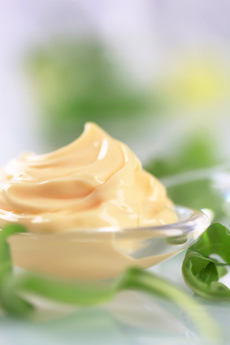
Julia Child’s Mayonnaise Recipe
Page 1: Homemade Mayonnaise ~ Much Tastier Than
Mayo From The Jar
Plus An Easy Blender Mayonnaise & Green Mayonnaise Recipe
This is Page 1 of a three-page article. Click on the black links below to visit other pages.
Overview
There’s nothing more delicious than homemade mayonnaise: Any resemblance to commercial mayonnaise is highly unlikely. When seeking the perfect recipe, whether as a sauce or a blending agent, we turned to the source for all classic instruction in french cooking: Ms. Julia Child. You can find a full education in mayonnaise-making in Volume 1 of Mastering The Art Of French Cooking (co-written with Louisette Bertholle and Simone Beck).
Mayonnaise can be hand-beaten (a.k.a. whisked, the original way), made with an electric beater or in an electric blender. Blender mayonnaise uses a whole egg rather than egg yolks, and as Julia says, “...it is almost automatic, and no culinary skill whatsoever enters into its preparation.” Needless to say, she does not provide a recipe!
“Mayonnaise made by hand or with an electric beater requires familiarity with egg yolks,” she admonishes. “It is certainly far from difficult once you understand the process, and after you have done it a few times, you should easily and confidently be able to whop together a quart of sauce in less than ten minutes.”
|
|
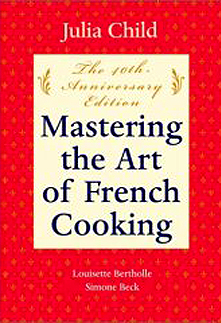
Recipes provided are from Mastering The Art Of French Cooking, Volume 1. |
Here are two Julia Childs recipes for handmade mayonnaise, although we urge you to purchase the book to see the many riffs on mayonnaise. You’ll find out where all those fancy French sauces got their names—and what’s in them!
And, because everyone likes a different tweak, we’ve included Fanny Farmer’s mayonnaise recipe as well.
Tips For Making Mayonnaise
Julia Child’s tips for homemade mayonnaise:
- Room Temperature: Have all ingredients at room temperature. If they aren’t, warm the mixing bowl in hot water to take the chill off the egg yolks; heat the oil to tepid if it is cold.
- Egg Yolks: Always beat the yolks for a minute or two before adding anything to them. When they are thick and sticky, they are ready to absorb the oil.
- Adding The Oil: The oil must be added very slowly at first, in droplets, until the emulsion process begins and the sauce thickens into a heavy cream. Then, the oil may be incorporated more rapidly.
- Proportions: The maximum amount of oil one large egg yolk can absorb is six ounces, or ¾ cup. When this maximum is exceeded, the binding properties of the egg yolks break down, and the sauce thins out or curdles. If you have never made mayonnaise before, it is safest not to exceed ½ cup of oil per egg yolk. Here is a table giving proportions for varying amounts of sauce:
| Number Yolks |
Cups Of Oil |
Vinegar Or Lemon Juice |
Finished Sauce |
| 2 |
1 to 1½ cups |
2 to 3 tablespoons |
1¼ to 1¾ cups |
| 3 |
1½ to 2¼ cups |
3 to 5 tablespoons |
2 to 2¾ cups |
| 4 |
2 to 3 cups |
4 to 6 tablespoons |
2½ to 3-2/3 cups |
6 |
3 to 4½ cups |
6 to 10 tablespoons |
3¾ to 5½ cups |
Continue To Page 1a: Julia Child’s Mayonnaise Recipe
Go To The Article Index Above
Recipes © copyright their respective owners. Additional material
Lifestyle Direct, Inc. All rights reserved.
|