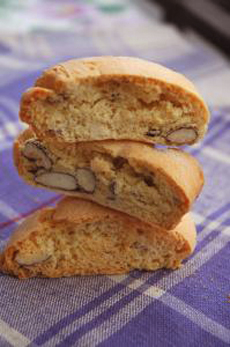
 Biscotti photo by Nathalie Dulex | SXC.
May 2006
Updated July 2009
|
|
The History of Biscotti
From The Roman Legions To Starbucks
CAPSULE REPORT: Originally made as a long-shelf-life food for travelers and carried by the Roman Legions, today’s biscotti are a popular accompaniment to cappuccino and a classic with Vin Santo. Originally flavored with almonds, they are now made in dozens of flavors. We’ve included Mario Batali’s favorite recipe if you want to bake your own. This is Page 1 of a two-page article. Click on the black link below to visit Page 2.
Overview
Though modern biscotti are associated with the Tuscan region of Italy, the popular Italian cookie traces its origins to Roman times. The word biscotto derives from “bis,” Latin for twice, and “coctum” or baked (which became “cotto,” or cooked). The Roman biscotti were more about convenience food for travelers rather than a pleasurable treat for leisurely diners. Unleavened, finger-shaped wafers were baked first to cook them, then a second time to completely dry them out, making them durable for travel and nourishment for the long journeys—Pliny boasted that they would be edible for centuries. Biscotti were a staple of the diet of the Roman Legions.
After the fall of the Roman Empire in 455 C.E, the country was repeatedly sacked by the Visigoths, the Vandals and others. The people did their best to survive; there was no culinary development. But with the Renaissance, cuisine also flowered. Biscotti re-emerged in Tuscany, credited to a Tuscan baker who served them with the local sweet wine. Their dry, crunchy texture was deemed to be the perfect medium to soak up the wine (and how much more flavorful than dunking a donut in coffee!). Centuries later, many still agree that dipping biscotti into Vin Santo is a perfect way to end a meal, or to while away an hour at a café.
Cantucci Di Prato: Tuscan Biscotti
Tuscan biscotti were flavored with almonds from the plentiful almond groves of Prato. There, the cookies were—and still are—known as cantucci. Cantucci di Prato can be found in the window of every pasticceria in Tuscany.
Cantucci became a staple in the Tuscan cities of Florence and Prato, and spread throughout the Italian peninsula, where they were called cantucci (biscotti is a generic term in Italy—more about that in a moment). As the Roman Legions had appreciated their long storage ability so did the soldiers, sailors and fisherman of the Renaissance. But now, rather than pallid, dry staples for nourishment, Italian bakers put their culinary gifts to work. Biscotti became so popular that every province developed its own flavored version.
|
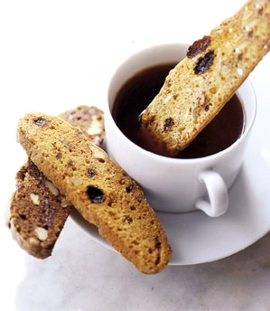
Eli’s in New York City makes a softer-style biscotti, by adding butter
or oil to the dough. |
From the almond recipe of Tuscany, the recipe expanded to anisette-, amaretto- and lemon-flavored dough and to other spices; to biscotti with raisins and other dried fruits; to biscotti studded with chocolate morsels and with other varieties of nuts. Today, the flavorings are only limited to the imagination of the baker and the palates of the customer. A recent survey of flavors for sale on Amazon.com turned up these biscotti flavors:
| |
Apricot Hazelnut, Berry Patriotic (dried cherries and blueberries with white almond), Butterscotch, Cappuccino, Cashew Sesame, Cherry Almond, Chocolate Brownie, Chocolate Cappuccino, Chocolate Cherry Amaretto, Chocolate Hazelnut, Chocolate Macadamia, Chocolate Pistachio, Chocolate Tiramisu, Cinnamon Almond, Cinnamon Hazelnut, Cinnamon Pecan, Cinnamon Sugar, Coconut Chocolate Chunk, Coffee Cashew, Cranberry Almond, Cranberry Orange, Cranberry Walnut, Dark Chocolate, Gingerbread, Hazelnut, Lemon Almond, Lemon Blueberry Poppyseed, Irish Cream Pistachio, Marble, Peanut, Pecan Toffee Pistachio Cranberry, Pistachio Rum, Macadamia Nut, Maple Praline, Mint Almond, Mint Chocolate, Spumoni (combined chocolate, cherry and pistachio), Toffee Currant, Triple Chocolate, White Chocolate |
|
Biscotti are frequently found iced with melted chocolate and other frostings, and like other cookies, can be ornately decorated for special occasions. They are typically made in a 3" size, a 5" size, and a 7" size, the latter usually reserved for cafés and ice cream parlors.
You Say Biscotti, I Say Cantucci
As noted, Italians call biscotti cantucci, and use the term biscotti to refer to any type of crunchy cookie, round, square and otherwise—as the British use the word biscuit. In 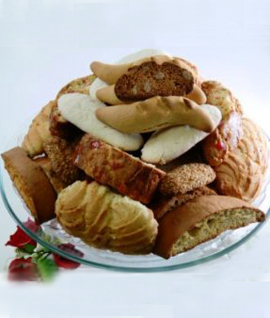 North America, we use biscotti as the ancient Romans did, to describe a long, dry, hard twice-baked cookie (in other words, cantucci). North America, we use biscotti as the ancient Romans did, to describe a long, dry, hard twice-baked cookie (in other words, cantucci).
Photo: An assortment of Italian biscotti. In Italy, biscotti are any twice-baked cookie. The biscotti shown here, available from Venieros.com, include papatelle, anise toast, regina, umberto, bow tie, taralli, neapolitan and “S” biscuit. At the top, you’ll see a 3" cantucci (what Americans think of as biscotti); at the bottom right, a 5" cantucci (the anise-flavored ones are called anise toast by some Italian-American bakers).
Most European countries have adopted their own version of biscotti. The British have rusks; the French, biscotte and croquets de carcassonne; Germans, zwieback; Greeks, biskota and paxemadia; Jews, mandelbrot; and Russians, sukhariki.
In any language, they taste great with a cup of coffee...or Vin Santo.
Continue To Page 2: Mario Batali’s Biscotti Recipe
|