THE NIBBLE (TM) - Great Finds for Foodies (tm)


RSS feed

Nueske's Ham

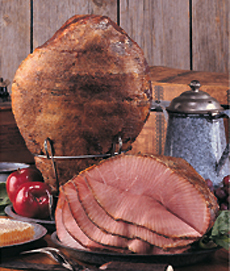
One of our favorite holiday hams: Nueske’s Spiral Cut.

MENU


Meats & Poultry
Category Main Page
Articles & Reviews


Main Nibbles
Main Page
Articles & Reviews of Foods From A to Z


Product Reviews
Main Page
Food, Beverages, Books,
News & More


About the author

MELODY LAN
is a member of THE NIBBLE™ editorial staff.


April 2006

Product Reviews / Main Nibbles / Meat & Poultry

Best Hams: For the Holiday or Any Day

With A Great Ham, Home Is Where The Ham Is


At THE NIBBLE™ we take our job of tasting food very seriously. While it sometimes can be tempting to judge a product by the way it looks or even by its packaging, we insist on keeping an open mind until we’ve tasted it—innocent until proven guilty, if you will. But last month our open-mindedness was tested when we set out to find the best hams: we had almost as many bad-ham days as bad-hair days. As we tasted ham after ordinary ham, it became harder to muster enthusiasm about the next one. Some hams had beautifully marble-colored meat but were too salty or smoked. Others were pale in color with very little flavor. The more we tasted, the more the thought of serving ham at any holiday dinner became a distant option—especially since we knew all too well that we’d be eating that same mediocre ham in sandwiches, soups, casseroles, omelets, etc., for weeks to come.

Still, we persevered. And we’re glad we did: after several overly salty or smoky hams—and several gallons of water to wash them down—we finally found what we were looking for: succulent hams that we look forward to recycling in a number of dishes for weeks to come. Each ham that we’ve included in this review possesses its own distinct flair; you should be able to find one to please virtually every palate. In addition to our top ham picks, we’ve also provided a little background on the meat, including a bit of history, an explanation of different cuts and types, and tips on what to look for in a ham.

What is Ham?

While ham can refer to the haunch of any animal meat, what we most often refer to as ham is the upper haunch of the boar or pig; it is usually dry-cured, like country ham, or wet-cured, like city ham, and then boiled or smoked. Of course, there’s much more to ham than just these two categories.

History of Ham

According to fossils found in the forests and swamps in Europe and Asia, the pig dates back 40 million years. Pigs were domesticated in China by 4900 B.C. and were raised in Europe by 1500 B.C. It’s difficult to say who was the first to cure a piece of pork to produce ham, but some researchers like Mark Kurlansky, author of Salt: A World History, believe that it was likely to have been the ancient Egyptians. But according to Larousse Gastronomique, a culinary encyclopedia first published in 1938, during the Roman Empire, the finest hams in Europe were produced by the Gauls, who cured pork by burying it at seaside. The meat was immersed in brine, a salt solution, until it was unearthed in the spring. This method is extremely rare today, as most hams are now cured in factories or temperature-controlled rooms to ensure that the curing process is consistent and safe.*

Other historians believe that the Chinese cured hams centuries before the meat was even known in Western Europe. The techniques were said to have traveled to Europe along the Silk Road, transforming pork and giving birth to a variety of ham products and flavors worldwide.

Hernando de Soto, a Spanish explorer, first introduced hogs to North America when he brought 13 pigs to Florida in 1539. Upon his death in 1542, his estate auctioned off about 700 descents of the original hogs. Since the settling of Jamestown in the early 1600s, America has been producing hams from pigs that were originally brought to the colonies of Virginia from England and Bermuda for food and sport. The climate of Virginia was ideal for raising pigs. In fact, they became so plentiful that settlers rounded them up and moved them to “Hogs Island” near the James River, where pigs became the main sustenance for Native Americans and newcomers. Native Americans had been curing venison long before the settlers arrived in Jamestown, and legend has it they taught the colonial settlers how to cure meat through salting, smoking and aging. The method was later adapted to preserve razorback pork.

We can’t be sure which group was the first to prepare salt-cured meat, or even when ham was first made. We do know, however, that through trial and error, people throughout history have perfected techniques to turn pork into succulent hams with full-bodied flavors that we enjoy today.

*Today, the USDA must approve hams that are to be sold or shipped throughout the nation; it requires that fresh meat be rubbed with salt or sodium nitrate and nitrite to kill harmful bacteria. While the nitrates and nitrite preserve and enhance the meat’s flavors and shelf life, at high temperatures nitrite can be a potential cancer-causing agent.


Ham Cuts

Cut Description
Butt Ham
Meat taken from the top half of the leg. It has more fat and meat than shank ham and is easier to carve around the bone.
Center-Cut Ham Steak

Slices cut from the center of the leg that vary between 1/2- to 1-inch thick. They come boneless or bone-in and are available fresh (uncooked), cured, smoked or fully-cooked.

Whole Ham

Cuts from the butt and shank of the leg. This ham can weigh more than 20 pounds and is available boneless or bone-in.

Shank Ham

Ham from the bottom half of the leg. It has less fat than butt ham and is more difficult to cut around the bone than other cuts. Shank ham yields a slightly sweet flavor.

Spiral-Sliced Ham
Precooked and spiral-sliced cuts of ham. This kind is ready to serve in slices with uniform thickness. Slices dry out within a week if not immediately eaten or placed in the freezer.


Ham Types

Type Description
City Ham (wet-cured)
Ham soaked in or injected with brine, a salt solution that contains nitrites or nitrates. It is then boiled or smoked. The meat tends to be juicy and dark pink in color due to the curing solution. City Ham comes boned or bone-in and is traditionally fully cooked.
Country Ham (dry-cured)

Ham made by rubbing the raw meat with salt and hang-drying it in a controlled environment of 75-80°F or higher. The results are a firm and very flavor-concentrated meat with a dark burgundy color. Customarily, Country Ham is smoked and tends to be saltier than most hams; it is enjoyed in paper-thin slices.

Fresh Ham

Meat from the hind leg that is not cured or smoked. It is raw meat, often gray-pink in color. When cooked, fresh ham turns gray-white and resembles pork roast in taste.

What To Look For In A Ham

Characteristic Description
Bone-in
The flavors of bone-in hams are much more prominent than boneless, and you can be sure that they are not a mix of four different muscles from a variety of pigs, as boneless hams can be.
Lightly Smoked

This adds the ideal amount of flavor to hams. Over-seasoning or smoke flavor-injections will cause hams to taste artificial, masking any hints of ham flavor. Some may even taste burnt.

Soaked in Brine

City Hams are soaked in a brine solution (or injected with it), so they tend to be more moist than Country Hams, which lose 20 to 30 percent of their moisture during curing. Tender and juicy hams are ideal to eat in thick slices. Brine injections can over-power the ham flavor, but a brine-soaked ham has a more infused flavor.

Moderate Marbling of Fat

A small to moderate marbling of fat provides ideal flavor and tenderness. If the meat does not have enough fat, it can be too tough or dry, but an excess amount may bury the meat’s flavor.

With Natural Juices
This means that the ham contains at least 18 percent protein and has a minimal amount of water added while it is cured. Ham with natural juices lends itself to tender meat and naturally savory flavors.
Rosy in Color
A rosy color indicates that the ham is at its most natural and freshest state. A ham with light or alternating shades of color suggests that the ham may have been improperly cured, is no longer fresh or has dried out.
Firm Texture
Don’t mistake soft ham for tender ham; if a ham is soft, it is likely that it has been watered down, which dilutes flavor and resembles ham jelly.

Top Picks

While there are many producers of quality ham in the U.S., many people think of ham as the part-water and part-ham products sold at most supermarkets. Because these commercial hams are sold by weight, they undergo processes designed to pack on the pounds—at the expense of our taste buds. Typically a mix of leg muscles from the pig, commercial hams are passed under needles that inject the processed meat with brine (typically a mix of salt and water), sugars, preservatives, additives like sodium nitrate, and flavorings. They are then submerged in the same solution to absorb even more weight. As a result, the salt often becomes the forefront flavor instead of the ham, and the water is passed off as juices from the meat itself.

Salt curing and smoking has, of course, improved over time and with practice. Family recipes have been passed down from generation to generation as invaluable secrets that have made ham an important part of our daily meals, especially during the holidays. Though we endured some bad ham days during our tastings at THE NIBBLE™—even with hams that have been heralded as ham-tasting winners from other media—we were impressed by a few truly savory hams worthy of any occasion. Read on to learn about the winners.

Bilinski’s

We make a double toast to the elegantly rich flavors of a Bilinski’s Champagne Ham. Bilinski’s has been making sausages and smoking hams since 1929, and they haven’t lost an ounce of their impressive craftsmanship over the years. Slowly smoked with natural hickory wood chips, this savory meat is steeped in Glenora Brut Champenoise, a sparkling wine from the Finger Lakes region of New York, for three days. It is then lathered in a tantalizing glaze of pineapple juice and brown sugar, so appetizing that we wanted to dress the rest of our food with the same tangy essence.

champagne ham
Champagne Ham.


Even a modest bite of this lush meat allows the aroma and flavor of pungent chardonnay grapes to shine through. In fact, the salt flavor that often dominates ham cannot be found at all—only fruity, sweet wine undertones. Made exclusively for the holiday season, Bilinski’s hams will be sold for Easter and are available until they are sold out. The Champagne Ham weighs between 7 and 10 pounds and comes boneless and fully-trimmed. If you are looking for a velvety ham that tastes as exquisite as wine, this one is a true champion.

For more information, visit Bilinski.com.

Nueske’s

Those who love their ham with a smoky, caramelized outer layer and a tender, melt-in-your-mouth texture will find bliss in every bite of Nueske’s ham. Their Old Fashioned Boneless Ham is as addictive as any meat we’ve had; we couldn’t stop ourselves from having seconds, thirds, even fourths. The Spiral Sliced Boneless Ham is also a great choice: all of the flavor, none of the labor of slicing the ham at the dinner table—the ham slices practically fell onto our plates. And the flavor is all ham, not water and salt.

Old Fashioned Boneless Ham
Old Fashioned Boneless Ham.

Nueske’s hams are smoked using a generations-old European method of smoking meats with applewood. The applewood-smoked aroma lingers on the roof of your mouth after you’ve swallowed a bite of the ham. While this is by far the smokiest ham we tasted, the sweet, chewy rind offsets any bitterness that customarily accompanies such smokiness.

For those cooking for a smaller group, Nueske’s also makes a Petite Ham, but we would rather have plenty of leftovers for soups, sandwiches and stir-frys.

For more information, visit Nueskes.com.

Spiral Sliced Boneless Ham


Ham I Am!

Here at THE NIBBLE™ we have trouble envisioning a more perfect ham than the hams from Ham I Am! Their hams are ham the way it should be: tasty, tender and easy to slice. The meat is consistently good from one side of the ham to the other, and we never find ourselves guzzling gallons of water to wash out the salty taste. We also aren’t getting our eight glasses a day from the watery reconstituted meat that other companies try to pass off as ham.

Pepper Ham
Whole Hickory Smoked and Peppered
Ham (half size also available).


Ham I Am! hams are delicately smoky throughout and don’t need any accompaniments to bring out their naturally delicious flavors. Their Whole Hickory Smoked and Peppered Ham, an award winner at the International Fancy Food Show in New York, is hand-rubbed with a simple mixture of brown sugar and cracked black peppercorns and then smoked. The result is a ham so flavorful that we just cannot wait for the next holiday for an excuse to serve it. Read our complete review of Ham I Am.

For more information, visit HamIAm.com.


Whole Hickory Boneless
Whole Hickory Smoked and Peppered
Boneless Ham (half sizes also
available).

Snake River Farms

If there were a ham beauty pageant, the lightly smoked bone-in ham from Snake River Farms, with its gorgeous marbling of deep-red and flush-pink meat, would take first prize hands down. Once carved, the ham reveals a tender and moist meat enveloped in a generous layer of fat. Unlike other store-bought hams that can be jelly-like in texture, Kurobuta ham is firm yet chewy (without tons of fibrous membranes), filling the mouth with a mildly sweet ham flavor.

kurobuta
Whole Kurobuta Bone-in Ham.


In Japanese, kurobuta translates as “supreme black hog.” The origin of kurobuta dates back to about three centuries ago and has been enjoyed in Japan for more than one hundred years. Snake River Farms’ Kurobuta Ham is produced from pure-bred Berkshire pigs that are fed a diet of corn and soybeans and roam in open pastures. Smoked with hard wood chips, this delicious ham melted in our mouths and disappeared quickly from our plates. This beauty will make ham enthusiasts out of non-ham-eaters.

For more information, visit SnakeRiverFarms.com.

Schaul’s

This hickory-smoked meat is a favorite for its juicy-but-not-watery, smoky-but-not-burnt, and flavorful-but-not-over-salted qualities. The excess bones and fat are removed, making the meat extremely easy to cut; our knife practically slid right through on its own. The rind isn’t tough and crusty like some can be, and it encloses a thin layer of fat, yielding an incredibly meaty ham with delicate hickory notes.

half bone-in-ham
Hickory Smoked Half Bone-in Ham.

The Bone-in Spiral Sliced Ham is great for gourmands who want to save a little time and effort without having to compromise quality or taste. The meat is significantly sweeter than the the Hickory Smoked Bone-in Ham, and the generously sliced cuts are very lean. The ham’s honey and mildly smoky flavors keep both our salty and sweet cravings satisfied.

For more information, visit Schauls.com.

spiral sliced
Bone-In Spiral Sliced & Glazed Ham.


Virginia Traditions

We were a bit taken aback to find that a gourmet ham would come frozen. With all the frozen foods we’ve tried this past year, we’ve come to expect a bland or artificial-tasting product. But Virginia Traditions has challenged our prejudice. Smoked over a hickory fire, this boneless spiral-sliced Virginia ham is lightly coated with a brown-sugar glaze, giving way to a balanced explosion of robust, maple-like flavors, without even a hint of freezer flavor.

boneless ham
Boneless Spiral-Sliced Ham.

Truly a head-turner, this city ham is a pale mahogany color and comes pre-cut in thin, even slices. The meat is extra-lean, and we especially enjoyed it warm, as it brought out the complex layers of ham flavor.

On our first round, we were so satisfied with this flavorful, meaty and tender ham that we passed on the Edwards Ham Glaze Mix that was included. We tasted the honey, brown sugar and orange-oil glaze later, and found that we would gladly eat it again. The trace of zesty citrus finished off the ham like a grand finale.

Virginia Tradition’s Boneless Spiral-Sliced Ham is available in two sizes: 4 to 5 pounds and 9 to 10 pounds. The website says the smaller size serves 10 to 12 people, but we think it would be enough for closer to 20; we can only imagine how many the large size would serve!

For more information, visit VirginiaTraditions.com.

© Copyright 2005-2008 Lifestyle Direct, Inc. All rights reserved. Images are the property of their respective owners.


Spread The Word: Each icon below links to a site where you can bookmark, share and comment on this article:
Dine52    del.icio.us    ma.gnolia    Newsvine    Yahoo Myweb    BlinkList    simpy    reddit


.