CAPSULE REPORT: Avocados are packed with fiber, folate, potassium, vitamin B6, vitamin C, vitamin E, lutein and heart-healthy monounsaturated fats. The only challenge is portion control when it’s turned into something as delicious as Yucatan Guacamole. Yucatan Guacamole is so fine in texture, flavor and seasoning that we bypassed the chips—they just got in the way of the perfectly seasoned avocado flavor. Instead, we added those chip calories to our guacamole allotment. The Yucatan salsas are delicious, too. The products are available at retailers from coast to coast.
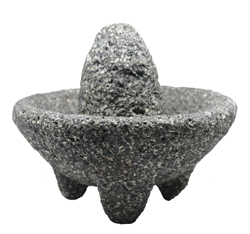
We’ve been making guacamole since we were teenagers. It’s an easy recipe for a young person to make, especially one who has just learned the joys of Mexican cuisine. In our town, there is an authentic Mexican restaurant where the waiter mashes fresh avocados tableside in the traditional manner, using a molcajete, a mortar and pestle made of lava stone that dates back to Aztec times and earlier. The guacamole is made to our preferred degree of spiciness. Making guacamole at home was doubly enjoyable: We stuck toothpicks in the huge avocado pits and watched them sprout. Of course, no one ever grew an avocado tree.
We envy friends who live in California and Florida and have avocado trees growing in their yards. We need to buy our fruit from the market and wait for it to ripen. Sometimes, though, you find a product that’s ready made and really good, like Yucatan Organic Guacamole.
The inside lid of the one-pound container of guacamole announces that the contents include five or more organic avocados. Every batch is 95% Hass avocado*, 5% seasonings and has no chemical preservatives. Amid the nice mash of avocado, there are actual chunks of the flesh of the fruit.† Sparks of red pepper are aesthetically pleasing. Then you taste it. This is no shy guacamole: medium-spicy with jalapeño, onion, garlic powder and cilantro—although cilantro-haters won’t be put off by it, and cilantro-lovers will want to add a handful of fresh-chopped herb for flavor. Even without the added cilantro, it was delicious—and hard to resist eating the entire pound. (The spice-averse need not worry: there is also a mild-spiced All-Natural version, and the “authentic,” spicier version is available in All-Natural as well as the Certified Organic.)
The molcajete, a mortar and pestle carved from
lava rock, was used by the Aztecs and earlier
peoples to grinding chiles and spices and for other food preparation. Photo by Suzannah Skelton.
The guacamole is so good that it deserved better than any tortilla chip we had around: It sent us on a tortilla chip-tasting expedition, which we’ll report on next month. In addition, we sought different ways to enjoy this savory fruit dip.
*Some supermarket guacamoles have as little as 7% avocado and are primarily fillers and seasonings.
†The avocado is the fruit of a tree. However, since it is savory, not sweet, it tends to get grouped with the vegetables, like tomatoes. Another way to tell the difference between fruits and vegetables is that vegetables drop their seeds externally, whereas fruits contain their seeds inside (strawberries are the exception). Cucumbers and squash, e.g., are also biologically fruits, not vegetables.
Serving Suggestions
And so, after dipping a few commercial tortilla chips, the saltiness of which got in the way of this perfectly seasoned guacamole (fresh-made chips in the Mexican restaurants of our acquaintance tend not to be salted) we instead elected to enjoy it:
In a small dish, first as a snack and later with seafood, poultry and meats—with anything grilled
On a burger or veggie burger, instead of ketchup
On a triple decker BLT, instead of mayonnaise
With eggs
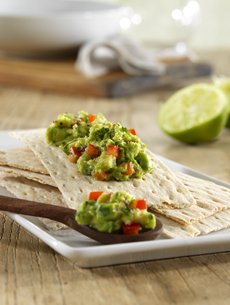
On Japanese black sesame rice crackers
On Wasa crispbread
As a zero-cholesterol “deviled egg” substitute, in hard boiled egg whites
Mixed with cubes of chicken for a spicy chicken salad (recipe below)
Layered into a “napoleon” with goat cheese rounds and roasted red peppers (alternate slices of goat cheese from a log, pepper and guacamole)
With a Cobb salad
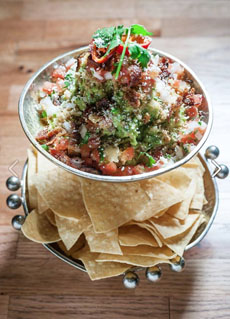
With tortilla chips, tacos, fajitas and as a side with almost any Mexican dish
As those who have had avocado ice cream and sorbet know, there are few things that avocado does not pair well with.
About the Hass Avocado
The Mesoamericans “discovered” the avocado, which had grown there for perhaps 50 million years. The name guacamole comes from Mexican Spanish via the indigenous language assumed by the conquering Aztecs, Nahuatl. AhuacamOlli is a compound noun from Ahuacatl [=avocado] + mOlli [=sauce] (the chocolate based mole sauce comes from that same word, which simply means “sauce”).
The Spanish could not pronounce ah-hwa-CAH-tel and called the fruit “aguacate.” The word Ahuacatl itself means “testicle:” Aztecs saw the avocado as resembling the testicles and ate it as a sex stimulant. According to Linda Stradley on the website WhatsCookingInAmerica.com, for centuries after Europeans came into contact with the avocado, it carried its reputation for inducing sexual prowess, and wasn’t purchased or consumed by anyone concerned with his or her reputation. Growers had to sponsor a public relations campaign to dispel the myth before avocados could become popular.
There are hundreds of avocado cultivars. The Hass avocado, black-green in color with the pebbled flesh that earned it the nickname “alligator pear,” is of Mexican origin. It is one of the smaller varieties, rich, buttery and flavorful (the Hass flesh is said to have the subtle taste of toasted almonds). There are large, smooth- and thin-skinned avocados in the market that hail from the Caribbean. They have a slightly more bland flavor, and are much less oily than the Hass, which makes them less good for guacamole (they don’t mash as well, even though by looking at size, one might imagine an excellent guac yield. They are still excellent for salads and other culinary purposes.
Ninety-eight percent of the avocados grown in Mexico are Hass. “Authentic” recipes for guacamole vary, and are somewhat dependent on availability of ingredients as well as personal taste. It can be as simple as mashed avocados with salt, and if available, lime juice. Others add chopped onion or green onion, tomatoes, chiles (generally the milder serrano), red bell pepper and other seasonings (cumin, cilantro, black pepper, hot sauce, garlic). Sour cream and/or mayonnaise are called for in some recipes, but these are American adaptations and dilute the flavor of the avocado. Fusion recipes add everything from Cajun spices to goat cheese and pistachios.
Salsas
It stands to reason that a company that makes such good guacamole will make good salsa to go with it. Yucatan offers two different recipes: Fire Roasted and Especial. Both are organic.
Especial is a classic flavor: tomatoes with onions and enough jalapeño chiles to put it on a spice level (medium) with the organic guacamole. The texture is somewhere between the salsa fresca that’s found freshly made on the tables of Mexican restaurants, and the pasteurized, shelf-stable salsas that require no refrigeration.
Fire Roasted is more mild in spice level and has the deeper, roasted-tomato flavor.
This salad is reminiscent of the popular “Taco Dip” recipe, which follows. Makes 4 servings.
Ingredients
1 cup Yucatan Guacamole
1 head lettuce, chopped
2 tablespoons chopped canned green chilies, drained
1 tablespoon chopped green onion (scallion)
3 cups diced cooked chicken, chilled
4 tablespoons vinaigrette or Italian salad dressing
1/3 cup sour cream
1/2 cup Monterey Jack cheese, shredded
1 cup pitted Picholine or Mediterranean black olives, sliced (or purchase sliced canned olives, but the flavor is more bland)
1 pint box grape or cherry tomatoes
Salt and fresh-ground pepper, to taste
Directions
Mix lettuce, green chilies, green onion and chicken with Italian salad dressing.
Sprinkle with salt and pepper.
Spoon into salad bowl or 9 x 13 inch casserole.
Spread with sour cream. Cover with layer of Yucatan Guacamole.
Sprinkle with cheese & garnish with olives & tomatoes. Cover and refrigerate for 2 hours. Serve.
Layered Taco Dip
Makes 40 servings assuming 16 chips/crackers each and 2 tablespoons of dip.
Ingredients
1 cup Yucatan Salsa
1 cup Yucatan Guacamole
1 can refried beans
1 cup sour cream
¼ cup chopped green onions
¼ cup sliced, pitted black olives
¼ cup sliced jalapeño peppers
Fresh cilantro
Tortilla chips, tortillas or crackers
Directions
Spread refried beans on large serving plate or in a glass bowl.
Top with layers in this order: sour cream, Yucatan Salsa and Yucatan Guacamole.
Sprinkle with green onions, olives and jalapeños.
Refrigerate until ready to serve. Sprinkle with chopped, fresh cilantro. Serve as a dip or spread on a tortilla.
The salsas keep fresh for several weeks after opening. Our guacamole didn’t last that long, but the recipe contains natural substances that slow down the browning enzymes in avocado, so the guacamole will stay green for three to five days after the package is opened. To keep it fresh longer, there’s the trick of squeezing fresh lime on the surface...but who could keep it longer?
YUCATAN FOODS GUACAMOLE: All Natural Authentic, All Natural Mild and Certified Organic
SALSA:
Especial and Fire Roasted Salsa
The plastic-container products are made in Mexico and certified kosher by VKNN. The bag-in-a-box products
come from South Africa and are certified kosher by Ben Din of Johannesburg; they are also certified Halal. Both are USDA certified organic.
Guacamole 16-Ounce Tub
8-Ounce Tub
Salsas
14-Ounce Tub
Products are available in food stores nationwide. Prices vary by retailer.