THE NIBBLE (TM) - Great Finds for Foodies (tm)


RSS feed
Anaheim Chiles
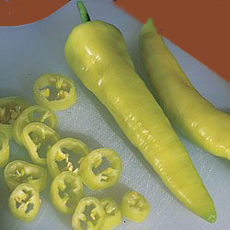
The Anaheim chile, named because it was canned in Anaheim, California beginning in the early 1900s, was developed from the pasilla. With a modest level of heat, it is popular for stuffing.

MENU


Seasonings

Category Main Page
Articles & Reviews


Main Nibbles

Main Page
Articles & Reviews Of Foods From A To Z


Product Reviews

Main Page
Food, Beverages, Books,
News & More


October 2005
Updated April 2007

Product Reviews / Main Nibbles / Seasonings

Chile Pepper Glossary

How Hot Is It? The Scoville Scale Measures Heat Units of Chiles

Chiles are part of the American diet, but they’re not exactly a new food fad. Millennia before someone coined the term “Tex Mex,” early Americans were flavoring their foods with hot chiles. They were one of the first cultivated crops, domesticated by prehistoric peoples from Peru to the Bahamas. Traces have been found in bowls in Ecuador dating back 6,100 years.* Wild chiles have been a part of the diet in the Americas since about 7,500 B.C.—all varieties, including the bell peppers, have a high vitamin C content. The word in Nahuatl, the language of the Aztecs, is “chilli,” the spelling that is used in the U.K. and its former colonies.

*Science, February 16, 2007.

Chiles were “discovered” in the Caribbean by Columbus, who appended the word “pepper” (pimiento, in Spanish) because of their fiery similarity to the black peppercorns he was familiar with—although there is no relationship between the two plants, or with Szechuan pepper. “Chile pepper” is a misnomer, and the term “pepper” is not used in Latin America.

The first chiles were brought to Spain in 1493 by Diego Álvarez Chanca, a physician on Columbus’ second voyage to the West Indies. He first wrote about their medicinal effects in 1494. From Europe, chiles spread rapidly to India, China, and Japan. In Europe, they first were grown in the monastery gardens of Spain and Portugal as botanical curiosities, but the monks experimented with their culinary potential and discovered that their pungency offered an inexpensive substitute for black peppercorns, which were so costly that they were used as legal currency in some countries.

What we call “heat” or ”fire” of the chile is known in the industry as the pungency* level. The pungency is the result of both the plant’s genetics and the environment in which it grows. Although plant breeders can produce a chile with a certain amount of relative heat by varying water amounts and temperature levels, genetic control is not yet fully understood.

*While many people think of pungent as a sharp or acrid smell, another meaning is “causing a sharp or irritating sensation,” e.g., burning.

The heat is due to capsaicin, an alkaloid, and four related chemicals, collectively called capsaicinoids. Each capsaicinoid has a different effect on the mouth, and variation in the proportions of these chemical is responsible for the differing sensations produced by different varieties. Capsaicin causes pain and inflammation if consumed to excess, and can even burn the skin on contact in high concentrations (habañeros, for example, are routinely picked with gloves). It is also the primary ingredient in pepper spray.

Cooking With Chiles

Chiles are available fresh, dried, smoked and roasted. Over 100 varietals are available commercially, although most are grown in limited quantities. Chiles are fruits: like tomatoes and all fruits (except the strawberry), they carry their seeds on the inside. While Americans tend to think of chiles simply as hot, each has a specific fruit flavors: apricot, cocoa, nutty, plum raisin, sweet et al.

  • When cooking with chiles, it is important to pick the chile that fits the desired culinary effect. It may be necessary to blend several different chiles and test extensively. Chile influences change with each ingredient added to a recipe. Some moles use five different chiles!
  • To “cool off” after eating too much hot stuff, milk, not water or beer, is the antidote. Yogurt or sour cream works even better. Eating some bread or rice will help to soak up some of the capsaicins as well. Capsaicins are not water-soluble; they’re fatty molecules.
Pasta With Chiles
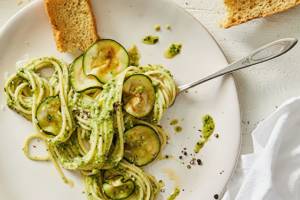
Some like it hot: A dish of spaghetti with chiles
gives new meaning to the term, “fire-eaters.”
  • Always wear gloves when cutting hot chiles, then remove them and wash them. Inadvertently touching the eyes with any particle of capsaicin left on one’s fingertips will be excruciating.

The Scoville Scale


The most common way to evaluate chile pungency is a simple taste test. This method, although quick and cost-effective, may leave the tester in some pain: one would be happy to “let Mikey eat it.” There are two other ways of testing pungency as well, the Scoville organoleptic test and high performance liquid chromatography.

In 1912, Wilbur Scoville (1865-1942), a pharmacologist who worked for the large pharmaceutical manufacturer, Parke Davis (now a subsidiary of Pfizer), questioned how to determine the different heat levels of the wide variety of chiles. He developed the first systematic laboratory approach used to measure their pungency—a simple laboratory test. Called the Scoville Organoleptic Test, human subjects taste a chile sample and evaluate how many parts of sugar water it takes to neutralize the heat of the chile so that its pungency is no longer noticeable. This dilution is called the Scoville Heat Unit. This procedure is more accurate than the taste test (“bite the chile”) technique and less expensive than more advanced laboratory techniques—although the measure of pungency is still subjective and depends on the taster’s palate and sensitivity to the capsaicin (the chemical compound that gives chiles their heat) that are responsible for pungency. (In addition, there are serious limits on how many samples a taster can handle within a reasonable time.)

Today, a sophisticated laboratory process called High Performance Liquid Chromatography or HPLC, measures the amount of capsaicinoids (capsaicin) in parts per million. In this procedure, chile pods are dried, then ground; the capsaicins are extracted, and the extract is analyzed for total heat present as well as the individual capsaicinoids present. This method is more costly than the Scoville test or the taste test but much more accurate. While the measurement is in ASTA pungency units, not Scoville units, the scores are often converted to approximate Scoville unit values.

The chart below rates chiles, with 0 being mildest and 10 highest heat.

  • Mild: 0 to 5,000 SHUs
  • Medium: 5,000 to 20,000 SHUs
  • Hot: 20,000  to 70,000 SHUs
  • Extreme: 70,000 to 30,000 SHUs

Ranges stated vary because the capsaicin levels of chiles grown even from the same seeds will vary:

  • The capsaicin can vary considerably within a species—by a factor of 10 or more‚ depending on seed lineage, climate, even soil.
  • The original Scoville test is an organoleptic test on humans, so even measurements of the same sample can vary by 50%.
  • When one looks at a score, one generally doesn’t know if it is an original Scoville test or a more accurate High Pressure Liquid Chromatography test. That’s why numbers from different sources vary so widely.
Chile Type Category Scoville Heat Units (SHUs)
Bell, Pimento, U.S. Paprika, Sweet Banana Mild 0
Pickled Pepperoncini Mild
10
Anaheim, Canned Green Chiles, Cherry, Hungarian Hot Paprika Mexi-Bell, New Mexican R-Naky, Pepperoncini Pepper (500) Mild 100-500
Chili Powder, New Mexican Big Jim, New Mexican 6-4, Tabasco Sauce/Green Pepper (600-800) Mild
500-1000
Coronado (1,000), Pasilla Mild 1,000-1,500
Ancho (2,000), Cascabel, Poblano (2,000) Sandia Mild
1,500-2,500
Cayenne Large Red Thick, Louisiana Hot Sauce, Mirasol, Rocotillo (2,500), TAM Mild Jalapeño Mild
2,500-5,000
Aji Amarillo, Chipotle (10,000), Early Jalapeño (8,000), Serrano, Tabasco Sauce/Original Pepper (5,000), Wax Pepper, Tabasco Sauce/Habañero (8,000) Medium
5,000-15,000
Crushed Red Pepper, De Arbol, Habañero Hot Sauce, Manzano (30,000), Serrano (23,000) Medium-Hot
15,000-30,000
Cayenne Long (50,000), Pakistan Dundicut, Piquin, Thai Prik Khee Nu Hot
30,000-50,000
Chiltepin, Chinese Kwangsi, Rocoto, Santaka, Thai (100,000) Hot-Extreme
50,000-100,000
African Birdseye, Habañero (350,000), Jamaican Hot (200,000), Scotch Bonnet (325,000), South American Chinenses Extreme
100,000-500,000
Red Savina Habañero Extreme
570,000
Dorset Naga, Francisca, Naga Jolokia or Tezpur Extreme
855,000
Bhut Jolokia Extreme 1,001,304
Common Pepper Spray     — 2,000,000
Police-Grade Pepper Spray     — 5,300,000
Pure Capsaicin     — 16,000,000
 

Most chart data from The Pepper Encyclopedia by Dave De Witt, William Morrow & Company
*Guinness Book of Records’ “hottest spice”: In February 2007, the Bhut Jolokia from India was named the world’s hottest. A naturally occurring chile hybrid native to the Assam region of northeastern India, Bhut Jolokia means “Ghost Chile” in Assamese. Prior to this new designation, the Red Savina was considered the world’s hottest; then in April 2007 the Dorset Naga tested almost 60% higher 876,000 SHUs. Originating in Bangladesh, it is sold with a health warning.

Chile Glossary

Chiles are available fresh, dried, crushed or pulped. Their chemical compounds deliver two important qualities: Some varieties are desired for their bright red color, from the pigment capsanthin; others are famous for the biting pungency of their capsaicin. There are more than 100 types of chiles cultivated worldwide—30 different types of chiles used in Mexican cooking alone. For a true master list, see the database of chiles developed by a U.K. aficionado. The directory isn’t user-friendly—if you don’t know what you’re searching for, you essentially have to start out at the beginning of the alphabet and browse through, letter-by-letter. But the collection is impressive! (Speaking of impressive, we have 50 other food glossaries—everything from a Beef Glossary to Culinary Oils. Check them out!)

Click on the letter of the alphabet in this bar to get to a term
without having to scroll manually:

a b c d e f g h i j k l m n o p q r s t u v w x y z

Aji: While there are many chiles of the variety called aji, aji is also one of the native words for chile. See chile.

Anaheim ChilesAnaheim: Also known as California Chile and Chile Verde. Not a hot chile (1,000 to 10,000 Scoville Units), the green Anaheim was cultivated as far back as 1900 for canning in Anaheim, California. It was developed from pasilla chiles in New Mexico. A modest heat level, 1,000 to 10,000 Scoville heat units, it is often used for stuffing. 
Photo at right: red Anaheim chiles, courtesy of MorgueFile.

Ancho Chile: Perhaps the sweetest of the Mexican chiles, the ancho is large, fleshy and full-bodied with a mild fruit flavor with hints of coffee and a faint raisin or licorice taste. Relatively mild (3 on a scale of 10), it is the chile of choice for chiles rellenos, and along with the guajillo, and the pasilla, one of the chiles used to make mole sauce; ancho also is used to flavor salsas and dips. The thick flesh means that the best flavors are achieved through long, slow cooking or soaking in boiling water to soften for a purée—it is rarely used uncooked. Dried ancho chile is used for chile powder—a pinch adds flavor to roast or grilled meats, vegetables and mayonnaise without adding any real heat. Try it as a seasoning with cheese dishes, chocolate, potatoes, tomatoes and yogurt. “Ancho” means wide, a reference to its broad, flat pod.

Bell Pepper: Sold in its green immature state and its ripe red state, where it is also called pimento. In Great Britain, bell peppers are called capsicums. Bell peppers have Birdseye Chileno heat: 0 on a scale of 10.

Birdseye: From Africa, the tiny, thin-fleshed birdseye chile is one of the hottest—9 on a scale of 10. It is used both raw and in cooked dishes—most popularly with fish sauce, lime juice and sugar for a Thai-style dipping sauce. It has a clean flavor but lacks the complexity of some other chiles.
Photo at right: Birdseye chile taken by John Evans | SXC.

Bhut Jokolia: Originating in Assam, India, this long, flat, orange-colored chile, an extreme member of the habañero family, first made waves around 2005 when it was measured at more than a million Scoville units. The prior record holder was the Red Savinia, at slightly more than half that amount. Bhut Jolokia translates as “ghost chile,” presumably because the chile is so hot, you give up the ghost when you eat it. No sane person would want to eat one, but its intense heat concentration could provide an economical season to the packaged food industry. 100 on a scale of 10.

Capsaicin: One of the chemical compounds in hot chiles, along with four related capsaicinoids, that causes the burning sensation. At the stem end of the pod, glands secrete the capsaicin, which then spreads throughout, but most of the capsaicin is found in the interior ribs that divide the chambers of the chile, and to which the seeds are attached. The amount varies very significantly by variety, and is measured in Scoville Heat Units (SHUs).

Capsaicinoids: See capsaicin.

Capsicum: The species that includes the bell pepper as well as hot chiles. The word Capsicum comes from the Greek kapsimo, meaning “to bite” (a reference to Red Bell Pepperpungency or heat). Capsicum annuum L. includes sweet bell peppers, paprika, pimento, and other red peppers. Capsicum frutescens L. includes many of the hotter chiles. In India and Pakistan capsicum is commonly called shimla mirch. In Peppers: History and Exploitation of a Serendipitous New Crop Discovery, W. Hardy Eshbaugh states that “Scientists believe that Bolivia is a nuclear center of the genus Capsicum and that the origin of the domesticated taxa can ultimately be traced back to this area. That does not imply that each of the domesticated species arose in Bolivia. Clearly, evidence supports a Mexican origin of domesticated C. annuum while the other domesticated species arose in South America.”

Capsicums: In the U.K., Australia and New Zealand, bell peppers are called capsicums.

Cascabel: The cascabel is a small, round, hot chile that is prized for the hot, burning sensation that it produces in the mouth when consumed. Flavorful and smoky with an acidic bite, used primarily for sauces and soups. When dried it makes a rattling noise and as can be used for percussion. The plant can grow to more than one meter and grows in the wild on the Pacific coast of Mexico.

serrano peppersCayenne: Cayenne pepper is a fine red powder with medium heat—6 on a scale of 10—used to flavor spicy dishes; its name comes from the city of Cayenne in French Guyana and it owes its fame to the Portuguese sailors who carried it to back to Europe, Asia and India on their voyages. The powder is a blend of the fruits of several cultivated varieties of the Capsicum baccatum and Capsicum frutescens species of the nightshade family. The fruits are either dried and ground, or pulped and baked into cakes, which are then ground and sifted to make the powder. It is generally rated at 30,000 to 50,000 Scoville Units. The name is derived from the Tupi word kyinha, literally “hot pepper.” Cayenne is popular in dips, salsas and other sauces, soups and stews, where it adds heat, but not much flavor or scent provided by other chili powders.
Photo of cayenne chiles by Rafael Rigues.

Cherry Pepperor Hungarian Cherry Pepper: A small, round pepper, Capsicum annuum cerasiforme, that is 1 to 2 inches in diameter and bright red in color. It has a slightly sweet flavor that can range from mild to medium-hot.

Chile: The dominant Spanish word for peppers, although the native Indian term aji is used in some countries like Chile, whose name is unrelated to the pepper. The word chile comes from Nahuatl (the Aztec language).

Chile-Head: A lover, collector and eater of hot chiles. Some are hobbyists seeking to learn as much as they can about the growth, preparation and consumption of chiles. Others make or collect varieties of hot sauce. Some collect chile seeds. More than a few pursue extremely hot chile flavors.

Chile Peppers: The name given to hot peppers in the U.S. It is a variation of chilli.

Chilli/chillies: The name given to hot pepper varieties in Australia, New Zealand, the U.K., Ireland and Canada. Chilli is the word for chile peppers in the Mexican native Chilelanguage, Nahuatl, used by the Aztecs and other peoples.

Chipotle: A chipotle is a red (ripe) jalapeño that has been dried and smoked to yield a rich, smoky flavor with a nutty finish (some have notes of chocolate). It has a medium heat level, 6 on a scale of 10. The flesh is thick, so it is best in a slow-cooked dishes like soups and stews, or vegetable and meat dishes where it adds its own “meaty” depth of flavor. Chipotles are believed to have originated near the ancient city of Tenochtitla’n, the capital city of the Aztecs. Chipotle is used in adobo sauce as well in stews and casseroles. Try it in mayonnaise!

Espelette Peppers or Piment d’Espelette or Ezpeletako Bipera: The chile of Piment d'Espelette - Espelette PepperSpain’s Basque country is as treasured there as paprika is in Hungary. It is believed that the chiles were introduced into the Basque Nive Valley by Gonzalo Percaztegi, a navigator who voyaged with Christopher Columbus (who brought chiles to Spain in 1494), in 1523. Basques often use Piment d’Espelette instead of black pepper; it is prominent in local dishes such as piperade. The pepper is sold in a powdered spice form: The peppers are dried naturally, baked in an oven and ground into powder. The AOC-protected chile has its own official website (in French).

Fresno ChileFresno: Fresno chiles are available in red and green varieties, the red being the sweeter of the two. On the chile heat scale, it ranks with a serrano. Red Fresnos are found in a broad range of Latin dishes. They are delicious added to soups, stews and dips or roasted and enjoyed whole with barbecued meats and poultry.
Photo of Fresno chiles at right, courtesy of Melissas.com

Guajillo: A thin-skinned chile from Mexico with complex notes, including a green tea flavor, berry notes and a faint pine nut finish, often used in seafood dishes. It has medium heat (5 on a scale of 10) and a deep red color that intensifies when the chiles are soaked.

Habañero: The hottest chile grown in central America or the Caribbean (10 on a scale of 10), the habañero is named after Havana, where it is believed to have originated, and was later Habanero Peppersintroduced to the Yucatan peninsula. The habañero is the most intensely spicy chile of the Capsicum genus. Unripe habañeros are green, but the color at maturity varies. Common colors are orange and red, but white, brown, and pink are also seen. The lantern shape resembles a bonnet; the typical ripe habañero is 1 to 2-½ inches long and 1-3/4 inches in diameter. It is loosely related to the Scotch Bonnet and the Jamaican hot chiles. Most habañeros rate 200,000 to 300,000 SHUs—30 to 50 times hotter than the jalapeño. Its fierce, intense heat and flavor mix, with an underlying delicate fruity, citrus-like flavor, mix well with tropical fruits and tomatoes. It is used extensively in salsas, chutneys and seafood marinades. The longer the chopped chiles infuse in the sauce, the more powerful the flavour.

Health Benefits: Chiles are high in vitamin C (they contain more than oranges and broccoli), are a good source of fiber (if you can eat enough of them), and the antioxidants in the capsaicin may fight cancer and heart disease.

Hot Paprika: See Paprika.

Jalapeño:  Flat with a shiny green color, the jalapeño is a small to medium-sized Jalapenochile that is prized for the hot, burning sensation that it produces in the mouth when eaten. It is a sweet, medium heat—5 on a scale of 10—and the chile is used in sweet dishes such as well as savory ones. Jalapeño can be found fresh, roasted, pickled or smoked (when it is called a chipotle). It has a heat level that varies from mild to hot depending on how it was grown and how it was prepared. It is named after Jalapa, the capital of the Mexican state of Veracruz. The jalapeño is America’s most popular chile and one of the most popular in Mexico as well. Beyond salsas and other Mexican foods, add some jalapeño to sauces and soups, or infuse in vinegar to add a kick to salad dressing.

Japones: The small red chiles found in Asian dishes. This chile is very flavorful and spicy with medium high heat.

Kashmiri: The slender chile, also called degchi mirchi, is a relatively spicy chile (7 on a scale of 10) of India that provides the vibrant red color to meats and curry vindaloo.

Long Chile: A group of bright red, thin-skinned chiles of medium heat (6 on a scale of 10), that don’t have a complex flavor so can be used whole, chopped or crushed to add heat to virtually any dish. They are often fried whole in oil to start a curry before the other aromatics are introduced. Not to be confused with long pepper, Piper longum, an East Indian shrub that produces a long peppercorn with a flavor similar to the round black peppercorn in common use, Piper nigrum.

Malagueta: Originally from Brazil, the malagueta is an extremely hot chile (9.5 on a scale of 10), similar to the birdseye in both appearance and flavor. It is typically minced with oil in a salsa or as a table condiment. Not to be confused with the meleguetta pepper, Aframomum melegueta, an African rhizome plant of the ginger family whose seeds, also called Grains of Paradise, are used as a spice to flavor beer and foods.

Naga Jolokia: The Naga Jolokia chile is from the same species, but a different variety, of the chile used by Tabasco® sauce. When ripe it measures two inches long and a half inch wide with an orange color, similar in appearance to the habañero chile. It has gained notoriety as “the hottest chile in the world” with a reported 855,000 SHUs besting the previous record holder, the Red Savina Habañero. However, there was no independent verification of the first test. It grows wild in the army garrison town of Tezpur, in the northeastern state of Assam, India (the Red Savina is cultivated). It is also called Bih Jolokia in some places of Assam (Bih = Poison, Jolokia = chile pepper; in Assamese).

Nora: Dark red nora chiles, from Spain, are very mild—1 on a scale of 10—and are sometimes referred to as paprikas or peppers. They are large, fat, round and glossy with a rich, mild and sweet flavor, and are used to give a deep red color to dishes when added whole or in slices.

Paprika: Paprika is a sweet-to-mild variety of the chile (Capsicum annuum, order Polemoniales). It can be elongated or round fruit, bright red, yellow, or green in color. Associated with Hungary, it originated in South America and grows all over the world. In Hungarian, “paprika” refers both to the chile and to processed paprika in its different forms. The ground spice is a favorite seasoning in Hungary, where it is used in stews (the famous goulash), ragouts, stuffings, sauces and as a garnish. In fact, eight or more different varieties can be purchased there with different levels of pungency, ranging from Special Quality (Különleges), the mildest and brightest red, to Hot (Erös), light brown in color, the hottest of all the paprikas (the hottest paprikas are not the bright red ones, but the palest red and light brown spices). Paprika is also sold smoked, for additional flavor. It is most popularly used as a dry seasoning for meats or root vegetables; in soups, sauces and marinades; or to provide a beautiful color and flavor, for example, in mayonnaise and dips.

Pasilla: Pasilla chiles are long, wrinkly, dark brown-black and medium-hot (6 on a scale of 10) Pasilla means “raisin” in Spanish, and the pepper has a distinctive grape, herbaceous flavor (some say licorice) that lends itself to moles, enchiladas, chicken, duck, lamb and pork. Its relatively thin flesh means that it can either be added to dishes whole or in pieces, soaked and pureed or stuffed, sliced into rings or diced and added raw to a salad, sauce or salsa. Pasilla is popular in marinades and as a garnish, with finely sliced rings scattered over a soup, chile, eggs or other dish. Because of its dark brown wrinkliness, it is sometimes confused with the ancho, which also shares some raisin flavors.

Peppercorns: Peppercorns have no relationship to Capsicums, the species to which chiles and bell peppers below. Black and white peppercorns derive from the Piper genus, which contains Piper nigrum L., the source of black and white pepper.

Peppers: In the United Kingdom, Ireland, and Canada, as well as the U.S., the heatless pepper varieties are called “peppers,” “sweet peppers,” “green peppers,” or “red peppers.”  See also “chilli/chillies.”

Pimento. The pimento is a variety of large, red, heart-shaped pepper that measures 3 to 4 inches long and 2 to 3 inches wide. Pimiento is the Spanish word for “pepper.” The flesh of the sweet pimento is sweet, succulent and more aromatic than that of the red bell pepper. They are the red stuffing found in green olives.

Red Bell Pepper: See Bell Pepper.

Red Savinia: See Savinia Habañero.

Savina Habañero: A type of habañero chile. At 577,000 Scoville units, it was the record holder as world’s hottest chile until the discovery of the Bhut Jolokia (typical habañeros range from 200,000 to 300,000 SHUs). Recognized for a time by the Guinness Book of Records as the “World's Hottest Spice,” it was developed and cultivated by GNS Spices of Southern California.

Scotch Bonnet: A variety of chile, similar to, and of the same species as the habañero. It is found mainly in the Caribbean islands, with a shape resembling a Scot’s bonnet. Most Scotch bonnets have a heat rating of 150,000 to 325,000 Scoville Units. They are used in many different sauces worldwide. If eaten raw by those unaccustomed to eating hot chiles, they can cause dizziness, numbness of hands and cheeks as well as severe heartburn.

Scoville Units: A unit measuring the concentration of capsaicin, the “hot” ingredient in chiles. A measurement of 50,000 Scoville units means that an extract from the chile can be diluted 50,000:1 with sugared water and the “burn” of the capsaicin will be barely detectable by the human tongue. The methodology was invented in 1912 by the American pharmacologist Wilbur L. Scoville, who was working on the use of capsaicin in the muscle pain-relieving ointment Heet. Chiles have capsaicin concentrations from zero (or negligible), i.e. bell peppers, to 580,000 Scoville units, i.e. Red Savina Habañero chiles.

Serrano Chile: The serrano is a hot chile—8 on a scale of 10. Small and thin, it is popular for its hot, clean flavor with notes of citrus. It can be used cooked or raw, chopped or ground, and is popular in salsas, stir-fries and particularly with seafood. Serrano is a good choice with Asian dishes, as its flavor blends well with cilantro, garlic, lime, mint, onion and vinegar.

SHUs: Scoville Heat Units, or Scoville Units.

Urfa: From Turkey, urfa chiles are sweet and smoky, with notes of dried fruit and tobacco. Purple in color, they are used to give deep color and flavor to foods. Medium in heat—5 on a scale of 10—they are most often found in crushed flake form.

© Copyright 2005-2008 Lifestyle Direct, Inc. All rights reserved.  Images are the copyright of their respective owners.


Spread The Word: Each icon below links to a site where you can bookmark, share and comment on this article:
Dine52    del.icio.us    ma.gnolia    Newsvine    Yahoo Myweb    BlinkList    simpy    reddit


.