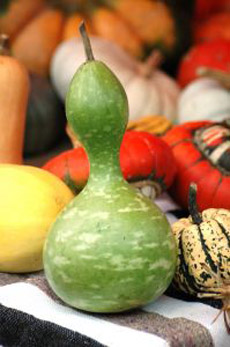
Looking like a food of the Jetsons on the one hand, the calabash squash is part of quite a few primitive cultures, as you’ll read below. Photo by Ndulex.
|
MELISSA HOM is an editorial intern at THE NIBBLE.
|
|
June 2006 |
 |
Product Reviews / Main Nibbles / Vegetables
Squash Glossary
Summer, Winter And Year-Round Delights
Jump To Chart Of Squash
Amid the melting pot and hodgepodge of cuisines in the U.S., sometimes you have to wonder, “What is American food?” While Rice Krispies® treats and the peanut butter and jelly sandwich are uniquely American recipes, squash is something natively grown in the Americas.
The word “squash” is derived from “askutasquash,” which literally means “a green thing eaten raw” in the language of the Nahahiganseck Sovereign Nation, the native Americans who controlled the area surrounding Narragansett Bay in present-day Rhode Island, portions of Connecticut and eastern Massachusetts. The squash is versatile. While some require cooking, others, like zucchini, can be prepared in every conceivable way: raw, sautéed, grilled, steamed, boiled, broiled, baked, fried, microwaved or freeze-dried. Easily puréed for soups, cakes, pies and quick breads, it also can be spiced and added to rice pilafs, cubed and grilled on skewers, added to stews and made into famous dishes like ratatouille and pumpkin pie. Served alone or as an side dish, the diverse flavors of squash lend itself to any occasion.
Before we go further, let us spring the surprise that although we’ve put this article in our Vegetables section, squash and gourds are actually fruit! Because they aren’t sweet, they are typically used as vegetables. But by botanical definition, fruits have their seeds on the inside. Squash are fruit, like tomatoes.
Depending on the variety, a half a cup of squash ranges from 50 to 125 calories. With just one serving, squash provides an excellent source (20 percent or more of your recommended daily value) of magnesium, potassium, and vitamins A, C and E (vitamin E is found in their seeds). Squash is also a good source (10 percent or more) of calcium. High in nutrients and flavor, squash is also remarkably high in antioxidants and beta-carotene.
Buying and Storing Squash
The terms “summer” and “winter” squash only loosely refer to when the squash is harvested—most are available year-round. They more accurately group the squash by durability. Summer squash are thin-skinned and bruise easily (think zucchini), so look for firm, blemish-free ones with taut skin. Typically, the smaller ones are sweeter and more tender. Summer squash are good for about a week in the refrigerator before they begin to soften and wrinkle. Winter squash on the other hand have hard, thick rinds (think acorn squash). You may find yourself needing a hammer to tap the knife’s handle when trying to halve one. They also have longevity on their side: you can keep winter squash in cool, dark places for one to three months.
- Avoid storing squash near apples, avocados, or passionfruit, all of which are are natural ripening agents, releasing ethylene gas. While they are great to throw into a paper bag to the ripening process of other fruits like pears, bananas and tomatoes (and to quicken plant flowering), they only discolor and decay zucchini and other dark green squash.
- When storing winter squash, such as acorn, buttercup, butternut, turban and pumpkins, leave a 4-inch (or longer) stem on if a woody stems. Fleshy or softer stems on squash such as banana and hubbard can be cut to one 1 to 2 inches. This helps to retain moisture.
Things To Do With Squash
With a dozen or more varieties of squash at hand, there’s no shortage of delicious dishes to engage them. Here are just a few ideas:
- Breads And Desserts: Pumpkin and zucchini aren’t the only types of squash-based quick breads and pies. Take the pulp of any winter squash and purée it for a pie filling; grate any summer squash for a cake or bread. Similarly, the squash of your choice can be the starring flavor of a soufflé, pancake, waffle, oatmeal, pudding, cheesecake, or custard. Everyone has had a chocolate chip cookie, but surprise guests next time with a Cinderella Squash Chocolate Chip cookie (or any squash of your liking).
- Soups, Pilafs And Casseroles: We may have gotten pasta from the Italians (who got it from the Chinese); but in turn, squash in risotto is now a classic. Incorporate squash into your rice and pasta dishes. And whether it’s summer or winter squash, there’s a soup and casserole for any “season.”
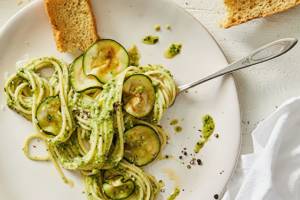
- Cool As A Cucumber: Summer squash can be eaten raw and are refreshing due to their high water content. Chop them up for salads or snacks to serve alongside carrot sticks. Cucumbers in particular make wonderful chilled soups when pureed with a bit of yogurt. If you’re carb-conscious, shave thin slices of cucumber to wrap sushi rolls to substitute rice. How effective cucumber slices are for reducing puffiness around the eyes is debatable, but it still feels nice!
- Toast The Seeds: The seeds in winter squash can be scooped out, cleaned and spread across a baking pan or sheet of aluminum foil. Bake at 325°F for about 30 minutes, depending on the size of the seeds. Toss the roasted seeds in butter or oil and salt or seasoning as you like. Roasting seeds are very fragrant, but keep an eye on them because if the shells look too browned, chances are the seed inside is already burnt. Toasted seeds make great bar snacks, appetizers and garnishes.
Now it’s time to meet the squash. The photos in our squash glossary are courtesy of Goebel Farms, Melissa’s, MorgueFile and Melissa Hom. As you’ll see, quite a few of the squash are so beautiful, they can be used as table decor in a basket or bowl and enjoyed for a few weeks prior to becoming dinner (as we enjoyed them in the course of writing this article).
| My Name |
Get To Know Me |
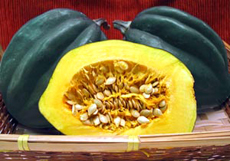
Acorn Squash
Any Green Bay Packers fan would love acorn squash because it comes in the team’s three colors: green, gold and white (though the dark green ones can be much darker in hue than the team’s forest green). Known for its compact size, one squash easily provides one or two generous portions. The defined ribs make an attractive vessel: the halves can be hollowed out after baking and used as decorative bowls for mashed squash, rice, soup or stuffing. Naturally sweet and slightly fibrous, acorn squash can be substituted for buttercup squash which is generally drier, or butternut squash which is nuttier.
Available year round, although the all-white or all-yellow acorn squash peak late August to December. |
 |
Ambercup
Compact and weighing less than three pounds, the pumpkin-colored shell with an occasional stripe encases a deep vibrant orange flesh. It is comparable to buttercup squash but slightly drier; the dryness lends itself to cooking because the water content can be controlled in soup, stuffing or rice pilaf.
Available June to November. |
. |
Autumn Cup
Under its forest-green shell and sparse green stripes is rich, meaty squash so flavorful that its yolk-colored flesh pops in the mouth. Compact but substantial, this squash is a velvety joy.
Available September through December.
|
 |
Australian Blue Squash
The hefty Australian Blue has teal-gray skin encasing bright orange flesh. The flesh is very similar in taste and appearance to a pumpkin; the two can easily be substituted for each other. Australian Squash or Queensland Blue Winter Squash is also known as the Jarrahdale Pumpkin, named after Jarrahdale,
Western Australia’s first timber town in 1872. It is also known for its farms, orchards and art galleries.
Available September through December.
|
 |
Baby Boo
A miniature white pumpkin 2 to 3 inches in diameter, mostly used for decoration.
Available throughout the fall.
|
 |
Banana Squash
Ranging from 2 to 3 feet in size, the log-shaped squash has a faded cream or peach-colored exterior and golden, cantaloupe-colored flesh. It averages 10 to 12 pounds although grocers often sell them in more manageable cuts; it is common for banana squash in home gardens to grow up to 40 to 50 pounds or more. Bush Pink Banana Squash is a specific heirloom squash with pink skin and orange flesh, but is still a banana squash.
Available year-round, but peak season lasts summer through early fall. |
 |
|
Buttercup Squash
Squat and green with vertical gray or pale green stripes, this decorative squash with tender orange flesh is likened to sweet potato.
Available year-round, but peak season lasts from early fall through winter. |
 |
Butternut Squash
The almond cream-colored gourd with a bottleneck shape, one of the more common varieties of squash, tastes like a nuttier version of sweet potatoes.
Available year-round, but peak season lasts summer to early fall.
|
 |
Calabash
The smooth, pale green bottle gourd is multipurpose squash. Its white flesh is normally used in Chinese stir-fries or dried as strips in Japan. In Central America, its seeds are roasted and ground, then incorporated into a rice, cinnamon, and almond-based drink. The calabash’s dried shell can be used as bowls, containers, smoking pipes, bird houses or ornaments. As musical instruments, they are made into maracas and the seeds inside rattled for percussion. Their hollow chambers allow for use as a string instrument, and can they also be turned into a drum. But perhaps the most unusual use is among the natives of New Guinea, where men wear it as a koteka, or a penis gourd or sheath, to cover their genitalia. The calabash can also be teardrop-shaped and many cultures add weights to the squash to help elongate it and create the typical bottle shape.
Available late summer and throughout fall. |
 |
|
Calabaza or West Indian Squash
Round or pear-shaped, the calabaza squash ranges from beige to pale sunset colors. As its name implies, it is popular in the Caribbean, as well as Central and South America. It is similar to the butternut, but with a firmer and more fibrous texture.
Available year-round. |
 |
Carnival Squash
This beautiful squash has a festive pattern with brush-like stripes of deep orange and specks of green. The meat inside is a golden yellow color similar to butternut and golden sweet potatoes, and is even creamier.
Available year-round, but is best late summer through early fall. |

|
Chayote Squash
Also called Christophen squash or a vegetable pear, the chayote was originally cultivated in Central America. The pale green squash is mild-tasting: refreshing like a cucumber, tender like zucchini, but crisp like an apple. Like zucchini, it can be eaten or prepared almost in any way. Try munching on it raw, over salad, or deep-fried like tempura.
Available year-round, but the peak season is September through May.
|
|
Cheese
Also known as the Long Island Cheese Pumpkin, this squash is squat and round like a cheese wheel. The pale peach or orange exterior makes it a pumpkin look-a-like; it is mostly ornamental.
Available fall through winter.
|
 |
Chinese Okra, Luffa Gourd or Silk Melon
The Chinese okra tastes and cooks similarly to zucchini. Neither needs to be peeled or seeded. Look for the young ‘uns—older Chinese okra tends to be bitter, and the rough ridges and spine only become tougher.
Available year-round, but the peak season is the summer and fall.
|
 |
Cinderella
This medium-sized round squash with a red-orange exterior and thin green streaks is also known as the red etampes. Although perfectly edible, most use the Cinderella pumpkin as an ornament.
Available late August throughout the fall. |
|
Cucumber
Cylindrical and green, cucumbers are popular choices for added crispness to salads, snacks, sushi rolls, or sandwiches. When cooked, they are tender, but their taste remains mild unless pickled. They are equally refreshing in soups, as a pureed sauce, and in ethnic dishes like the Greek cucumber and yogurt salad, tzatziki. There are different varieties of cucumbers, but the main difference lies in the skin and seeds. An old wives’ tale has it that either the seeds or bitter skin causes people to burp, which is why “burpless” varieties were developed with thin skins and virtually no seeds.
Available year-round. |
 |
Cucuzza
“Cucuzza” is the general term for squash in Italian, so it makes sense that the cucuzza is also called Italian squash. Its long, curved and bottom-heavy body also earned it the title of “bottle gourd.” It can be prepared just like zucchini and has the same tender, mildly sweet characteristics.
Available summer through fall. |
 |
Delicata
This oblong squash has lemon-colored skin streaked with green or orange. The meat is a cross between butternut and sweet potato, so much so that it is also called sweet potato squash. It is also known as Bohemian squash.
Available year-round, it is best late summer through early fall. |
 |
Eight-Ball Squash
The fattened, round eight-ball squash from California is a spherical hybrid of zucchini. Sharing the same dark, speckled green skin and plump insides, this squash can be served the same way as zucchini.
Available during the warm months in California from spring until fall.
|
 |
Gold Nugget
Similar to a hand-size pumpkin, this dull-skinned squash (the dull skin indicates maturity) is as deep orange inside as it is out. Noted for its blander taste compared to other squashes, gold nugget lends adapts itself to a variety of flavorings.
Available year-round. The best season is late summer through early winter. |
 |
Green-Striped Cushaw
This white squash, mottled and striped with green, is crookneck-shaped and dense. Its yellow flesh is best suited for pies and fillings because it is slightly sweet, but thick and coarse. It tastes very much like a pumpkin, and could be an even better alternative.
Available late summer to the end of winter. |
 |
Hubbard Squash (Blue, Golden, Green, or Gray)
Large and bumpy like a misshapen teardrop, this squash is notable for its wart-covered exterior and its peach-colored flesh. Hubbards are generally uniform in color, although the gray ones have a dusty appearance. The flesh is moist, but is best prepared boiled or baked and then puréed. Longer cooking helps breakdown its fibrousness and evaporates some of the excess water.
Available year-round, but peak season is early fall throughout winter. |
|
Kabocha Squash
“Kabocha” is the general term for squash in Japanese, but this Japanese squash also goes by the name ebisu, delica, hoka and (you guessed it) Japanese squash or Japanese pumpkin. The mossy green rind with spotted streaks of gray-teal encase tender, sweet pumpkin flesh, but without the stringy fibers.
Available year-round. |
 |
Lumina
A round, white squash that is sometimes carved like a pumpkin for decoration.
Available in the fall and throughout winter. |
 |
Orangetti Squash or Vegetable Spaghetti
The pale, orange-fleshed cousin of the spaghetti squash shares the same quality of separating into long spaghetti-like strands as it cooks. The watermelon- shaped squash is golden and smooth, and its delicate strands can be cooked like conventional squashes. But it is especially impressive piled on top of a plate, like real pasta.
Available August through October. |
 |
Pattypan or Sunburst Squash
These cute, dreidl-sized squash come in yellow, green and white. They have scalloped edges and, like most other summer squash, a thin skin and tender meat. They can cook in the microwave, bake in the oven, on the stove, or can be used cooked or uncooked as a simple garnish for any dish.
Available year-round, but the peak season is May through August.
|
 |
Pumpkin
Drier, coarser and more strongly flavored than most other squash, pumpkins are renowned harbingers of of autumn for Halloween as Jack-O-Lanterns. They are mostly ornamental; most people who bake with pumpkin do so with the canned variety due to the time demands of preparing the fresh, fibrous flesh. There are many pumpkin variations, such as Jack-Be-Little, Gold Dust, Wee-Be-Little, Lil-Pump-Kee-Mon and White Pumpkins (Valenciano, Cotton Candy, Baby-Boo).
Available year round, but best in the early fall throughout winter. |
 |
Red Kuri Squash or Uchiki Kuri Squash or Orange Hokkaido
With butter-colored flesh that is smoother than butternut, this teardrop-shaped squash with an intense, sunset-colored rind has a pronounced, distinctive chestnut flavor. It makes it a unique soup base that lends itself to many pairings with other ingredients.
Available year-round. Best season is late summer through early fall. |
 |
Spaghetti Squash or Vegetable Spaghetti
This watermelon-shaped squash is known for flesh that separates into long, blond, spaghetti-like strands as it cooks, which lends itself to any recipe that wheat pasta would. The strands can be used in salads, casseroles or on a plate with sauce. Mellow-tasting with a slight crispness not found in pasta, it’s fun to halve the squash lengthwise and rake strands out of its naturally oval shell. The yellower the rind, the riper the squash.
Available year-round. Best season is early fall through winter. |
 |
Summer Squash
Thin-skinned squash with taut skin that bruises easily. Examples include zucchini and yellow squash like the crookneck squash at the right. They have a relatively short shelf-life: two weeks in the refrigerator. Different varieties of summer squash are found in yellow, green and white. |

Photo courtesy of MorgueFile. |
Sweet Dumpling
The cream or daffodil-colored rind of this pretty squash boasts thick deep ribs, which are lined with green or orange. It lives up to its name for being sweet and tender. The petite squash can be held in one hand, making it a “dumpling” in comparison to other squash with ribbed, pumpkin-type shapes. It’s a great size for roasting or baking as individual servings.
Available throughout the fall. |
 |
Turban
Turban are distinctively shaped like a sultan’s turban and can be strikingly colored. They vary from orange, red, green, and white, sometimes combining all four. The yellow flesh reminds some of hazelnut, and its good size makes a wonderful bowl for an individual serving of soup when ut is hollowed out. The bottom can be cut off to be hollowed out or stuffed.
Available year-round. The best season is late summer through early fall. |
 |
Winter Squash
Winter squash have hard, thick rinds—examples include pumpkins and acorn squash. Kept in cool, dark places, they will have a shelf life of up to three months. |
 |
Yellow Squash or Yellow Zucchini
Yellow squash comes in a number of varieties including crookneck, straightneck, pattypan (see example above) and zucchini (photo at right). The crookneck has a curved, bottleneck, while the straightneck is straight. Pattypan are small top-shaped squash with scalloped edges. Like all summer squash, they are marked with thin skin that does not need peeling, and are usually tender and mildly sweet.
Available year-round. |
 |
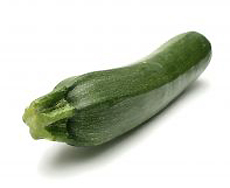
Zucchini
Often paired with its cousin, yellow squash, zucchini is one of the most popular summer squashes. Its mild flavor is versatile; it can be eaten raw, grilled, fried, sautéed, baked, tossed in salads, in pasta dishes, on sandwiches, or even baked into bread and cake. Look for glossy, firm, dark green skin.
Available year-round. |
 |
Online Retailers
Many types of squash are easily accessible in supermarkets; some are more specialty items, equally deserving of your attention. Melissa’s, the largest distributor of fresh specialty produce from around the world, will ship squash straight to your front door. Farmer’s markets and pick-your-own-vegetable farms also are wonderful resources. If you’d rather pick your own from the backyard, seed retailers often carry a variety of hybrids.
|
© Copyright 2005-2008 Lifestyle Direct, Inc. All rights reserved. Images are the copyright of their respective owners.

|
 |
|
|