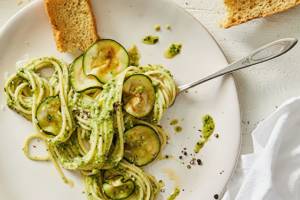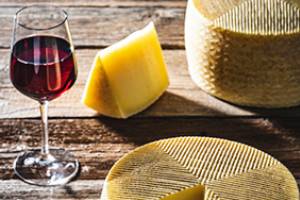
Crisp and dry, G Saké pairs well with everything from Asian dishes to grilled meats and even cheese courses.
|
CAITLIN BARRET, a former member of THE NIBBLE editorial staff, now writes freelance for THE NIBBLE.
|
|
March 2006 |
|
Product Reviews / Main Nibbles / Wine
G Saké
An Ultrapremium Saké, Born In The U.S.A.
Overview
Beer has its place at summer barbecues or alongside a hot slice of pizza, and there seems to be a wine pairing for everything from the finest caviars to the lowliest pork rinds. But there is simply nothing more refreshing, relaxing and cleansing than a chilled glass of saké before a meal, with a meal or after it. We’ve even considered replacing the glass of water on the bedside table with a carafe of saké, but we are guessing our mothers wouldn’t approve.
While saké can intimidate first-timers with its dry taste and alcoholic bite, G saké from Oregon’s SakéOne is smooth and round on the palate, with just a little bite at the finish. “G” stands for genshu; and although genshu refers to premium-grade and a cask-strength of 18% to 21% alcohol, the sexual reference is hard to miss. G saké contains 18% alcohol, but it is smooth and silky and, well, sexy. It is a Junmai Ginjo Genshu Saké. (Click here for Sake 101, which explains more about the categories of saké.) While it is made in America (there are three sakéries in the U.S.), it will please saké purists.
G Saké
Most sushi bars offer saké hot, but high-quality saké should be enjoyed chilled or at room temperature (the heat covers up flaws, and enables a lower-quality saké to be served—not that there’s anything wrong enjoying warm saké). When we had our first taste of G, it was straight from the fridge. It was delicious: crisp, dry, with light citrus notes. But as it came up to room temperature, its true flavors really shone through: creamy, deep melon notes emerged, and the saké’s “legs” seemed to stretch out past our palates and into our bellies, where it left us warm and satisfied. While this saké is tailored to be pleasing to American tastes, it certainly didn’t leave us wishing we had gone with a more expensive import.
G’s stunning black bottle also sets itself apart from other sakés. Like all wines, saké should be from being protected from the destructive rays of light, so the dark color is an obvious choice. But the bottle’s wide, tapered shape makes it an attractive conversation piece, suitable to serve your guests from if you don’t have a saké set. Saké of this caliber can even be served in a white wine glass.
Cooking With Saké
Saké is also as versatile as wine in cooking. It is great in marinades, as it helps to tenderize the meat. Saké’s flavors enhance sautéed vegetables, fish and poultry. Here are some simple ways to “saké” it to your food. You might not want to pour too much of the premium-priced G into the pot, but for half the price, you should consider adding saké to:
-
Vegetables (this works best with asparagus, snow peas and green beans): Chop up two to three cloves of garlic and heat in about a tablespoon of olive oil in a pan for three to four minutes. Once the garlic is golden, remove it with a slotted spoon and set aside, leaving the fragrant oil behind. Increase the heat to high and add the vegetables, stirring to make sure they are evenly coated. Add about a tablespoon of lemon juice and 1/3 cup saké, and cover. Let the vegetables steam for about two to three minutes, until they are al dente.
- Fish: This is a fast and simple way to prepare any thick white fish filet like cod, catfish or even heartier fish like mahi mahi. In a wide saucepan, mix 1/2 cup saké, 1 tablespoon of chopped ginger, 1/4 cup soy sauce, 1/4 cup rice vinegar, 1/4 cup mirin and 2 tablespoons of sugar. Heat until simmering and add the fish. Simmer until cooked through, about 6 minutes depending on the thickness of the fish.
- Chicken: We like to make a chicken stew in our slow cooker with saké. This stew works as a main course with rice and vegetables. In a slow cooker add 8 ounces of chicken meat (breast or thigh); 4 carrots, cut into 2 inch pieces; 2 russet potatoes, cut into large chunks; 1/4 cup saké; 2 tablespoons of brown sugar; and 1/2 teaspoon chili flakes. Fill the rest of the cooker with your favorite broth, or just use plain water. Add other root vegetables like burdock or lotus root for a more authentic Japanese flavor, or add tomato paste and leafy greens like spinach or kale for a stunning, healthful soup.
We love G for its name. While some of our favorite sakés have names like Hokusetsu Jyunmai Daiginjyo, we find ourselves checking our notebooks to remember how to pronounce them, and we have a tough time picking them out on the shelf at a wine store. We love G because all we need to do to remember it is think, “Gee, I would really love a cool glass of saké right about now,” and then reach for the distinctive black bottle.
Pick up a bottle next time you are entertaining, and impress your guests with something new: G’s appealing, accessible flavor that will pair well with everything from Asian-style dishes to cheese courses and grilled meats.
SAKEONE
G Sake
Purchase online at SakeOne.com
*Prices and product availability are verified at publication but are subject to change. Shipping is additional. These items are offered by a third party and THE NIBBLE has no relationship with them. Purchase information is provided as a reader convenience.
|
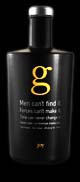
We love G Saké's
sleek lines and bold
logo. |
Smooth And Pure
 |
 |
 |
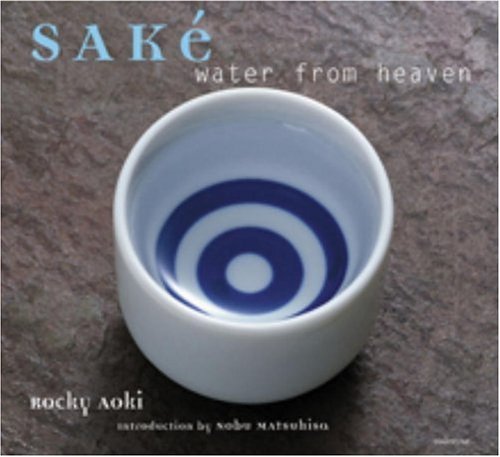
| Sake: Water from Heaven, by Rocky Aoki and Nobu Mitsuhisa. This book explores this relatively unknown drink, supplying a full background to this still-mysterious beverage. $15.72. Click here for more information. |
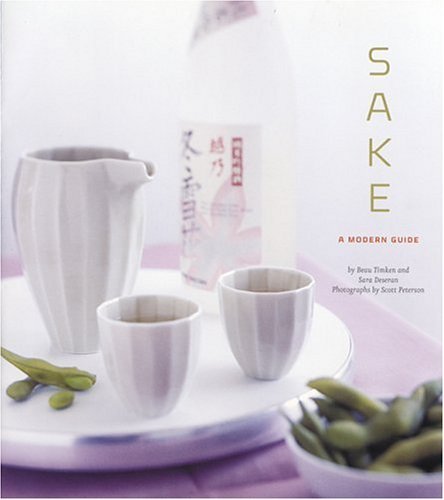
Sake A Modern Guide, by Beau Timken, Sara Deseran, Scott Peterson. This fun and informative guide demystifies an age-old wine and explains the many types of sake and how to properly taste their complex flavors. $12.32. Click here for more information. |
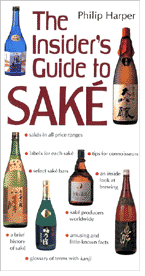
The Insider's Guide to Sake, by Philip Harper. This book unravels the history and intricacies of this exotic drink, and provides an extensive list of restaurants and retail outlets in Japan, the United States, and Europe where the beverage in all its variety can be found. $9.72. Click here for more information. |
Sleek And Stylish
 |
 |
 |
| Sake Set. This elegant black gift boxed set includes a sake bottle and four sake cups in each in a difference color and pattern. $25.99. Click here for more information. |
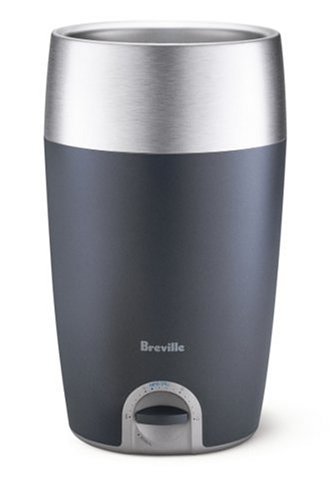
Breville Wine Chiller. Chill you sake to smooth perfection with this wine chiller. $49.99. Click here for more information. |
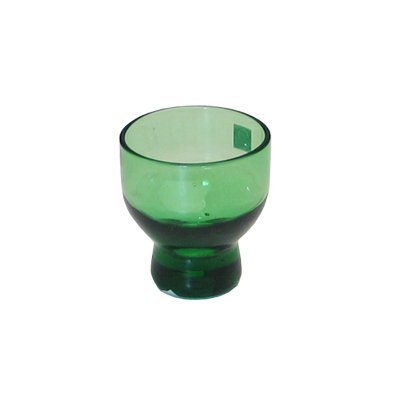
Glass Sake Cup. This beautiful green sake glass is an elegant way to serve an elegant beverage. $2.52. Click here for more information. |
|