THE NIBBLE (TM) - Great Finds for Foodies (tm)


RSS feed
(What’s this?)
Kosher champagne
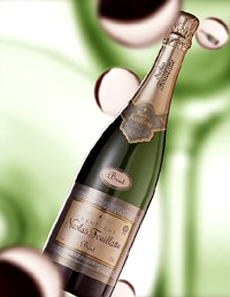
You’re giving up bread to observe the exodus: no need to give up good wine too! Champagne Nicholas Feuillatte Kosher Brut gets our vote for the best kosher bubbly.
MENU


Wine

Category Main Page
Articles & Reviews


Main Nibbles

Main Page
Articles & Reviews of Foods From A to Z


Product Reviews

Main Page
Food, Beverages, Books,
News & More


April 2006

Product Reviews / Main Nibbles / Wine

Seder-Bound?

What To Pour


Wine lovers tend to whine when it comes to Passover: having to give up the good grapes for kosher for—for Passover—wines is more painful than clearing the house of anything leavened. However, if you know where to look, you can drink as well as you eat. First, a lesson on kosher wine. If you don’t want the lesson, click here to get to the recommendations.

What makes a wine “kosher?”  Regulations. Anyone can grow and pick the grapes and transport them to the winery, but as soon as crushing begins, the wine can only be produced by Sabbath-observant Jews—a non-observant Jew can’t even push a button to start a machine. Aside from needing a steady supply of Sabbath-observant Jewish winery workers—which could be a challenge in California wine-growing regions—it gets more complex.

  • No work can be done on the Sabbath or on a Jewish holiday. But wine-making is organic chemistry: when the grape juice is ready to be processed, winemakers are at its bidding. Not so with kosher wines: if something needs to happen on Saturday or Rosh Hashanah, it waits. (This can be risky: e.g., fermenting grapes can start to spoil. If they’re being watched, you can take action before damage is done.)
  • The winemaker has to decide whether to make wines mevushal, the Hebrew word for “cooked,” or non-mevushal. A mevushal wine can be served and opened by a non-observant Jew and remain kosher; a non-mevushal wine cannot. This has commercial implications: mevushal wines can be opened by waiters at restaurants and events. Mevushal is an added process that brings the must, the slurry of grape solids and juice resulting from the grape pressing, to the boiling point (this happens before the fermentation process begins). Other techniques include modern flash-pasteurization of the fermented wine, which some experts feel compromises the mouthfeel of the wine, especially reds.

What else makes a wine kosher?

  • No animal products can be used in processing. Non-kosher winemakers can use egg whites or gelatin to clarify the wine—to attract suspended particles and drag them down to the bottom of the barrel as sediment. Kosher winemakers use bentonite, a clay material. Similarly, kosher winemakers would never use animal bladders for filters.
  • Physical cleanliness is also mandated by kosher law. Tanks, crushers, presses and all equipment must be cleaned three times by modern steam cleaning, scalding hot water (and when needed, blowtorches).
  • All barrels for aging must be either brand-new or used exclusively for kosher wines.

It is a misconception that kosher wines are blessed by rabbis; rather, they are made kosher (the Hebrew word for “proper” or “correct” so that blessings can be made on and over them by rabbis or anyone else. And now, the wines.

Champagne Nicholas Feuillatte Brut Kosher  (France)

From the vineyards of Epernay to your table, this perennial favorite, pronounced nico-LAH foo-YAHT, is the real deal: a deep gold color, perfectly balanced with ripe fruit, bright, racy acidity and a finish. It is a blend of 80% Chardonnay and 20% Pinot Noir grapes. The nose has notes of honey, acacia blossom, apples and pears. Champagne Nicolas Feuillatte Brut Kosher is certified kosher, kosher for Passover and Mevushal by Rabbi Nissim Redibo of the Beth Din in Paris and Orthodox Union in the United States. $45.00.

Another fine Champagne house, Laurent Perrier, makes Brut and Rose Champagnes that are kosher but not mevushal; and Heidsieck & Co. makes a mevushal Monopole Brut Kosher Champagne ($62.00). (Heidsieck was the official champagne aboard the Titanic. Bottles salvaged a few years back reportedly still tasted terrific.)

Hagafen Cellars (U.S.)

In the heart of Napa Valley, Hagafen has been making noteworthy kosher French varietal wines for 25 years. They have been served at the White House classic French premium varietals of Cabernet Sauvignon, Chardonnay, Merlot, Pinot Noir, Sauvignon Blanc and Syrah. They also produce a sparkling wine, Brut Cuvee and an off-dry White Riesling. Robert Parker has called the Syrah “the best kosher red ever produced.”

All of the wines are worth trying—especially the ones you wouldn’t think to try, the Brut Cuvee and the White Riesling.

  • Hagafen Syrah2001 Napa Valley Brut Cuvee Sparkling Wine Late Disgorge. Aromas of lemon, grapefruit, strawberry, and white chocolate with hints of melon, tea and toast. The palate has complex flavors of peach, tropical pineapple, grapefruit and pink grapefruit, berry, chocolate, tea, and bread; and a long finish. $15.00.
  • 2000 Napa Valley Cabernet Sauvignon—Estate Bottled. The heavyweight of the two cabernets, with 10% Cabernet Franc, has won gold medals for all previous vintages since 1995. The nose is dense red raspberries, wild blackberries, chocolate, and a warm toasty essence. The palate, like the nose, has a compact structure but softens in the finish. Limited Edition in Double Magnums, $400.00. The regular 2001 Napa Valley Cabernet Sauvignon—Estate Bottled, also made with 10% Cabernet Franc, is available in a standard 750 ml bottle for $49.00.
  • 2005 Napa Valley White Riesling—Estate Bottled. A perennial gold medal winner, twelve previous vintages won gold medals at major wine competitions. On the nose, classic Riesling aromas of litchi, Royal Anne cherries, and white peach; a palate of peach, pear, pineapple, grapefruit and mandarins. An extremely long finish. In general, the slight sweetness of White Riesling is good to to offset spicy or succulent foods (we enjoy it with Thai, Indian, and Chinese cuisines). $21.00.
  • 2000 Napa Valley Syrah—Estate Bottled. Bright fruit flavors: raspberry, red licorice, cinnamon, and toasty oak aromas reach out from this wine. Aged for twenty months in small oak cooperage, this medium- to full-bodied wine fills the palate with fruit and retains a long raspberry finish. $39.00.

RiojaYou can read about the other bottlings on the company’s website. Wines are sold by the half-case from the website, which has a retail store locator as well. If you’re in Napa, vineyard tours are conducted daily at 11 a.m., by appointment.

Hagafen.com


Ramon Cardova Rioja (Spain)

Kosher for Passover Rioja from Spain?  Why not!  There are good kosher wines from Australia, Argentina, and other places you wouldn’t think cater to the kosher market. For lovers of dry reds, this is a luxurious Rioja produced from 100% Tempranillo grapes from old vines surrounding the town of Haro, La Rioja. With its bright ruby red color, a nose of ripe wild berries and balsamic aromas, Ramon Cardova is ideal with red meat, fish, and soft, light cheeses. Supervision: OU. $17.00. Available from KosherWine.com.


Le chaim!


Recent Articles From Our Kosher Nibbles News Feed:

Subscribing notifies you whenever there are
new additions to the Kosher Nibbles section.


Subscribe to THE NIBBLE™ Kosher Nibbles by Email


© Copyright 2005-2008 Lifestyle Direct, Inc. All rights reserved.  Images are the copyright of their respective owners.


Spread The Word: Each icon below links to a site where you can bookmark, share and comment on this article:
Dine52    del.icio.us    ma.gnolia    Newsvine    Yahoo Myweb    BlinkList    simpy    reddit


.