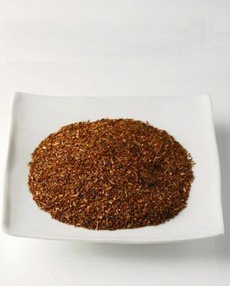
 Red teas, including honeybush and rooibos, are herbal teas plucked from bushes that grow in South Africa. Red teas, including honeybush and rooibos, are herbal teas plucked from bushes that grow in South Africa.
March 2005
Last Updated May 2026
|
|
Different Teas & Tea Terminology
Tea Glossary Page 7: Terms With H
This is Page 7 of a 15-page glossary of different teas and tea terms. Click on the links below to visit other pages. This Tea Glossary is one of our many delicious food glossaries. Take a look at more of your favorite foods.
Click on a letter to go to the appropriate glossary page:
a b c d e f g h i j k l m n o p q r s t u v w x y z
This glossary is protected by copyright and cannot be reproduced in whole or in part.
HANDKERCHIEF TEA
A very fine-tipped tea grown in Taiwan, which gets its name from the large silk handkerchiefs that Chinese tea growers used to collect their leaves.
HARD
Pungent flavor; a desired quality in tea, especially Assam teas.
HARSH
A bitter, rough taste generally due to the leaf being under-withered during manufacture.
HEAVY
A thick, strong, and colored liquor with limited briskness and astringency.
HERBAL TEA
A beverage that is not made from the tea plant, but from a variety of dried berries, fruits, herbs, flowers, and roots—virtually anything that can be steeped that does not come from the tea plant Camellia sinensis. Correctly, herbal teas are called tisanes and not teas, since tea comes from the tea plant, but Americans are stuck on the designation of “tea.” Herbal teas do not have caffeine, and some have palliative effects that have been homeopathic (folk medicine) remedies for millennia. Examples include chamomile, which induces sleep, ginger, which reduces nausea, catnip, ginseng, licorice, sage, and yerba mate. Herbal teas should be brewed with water at 208°F.
|
|
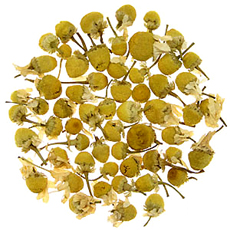
Organic golden chamomile blossoms are available from RishiTea.com. |
More recently, rooibos, a red infusion from a South African bush, has been found to be as antioxidant-rich as tea, yet is naturally caffeine-free.
HIGH-GROWN TEA
Teas grown in the mountains (i.e., at higher altitudes) are generally of higher quality than teas grown in flatter regions.
HIGH TEA
The name given to a hearty evening meal served late afternoon or early evening (now generally around 6 p.m.), which is a combination of afternoon tea and dinner. Not the upscale repast it sounds, high tea was the main meal for farming and working classes in Britain, comprising a main dish, generally roast beef or leg of lamb, bread and butter, a pudding (pastry or custard), and tea. Sometimes called meat tea, it is a world away from the fashionable world of afternoon tea enjoyed by the upper classes.
|
|
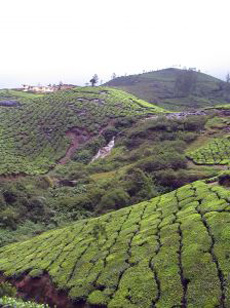
A tea garden in the mountains of Kerala province, India. Photo by Piotr Bizior | SXC. |
HIGH FIRED
Over-fired or dried, but not bakey or burnt.
HONEYBUSH TEA
“The other red tea,” honeybush (Cyclopia intermedia), is an herbal tea grown on the mountain slopes of the Longkloof District (Eastern Cape) of South Africa. Honeybush is similar in appearance and flavor to rooibos, but slightly sweeter. Honeybush’s yellow, orchid-like flowers emit a honey-like scent, and the leaves are harvested during the flowering season. See rooibos.
|
|
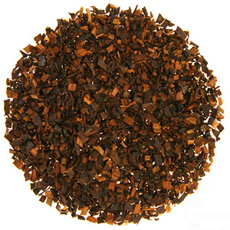
Honeybush tea from RishiTea.com. |
HONG KONG SILK STOCKING TEA
Also called Hong Kong Milk-Style Tea, Hong Kong Silk Stocking Tea is a very smooth and velvety milk tea made by filtering strong black tea through a long cloth bag multiple times for aeration, which creates the texture. The bag becomes stained brown, resembling a stocking of older days—which is how the tea got its name. The tea is often the Ceylon variety (with both coarse and fine leaves used), with evaporated milk and white sugar added. Alternatively, sweetened condensed milk can replace the evaporated milk and sugar. It is served both hot and cold.
The technique was created in 1952 by Lam Muk Ho at the Lan Fong Yuen restaurant in central Hong Kong. Delivering a strong tea flavor with a delicate balance of sweetness and astringency, it is popularly enjoyed at breakfast or afternoon tea with pineapple buns (bo lo bao) or French toast.
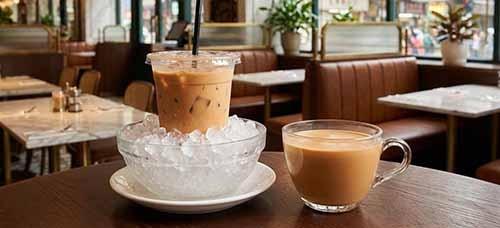
Hong Kong Silk Stocking Tea, served hot or cold (the latter shown in an ice bath commonly used instead of ice cubes, which would dilute the drink (photo The Nibble | Abacus).
HOOCHOW
A Chinese green tea.
HOUJICHA
A Japanese green tea that is produced by roasting bancha tea over high heat. The result is a robust, savory tea, reddish-brown in color, with a refreshing, smoky, roasted taste, a caramelized flavor profile, and virtually no bitterness. It contains the lowest level of caffeine of any Japanese green tea, although it is the most “coffee-like” of the Japanese green teas.
HUNAN
One of the tea-growing provinces of China.
HYSON
A brand of Chinese green tea commonly drunk in Europe in the 18th century, and often used generically to refer to the tea beverage, as Sanka and Kleenex are used to describe decaffeinated coffee and facial tissues. Young Hyson is a type of green tea that is plucked early.
|
|
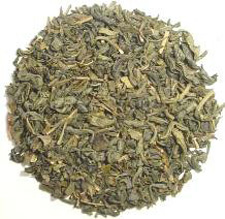
Hyson tea. Photo courtesy of Stock.Xchng. |
Continue To Page 8: Tea Terms Beginning With I & J
Go To The Glossary Index Above
Lifestyle Direct, Inc. All rights reserved. Images are the copyright of their respective owners.
|