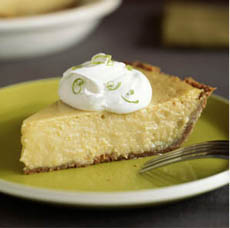
Key lime pie is named for the Florida Keys, where the pie was first made. Photo courtesy Morton’s The Steakhouse.
June 2009
Last Updated June 2026
|
|
Pastry Glossary: Different Types Of Pastry
Galette & Other Types Of Pastry & Pies
Page 5: Definitions G ~ L
This page contains terms for different types of pastry, such as galette, kolache, linzer torte, lemon meringue pie, and Key lime pie. This is Page 5 of a ten-page glossary. Click the black link below to visit other pages. See many more food glossaries, each featuring a different favorite food.
|
GALETTE
A French term with multiple meanings, depending on the category of food. In the pastry world, a galette is a rustic, round, open-faced fruit pie. It is flat, with a flaky, turned-up crust that wraps around the filling to create a “bowl.” The Italian word is crostata.
|
|
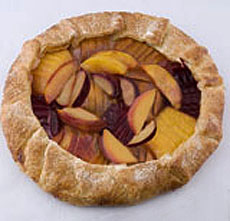
Peach galette from FrogHollow.com, a NIBBLE Top Pick Of The Week. |
|
GRASSHOPPER PIE
Grasshopper pie is a crème de menthe chiffon pie with a chocolate cookie crust. It was invented in the U.S. in the 1950s and pays homage to the Grasshopper cocktail, made with crème de menthe and crème de cacao. A frozen version can be made with mint or mint-chip ice cream.
|
|
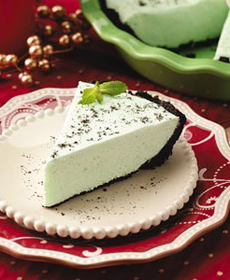
Grasshopper Pie, green from creme de menthe. Photo courtesy Taste Of Home. |
|
GRUNT
A grunt is a “spoon pie”: biscuit dough dumplings atop cooked fruit. It is steamed on the stovetop, instead of baked in the oven. See also cobbler, pandowdy, and slump.
HOT WATER CRUST PASTRY or HOT WATER PASTRY
A quick and easy method for making plain pastry. It is less flaky than the traditional method but crisp, tender, and serviceable. It works best with lard: Lard is placed in a bowl and melted with boiling water; sifted pastry or cake flour, salt, and baking powder are added and stirred until blended. The dough is patted into a ball, wrapped in wax paper, and chilled.
|
|
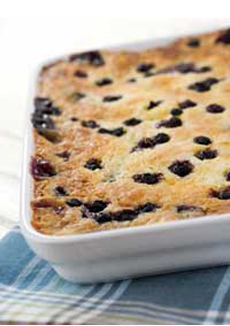
A blueberry grunt. Photo courtesy WildBlueberries.com. |
ICEBOX PIE
A pie that must be refrigerated or frozen before it can be served. Icebox pies have cookie-crumb crusts that may or may not be baked; fillings are either uncooked or cooked on top of the stove. The fillings are set in the refrigerator (icebox) or freezer (in the case of an ice cream pie). This chilling process allows the filling to thicken and/or set, giving it the proper consistency for serving. Most refrigerated pies need to be consumed within a day before the crust begins to get soggy.
IMPOSSIBLE PIE
Impossible Pie is a custard pie that “magically” creates its own crust while baking. Popularized in the 1970s, it gets its name because it is “impossibly easy” to make. Simply pour the batter into a greased pie dish. During baking, the ingredients naturally separate into distinct layers: a delicate bottom crust, a custardy filling, and a top “crust” of coconut. Here’s a recipe.
While coconut is the most traditional, the batter can be adapted to make several other sweet or savory treats, from apple, chocolate, lemon, pumpkin, etc., to savory pies like cheeseburger, ham-and-cheese, or taco pies (which rely on Bisquick and eggs to form a crust around a hearty filling)
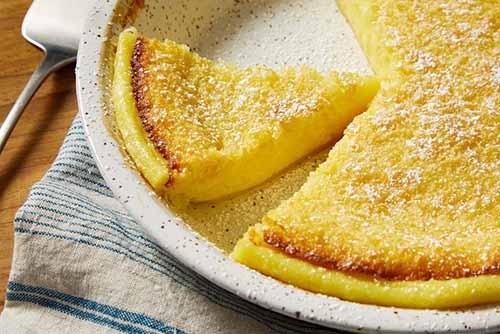
Impossible Pie (photo © Taste Of Home).
ITALIAN PASTRY
There is no single type of “Italian pastry.” Like French pastry or the pastry of any nationality, it is rich and varied. Examples include cannoli, lobster tail, pignolata, sfogliatelle, and zeppole.
|
JALOUSIE
A jalousie (the word means both jealousy and slatted blind in French; in this case, it refers to the slats) is a fusion of a turnover and a strudel. You have seen it before, but have not known the official name. A jalousie consists of two rectangles of puff pastry with a fresh fruit filling in between; the edges of the pastry are pinched together or crimped with a fork. Before baking, slits (“slats”) are cut into the top crust that allow steam to escape and also create a glimpse at the attractive filling between the slats. Jalousie is considered a French version of the German strudel.
|
|
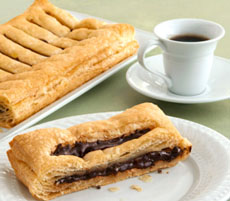
Jalousie. Photo courtesy Pepperidge Farm. |
|
KENTUCKY PIE or KENTUCKY DERBY PIE
A relative of chocolate pecan pie that’s associated with the Kentucky Derby but eaten year-round. Created in the 1950s by the owners of Kern’s Kitchen in Louisville, it uses walnuts instead of pecans and often a shot of Bourbon. The Kern family trademarked “Kentucky Derby Pie,” which explains why there are two names for essentially the same pie.
|
|
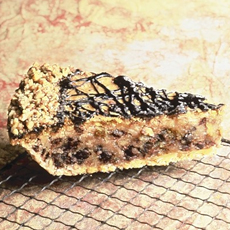
Kentucky Pie. Photo courtesy Lewis & Neals. |
KENTUCKY SAWDUST PIE
See Sawdust Pie.
|
KEY LIME PIE
A one-crust custard pie made specifically from the juice of Key limes, which are less acidic than the standard supermarket Tahitian lime. Key lime juice is yellow, not green. (See our Lime Glossary.) If you see a green-colored Key lime pie, avoid it—it is artificially colored and likely artificially flavored. Read the history of the Key lime pie, which originated in the Florida Keys, plus a recipe. (See another photo at the top of the page.)
|
|
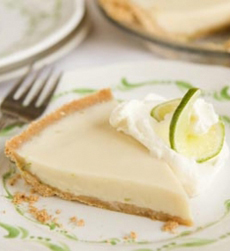
Key Lime Pie. Photo courtesy Lewis & Neals. |
|
KOLACHE or KOLACKY
A light, round Czech and Polish yeast-dough pastry with a sweet cheese, fruit, or jam filling. It is enjoyed as a breakfast pastry, snack, and dessert. There are also savory versions filled with vegetables and meats. The dough is filled with these ingredients and allowed to proof and rise prior to baking. It is also spelled kolache and kolach.
Eastern European pastries similar to kolachkes include kiffles (especially in Hungary), koláče (Czech Republic), and tvaroh pastries (also from the Czech Republic).
They all share a similar dough base and often feature sweet fillings like fruit preserves, poppy seeds, or cheese fillings like tvaroh, which is similar to farmer's cheese.
Authentic Czech kolaches are round, but kolaches can also be made in other shapes and fillings, depending on the region and recipe
Here’s a recipe for the kolaches in the second photo.
|
|
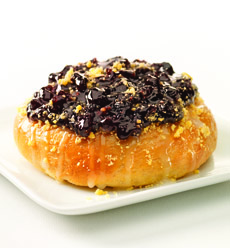
A berry-filled kolache. Photo courtesy of KolacheMama.com.
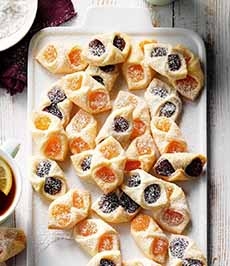
These kolaches have ice cream in the dough! Photo courtesy Taste Of Home. |
|
KRINGLE or DANISH KRINGLE PASTRY
Kringle pastry is a type of light, flaky Danish pastry similar to French pâte à choux (puff pastry). It is used to make a round coffee cake (originally baked in the shape of a pretzel) filled with almond paste or other variations and topped with glaze or powdered sugar, also known as a kringle, that is popular in the Midwest, where a concentration of Danes settled in the 1800s.

|
|

A Danish kringle can also be made in an oval shape. Here’s the recipe (both photos © Taste Of Home).
At left, another format for the kringle, shaping it more like a Danish pastry.
|
|
KUCHEN
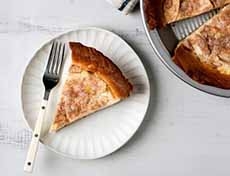
While Kuchen is the German word for cake, it can refer to different styles depending on the specific recipe. It can be a custard-filled cake, it can even be a coffee cake. Some kuchen recipes are more like fruit pies, with a crust and a fruit filling.
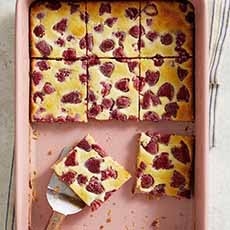
This raspberry kuchen has a crumb crust. Here’s the recipe (photo © Taste Of Home).
|
|
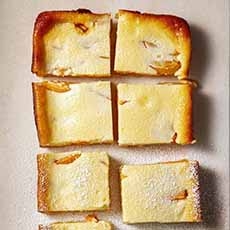
This peach kuchen has a conventional pie crust. Here’s the recipe. The version below is a custard-filled pie with a yeasted crust; here’s the recipe (photos © Taste Of Home).
|
|
LAMINATED PASTRY
Laminated dough is used to make Viennoiserie—brioche, croissants, Danish, and other buttery, flaky breakfast pastries. It is a time-consuming and expensive dough to make, owing to the large quantity of butter used.
First, a yeast dough is made, called the détrempe (from the French verb, “to soak,” as the dry ingredients soak in liquid). The ingredients—milk, dry yeast, brown sugar, bread flour, and sea salt or kosher salt—are kneaded together.
Some recipes use starter dough from a prior batch. The dough is chilled and then rolled out into a rectangle. A smaller rectangle of rolled-out and chilled butter called the beurrage (from the French word for butter, beurre) is placed on top of it. Then the construction of the pâton, or dough roll, begins.
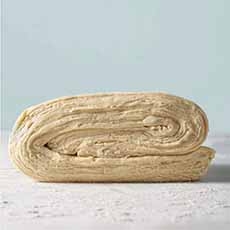
The rectangle is folded into thirds as if folding a letter (in fact, this first fold is known as a “single letter fold”). The pâton is then refrigerated for an hour, rolled, and folded again. The rolling and folding continue, usually for four turns, until it resembles the second photo.
|
|
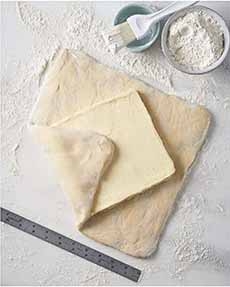
Laminated dough begins like this. Many folds later, the dough is ready to be cut and shaped. Here’s the recipe for croissants (photo © King Arthur Baking).
|
|
LATTICE CRUST
A top crust made by crisscrossing strips of dough (see the photo at the top of the page). The strips can be plain or made with serrated edges using a pastry cutter. A lattice crust is generally used to showcase beautiful fruit.
LEMON MERINGUE PIE
A pie crust filled with lemon custard and topped with meringue.
|
|
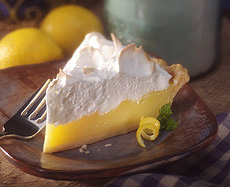
Photo of lemon meringue pie courtesy of American Egg Board. |
|
LINZER TORTE
Probably second in fame in Austria to the Sacher torte, the Linzer torte, traced back to 1696 in the town of Linz, Austria, is a pie with a lattice crust top.
It’s made with an almond short-crust pastry and traditionally filled with black currant preserves (some bakers prefer red currant). In the U.S., where currant preserves are not easy to find, raspberry jam is usually substituted.
Today, there are many variations on the theme: you can find different preserves—apricot, cranberry, fig, and orange, for example—and hazelnut crusts, which many bakers feel improve upon the original.
While Linzer torte shares some visual similarities with a pie, such as having a filling and a top crust, it is more closely related to a tart or a cake than to a pie.
In fact, it’s fundamentally different from a pie in its ingredients and preparation.
In fact, Sacher torte is a chocolate layer cake, filled with apricot jam and iced with chocolate ganache.
Here’s a description and photos of different tortes.
|
|
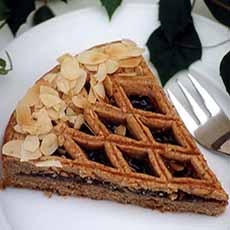
A slice of classic linzer torte, with a lattice crust. Here’s the recipe (photo © Zen Gourmand).
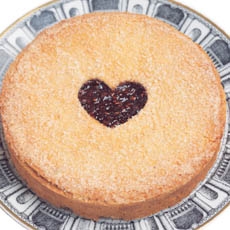
However, different bakers add their own touches, like this one with a heart-cut top crust (photo © L.A. Burdick). |
|
LOBSTER TAIL
An Italian specialty, a flaky pastry in the shape of a lobster tail, filled with cannoli cream, vanilla, or chocolate custard and dusted with confectioners’ sugar.
|
|
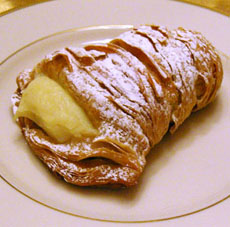
Lobster tail pastry. Available at LucibellosPastry.com. |
Continue To Next Page: Terms With M To O
Go To The Article Index Above
|