More Antioxidants Than Any Other Fruit...
& Delicious!
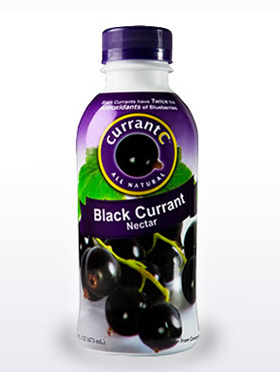
CAPSULE REPORT: Black currants have twice the antioxidants of blueberries, hitherto the uber-antioxidant fruit. They have four times the vitamin C of oranges and significant amounts of calcium, magnesium, manganese, potassium and riboflavin. Should you be drinking currant juice? Sure, especially when it tastes this good! Why aren’t we all drinking currant juice? The black currant was banned for 100 years. The ban is over: Currant C is the first nationally available currant beverage. This is Page 1 of a two-page article. Click on the links to visit Page 2.
It looks like grape juice, but don’t let that fool you: It’s a bit grape-like, but currant tastes distinctive, bold, pleasantly tart and sophisticated. It’s the kind of juice wine drinkers would choose if they couldn’t drink wine anymore, and when chefs and sommeliers at fine restaurants get wind of it, they’ll start offering it to their designated drivers and non-alcohol-consuming patrons. From a culinary standpoint, currants have long been enjoyed in desserts, jams and in sauces for meats, especially game, duck and pork (it is a key ingredient in Cumberland Sauce).
If only the label were more in keeping with the goods inside. The bottle is pretty (a stock design), but the graphics look hokey: pure health-food-store. Maybe a re-design is in the works: we guarantee, Currant C folks, that it will pay for itself in the incremental bottles you sell. But this is pure substance over style: The contents inside are not only good, they’re good for you! (The Company claims that Currant C has the highest content of black currant juice of all other beverages in the world, 37% although how it monitors the juice content of every currant beverage in the world, and what they will do if a company in some foreign land introduces a 38% juice, we can’t guess.)
Three years ago, the antioxidant news was green tea. Two years ago, it was chocolate and white tea. Last year it was blueberries.
This year, it’s going to be currants. Their extraordinarily high antioxidant levels make blueberries, chocolate and green tea dull news.
Currant juice may become the new breakfast tonic of choice, much to the chagrin of orange growers. Antioxidants protect key cell components from damage by neutralizing the free radicals that are linked to cancer, and other ailments; last year, a Tufts University study indicated that black currants may thwart Alzheimer’s.
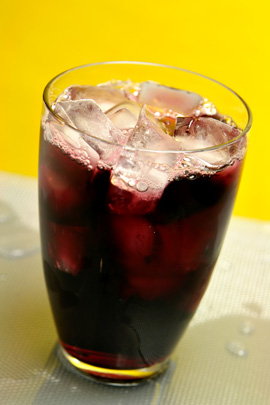
A glass of Currant C is a healthy start to the day—and may thwart Alzheimer’s Disease. Photo by Kasia Biel | SXC.
Inside The Bottle
The juice is made from concentrate with filtered water, and pure cane sugar is added to offset the tartness. The all-natural product is not pasteurized and needs to be refrigerated. Each 16-ounce bottle contains two servings, at 130 calories each. Currant Juice seems pricey: A 16-ounce bottle is $3.99. But we spend as much on one latte without thinking twice. Here is a two-day supply. Try a bottle of Currant C: you may start ordering it by the case, as currency for your health.
Currant C is available at fine food stores and health food stores including Whole Food Markets. For a store locator, visit the website.
*Prices and product availability are verified at publication but are subject to change. Shipping is additional. These items are offered by a third party and THE NIBBLE has no relationship with them. This link to purchase is provided as a reader convenience.
Recent Articles From Our NutriNibbles™ News Feed:
Subscribing notifies you whenever
there are
new additions
to the NutriNibbles™ section.