THE NIBBLE (TM) - Great Finds for Foodies (tm)


RSS feed
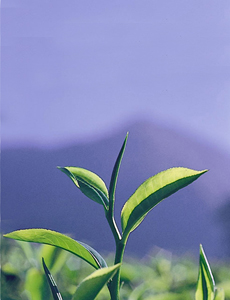
Tea plantationFine tea is  cultivated on beautifully terraced plantations. Sri Lanka is the largest exporter of tea, followed by Kenya, China and India. India and China are by far the largest producers, but keep most of their tea for domestic consumption. Photography in this story courtesy of MightyLeaf.com.
MENU


Teas

Category Main Page
Articles & Reviews


Beverages

Category Main Page
Articles & Reviews


Main Nibbles

Articles & Reviews on Foods
From A to Z


Product Reviews

Main Page

Food, Beverages, Books,
News & More


August 2005

Product Reviews / Main Nibbles / Beverages

The History of Tea

From Camellia to Clipper: Tracing Tea Through The Ages


You may have consumed thousands of cups of tea in your lifetime, without much thought of the genesis of this healthy brew.  Here, a history of tea from ancient to modern times.


The origin of the wild tea plant, Camellia sinensis, has been traced to the area of Assam, India, and possibly also to China. Historically the origin of tea as a medicinal herb useful for staying awake—its initial use—is unclear. Cultivation of the tea plant can be traced back 2,000 years and more in Asia. Most historians would credit China as the birthplace of the beverage, tea, with hints of tea drinking in its history as far back as 1000 B.C.E. or earlier. The use of tea as a beverage drunk at social occasions dates back at least to the Tang Dynasty (618 to 907 C.E.), from when a treatise on the subject survives. Let’s take a brief look at the history of tea.


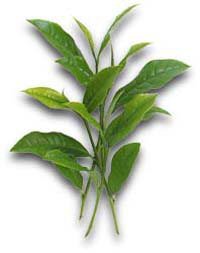
Tea leaves
Tea leaves. In India the tea plant, can
grow to 30' or more unpruned, but is
kept at 3' to 5' for convenient plucking
of the tender leaves
.

The First Pot Ever Brewed

The story of the origin of tea is, like many origins, lost to history. Possibly, ancient man, looking for sources of food, chewed on a leaf and noticed the energizing effects of the caffeine. However, colorful legends abound:

  • According to Chinese legend, the story of tea began in 2737 B.C.E. when the legendary Emperor Shen Nong, also a skilled scientist and the father of Chinese medicine, discovered it by accident. While boiling water in the garden (another variation has him out on a journey), a leaf from an overhanging wild tea tree drifted into his pot—inadvertently brewing the first pot of tea. The Emperor found the infused, unusually flavored water delicious, invigorating and refreshing. As a scientist, he further researched the plant and found that tea leaves eliminated numerous other poisons from the body. Because of this, tea is considered one of the earliest Chinese medicines.
  • In an Indian variation, Gautama Buddha is said to have discovered tea, when a falling tea leaf happened to land in his cup one day as he sat meditating in a garden.
  • India, part of the indigenous tea-growing region, attributes the discovery of tea to Prince Bodhi-Dharma, an Indian saint who founded the Japanese Zen school of Buddhism. In 520 B.C.E., he left India to preach Buddhism in China, vowing to meditate for nine years. Towards the end of his meditation he fell asleep. Upon awaking he was so distraught that he cut off his eyelids. A tea plant sprung up from where his bloody eyelids hit the ground to sanctify his sacrifice. (Alternatively, he cut his eyelids off so that he wouldn't fall asleep while meditating, and the first tea plants sprang up from the ground where he flung the severed eyelids. Ouch!)


The Evolution of Tea Culture in China and Japan


The tea plant probably originated in the region that today comprises Northern India, Tibet and southwest China. Prehistoric man made a relish from the leaves and also used it for medicinal purposes. Tea plant cultivation in China began about 4,000 years ago. Later Chinese traders may have traveled throughout these regions and encountered people chewing tea leaves. From these journeys, people all over Chinese learned about tea.

By 350 B.C.E., tea drinking was common in China, and many grew the plant in private gardens. Tea was thought of as a medicinal drink in China until late in the sixth century.

Brick of Tea
Not until the Tang dynasty (618 to 907 C.E.), often referred to as the Classic Age of tea, did consumption move beyond medicinal purposes to a social beverage. Tea became characterized as China’s national drink. Several different preparations were used to make tea, including the addition of onion, ginger, orange, or peppermint. Different preparations of teas held different medicinal purposes, although by this time tea was primarily thought of as a beverage in spite of the acknowledgement of its purported healing properties.
A brick of compressed tea leaves.

During this time, compressed bricks of tea leaves were first softened by fire and then grated into boiling water. Milk and sugar were never added to tea, although both were available and used in other foods. A government-imposed tea tax is further evidence of the beverage’s growing popularity.

In 780 C.E., Chinese merchants commissioned a Buddhist monk, Lu Yu (733 to 804 C.E.), to write the Ch’a Ching, Classic of Tea treatise, to extol the virtues of tea. It included the proper tea making process:

  • After being plucked on a sunny day, the tea leaves must be baked over an even fire, with no wind. After baking they should be placed in a paper bag to cool. When completely cold the leaves can be ground. (Tea was not brewed from whole leaf until the 1300s.) Then spring water should be heated to just under the boiling point and a pinch of salt added. Then bring it to a second boil, and stir only the middle portion of the liquid. Steep the ground tea leaves in this water in each cup individually and drink before it cools. The first and second cups taste the best, and more than four or five cups should not be consumed.

The skill of making tea properly was highly valued in China, and an inability to make tea well, and with elegance, would cause disgrace. Making tea was an honor, and only the lord of the house was allowed this privilege and duty. Lu also describes types of tea, uses and the benefits of drinking it. More importantly, he imbued the writings with a spiritual aesthetic that reflected Buddhist, Taoist and Confucian religious thought. The tea ceremony served as a metaphor for expressing the harmony and simplicity that not only ordered but also streamed throughout the entire universe.

Tea was a drink of the working people and the aristocracy, and was often drunk while entertaining both casually and formally. Visitors were served tea, prepared by the lord of the house. Although consumed universally throughout China, tea was identified primarily with the southern and central provinces, where it played an important role in betrothals. It was the symbol of new marriages, as it was said that both tea bushes and new families must grow from a new seed.

In the Sung dynasty (960 to 1280 C.E.), known as the Romantic Age of tea, poetry and artistic references to tea abounded. A precursor to the Japanese tea ceremony to come, the most popular method of preparation involved grinding delicate tea leaves into a green powder in a stone mill and whipping it into hot water with bamboo whisks, creating a frothy drink. Formal tea-tasting parties were held, comparable to modern wine tastings, where the proper vessel was important.

Powdered green matcha tea

During this period, Chinese culture significantly influenced and impacted art, politics and religion in the Far East. A Zen Buddhist monk, Saicho, is credited with introducing tea to Japan in the late 8th or early 9th century. While studying in China, Saicho became exposed to tea and brought back seeds to start growing it at his monastery. Other monks realized that it could enhance their meditative practices and followed suit, and over time small tea plantations sprouted up at secluded monasteries. Later tea was elevated to an art, really just an extension of the Zen philosophy’s purity of form However, due to isolation, teas popularity did not blossom until the thirteenth century.

Powdered green matcha tea, which creates a frothy beverage, is used for tea ceremonies.

At this time in Japan, as in China, people only drank tea in powdered form (matcha). Inspired by Buddhist spiritual philosophy, this marks the origin of the Japanese Tea Ceremony or Chanoyu (literally, “the hot water for the tea”), in which the making and serving of tea is carried out through an elaborate set of procedures, each movement learned over years of study and requiring great skill and poise.

The Modern Tea Steeping Custom Emerges


Not until the Ming Dynasty (1368 to 1644) was tea prepared as it is today, by steeping leaves in water. Instead of compressing tea leaves into bricks, the leaves were dried, rolled and then heated in iron woks to dry. The dried leaves were steeped in hot water. The Chinese government further established a hold on tea trade by opening a Bureau of Tea and Horses, regulating interactions on the frontier, where people traded tea for horses. From 1644 to 1911, the Qing dynasty ruled China and eventually abolished duties on tea—a testament to how essential tea had become to everyday life and the economy.

Processing Tea
Processing tea.

In the 17th century, a Chinese monk traveling in Japan brought the new rolled form of tea that had replaced powdered tea in China. In the 18th century a tea merchant in Uji, Kyoto, Nagatani Soen, invented a new Japanese method of steaming, drying and rolling green tea. This tea and style of processing became known as Sencha. The custom of drinking Sencha tea daily prevails today.

Tea Entices the West

Although Europeans did not see tea until the 17th century, it appeared earlier elsewhere in the West. Around the 9th century, references in Arab trade documents refer to the process of boiling bitter tea leaves. But it took many more centuries for tea to get to the Continent. Marco Polo (1254 to 1324) never specifically mentioned tea in his travel writings about the East. Scholars conjecture that the first Europeans to encounter tea were either Jesuits living in Beijing who attended the court of the last Ming Emperors. The first western reference to tea was in a 1559 volume of travel literature entitled Voyages and Travels, compiled by Giambattaista Ramusio. In it, tea is described as a hot drink with medicinal qualities. In the 1560s, Father Gasper da Cruz mentions tea in a letter home to Portugal from China, and Father Louis Almeda does the same in a letter sent from Japan to Italy. In spite of these early reports of tea it was not brought to Europe until 1610. Russia discovered tea in 1618 after the Czar received a gift of it from the Ming emperor, although some reports have it arriving earlier via camel caravans that came from China, traveling part of the way on the famous Silk Road.
 
Tea was not seriously traded until Dutch merchants got involved. In 1610, the first shipments of Japanese and Chinese tea arrived in Europe via ships charted by the Dutch East India Company. The popularity of tea spread to cities including Amsterdam, Paris and London. However, its high price limited consumption to Europe’s royal classes and aristocrats. Tea drinking, a novelty at the time, allowed the wealthy to partake of a bit of Eastern adventure during the age of exploration and discovery. Served primarily to men, it was first called Cha, from the Cantonese word for tea. The name changed later to Tay, or Tee, when the British trading post moved from Canton to Amoy, where the word for tea is T’e.


Tea and the Brits

While tea was popular on the Continent, today’s most famous tea drinkers, the British, did not immediately embrace it. Coffee remained the hot drink of choice, enjoyed in coffee houses frequented by men.

Tea was introduced to Britain by the Dutch. In 1657, the first shop to sell tea in England opened, run by Thomas Garraway. He advertised it as a medicinal drink, capable of curing almost anything, and charged £6 to £10 for a pound. His coffee house was a center for mercantile transactions, and he sold tea both by the pound, and prepared tea.


Catherine of Braganza
Catherine of Braganza. Photo courtesy of Wikipedia.

First sold in apothecaries and a few coffeehouses, the acceptance of tea into British culture was relatively slow. Tea got an important boost when King Charles II married Catherine of Braganza in 1662, daughter of King John IV of Portugal (and for whom the borough of Queens in New York City is named). She practiced temperance, tea was her drink of choice, and it gained social acceptance among the aristocracy as she replaced wine, ale and spirits with tea as the court drink.

In an attempt to please Charles II, the English East India Company brought small gifts of tea from the Continent for Catherine in 1664 and 1666. Other than these gifts, the English East India company did not consider tea to be worth importing from China until 1668, and it was not considered a serious trading commodity for at least another nine years. In 1669 all imports from Holland were prohibited, including tea, granting the English East India Company a monopoly over this commodity. Soon thereafter, the British East India Trade Company (also known as the John Company), which was competing with the Dutch for tea trade, established its first foothold in the East by securing a tea factory in Macao. Tea’s popularity was on the rise in London’s cafes and coffee houses.

Catherine of Braganza’s choice of tea was instrumental in the popularization of tea in Britain. Because tea was introduced primarily through male frequented coffee houses, there would have been far less social acceptability for women to drink this beverage had it not been for her example. Catherine of Braganza's use of tea as a court beverage, rather than a medicinal drink, influenced its popularity in literary circles around 1685. By 1686 tea was selling in markets, and the English East India Company considered it to be a part of their regular trade. It was no longer only a specialty item brought back by a ship’s captain for personal use.

Women were first introduced to tea on a wide scale when Lyon’s tea house opened. This provided a place for women, accompanied by a male escort, to go and visit with one another in an acceptable atmosphere. Women were also served tea in the London tea gardens of the early 1730s. Tea gardens were outdoor gardens with flowered walks and music for dancing. They opened in April or May and remained open until August or September, serving tea and other beverages. One had to pay to get in, and the working class was not admitted.

A Tea Monopoly: The British East India Company


By the early 1700s, the British East India Company had established itself as the dominant trading power and would go on to monopolize the tea trade with China. Trading stations sprang up in India, including hubs in Bombay, Bengal and Madras. The Company, acting as an imperial arm of England, would exercise significant political power in helping to create a wealthy and powerful British Empire. This included not only trading but also the right to annex land, direct troops and dictate British laws.
 
The British would exploit the tea trade for profit and political power over the next century. However, geopolitical change involving new American colonies abroad and the French and Indian Wars in 1763 began to threaten the British East India Company’s privileged position. In addition, the Company would struggle, burdened by financial mismanagement, corruption and growing tea smuggling operations.


Tea Plantations in India


Interestingly, despite the Company’s dominance, up until the mid 1800s, China remained the sole source of tea for Western demand. Looking to discover the tea growing secrets and to end their reliance on Chinese tea, the British Tea Committee sent Robert Fortune, an English botanist, on an undercover mission to China. Disguised as a Chinese merchant, he traveled around the country learning about farming and processing techniques. Most importantly, he sent back tea samples and brought back Chinese tea experts who played an important role in enabling British tea planting and experimentation in India.

Drying tea leaves
Around 1823, a British Army Major, Robert Bruce, stumbled upon indigenous tea bushes growing in the Northeast region of Assam, India. With this discovery, the British East India Company seized the opportunity to experiment with growing tea in not only Assam but in Darjeeling, a region in Northeastern India at the foot of the Himalayas. An East India Company employee, Dr. Campbell, first planted Darjeeling tea seeds in his garden at Beechwood, Darjeeling.
Drying tea leaves .

The planting proved so successful that in 1847 the British government began developing tea estates in the area.

 
This marked the beginning of a new tea industry in India and an end to reliance on Chinese-grown tea. With tea plantations springing up all over parts of India and the advent of the industrial revolution, the tea trade in India would flourish.

Tea in North America


Tea initially came to America in the mid-1600s via the Dutch, who started a settlement in New Amsterdam. A favorite beverage of women and wealthy Colonists, a heavily taxed tea trade flourished between the Colony and England. To bolster the Company’s failing financial position, it had convinced the English Parliament to enact the Tea Act, which allowed them to ship tea duty-free directly to the Colonists and profit by excluding the Colonial merchants. The general notion of taxation without representation brewed great dissent among the Colonists.
 
Political tensions came to a climax with the Boston Tea Party, as Colonists protested England’s high taxes by dressing as Native Americans, assaulting East India Company’s trading boats and and dumping tea into Boston Harbor. This act provided an impetus for the American Colonies’ fight for independence in 1776.
 
Although the American Revolution set back the Company, it managed to survive due to its immense size. But when Richard Twining and thousands of independent tea merchants organized a campaign to reveal the Company’s corrupt practices and pressured the English government to end the monopoly, it eventually crumbled.

Afternoon Tea & Tea Dances

Anna, the seventh Duchess of Bedford, introduced the concept of afternoon tea in the early 1840s. English high society didn’t dine until 8:30 or 9 p.m.—even later in the summer—and she needed something to tide her over during the stretch between lunch and dinner. To refresh herself, she ordered what we would call a snack—a small meal of bread, butter, perhaps cakes and tarts—to be brought secretly to her boudoir. When she was exposed she was not ridiculed, as she had feared, but her habit caught on and the concept of a small meal became popular. Over time, her friends joined her, and “afternoon tea” became an elaborate social and gustatory affair with sweet and savory delicacies, special “tea cakes,” and even tea gowns to bridge the fashion between casual afternoon and formal evening dress.

NOTE: Americans can easily confuse High Tea with Afternoon Tea. High Tea is a hearty working class evening meal, generally served around 6 p.m. It generally includes roast beef or leg of lamb, pastry or custard for dessert, and tea. Although it sounds similar, High Tea is a world away from the fashionable world of Afternoon Tea.


In 1842, a well-known actress named Fanny Kemble first heard of afternoon tea, and did not believe the custom had been practiced prior to that date. Within a few years, a complex set of rules and etiquette developed surrounding the social custom of women visiting each other for tea.

In the 1840s, upper middle class and upper-class women commonly held at-home teas. Each chose a permanent day of the week to hold at-home hours, and woman would send announcements to friends, relatives, and acquaintances. Unless regrets were sent, it was expected that invitees would attend. On that particular day of the week she would remain at home all day to receive visitors. Conversation, after the model of the French salon, was the primary entertainment. Tea, cakes and finger sandwiches were served. There was at least one person holding an at-home day on any given day, the social fabric of the community was established and most women saw each other almost every day at different houses.

The hostess would announce when tea was served, and would take a seat at one end of the table to pour tea for her guests. The eldest daughter of the household, or the closest friend of the hostess, poured coffee or hot chocolate. The hostess also added the sugar and milk or lemon to the tea per the guest’s preference. Why not a buffet? Tea and sugar were more common and affordable by the 1800s, but as consumable luxuries they still represented wealth and were controlled by the hostess (tea was stored in locked tea caddies to which only the woman of the household held the key, and did not become widely available and affordable to the working classes until the middle to late nineteenth century with the introduction of cheap black tea from Sri Lanka). The upper classes, wealthy enough to hire servants, had them pour the tea and guests could add their own sugar, milk or lemon. By releasing control over dispensing tea and sugar, the upper classes demonstrated their wealth and ability to buy as much of these items as desired.

In 1919 the tea dance emerged as a popular way for younger people to take tea, and continued through World War II. Friends and acquaintances gathered between 5:00 and 6:30 p.m., and table and chairs for tea and snacks were set up around a dance floor.


Clipper Ships and the American Tea Trade


American clipper ships began importing tea directly from China starting in the 1850s. In the wake of the British East India Company’s downfall and the repeal of the Navigation Acts, which dictated that all tea must be shipped directly from England to colonist ports, clipper ships quickly became the preferred method for transporting tea. Built for speed, these graceful and sleek vessels with three masts easily outpaced trading ships. The British and Americans raced clippers back and forth between China and their homelands, bringing the best teas for auction.

American Tea Inventions


During the 19th century, tea drinking played an important role in social life—from tea Tea Bag Holderparties to afternoon tea—in both England and America. New tea traditions began to develop in America as the beverage’s popularity grew.
 
Iced tea originated in 1904 at the World’s Fair in St. Louis A tea merchant and plantation owner from abroad had intended to provide visitors with free hot tea samples. Due to the unusually hot weather, it was not a big hit. To promote sales, he asked a nearby ice cream vendor for some ice. The American iced tea tradition was born when he dumped the ice into the hot brewed tea. Today, bottled iced tea sales make up about 80% of the U.S. tea market.
 
The original tea bags were handmade, hand stitched muslin or silk bags. Patents for tea bags exist as early as 1903 (see sketch). However, Thomas Sullivan, a tea merchant from New York, is often credited with creating the first commercial tea bag concept.  He created the pouches to send samples of tea to commercial customers, and they were a big hit.
 
Today, tea is the world’s most popular beverage after water. In the United States, it is fifth in popularity, following water, coffee, soft drinks and juice.


Sources: Answers.com, MightyLeaf.com, Wikipedia, Kendra Wilhelm

Favorite Tea Books: Steep Like A Pro

The Tea Companion The London Ritz Book Let's Have A Tea Party
The Tea Companion—A Connoisseur's Guide: An authoritative guide to understanding, purchasing, and serving fine tea. Click here for more information. The London Ritz Book of Afternoon Tea: Capture the essence of a traditional British tea. Click here for more information. Let's Have A Tea Party: Surprise a young dame with a tea party primer. Click here for more information.

Tea Is Served

Teapot Teaspoons Teacup
Modern Teapot: Bring your tea into the 21st century with this modern teapot. Click here for more information. Stainless Steel Teaspoons: An elegant way to stir and sip your tea. Click here for more information. Beaker Teacups: These classic-modern beaker style teacups add an edge to this historic beverage. Click here for more information.


© Copyright 2005- 2008 Lifestyle Direct, Inc. All rights reserved. Images are the copyright of their respective owners.


Spread The Word: Each icon below links to a site where you can bookmark, share and comment on this article:
Dine52    del.icio.us    ma.gnolia    Newsvine    Yahoo Myweb    BlinkList    simpy    reddit


.