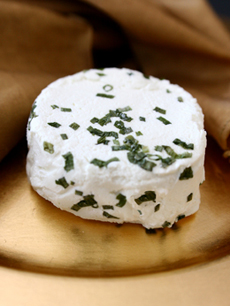
Buttery on the palate with a velvety texture: just two words to describe Brillat-Savarin, one of the great cheeses of the world. Photo Courtesy of Teddington Cheese.
August 2005
|
 |
Cheese Terminology
Talk Cheese Like a Pro
If you’ve ever struggled for words to describe cheese—here they are. If your prior vocabulary was limited to mild, tangy, and sharp, you’re about to discover the many ways in which industry professionals and connoisseurs describe a piece of cheese. If the aromas and flavors of cheese begin to resemble those you’ve used or heard used to describe wines, you’re beginning to understand a common language of food (and also why wine and cheese pair so well).
With guidance from our advisors at Murray’s Cheese, one of New York City’s top spots for cheese advice (and for buying the greatest cheeses in the world), we’ve divided our cheese terminology into categories corresponding with the major classes of cheese. If your surprised that so many adjectives could accrue to a simple piece of cheese...it’s because cheese is hardly a simple food!
Fresh Cheeses
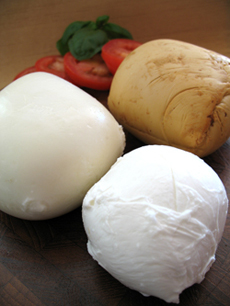
Fresh cheeses are delicate and usually eaten within days of their production, and have high moisture content. They are typically pasteurized and sweet with little salt; and used for breakfast, with fruit for dessert, or in cooking.
Examples: young Chevre (goat cheese), Mozzarella, Ricotta. |
 |
| Mozzarella production. Photo courtesy of Libera Associazione il Popolo. |
Fresh Textures |
Aromas & Flavors |
- Airy
- Creamy
- Curdy
- Delicate
- Lactic
- Moist
- Pasteurized
|
|
- Citrus
- Grassy
- Lemony
- Mild
- Sweet
- Tangy
- Vibrant
|
| |
|
Bloomy Cheeses
These are the white cheeses with soft, creamy interiors—the most popular cheeses in the world. The rind is composed of one of the greatest cheese molds, Penicillium candidum.
Examples: Brie, Camembert, Brillat-Savarin and Pierre Robert.
|
|
- Custardy
- Decadent
- Fluffy
- Luscious
- Mouthfilling
- Pasty
|
- Pillowy
- Rich
- Ripe
- Soft
- Velvety
- Voluptuous
|
- Buttery
- Earthy
- Grassy
- Mushroomy
- Slight Ammonia
- Wet Grass
|
| |
|
Washed Rind Cheeses or “Aromatics”
These are pungent, aromatic cheeses covered in a bacterium called Breyibacterium linens (B. Linens), which contributes to the ripening and the aroma. The cheeses are washed in brine, often mixed with an alcohol like beer, brandy, cider or wine. Most washed rind cheeses will ripen into soft cheeses, but some remain firm.
Examples: Epoisses, Livarot, Munster, Prattigau. |
 |
| Cowgirl Creamery’s gorgeous munster-style Red Hawk. Click here for our review. |
Washed Rind Textures |
Aromas & Flavors |
- Chewy
- Elastic
- Fatty
- Melting
- Moist
- Spreadable
|
|
- Assertive
- Barnyardy
- Beefy
- B. linens
- Dominant
- Eucalyptus
|
- Fruity
- Gamy
- Lingering
- Pervasive
- Stinky
- Sweaty
|
| |
|
Lightly Pressed Cheeses (Pressed, Uncooked)
One of the largest groups of cheeses, the paste is usually semi-firm to firm. While the number of different cheeses in this category is large, the most common form of lightly pressed cheese is the ever-popular and versatile cheddar.
The next time you have an opportunity, compare Cheddar to Emmenthaler or Gruyere, two popular cheeses whose curds have been cooked. While they will seem related, look for the cooked milk aroma in the latter two
Example: Cantal, Cheddar, Salers.
|
 |
| Cabot cheddar is a perennial award-winner. |
|
|
- Melting
- Pliable
- Semi-Soft
- Smooth
- Supple
- Yielding
|
- Earthy
- Fruity
- Grassy
- Herbaceous
- Straw/Hay
|
| |
|
Pressed Cheeses (Pressed, Cooked)
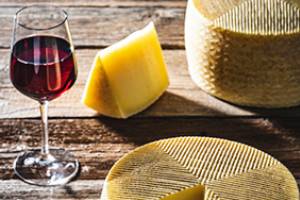
These are traditionally the biggest wheels of cheese, which hail from the mountains. The difference between these and the Lightly Pressed group of cheeses is in the cooking of the curds before the wheels are formed.
Examples: Beaufort, Emmenthaler, Gruyere.
Photo courtesy of AdvantageCheese.com. |
 |
|
|
- Bold
- Crumbly
- Dense
- Dry
- Firm
|
- Flaky
- Grainy
- Hard
- Sandy
- Sturdy
|
- Caramelly
- Herbaceous
- Lingering
- Nutty
- Sharp
|
|
| |
|
Blue Cheeses
Created by the mold Penicillium roqueforti, a relative of the Bloomy group’s Penicillium candidum, but blue in color rather than white. They range from medium to sharp in flavor, and can be semisoft or hard.
Examples: Cabrales, Gorgonzola, Roquefort, Stilton.
Photo courtesy of Midwest Dairy Association. |
 |
|
|
- Creamy
- Crumbly
- Fudgy
- Liquescent
- Powerful
|
- Punctured
- Sandy
- Striated
- Veined
- Velvety
|
- Biting
- Electric
- Lingering
- Mean
- Moldy
|
- Penicillium roqueforti
- Popping
- Spicy
- Tangy
|
| |
|
No quiz tomorrow: just enjoy building your knowledge of this most wonderful of foods. If you have comments or additions to this list, click here to send them to us.
You Love It, Now Learn It
 |
 |
 |
| The World Encyclopedia of Cheeses: An authoritative, fact packed guide to the cheese world. $23.10. Click here for more information. |
Cheese Primer: Share in Steve Jenkins limitless knowledge. $11.53. Click here for more information. |
The Cheese Companion: This accessible book is a comprehensive guide to selecting and enjoying the world's cheese. $12.89. Click here for more information. |
Tools Of The Trade
 |
 |
 |
| Henckels Twin Select Cheese Knife: A sleek stainless steel knife that is practical, but will impress. $19.99. Click Here for more information. |
Porcelain Cheese Markers: These porcelain cheese markers identify your cheese in an attractive fashion. $11.00. Click Here for more information. |
Bamboo Cheese and Bread Board: This cutting board is actually harder than maple and has a distinctive appearance and beauty all its own. $10.99. Click Here for more information. |
© Copyright 2005-2008 Lifestyle Direct, Inc. All rights reserved. Images are the copyright of their respective owners.

|
 |
|
|