THE NIBBLE (TM) - Great Finds for Foodies (tm)


RSS feed
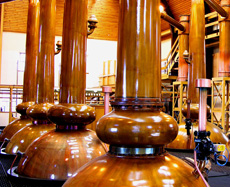
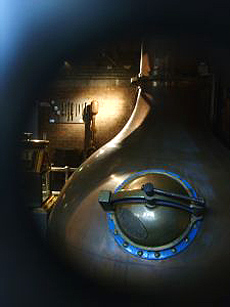
Whiskey Still
A whiskey still, dramatically lit. Photo by Dora Pete | SXC.
MENU


Cocktails & Spirits

Category Main Page
Articles & Reviews


Main Nibbles

Main Page
Articles & Reviews of Foods From A to Z


Product Reviews

Main Page
Food, Beverages, Books,
News & More


March 2006
Updated November 2007

Product Reviews / Main Nibbles / Cocktails & Spirits

Whiskey Glossary

Terms & Definitions For Bourbon, Scotch, Irish Whiskey & More


This glossary is a companion piece to our overview article about whiskey, Whiskey 101. Please contact us if you’d like to suggest additional terms. The Whiskey Glossary is just one of more than 50 NIBBLE Food Glossaries. Take a look at the entire collection.


Click on the letter of the alphabet in this bar to get to a term
without having to scroll manually:

a b c d e f g h i j k l m n o p q r s t u v w x y z

American Whiskey: Bourbon and Tennessee Whiskey are distinguished in flavor from other types of whiskey, largely because the grain mash used to make them contains more than 50 percent corn. The home-brewed versions—“moonshine” and “hooch”—follow a similar formula and therefore share a similar taste, although they lack the refinement from aging. All American whiskeys except corn whiskey must be aged in new casks that have been charred on their inside surface. See the individual entries for Bourbon, Corn Whiskey, Hooch, Moonshine, Tennessee Whiskey and Rye.

Aqua Vitae: Latin for “water of life,” the original name given to whiskey by the Irish monks who created it in the sixth century C.E.

Blended Grain: Denotes a mixture of grain whiskies (no malt) from different distilleries.

Blended Malt: A mixture of malts (no grain) from different distilleries.

Tullamore DewBlended Whiskey: A product composed of both straight whiskey and neutral spirits. The blend typically comes from a number of distilleries so that the blender can produce a consistent flavor; the bottle contains only the brand name (Dewars and Chivas Regal are blended Scotches, Tullamore Dew a blended Irish whiskey, e.g.) and not the name of a distillery. Generally, the taste of blended whiskey is more mellow than both the straight or single malt whiskeys. Like straight whiskey, blended whiskey must be at least 80 proof. Prior to a change in law in the latter half of the 19th century, malt and grain whiskies were produced separately; the law allowed malt and grain to be combined.
Photo “on the rocks” courtesy of Tullamore Dew.

Blending: Mixing malt or pot still whiskey with grain whiskey.

Bourbon: A whiskey made with at least 51% maize (corn) and/or rye, distilled in a continuous still. It was first made in Bourbon County, Kentucky in 1789 by a Scotsman, and was called “American Scottish Whiskey” until the U.S. government officially adopted the name Bourbon in 1963. There are three styles of Bourbon: Kentucky Bourbon (e.g., Jim Beam, Maker’s Mark); Tennessee Whiskey (e.g. Jack Daniel’s), which is not technically a Bourbon since it is made in Tennessee, but is often referred to as Bourbon; and Rye, which uses rye instead of corn as an ingredient. Each has distinct flavors based on the grains and the time matured in oak. The main difference between Bourbon and Tennessee Whiskey is that the latter develops a sweetness as it is slowly filtered through large vats of sugar-maple charcoal. In the specialty Bourbon area, there are small-batch Bourbons, more complex and sophisticated; wheated Bourbons, distilled from wheat and barley malt in addition to the mandated minimum of 51% corn; and, following in the footprints of Scotch, there now are fine Bourbons aged for 10, 15 and 20 years.

Whiskey StillBrewing: The process of producing alcoholic liquids, aided by yeast from the sugars present in a solution of fermented grains.
Photo of eight whiskey stills at the Glen Marangie Distillery in Tain, Scotland by Bern Altman | SXC.

Canadian Whisky: Canadians spell “whisky” without the “e,” as do the Scots and most other countries except Ireland and the U.S. (see Whiskey, below). The Canadians produce both Bourbon-style whiskey, made with rye (e.g. Canadian Club, Crown Royal and Seagram’s VO) and Scotch-style whiskey made with barley (e.g. Canadian Mist). Canadian whisky tends to be smoother and lighter than American Bourbon. It is always wood-aged for a minimum of three years, often in casks previously used for Bourbon, brandy or sherry, to provide extra flavor components.

Cask: The wooden barrel in which whiskey is stored to mature.

Coffey Still: A patent still, or continuous still, invented by Irishman Aeneas Coffey, a former government excise (tax) official. His invention allows the continuous distillation of wash. See Continuous Still.

Continuous Still: Called variously a column still, patent still or Coffey still after its inventor, the mechanism has two columns. The two columns enable fractional distillation—a column still can achieve a higher level of vapor alcohol content than a pot still.

Corn Whiskey: Corn whiskey is the least refined of American whiskey products: harsh and without complexity. It is made from a mash of least 80% maize (corn), distilled to not more than 80% alcohol by volume. It does not have to be aged and, if it is, by law it must be aged in new, uncharred oak barrels or used uncharred barrels (all other American whiskies must be aged in charred barrels, which provide extra flavor). Aging usually is six months. Moonshine is corn whiskey.

Distillation Process: Barley is soaked in water, then spread to dry and malt (germinate). With Scotch, the malted barley is dried further over peat to provide flavor. It is ground to grist; grist is mixed with water into mash. During mashing, the enzymes in the malt (malted barley) break down into sugars. The liquid extracted from the mash, called the wort, contains the sugars that will be fermented and distilled into alcohol.

Draff: Spent solids of grain left over from the brewing process. Removed from the mash tun, these wastes are normally sold as livestock feed.

Feints: The impure spirit produced from the end of the second distillation.

Fermentation: An active period during the brewing process when yeast reacts with the sugar-rich wort.

Fermenters: See Wash Backs.

Fillings: “New” whiskey that has been filled into wood casks prior to being matured.

Foreshots: The oily spirit produced at the start of each “run” from the stills.

Gauger: An old name given to an taxman whose job was to assist in the prevention of illicit distillation, notably poteen in Ireland.

Grain Whiskey: Whiskey produced from column stills, normally made from wheat or maize with a small quantity of malted barley to aid fermentation. The grain is aged for several years—the grains used in Johnny Walker Red are aged from four and six years, for example. Malt is aged as well.

Grist: Name given to the crushed grain mixture of malted and unmalted barley in the making of Irish pot still whiskey.

Hooch: Liquor that is illicitly distilled and distributed. See Moonshine.

Indian Whiskey: Not whiskey per se, but more rum-like, since much Indian whiskey is distilled from fermented molasses. However, India has begun to distil whiskey from malt and other grains. If you purchase such a product, be sure to read the label or ask, to know what you are buying.

Tullamore DewIrish Whiskey: Irish whiskey is triple-distilled for extra smoothness and aged for a minimum of four years. It is often suggested that beginners start with Irish whiskey as a first step in whiskey drinking, because it is so light and smooth (one may be happy to stay there, especially if one does not like smoky flavors). Finesse is the word: Its mellow yet flavorful character made it the world’s favorite whiskey in the late Victorian era. The use of unmalted barley in the production of Irish whiskey offers a very different flavor profile from the neighboring Scotches—no smokiness but a perfumed, slightly sweet character. Although Scotch has dominated the whiskey scene for a long time, Irish is finally beginning to gain the recognition it deserves. A few popular brands of Irish whiskey include Bushmill’s, Connemara, Jameson and Tullamore Dew.

Malt or Malted Grain: Barley soaked in water, then spread to dry in order to promote germination (unmalted grain produces a neutral spirit, similar to vodka). Malts are aged prior to

Marrying: The process of mixing whiskeys from more than one distillery in order to form a blend or vatting (blended whiskey or vatted malt Scotch, e.g.).

Mash: In the process of creating beer and spirits, malted grain is mixed with hot water and steeped at various temperatures to allow enzymes in the malt to break down the starch in the grain into sugars. The mixture is called the mash; after the starches in the grain have been enzymatically broken down into sugars, it is called the wort.

Maker: A whiskey producer or distiller.

Mashing: The process of creating the mash. This is a complex, slow heating process that takes place in a large, closed kettle or mash tun.

Mash Tun: A large container holding grist and hot water for mashing process. The product of the mash tun is known as wort.

Whiskey BarrelsMaturation: The process of aging whiskey in casks over a period of years, where it reacts with the wood and takes on more complex flavors. The longer whiskey is left to mature, the greater complexity it will gain from the chemicals within the wood (hence, 12-year-old, 25-year-old, etc.). Scotch is often aged in used Bourbon barrels.
Photo of whiskey aging in wooden casks by Jean-Pierre Ceppo | SXC.

Moonshine: Smuggled or illicitly distilled liquor, especially the corn liquor that was popularly and illicitly distilled in rural areas of the southern U.S. It got the name “moonshine” because the work was done in the wee hours, under the light of the moon and out of the eyes of the law. See Hooch.

Peat: Material formed by decaying matter found in bog land (also known as turf in Ireland). It is used as a fuel (among other purposes), and traditionally used in Scotland as the fuel for drying the malted barley. This gives Scotch whisky its distinctive smoky flavor, often called “peatiness.” The distiller can control the amount of peatiness in the flavor

Poteen: An Irish term for an illicit spirit traditionally previously made from malted barley, occasionally from potatoes. Today it is more commonly made from molasses.

Pot Still: A copper container in which the distillation process takes place. The heating of the contents of the still produces vapors containing the alcohol, which is separated from the water.

Pot Still Whiskey or Pure Pot Still Whiskey: The traditional name for Irish whiskey that is produced from a mixture of malted and unmalted barley and distilled in a pot still.

Run: Clear alcohol-rich liquid produced by the distilling process.

Rye Whiskey: Rye whiskies are produced in both the U.S. and Canada. Ryes such as Jim Beam (U.S.) and Canadian Club are often quite assertive in flavor, with more than 51% rye in the mash. See also Bourbon.

Scotch or Scottish Whiskey: Whiskey from Scotland, informally known as Scotch, has a distinctive flavor attributed to the barley used in the mash. Scotland has Chivas Regalinternationally protected the term Scotch; for a whiskey to be labeled as such, it must be produced in Scotland. The process begins with malted barley dried over peat fires, which gives a smoky flavor. The barley is then usually aged for at least three years. There are more than 120 brands of Scotch comprising three main styles: Blended Scotch (normally mixed with soda, e.g. Johnnie Walker Red Label), Premium Scotch (drunk neat, e.g. Jonnie Walker Blue Label, Chivas Regal) and Single Malt Scotch (drunk neat—see more below). Within each style, each maker has a process and “recipe” that accounts for the variation in flavor: the type of water used, the char on the oak cask, how long the product is aged in oak casks before bottling, the temperature of the warehouse during aging, etc. Scotch whiskey types include blends, single grains, single malts and vatted malts. A bottle simply labeled “Scotch Whisky” is likely to be a blend.

Single Cask Scotch: A single malt Scotch that contains whiskey from a single-cask. If it is not designated “single cask,” the bottle it will contain whiskey from many casks, so the blender can achieve a blended taste that fits the flavor profile of the distillery.

Single-Grain Scotch: There are two basic types of Scotch, malt and grain. Malt is made entirely from malted barley; Grain is made from malted and unmalted barley, along with other grains, and used in blends. However, now is some “Single Grain” Scotch is being made from barley only.

Single-Malt Scotch: A malt whiskey made by a single distillery and only from a malt mash, i.e., Laphroaigunmixed with either grain or pot still whiskeys. While by law single-malt Scotch must be at least three years old, malt whiskies don’t reach peak drinking until they are 10 years or older. Thus, distillers have to carry the inventory and don’t see their money for a decade or longer. Single malt Scotch grew to prominence after World War II. Each area produces a very discernable flavor profile, from highland mountain heather to peat and seaweed from the islands to earthiness in-between. Single malts from the Scottish Lowland are relatively muted in flavor (e.g. Glenkinchie, MacLeods), the Highland malts are at the other end of the spectrum, assertive (Dalmore, Dalwhinnie), while Speyside is known for the most complex flavors—floral, fruity, grassy (e.g. Balvenie, Glenfiddich, Glenlivet). The island of Islay produces peaty whiskies (e.g. Bruichladdich, Laphroaig), and the smaller islands their own distinctive products (e.g. the island of Skye has only one single-malt distillery, Talisker, whose style is a bit peaty but largely peppery). However, because the flavor so closely mirrors the distillery in which it was produced, there is great variation in taste from brand to brand.  

Straight Whiskey: A whiskey aged in newly-charred oak barrels for a minimum of two years. Only water is added to dilute the alcohol, which can only be reduced to 80 Jack Daniel's Whiskeyproof. Examples include Bourbon, Tennessee whiskey and Rye.

Tennessee Whiskey: A product identical to Bourbon in almost every respect. The key difference is that Tennessee whiskey is filtered through sugar maple charcoal, which provides a unique flavor and aroma. Bourbon does not go through a charcoal mellowing. Jack Daniel’s is the leading example. Historical note: Jack Daniel’s is the oldest registered distillery in the States, registered in 1866.

Uisge Baugh: In Gaelic, the language of the Irish, the name was given to the distillate produced by Irish monks of the sixth century C.E. to the drink they created. Pronounced ISH-ka BA-ha, it evolved to whiskey. The monks also called the beverage aqua vitae in Latin. Both phrases mean the same: water of life.

Uisce Beatha: A slightly different spelling for the same “water of life” in Celtic, the language of the Scots, and a slightly different pronunciation, ISH-ka BYA-ha.

Vatting: The mixing together of identical whiskeys from a single distillery, but from different casks, in order to maintain continuity of character for a particular brand of whiskey.

Vatted Malt Scotch: A blend of malt whiskies from different distilleries. Sometimes labeled “Blended Malt Whisky.”

Wash: The term given to the fermented liquid prior to being pumped into the wash still for the first distillation.

Wash Backs: Also referred to as fermenters in Ireland, these are huge containers that hold the fermenting liquid as it changes from wort to wash.

Whiskey: A spirit, or alcoholic distillate, made from a fermented mash of grain or Suntorymalt, and aged in barrels. There are numerous types of whiskey—American (Bourbon, Tennessee), Canadian, Irish, Scotch and others—each distinguished by the type of grain (barley, corn, rye) used in the fermentation process as well as the distinct distillation and aging process. Australia, England, Germany, Japan, New Zealand, Switzerland, Thailand, all with strong local markets for whiskey, now produce their own. Regardless of the variety or country of origin, a general rule of thumb is that all straight whiskeys must be aged at least two years in wood, generally oak. Each nation has its own rules and regulations about what constitutes a true whiskey.
Suntory, the Japanese corporate giant that owns Ballantine’s, Bowmore, Glenfiddich, Jack Daniel’s and The Macallan, makes its own whiskies, including Hibiki and Hibiki 30  Years.

Whisky: The Scottish spelling of whiskey, chosen to differentiate its product from Irish whiskey. The spelling is used by Canada, Japan and Wales as well. A 1968 directive of the Bureau of Alcohol, Tobacco and Firearms specifies “whisky” as the official U.S. spelling, but allows the alternative spelling, “whiskey,” which most U.S. producers prefer.

Worm: An apparatus, normally a coiled copper tube, in which the vaporized alcohol form the stills condenses and is separated from the water.

Wort: The liquid created by mashing malted barley. Now, the sugars can be fermented into alcohol.

Yeast: An organism that feeds on sugar, forming alcohol as a by-product. Yeast is added to the wort in the mash tuns to aid the fermentation.


Sources & Acknowledgements

Several books were read in the course of developing this glossary. Some terms came from ClassicWhiskey.com. Some information came from Wikipedia.

© Copyright 2005- 2008 Lifestyle Direct, Inc. All rights reserved.  Images are the copyright of their respective owners.

 Free Food Newsletter


Spread The Word: Each icon below links to a site where you can bookmark, share and comment on this article:
Dine52    del.icio.us    ma.gnolia    Newsvine    Yahoo Myweb    BlinkList    simpy    reddit


.