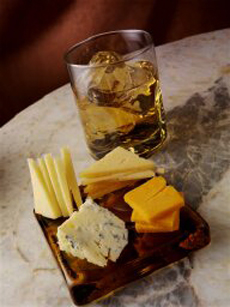
 Tennessee Whiskey and a snack. Photo courtesy Wisconsin Milk Marketing Board.
March 2006
Last Updated October 2025
|
|
Product Reviews / Main Nibbles / Cocktails & Spirits
Whiskey Glossary
Page 5: Tennessee Whiskey, Wort & Other Terms With T-Z
This glossary is a companion piece to our overview article about whiskey, Whiskey 101. Please contact us if you’d like to suggest additional terms. The Whiskey Glossary is just one of many NIBBLE Food Glossaries. Take a look at the entire collection.
Click on a letter to go to the appropriate glossary section:
a b c d e f g h i j k l m n o p q r s t u v w x y z
This glossary is protected by copyright and cannot be reproduced in whole or in part.
|
TENNESSEE WHISKEY
A product identical to Bourbon in almost every respect. The key difference is that Tennessee whiskey is filtered through sugar maple charcoal, which provides a unique flavor and aroma. Bourbon does not go through a charcoal mellowing. Jack Daniel’s is the leading example. Historical note: Jack Daniel’s is the oldest registered distillery in the United States, registered in 1866.
UISGE BAUGH
In Gaelic, the language of the Irish, the name was given to the distillate produced by Irish monks of the sixth century C.E. for the drink they created. Pronounced ISH-ka BA-ha, it evolved to whiskey. The monks also called the beverage aqua vitae in Latin. Both phrases mean the same: water of life.
|
|
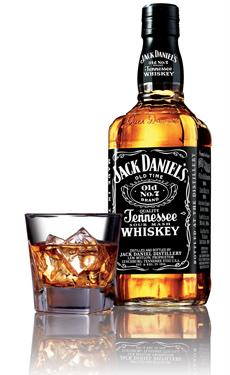
The most famous of the Tennessee whiskeys. Photo courtesy Jack Daniel’s. |
UISCE BEATHA
A slightly different spelling for the same “water of life” in Celtic, the language of the Scots, and a slightly different pronunciation, ISH-ka BYA-ha.
VATTING
The mixing together of identical whiskeys from a single distillery, but from different casks, in order to maintain continuity of character for a particular brand of whiskey.
VATTED MALT SCOTCH
A blend of single malt whiskies from several different distilleries. This process creates a whiskey with more complex characteristics than are often found in single malts. Recent changes in law have replaced the term “vatted malt” on labels with “blended malt” or “blended malt whisky.” This is, unfortunately, misleading. Blended whiskies are a mix of different types of whiskey: single malts made from barley or other whiskies made from other grains or from neutral spirit. Vatted malt Scotch, while a blend, is made only from single malts.
WASH
The term given to the fermented liquid prior to being pumped into the wash still for the first distillation.
WASH BACKS
Also referred to as fermenters in Ireland, these are huge containers that hold the fermenting liquid as it changes from wort to wash.
|
WHISKEY
A spirit, or alcoholic distillate, made from a fermented mash of grain or malt and aged in barrels (the brown color comes from barrel aging). There are numerous types of whiskey—American (Bourbon, corn, Tennessee, rye), Canadian, Irish, Scotch, and others. Each is distinguished by the type of grain (barley, corn, rye) used in the fermentation process, as well as the distinct distillation and aging process. Australia, England, Germany, Japan, New Zealand, Switzerland, and Thailand, all strong markets for whiskey, now produce their own. Regardless of the variety or country of origin, a general rule of thumb is that all straight whiskeys must be aged at least two years in wood, generally oak. Each nation has its own rules and regulations about what constitutes a true whiskey.
|
|
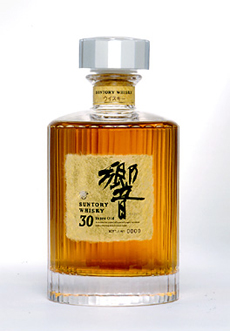
Suntory, the Japanese corporate giant that owns Ballantine’s, Bowmore, Glenfiddich, Jack Daniel’s, and The Macallan, makes its own whiskies, including Hibiki and Hibiki 30 Years. |
WHISKY
The Scottish spelling of whiskey, chosen to differentiate its product from Irish whiskey. The spelling is used by Canada, Japan, and Wales as well. A 1968 directive of the Bureau of Alcohol, Tobacco, and Firearms specifies “whisky” as the official U.S. spelling, but allows the alternative spelling, “whiskey,” which most U.S. producers prefer.
WHISKEY/WHISKY HOLIDAYS
These 25+ whiskey-related holidays are celebrated in the U.S.
- January: Ginuary
- January 1: National Hangover Day
- January 8: National Bootlegger’s Day
- January 11: National Hot Toddy Day
- January 16: Prohibition Remembrance Day
- February, Monday after Super Bowl Sunday: National Football Hangover Day
- February 24: World Bartender Day
- February 27: Open That Bottle Day
- March 5: Cinco de Marcho*
- March 24: National Cocktail Day
- March 27: International Whisk(e)y Day
- March 31: National Après Day
- April: Alcohol Awareness Month
- May 14: World Cocktail Day
- May 22: National Craft Distillery Day
- May 30: National Mint Julep Day
- June 5: National Moonshine Day†
- June 14: National Bourbon Day
- June, 3rd Week: National Craft Spirits Week
- July 7: National Dive Bar Day
- July 21: Legal Drinking Age Day
- July 27, National Scotch Day
- August 25: National Whiskey Sour Day
- September 10: National Canned Cocktail Day
- September 20: National Punch Day
- November 12: National Happy Hour Day
- December 5 National Repeal Day
- December, 1st, Friday: Bartender Appreciation Day
WORM
An apparatus, normally a coiled copper tube, in which the vaporized alcohol from the stills condenses and is separated from the water.
WORT
The liquid that’s created by mashing malted barley. Now, the sugars can be fermented into alcohol.
YEAST
An organism that feeds on sugar, forming alcohol as a by-product. Yeast is added to the wort in the mash tun to aid the fermentation.
Go To The Article Index Above
________________
*Cinco de Marcho is celebrated every year on March 5, which is 12 days before St. Patrick’s Day. A play on the Mexican holiday name, Cinco de Mayo, this made-up holiday gets celebrants to prepare their livers for all the drinking that happens on St. Patrick’s Day.
†Moonshine is a type of unaged whiskey. The primary difference is the lack of aging. Historically, it was illegal because the distillers avoided paying taxes on their products, and production was unregulated, both outlawed by federal laws regarding unlicensed distilling. The first legal moonshine distillery in the U.S. opened in 2005 to meet the demand for this type of spirit.
Sources & Acknowledgements
Several books were read in the course of developing this glossary. Some terms came from ClassicWhiskey.com. Some information came from Wikipedia.
© Copyright 2005-
|