THE NIBBLE (TM) - Great Finds for Foodies (tm)


RSS feed
Whiskey
Learning to taste whiskey properly will help you appreciate its complexity and nuances.
MENU


Cocktails & Spirits

Category Main Page
Articles & Reviews


Main Nibbles

Main Page
Articles & Reviews of Foods From A to Z


Product Reviews

Main Page
Food, Beverages, Books,
News & More


ABOUT THE AUTHOR


THALIA DEMAKES is a freelance writer living in Boston.


March 2006

Product Reviews / Main Nibbles / Cocktails & Spirits

Whiskey 101

Learning To Appreciate the Wonders of Whiskey


A true gastronome can be described as one fascinated by the roles food and drink play in culture. Yet many focus on the fare and tend to overlook the drink.  While we all know that nothing compares to a satiating meal, there is also something to be said for having a “good spirit.” After all, consuming alcohol is a significant—and quite pleasurable—part of tradition and social custom. 

While many foodies have familiarized themselves with the world of wine, the same cannot necessarily be said for whiskey. Sure we might enjoy it “neat” every now and then at our favorite dimly lit bar, or as a nightcap after a long day, but few of us have taken the time to learn to truly appreciate the spirit. It’s a shame, really, because it has so much to offer. Whiskey is an incredibly nuanced drink, full of flavors that are both subtle and complex at the same time. Learning to taste it properly can open up a whole new world, gastronomically speaking.

Here, we offer a “crash course” on the drink: what it is, where it came from, an explanation of the different types, a guide to tasting it, and tips for throwing a whiskey-tasting party. Whether you’re a whiskey novice just beginning to take interest in the spirit or a connoisseur with cabinet full of vintage bottles, we guarantee you’ll learn something in Whiskey 101.

Overview

For the newcomer, beginning an exploration of whiskey can be daunting. There is such a wealth of information on the subject, and yet, sadly, the knowledge most folks—even many foodies—have is limited to the “highball” and the “whiskey sour.” Perhaps it comes down to reputation: given its potency, whiskey carries the stigma of being a hardcore drinker’s drink. While most everyone is vaguely familiar with the names Jameson and Jim Beam, many have no idea what constitutes a true whiskey, or how to distinguish one type from another. They know little about its origins (still a heated topic of debate, especially among the Scottish and Irish), the process by which it is made, the importance of region in regards to classification, or the character notes that distinguish one variety from the next. For the most part, people have tended to relate to Eric Asimov’s statement that whiskey always “seemed merely a means to an intoxicating end.” 


Single Malt

While there may be some truth to some of the generalizations, the majority of these assumptions are false. Having withstood the test of time and attracted a loyal following in the process, whiskey deserves to be thought of as more than just a nice mixer.

Much to the delight of whiskey lovers, the tide finally seems to be turning. Whiskey has become quite fashionable, with tastings popping up faster than brands of artisanal chocolate. As with fine wines, more people are coming to see the creativity and innovation involved in detecting the distinct flavors and aromas in whiskey varietals.

Definition

Whiskey is a spirit made from a fermented mash of seed-fruit grains such as barley, rye or corn. In more elaborate terms, it is an alcoholic distillate with a multitude of variations, distinguished by the types of grain used in the fermentation process as well as the distinct distillation and aging processes. Regardless of the variety or country of origin, a general rule of thumb is that all straight whiskeys must be aged at least two years in wooden vessels, which are most often constructed of oak. Having said this, it is important to note that each nation has its own rules and regulations about what constitutes a true whiskey.

Brief History

Although it was originally considered little more than a distilled beer, whiskey has evolved into a complex beverage made from different types of “mash,” the fermented combination of grains that give each whiskey its distinctive taste. 

Irish and Scots disagree over where whiskey originated; Scots claim that whiskey originated in Scotland and attribute the monk John Cor with the first variation of the drink there from barley malt in 1294 C.E. Equally as likely, Irish monks who had traveled to the Near East brought back the technique and applied it to a different medium: the ancient Egyptians had been distilling perfume.

The first whiskey was not a pleasure drink but used for medicinal purposes. Until recently, the most popular—and the most readily available—brands were from Scotland. Others claim that the Irish were the true innovators of whiskey and that they introduced it to the Scots. In Gaelic, the words uisce beatha describe whiskey as “the water of life,” illustrating the strong Irish sentiment for the spirit. Uisce beatha phonetically became usky and then whisky in English. Along with Scotland and Ireland, other regions are known for whiskey production, including Canada, a few specific areas in the United States, and several other countries. In Ireland and the United States, the word whiskey is spelled with an “e,” while the British, Scots and Canadians usually opt to drop it.

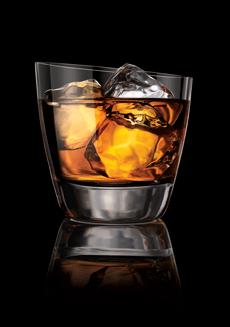
Whiskey in glassAll whiskeys, regardless of the type, are made from a fermented mash of grain. Straight whiskeys are bottled from the casks in which they are aged, with water added to reduce their proof. Blended varieties, such as Bourbon and Tennessee whiskey, can be made by either using “sweet mash” (fresh yeast) or “sour mash” (starter yeast culture saved from a previous batch).

Popular ways to drink whiskey include neat, without water or ice added; as a highball, rye whiskey and ginger ale with ice; and a Manhattan, rye whiskey, Italian vermouth, angostura bitters, and a maraschino cherry.

Types of Whiskey

  • Straight whiskey must be aged in newly charred oak barrels for a minimum of two years in order for it to be considered a true member of this class. Only water is added to dilute the alcohol, which can only be reduced to 80 proof. A few common examples of straight whiskey include Bourbon, Tennessee whiskey, and Rye.
  • Blended whiskey is composed of both straight whiskey and neutral spirits and, like straight whiskey, must be at least 80 proof. The manner in which this type of whiskey is blended allows the various distilleries to maintain a very consistent flavor. Generally, the taste is more mellow than both the straight or single malt whiskey varieties.
  • Single-malt whiskey can only be made from malted mash and must be bottled at a single distillery, making it the most expensive of the various types. Because the flavor so closely mirrors the distillery in which it was produced, there is great variation in taste from brand to brand.  

Style By Country

Most people base their preferences for whiskey on the particular location where their favorite bottle is distilled. Since the final product is determined by the water and the methods used to distill, store and age the whiskey, the flavor varies greatly in the different regions around the world.

  • Scotland: Whiskey from Scotland, typically known as Scotch, is recognized by its distinctive flavor, attributed to the barley used in place of corn in flavoring the “mash.” Regardless of whether it is referred to as Scotch, Scotch whiskey, or whisky (as opposed to whiskey), the product has certainly captivated a global market. Furthermore, Scotland has internationally protected the term Scotch; for a whiskey to be labeled as such, it must be produced in Scotland. There happen to be splendid whiskeys made by similar methods in other countries, most notably Japan; however, they cannot legally be called Scotches, and therefore are most often referred to simply as “whiskey.” The process begins with malted barley dried over peat fires, which gives the smoky flavor mentioned earlier. From there the barley is usually aged for at least three years. While many types of whiskey are produced in Scotland, it is the single-malt Scotches that are the most well-known and well-loved. Many believe the best Scotch whiskeys reflect the taste of the mountain heather, peat and seaweed present in the land from which it originatesSome familiar Scottish brands include Chivas Regal, Dewars, Glenfiddich, and Glenmorangie.
  • Ireland: Irish whiskey, or Irish, is triple-distilled for extra smoothness and aged for a minimum of four years. It is often suggested that beginners start with Irish to ease their way into whiskey drinking. Due to a relatively mellow yet flavorful character, it is less intimidating. The use of unmalted barley in the production of Irish whiskey offers a very different flavor profile from the neighboring Scotches. And though Scotch dominated the whiskey scene for a long time, Irish whiskey is finally beginning to gain the recognition it deserves. Some popular brands of Irish whiskey include Bushmill’s, Connemara, Jameson and Tullamore Dew.
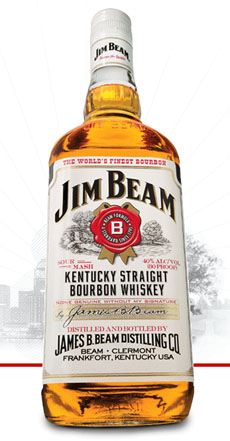
  • United States: Bourbon, which is produced in Kentucky, and Tennessee Whiskey and Tennessee Whiskey are distinguished in flavor from other types of whiskey primarily due the fact that the grain mash used to make them contains more than 50% corn. The home-brewed versions—“moonshine” and “hooch”—follow a similar formula but lack the finesse of a fine product aged for four years or longer. Both Jim Beam Black Label and Maker’s Mark are examples of classic Bourbons. The main difference between Bourbon and a Tennessee Whiskey like Jack Daniels is that the latter develops a sweetness as it is slowly filtered through large vats of sugar-maple charcoal. Small-batch Bourbons are appearing on the market to satisfy the hunger of whiskey aficionados looking for a more sophisticated spirit. Rye whiskey has more than 50% rye in the mash, and is often quite assertive in flavor.  Jim Beam and Old Overholt are examples. Rye is produced in both the United States and Canada.
  • Canada: Canadian whisky tends to be smoother and lighter than its counterpart in the U.S. It is wood-aged for a minimum of three years, often in casks previously used for Bourbon, brandy or sherry to provide extra flavor components. Not only are Crown Royal and Seagram’s VO two of the most popular brands from Canada, but they are also two of the most popular brands overall in the industry.

*A number of other countries—including Great Britain, Japan, Germany, Switzerland and New Zealand–also produce whiskey. The nations above were included in more detail because they are most well-known for whiskey production. 


Understanding The Role Of The Senses

  • Smell: As an organ, the nose is far more acute an organ than the tongue. There are actually 32 primary smells and only four primary tastes. So it makes sense that whiskey tasting relies primarily on the sense of smell, though the two work together to gather information on each sample. The smells, called aromatic volatiles, are detected by a small fleshly bulb called the olfactory epithelium, which is located at the back of the nose. The nose detects the scents (nuances of flavor from the volatile aromatics) and passes the information it reads directly to the brain. With a bit of practice, you can learn pretty quickly to break down smells and identify their constituent parts. Learning to put names to these parts is another story altogether.
  • Taste: The primary tastes are registered by tiny sensory receptors on our tongues and palates. These are broadly arranged so that sweet flavors are picked up on the tip of the tongue, sour and salty flavors on the sides, and bitter flavors towards the back. The amount of time it takes to stimulate the various areas of the tongue varies, with the bitter receptor taking the longest amount of time. So it is important when tasting whiskey to hold the liquid in the mouth to make sure it coats all areas of the tongue thoroughly in order to get an accurate reading. While it is obvious that the tongue registers the primary tastes present in whiskey, you may not realize the tongue also detects what is called the “mouthfeel” as well. 
  • Sensation: The mouthfeel is a term used to describe the way our tongues read the viscosity, texture and smoothness of the liquid being swallowed, as well as the pungency (basically the evaluation of pain) which can range from mere irritation to unbearable intolerance. Along with mouthfeel, there is also a sensation experienced by the nose. In tasting whiskey, pungency is particularly apparent in the stronger spirit, and may sting the nose and tongue and bring forth numbness, similar to temporary anesthesia. This sensation in the nose is called the “nose prick,” as it sparks sensation and tickles the hairs in the nostrils. Be cautious when nosing whiskey at full strength (from the cask), as it can be very potent and may really burn!
  • Overall Flavor: The flavor of the whiskey is actually determined by three factors: smell, taste, and feeling. We all know how bland things taste when we are burdened with a cold, which says a lot about the importance of smell in the ability to taste. Smells trigger memories more effectively than sights or sounds, and they enhance taste and sensation. Without the combined force of smell, taste and sensation (mouthfeel and nose prick), we would be missing an essential element in evaluating whiskey.

Planning For A Whiskey Tasting


Picking A Theme

As with planning any other type of event, selecting a theme for a whiskey tasting is a wonderful way to set the tone and offer a reference point. A tasting (and nosing) usually consists of five or six different whiskey samples. We have found it to work best when the selections are based around a particular theme.  Below you can find a few suggestions of themes to get you started:

  • Single Malt Tasting: This is a great theme to start with. For this tasting, select a bottle of single malt from each of the five whiskey-producing regions of Scotland. You should have representatives from the Highlands (both Speyside and Orkney), the Lowlands, Skye, and Islay. This type of tasting allows you to discover the various characteristics in the whiskey for which each region is known.
  • Singular Region Tasting: You can also choose a variety of samples from one particular whiskey-producing region, and base your theme around comparing brands from that specific location. Some ideas for this type of tasting include “Whiskeys of Speyside,” or “Whiskeys from Islay.” This theme works well for intermediate whiskey tasters who are already familiar with the ways in which geography plays a role in production.
  • Vertical Tasting: A vertical whiskey tasting is one that involves sampling several different expressions or ages of the same brand. This type of tasting is interesting because it forces you to detect subtle differences that are determined by the age of the product. This theme is nice for advanced tasters who have already determined preferences for a particular brand.  

Selecting the Whiskey

Once you have selected a theme, the next step is to decide which samples of whiskey to include in your selection. To get some ideas on where to start, we suggest checking out the following two publications, which have proven to be invaluable resources:

  • Whiskey BibleFor suggestions of whiskey to include in your tasting, pick up a copy of Jim Murray’s Whiskey Bible, an annual guide. The precious resource includes listings of more than 2,000 whiskeys that have been tasted, evaluated and rated by Murray himself, known worldwide as the “whiskey guru.” The book covers all types of whiskey, including Scotch (single malt, blends, vatted malts, single grains), Irish (pot still, malts, blends, grains), Bourbon, rye, Japanese, Canadian, Australian, European and other whiskey varieties. Designed specifically for quick and easy reference, Murray’s book includes easy-to-understand notes on tasting, and reviews of all that is new and worth looking out for in the world of whiskey. 
  • Another wonderful resource to consider in choosing your samples is Whiskey: A Definitive World Guide, by whiskey expert Michael Jackson. This volume is the first publication of its kind dedicated to helping people discover what Jackson considers the world’s finest spirit.
  • There are also countless whiskey websites, making for an abundance of information available on the Internet to help you determine the selections for your tasting. The Malt Advocate is an online publication dedicated to the whiskey enthusiast, offering an entire section dedicated to helping you go about your purchase. With tasting notes written by John Hansell, this buyer’s guide gives great insight on more than 100 different brands, making it the perfect go-to guide when conducting a whiskey tasting.

Once you have an idea of the whiskey samples you would like to include, invite five or six friends to take part in your tasting—that is, unless you prefer to sample solo. Assuming you will have company, give guests the specifics, share your enthusiasm about holding the event, and let them in on your theme. Ask that they each bring one of the specific bottles of whiskey from your list. This way, you not only involve them in the process, but you’ll also minimize your own budget.

What You Will Need

  • Five or six selections of whiskey
  • Six tulip-shaped glasses for tasting (one for each taster)
  • A white tablecloth to offset and accentuate the color of the samples
  • A supply of paper and pens for note-taking
  • A jug of spring water, needed for diluting
  • A water glass for each of the tasters

Preparing for the Event

Almost as important as selecting the whiskey itself is creating an environment with the necessary conditions to make it conducive for ultimate exploration of the senses.

  • Pick A Time: The best time of day to hold any tasting is in the morning, when taste buds are at their freshest. Since many professionals access whiskey on a daily basis and find the habit of drinking before noon repulsive, they often rely on nosing the whiskey in order to conduct their research. You can certainly hold a tasting in the late-afternoon or evening if you don’t happen to be a morning person. 
  • Create The Mood: As a general rule, it is best to refrain from having any products with strong odors in the area where the tasting will take place. Avoid wearing perfume, cologne, scented cosmetics, lotions or hair products that will overpower the whiskey. Give guests a heads-up so they can prepare accordingly, and ask they be cautious of bringing smells from outside in. It is best to avoid cooking with strong spices—especially curry—before a tasting. And while fireplaces and wood stoves provide warmth and charm, it is best not to light them, as they will only sabotage the senses and detract from the success of your event.
  • Set The Tone: It is suggested that tasters abstain from activity that could potentially affect the relevant senses for at least 30 minutes before the tasting is held. Advise guests that they should not brush their teeth, chew gum, eat mints, use mouthwash or partake in any other activities that could interfere with an accurate reading. Smoking and drinking espresso are also included in the list of no-no’s. While smoking does not inhibit the ability for smokers to fully taste and smell a whiskey, it can greatly interfere with the senses of non-smoking tasters, who may have difficulty detecting characteristics in the whiskey due to the intense aroma.
  • Prepare A Tasting Arena: Whether you choose to hold a more formal tasting, where guests sit around a dining table, or a more casual setting, in which guests are encouraged to stand and socialize, the area where you set up shop is important in the success of the tasting. Decide whether you would prefer to have a blind tasting, or if you would rather display each bottle of whiskey in plain sight. 
  • Provide Tools: It is a good idea to have a supply of paper and pens handy so that tasters can write down descriptions of the whiskey samples they taste as they go along. Familiarize guests with the steps to writing tasting notes. According to Charles MacLean, there are nine of them. At the top, there should be a section for making note of the distillery/brand, age and strength of the whiskey. Next, there should be a space for the following descriptions: Appearance (color, texture and clarity); Aroma: straight (intensity on a scale of 1-5, nose-feel, and cardinal aromas); Aroma: diluted (primary aromas, secondary aromas, development); Flavor (mouthfeel, primary taste, overall flavor, and finish). At the bottom of the card, leave room for general comments, and a space for the overall score. You may want to create a template and prepare several tasting-note cards. Have them ready for your guests upon their arrival.
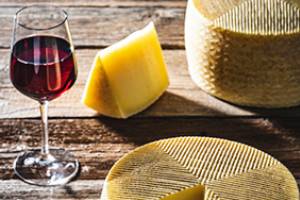
  • Offer Food: It is a fact that most people get hungry when they drink, so it would be kind of you to have something for your guests to nibble on after the tasting concludes. Offer a selection of cheese and crackers with fruit. Or if it is later in the evening, offer a few desserts to end things on a sweet note. Your guests will be thrilled to have been invited to the tasting, and they will appreciative that you took time to take care of their stomachs as well.

Conducting the Tasting

  • Select Glasses: Enthusiasts will tell you that whiskey can only be enjoyed properly when served in the right vessel. Though any tall, clear glass is acceptable (a wine or brandy glass will do), the nosing glass is ideal for tasting whiskey. This style has a tulip shape so that the aromas cannot easily escape, and is said to highlight the color of the spirit as well.
  • Serve a Sample: Select the whiskey you would like to taste, and pour a measure (roughly .5 to 1 ounce) into one of the nosing glasses. Serve the sample at room temperature, as this will allow the liquor to expend the maximum aroma and flavor.
  • Observe the Color: Hold the glass up to the light and note the hue of the liquid inside. The color of the whiskey is determined by the age and type of cask it has been matured in. It varies from a pale straw color to a deep mahogany all the way to a heavy treacle in older whiskeys. While there is an official scale of color-descriptors, beginners will find it easiest to describe the samples in their own terms. Eventually, as tasting knowledge develops, you will become familiar with the “correct” terms.
  • Do the “Swirl”: In order to release some of the aroma, swirl the whiskey around in the glass. Not only will this prepare the whiskey for your nose, but it will also provide much insight about the sample. The height of the swirl, often referred to as the “legs,” is indicative of the potency of the whiskey. Aficionados often illustrate how they can tell a stronger whiskey from the swirl because it has “longer legs.”
  • Go In For a Whiff: After you have swirled the whiskey in the glass, put your nose to the rim and take a sniff. Do not be tempted to inhale too deeply, or you may risk becoming temporarily “odor blind.” Not only would it be uncomfortable, but it would also interrupt the flow. To avoid this, the best way to go about nosing the whiskey is by taking short sniffs. You will notice that the cardinal characteristic aromas of the particular whiskey will be present. See what aromas you can detect, and encourage the others around you to do so as well. Note whatever comes to mind in your tasting notes, regardless of how odd the thought may sound. You may only be able to get a hint of a few of the aromas, as some are more “closed” or subdued, and require the addition of water to bring them out. Write down what you can so you can compare to the diluted sample.
  • Do The Dilute: While it is said that water should be added in equal proportion to the whiskey, we would tend to err on the side of caution. Experts suggest only diluting a teaspoon at a time to avoid potentially ruining the flavor; some older whiskeys lose everything if diluted too much. After all, you can keep adding, but you cannot go back and subtract. As mentioned earlier, diluting whiskey allows for more aromas to be detected. At this point, you should make a note of how the original aromas have changed since your first whiff, and which new ones have been released with the addition of water. While it can be challenging at first, putting the aromas into words can be quite fun once you allow yourself to let go of your inhibitions. Notice the immediate and enthusiastic response from your friends when you hit the mark.
  • Take a Taste: Tasting the whiskey should be the last step of the “tasting” process. Some say you should first try each variety “neat,” or in its pure form prior to diluting with water. They say that this enables tasters to describe the body, texture and mouthfeel of each sample accurately. Use your best judgment in determining whether or not you want to dilute during the nosing stage, or take a taste prior to adding any water. If you follow the advice of only adding a little water at a time, you really cannot go wrong either way. Take a large sip of the whiskey, and let it fill your mouth and roll over your tongue, which will allow each of the receptors to assess the sample. Jot down your first impressions right away. You should be able to tell whether the primary taste is sweet, salty, dry, bitter or a fusion a few or all of them. Can you detect any other flavors? Is there continuity between the aromas you detected earlier and the flavor components you taste now? Note any descriptions that come to mind, no matter how outrageous. Now put the glass off to the side, and take a moment to ponder the finish and the flavors that linger in your mouth since you have swallowed the sample. Do you find that it has a pleasant aftertaste? Does this aftertaste linger a long time, or does it disappear relatively quickly? Note your findings for the post-tasting discussion.
  • Discussion Time: Perhaps the most enjoyable part of tasting whiskey is sharing descriptions and opinions once the tasting has commenced. It can be great fun to compare notes and see what aromas and flavors others detected in the samples. Pull out the snacks, light the fire, and let everyone talk about their findings. 

Be sure to print out a copy of our Whiskey Glossary for all attendees.


© Copyright 2005- 2008 Lifestyle Direct, Inc. All rights reserved.  Images are the copyright of their respective owners.


Spread The Word: Each icon below links to a site where you can bookmark, share and comment on this article:
Dine52    del.icio.us    ma.gnolia    Newsvine    Yahoo Myweb    BlinkList    simpy    reddit


.