THE NIBBLE (TM) - Great Finds for Foodies (tm)


RSS feed

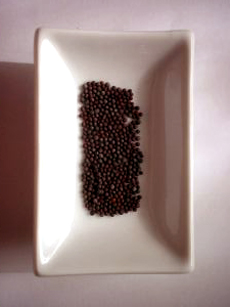
Black Mustard SeedsBlack mustard seeds. Photo by Meghan Anderson-Colangelo.
MENU


Condiments
Category Main Page
Articles & Reviews


Main Nibbles
Main Page
Articles & Reviews of Foods From A to Z


Product Reviews

Main Page
Foods, Beverage, Books
News & More


March 2006

Product Reviews / Main Nibbles / Condiments

Mustard Glossary

Sweet or Spicy, Hot or Tangy, Bright Yellow or Dark Brown

Jump to the Glossary


Ask people to name a mustard, and most will recall French’s, Gulden’s, the generic Dijon (named after the city of Dijon, France) or Grey Poupon (a manufacturer originating in Dijon). But many regions of France and other countries have their own mustard styles. Mustards have been popular for thousands of years because of the variety of flavors they impart to so many different foods.

The ancient Egyptians had mustard—grains of it have been found in the tombs of the pharaohs. The Greeks and Romans used the condiment. By the 1400s, mustard had spread through Europe: each region made its own style. Mustard came to America in the 1700s as immigrants set up their own businesses. The style of the day was strong, spicy and brown, and it was used sparingly. Gulden’s was founded in New York City in 1862, Plochman’s followed about 20 years later in Chicago. In 1885, the Frenches started a flour mill and spice business in Rochester, New York that made mustard, but not until 1904 did son Francis seek to create a different type of mustard—something milder so people would eat more of it. Bright yellow, creamy French’s Cream Salad Brand Mustard was envisioned as as a cooking ingredient, e.g. for potato and egg salad; but it arrived just in time to meet the rise of the hot dog. By the 1920’s, French’s outsold all other mustards by 5 to 1. So successful was the match, that French’s incorporated the red pennants from Wrigley’s Field into its logo. In 1957, Plochman’s introduced the squeeze bottle. It took almost 20 years—until 1974—for French’s to follow suit. By that time, America was entranced with a totally different mustard, Grey Poupon, a Dijon mustard.

Today, one can buy hundreds of fine, “gourmet” mustards: artisan-made, Champagne-based, herb- and fruit-flavored, or with the exotic tastes of China and Japan. In addition to being very tasty, mustards are extremely low in calories and carbohydrates (with the exception of sweet mustards, which have added honey or sugar products), and have no fat.

If you’re in the vicinity of Mount Horeb, Wisconsin, visit the Mustard Museum to see the largest assembly of mustards, mustard pots and related historic items. For the largest selection of mustards for purchase—hundreds of different varieties—visit the Mustard Museum’s online store.

If you’d like to suggest additional words for inclusion, click here.

You can click on the letter of the alphabet in the bar below
to get to a term without having to scroll manually.

a  b  c   d  e  f  g  h  i  j  k  l  m  n  o  p  q  r  s  t  u  v  w  x  y  z

American Mustard or Ball Park Mustard or Yellow Mustard

Called yellow mustard due to its bright color, and ballpark mustard for its pervasiveness at ballparks, this mustard was first manufactured in America in 1904 by George T. French as “Cream Salad Mustard.” It is made with white mustard seeds mixed with salt, spices and vinegar, with turmeric added to create the bright yellow color.

Bahamian Mustard

A peppery, brown mustard.

Blackcurrant Dijon
Click here
to purchase Blackcurrant Dijon Mustard.

Bavarian Mustard

A sweet mustard that contains very little acid, substituting copious amounts of sugar for preservation.

Beaujolais Mustard

A mustard made with Beaujolais wine, lending a deep burgundy color and some flavor of the wine.

Blackcurrant Mustard

A fruit mustard made by blending black currants into Dijon mustard. This produces a beautiful raspberry-colored, slightly-sweet (although not sugar enhanced) mustard that makes an elegant plate garnish, is used to flavor sauces for duck, rabbit and game, and to make sparkling vinaigrettes.

Black Mustard Seed

From the plant Brassica nigra, one of the three of the forty species of mustard plants used to make the mustard condiment. It produces the hottest mustard and is most popular in the Middle East Asia Minor, where it originated. Originally, many mustards were made with the black seed; but it is more difficult to grow than the brown seed, which has replaced it in most preparations. Black mustard seeds are used in Indian cooking, in curries and lentil dishes, or fried and sprinkled over rice and vegetables; when fried they take on a nutty, not hot, flavor. They add color contrast to light dishes like white fish, bread and breadsticks.

Black Mustard Seed

Burgundy Mustard

Click here to purchase Burgundy Mustard.

Bordeaux Mustard

A mustard made with Bordeaux grape must, imparting some flavor of the wine.

Burgundy Mustard

A Dijon mustard flavored with Burgundy wine, creating an aromatic mustard with hints of grape.


Chinese Mustard

A very hot prepared mustard. The Chinese mustard served by North American Chinese restaurants can be approximated by Colman’s Mustard.

Cognac Mustard or Moutarde Royale

Any style mustard can be flavored with cognac to create a rich and sophisticated garnish rich and sophisticated garnish. Moutarde de Meaux, or whole-grain mustard, flavored with cognac is called Moutarde Royale.

Colman’s Mustard

The leading brand of English mustard founded by Jeremiah Colman, originally a flour miller.

Moutarde Royale
Click here to purchase a crock of Moutarde Royale, which is Moutarde de Meaux, the “king of mustards,” flavored with cognac.

Colman's Mustard

Click here to purchase Colman’s Mustard, a superfine mustard powder that creates a hot mustard. By appointment to Her Majesty the Queen.

Creole Mustard

Originally, a pungent style with brown mustard seeds marinated in vinegar, ground and mixed with a hint of horseradish to create a hot, spicy mustard. Some products labeled “creole mustard” are sweet-style mustards made with molasses.

Deli Mustard

A brown mustard seasoned with garlic, dark brown sugar, ginger, allspice and cinnamon. Flecks of spice dot the mustard.

Dijon Mustard

Dijon, in the province of Burgundy, France, has been a gourmet center since early times. The mustard developed there was based on particularly strong and piquant mustard seeds grown in the chalky soil and densely wooded terrain. The seeds were carefully selected and harvested on sites that were rich in potassium and carbon. Today’s Dijon is not the original product developed in monasteries: in 1856 Jean Naigeon, a local producer, revived the flagging industry by substituting verjus for vinegar and creating a smoother, less biting product (today, white wine is most often used). Today's product is also made with brown mustard seeds instead of black, owing to the difficulty of growing the latter. While Dijon mustard was the first to be regulated, it is not covered by a Protected Designation of Origin (PDO) or a Protected Geographical Indication (PGI) under the auspices of the European Union. Thus, while there are large mustard plants in Dijon and its environs, most Dijon mustard is Dijon-style, manufactured outside of Dijon.

Dijon-Style Mustard

A mustard made in the style of Dijon mustard but not made in Dijon, France.

Düsseldorf Mustard

A spicy traditional German mustard, dark in color, made with brown mustard seeds, sometimes with horseradish. It is a hot and pungent version of Dijon-style mustard. It is usually served with sausages and cold meats.

Ritz Escoffier Dijon Mustard
Dijon mustard is made in both whole-grain and smooth preparations, like these artisan, stone-ground mustards from Ritz Escoffier, selected by the Paris Ritz Hotel.

Smooth Dijon Mustard


English Mustard

A product made from a combination of white plus brown or black mustard seeds, flour and turmeric. It is usually bright yellow in color with an extremely hot spiciness. It is particularly enjoyed with beef and sausages.

Roquefort
For the Editors’ favorite Roquefort mustard, click here.

Flavored Mustard

Mustards flavored by the addition of various individual herbs, fruits, spices and vegetables result in such mustards as balsamic, basil, blackcurrant, chili, chipotle, cranberry, dill, garlic, lemon, lime, harissa, herbes de Provence, horseradish, jalapeño, mesquite, olive, onion, parsley, peppercorns, shallot, raspberry, red pepper, tarragon, watercress, and even Roquefort cheese. Mustards are also flavored with beer and stout, wines (including champagne), and spirits. There are literally hundreds of different varieties.

German Mustard

A family of mustards ranging from mild to hot, spicy and mildly sweet. They can range from smooth to coarse-ground, and from pale yellow to brown in color. Germans enjoy mustard on their pretzels as well as on sausages and meats.

Grape Must

The young, unfermented juice of wine grapes, used, among other purposes, in the preparation of different varieties of mustard. The Latin name for mustard used in the Middle Ages, mustum ardens, meaning “burning wine,” refers to the spicy heat of the crushed mustard seeds and the French practice of mixing the ground seeds with the grape must.

Green Peppercorn Mustard

A medium-hot mustard, good to pair with beef, chicken, duck breast or omelets. Click here to purchase.

Honey Dijon Mustard

Grey Poupon

Established in 1777 by Maurice Grey and Antoine Poupon, the shop still stands in downtown Dijon. Grey Poupon is the U.S.’s largest-selling Dijon mustard, made under license by Nabisco Foods Company (it’s a milder recipe than the original French version).

Herb Mustards

Chive, parsley, watercress, et al are added to mustard for both flavor and color.

Honey Mustard

A sweet mustard made by adding honey to a base mustard. It can be bought commercially, or made at home by mixing the two ingredients. It is often used as a dip for pretzels and as a sweet base for hors d’oeuvres.

Horseradish Mustard

A zesty mustard made by adding honey to a base mustard. It can be bought commercially or made at home by mixing the two ingredients. It is served with roasts and sandwiches; and added to beef dishes, stews, and casseroles. Click here to purchase Horseradish Dijon Mustard from Maille, a leading producer in Dijon.

Japanese Mustard or Wasabi Mustard

A condiment served in most Japanese restaurants with sushi and sashimi, usually erroneously thought of as wasabi, or Japanese horseradish root. Japanese mustard is “faux” wasabi: a mixture of mustard, ordinary white horseradish root, cornstarch and food coloring created to approximate the much more costly Wasabia japonica. It is sold in powdered form and reconstituted in tubes, and can be used, as Western mustard, to flavor vinaigrettes, season meats, add to egg dishes, et al. Wasabi mashed potatoes are very popular in gourmet circles. To purchase a tube of prepared wasabi, click here. For authentic wasabi powder (ground Japanese horseradish root), click here.

Meaux Mustard or Moutarde de Meaux or Whole-Grain Mustard

Often called the “king of mustards” and enjoyed by connoisseurs, this rich mustard with a slightly nutty flavor is made of roughly crushed multi-colored mustard seeds mixed with vinegar and spices. The thick and rich mustard has been used by chefs for almost 400 years in salad dressings and as coatings for meat and fish. It is traditionally packed in stone crocks.

Medical Claims

Mustard has been used as an anti-inflammatory, an appetite stimulant, a digestive aid, a diuretic, an emetic, and a laxative.

Moutarde de Meaux
Click here to purchase a crock of Moutarde
de Meaux, the “king of mustards,” made by the house of Pommery, themselves mustard-makers to the Kings of France.
Mostarda or Mostarda di Frutta

This Italian “fruit mustard” is actually a unique preserve made from whole fruits preserved in a sugar syrup and mustard oil—sweet fruit and tangy mustard combined. It is used like a chutney and has a sweet yet slightly spicy twist. It originated in the town of Cremona in the Lombardy region of Italy, but its origins date back to the Roman Empire as a means of preserving fruit. It is traditionally served with roasted pork, ham, boiled meats, cured pork, turkey, leg of lamb, game, cold cuts and cheese. Agrumi (citrus) goes with mild cheeses such as ricotta and mascarpone. Frutta Mista (mixed fruit: orange, lemon, tangerine, apple and pear) goes with stronger cheeses; other varieties, such as fig, are made to go with stronger cheeses; and of course accompany savory dishes as well.

Mostarda

Moutarde a l'Ancienne


Moutarde à l’Ancienne (“Old-Style” or “Old-Fashioned”)
This grainy mustard is prepared from a base of mixed mustard seeds, verjus or white wine, spices and herbs, ground coarsely in order to leave the seeds whole. It has a dark color and a slightly milder flavor. It has a slightly sweet taste, making it a good accompaniment for rustic foods like sausages or country-style pates and cornichons. It can be mixed with melted garlic butter and fresh thyme to create a sauce to drizzle over fish, and many other creative preparations.

Must

See grape must.

Mustard

A condiment made from the seeds of the mustard plant. All mustard is made in relatively the same way. The seeds are crushed; depending on the type of mustard being Mustard Seedsmade, the hull and bran are sifted out. The seeds then may or may not go through further grinding and crushing. A cold liquid such as water, wine, vinegar, beer, or a combination is added, along with salt and spices (turmeric and cloves are often used). If it is a flavored mustard, other flavorings are added. In some cases the mustard is simmered to moderate the bite, then cooled. Some mustards are aged in large containers. The word mustard comes from the Middle English mustarde, meaning condiment; which in turn comes from the Old French mostarde. Mosto derives from the Latin mustum, which is the word for grape must, or unfermented wine. Mustard was originally made by mixing grape juice with ground mustard seed.

Mustard Oil

A pungent, aromatic golden oil made from the crushed seed of the mustard plant. The oil is not actually present in the seeds. When mixed with water or other cold liquid, a chemical reaction occurs between an enzyme and a glucoside from the seeds, resulting in the production of the oil, allyl isothiocyanate. A little goes a long way: mustard oil can be mixed with vegetable oils to deliver its spicy flavor. The oil goes rancid quickly and should be refrigerated after opening.

Mustard Plant

There are more than forty different varieties of mustard plants, but three produce the seeds that are used to make the mustard condiment. Brassica juncea, which originated in Mustard Plantthe Himalayans and has been cultivated for more than 3,000 years in India, is the basis for most mustards found in the U.S. and for the Chinese mustard used in the U.S. Sinapis alba, (alba means white) originated in the Mediterranean basin and has light tan seeds, which produce the mildest mustard. These are used to make American or ballpark mustard. Brassica nigra, which originated in the Middle East and Asia Minor and is popular in those areas, has black seeds, which produce the hottest mustard. All three varieties have become naturalized to North America: since mustard grows wild and weed-like in addition to being cultivated, all three can be found in nearly every state of the U.S. as well as many provinces of southern Canada.  Dark and white varieties of mustard seed cannot be substituted for each other in recipes as their flavors are distinctly different.

Mustard à l’Ancienne (“Old-Style”)

Mustard prepared from a base of mixed mustard seeds, verjus, spices and herbs, ground coarsely in order to leave the seeds intact. It is a very different type of mustard, grainy in texture, with a dark color and a slightly milder flavor.

Myrosin

The chemical compound that combines with sinigrin to create the heat in mustard when the seeds are cracked and mixed with a cold liquid (water, vinegar, wine, beer or a combination). The chemical reaction produces mustard oil, which can actually cause burning when it comes into contact with the skin.

National Mustard Day

Celebrated the first Saturday of every August at the Mount Horeb Mustard Museum in Mount Horeb, Wisconsin.

Powdered Mustard

A combination of brown and white mustard seeds ground into a powder, mixed with turmeric or saffron for added color and flavor. Flavored powdered mustards (chili, peppercorn, chive, mint) also can be found, or can be made by adding dried flavorings to plain powdered mustard. Powdered mustards have no aroma and little flavor until mixed with liquid, which engenders the chemical reaction that creates the mustard oil, which carries the flavor. When reconstituting, the mustard needs to stand for 15 minutes prior to use.

Prepared Mustard

A sharp-tasting, thick yellow or brown paste made of ground mustard seeds with vinegar or wine as a acidic fixative, prepared mustard is then seasoned with salt and various spices, depending on the house blend. On top of this base, there are hundreds of varieties of flavored prepared mustards, incorporating other spices (peppercorn, ginger), herbs (tarragon, chive, garlic, parsley), fruits (raspberry), nuts (walnuts, hazelnuts), and other food products (horseradish, beets, roquefort). Prepared mustard generally has about one-third to one-half the strength of dry mustard.


Roquefort MustardRoquefort Mustard

Actual Roquefort cheese is blended into the mustard creating a delightful infusion of rich flavors to accompany meat and pasta dishes, canapés, hard-boiled eggs...even to use as a dip. Click here to purchase.

Shallot and Chive Mustards

Especially nice blends to season salad dressings.

Sinigrin

One of the two chemical compounds that creates the heat in mustard.  See myrosin.

Sweet Mustard

A mustard sweetened with any traditional sweetener: honey, maple syrup sugar, or other product.

Tarragon Mustard

A traditional match for white meats like chicken, turkey and pork. Click here to purchase.

Verjus or Verjuice

An acidic, sour liquid made from the green juice of unripe grapes or other fruit. Verjus is used in preparations like sauces and mustards, much as lemon juice or vinegar would be employed. It heightens flavor without the harsher edge of vinegar. It has been used since medieval times; although out of fashion for many years, it is enjoying a renaissance.

Walnut Mustard

Walnut and hazelnut mustards are excellent pairings for poultry, red meats, game, and salad dressings. They also enhance sandwiches, especially those that include cheese.

Wasabi Mustard

See Japanese mustard.


© Copyright 2005-2008 Lifestyle Direct, Inc. All rights reserved. Images are copyright of their respective owners.


Spread The Word: Each icon below links to a site where you can bookmark, share and comment on this article:
Dine52    del.icio.us    ma.gnolia    Newsvine    Yahoo Myweb    BlinkList    simpy    reddit


.