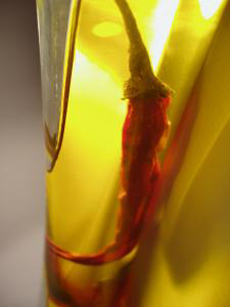
Traditionally, chile oil was a red Asian oil that gave heat to dishes. Today, gourmet chile oil can mean a high-quality oil infused with a hot chile.
November 2006
Updated April 2008
|
 |
Culinary Oils Glossary
How Many Types Of Cooking Oil Are There?
There are scores of different oils used in baking, cooking and garnishing. The right selection depends on the exact purpose. Is the food to be baked, fried, sautéed, seared, stir-fried? Will the oil be part of a marinade or a salad dressing? Or will it be a garnish, an “anointing oil,” where a few drops of the best oil go a long way?
Oils are extracted from these categories:
- Seeds, such as cottonseed, safflower, sesame and sunflower
- Fruits, such as avocado, apricot (kernel) and olive
- Nuts, such as almond, hazelnut, macadamia, peanut and walnut
- Vegetables, such as corn and soybean
There are two basic methods used for extracting the oil, cold extraction, which is how the finest oils are produced, and heat extraction, which produces refined oils. Both methods are described in the glossary below.
If you think we should consider definitions than those we have provided, or you’d like to suggest additional words for inclusion, click here. Also see our Olive Oil Glossary.
You can click on the letter of the alphabet in the bar below to get to a term
without having to scroll manually.
a b c d e f g h i j k l m n o p q r s t u v w x y z
ALMOND OIL
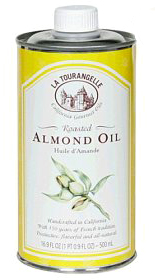
With a subtle toasted almond aroma and flavor, almond oil is used for salad dressings, sauces and desserts, although unlike almond extract, the oil is not concentrated enough to provide a strong almond taste to sweets. It has a high smoke point so it may be used for high heat cooking; but due to the high cost of nut oil, it most likely will not be used in this manner. Almond oil is a good source of monounsaturated fat and vitamins A and E.
ANOINTING OIL or FINISHING OIL
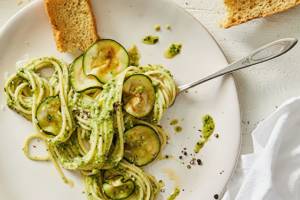
A term for condiment oil: an oil with especially fine natural flavor and aroma that should be enjoyed as a surface accent, and not used for cooking or baking where the nuances will dissipate under heat. These oils are drizzled to add flavor to cooked meat, pasta, poultry, rice, seafood and vegetables, and as dipping oils. They are also used in vinaigrettes (or as a salad oil without vinegar—sometimes alone, sometimes with a splash of citrus juice).
APRICOT KERNEL OIL
A lovely aromatic oil infused with the aroma and flavor of fresh apricots, apricot kernel oil is usually expeller pressed from the from the dried kernels of the apricot tree. It is high in monounsaturated fat and contains no trans-fatty acids, so it is a very healthy oil. Its mild flavor makes it a pleasant oil for salad dressings. It is suitable for high heat cooking methods, such as sautéing and pan-frying. High-quality oils come from France.
ARGAN OIL
Pressed from argan nuts, which are native to southwestern Morocco, argan oil has a golden yellow color with a slight reddish tint and a pleasing nutty aroma. The flavor is similar to hazelnut oil, but somewhat sharper. It is used in salad dressings, cooking, and as a condiment, and is available in gourmet and specialty shops as well as Middle Eastern markets.
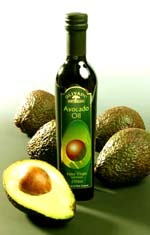
AVOCADO OIL
Avocado oil has a flavor delightfully reminiscent of avocados. It has the highest smoke point of any plant oil, so it can be used for high heat cooking as well as for salad dressings or for use as a condiment. Infused avocado oils are processed to strip away the heavier avocado taste to let the flavor of the infusion shine through. Read our review of Olivado Infused Avocado Oil.
BUTTER
There is nothing more delicious than butter. Butter can be used in baking and cooking (sautéing, stir frying, pan frying). While high in calories, saturated fat and cholesterol, butter is all-natural and a source of vitamin A and fat-soluble vitamins such as E, K and D, the antioxidant selenium, iodine. It is wonderful as a spread or as an ingredient in dips, marinades, sauces or any oven-baked dishes.
CANOLA or RAPESEED OIL
Canola oil, a trademarked cultivar of rapeseed (a plant in the turnip family, no relation to grapeseed), became a favorite of healthcare professionals in the 1990s, when studies claimed that it had the ability to lower the risk of heart disease. Canola oil has a bland flavor, which makes it a good cooking oil for spicy dishes (e.g. Chinese, Indian and Thai) or delicate dishes where the flavor of the oil is not wanted. It can be used in sautéing, as a marinade and in low-to-medium-temperature stir-frying (it is best to use a different type of oil for high-temperature frying). It doesn’t have enough flavor to be used in a salad dressing. Canola oil has the potential to become rancid more quickly than other oils.
CHILE OIL or CHILI OIL
Culinary oil, generally vegetable oil, that has been steeped with hot chiles. Traditionally, chile oil has been an Asian product used to flavor various dishes from stir-frys to condiments. However, with the growing interest in hot foods in the U.S., specialty producers are now making gourmet chile oils using olive oil and higher quality chiles, e.g. jalapeños and habañeros, that provide flavor as well as heat. While Asian chile oil should not be used as a cooking oil or the flavor will overpower the food, gourmet chile oils are often fashioned so that they can be used entirely to dress a salad, marinate meat, drizzle on vegetables, et al.
COCONUT OIL
A light-colored oil pressed from the meat of the coconut. At room temperature, it solidifies and has a buttery texture. It is produced primarily in India, Indonesia and the Philippines, and is very popular in India and throughout Southeast Asia. It has traditionally been used in cookies, candies, ice cream, whipped toppings and nondairy coffee creamers. However, because of the high level of saturated fat, companies have switched to unsaturated fats. Yet, several studies indicate that the saturated fat in coconut oil metabolizes in the body similar to an unsaturated fat and as a result, LDL (bad) cholesterol will not increase.
COLD EXTRACTION
One of the two methods for extracting oils. Oils obtained from cold extraction may be cold pressed or vacuum extracted. No chemicals or solvents are used as an aid in extracting the oil, ensuring that the oil is the best-tasting possible. The oils are flavorful and expensive, but tend to have lower smoke points than heat-extracted oils (macadamia nut oil, which is cold-extracted, has a very high smoke point). See also Heat Extraction.
COOKING OIL
A cooking oil is a culinary oil with properties that are best for cooking, as opposed to a salad oil or finishing oil. Cooking oil requires a high smoke point. If an oil has a low smoked point, prolonged exposure to heat, while pan-frying or stir-frying, for example, cause the oil to break down, burn bitter and begin to smoke and burn. As a comparison, the smoke point of butter is 350ºF, extra virgin olive oil, 410ºF (it will vary depending on the cultivar and processing) and grapeseed oil, 485ºF. Avocado oil and peanut oil have high smoke points (which is why the latter is used in Asian stir-frying). Because heat will break down the fine flavors and aromas of gourmet oils, the most expensive oils, and flavor-infused oils, are not recommended as cooking oils, even if they are flavored grapeseed or avocado oil.
CORN OIL
An oil extracted from the germ of the corn kernel. Refined corn oil is one of the best oils for frying because it has a high smoke point. It has a light golden color and is almost tasteless and odorless so it is a good choice for baking. It is widely used as a salad oil and it is also the main ingredient in the production of margarine. Corn oil is high in polyunsaturated fats and monounsaturated fats so it is healthier to use than oils with higher saturated fat levels. Corn oil is one of the most common, and inexpensive cooking oils.
CULINARY OIL
An edible oil; one which can be used for baking, cooking, dressings, etc. Flaxseed, for example, produces both culinary oil and industrial oil.
CULTIVAR
A variety of a plant that has been created or selected intentionally and maintained through cultivation. There are thousands of different cultivars of olive, for example. Not all are pressed for oil, because some varieties are not fleshy enough to produce enough oil to be commercially viable.
DEEP FRY or DEEP FAT FRY
The process of cooking food by totally covering in hot cooking fat or oil. This process produces evenly-cooked food with a golden, crisp outside and a moist and tender inside.
EXTRA VIRGIN
When used to describe refined oils, as opposed to olive oils, this refers to an oil that has been pressed as opposed to refined.
FINISHING OIL
A high-quality oil with special flavors, used as a condiment. See Anointing Oil.
FLAVORED OIL
Generally, an oil that has been infused with another flavor. Typically, these are fruits, herbs and spices. Popular flavors are basil, chile, garlic, lemon, oregano and rosemary. See Infused Oil.
FLAXSEED OIL
A smooth, buttery oil cold-pressed from the seeds of the flax plant. The flavor makes it appropriate as a salad oil; however, since the oil has a very high level of omega-3 fatty acids*, it is most often used as a nutritional supplement rather as a culinary oil. By the way, if the seeds are hot pressed, they produce linseed oil, an industrial oil and solvent which is not edible.
*A polyunsaturated fat considered to be helpful in reducing potential stroke and heart disease problems.
GRAPESEED OIL
Grapeseed oil is pressed from the grape seeds left over from wine making. The oil is almost tasteless, so it can be combined with stronger-flavored, more expensive oils, which makes them more economical to use. Refined grapeseed oil has a high smoke point so it is an excellent choice as a cooking oil, especially when sautéing or frying. Grapeseed oil is also used by commercial producers of mayonnaise.
HAZELNUT OIL
Hazelnut oil is a brown-colored oil with a strong, roasted hazelnut flavor. It is generally used as a flavoring for baked goods, in salad dressings, marinades and for some sauces. It is delicious drizzled on fish, poultry and pork products. See Nut Oils.
HEAT EXTRACTION or REFINING
One of the two methods for extracting oil. Heat extraction methods include expeller pressing and solvent extraction. The highly refined heat extracted oils usually lack color and flavor, but have a higher smoke point and longer shelf life than oils obtained through cold extraction. See also Cold Extraction.
INFUSED OIL
Infusion is a method of flavor extraction that incorporates the flavor of herbs or fruits into oil by steeping and removing. See also Flavored Oil.
LEMON OIL
A golden colored oil with a citrus aroma that is produced from the skin of the lemon. As edible oil, it is commonly used as a salad oil or as a food ingredient. Some lemon oils are mixed with olive oil to produce a combined oil for flavoring and dipping of foods.
MACADAMIA NUT OIL
An oil from the cold pressing of macadamia nuts. The oil is highly nutritious with the highest level of heart-healthy, monounsaturated fat of any edible oil. It also has an exact balance of Omega-3 and Omega-6 fatty acids. The high level of antioxidants slows rancidity and allows the oil to be kept for up to two years without refrigeration. In addition, the oil has a high smoke point, which makes it a good choice for sautéing and frying. While closely associated with Hawaii, the tree is native to Australia, which leads the world in production of the nut and the oil. Hawaii, Guatemala, Kenya and South Africa are other major producers. This versatile oil can be used in salads, as a condiment oil or in cooking.
MARGARINE
Margarine was created during a World War II butter shortage, then perpetuated as an alternative to high-fat, high-cholesterol butter. It can be used as a substitute for butter in many dishes, including as a spread or for pan-frying or sautéing. However, when margarine was created it was loaded with trans fat, a substance that we now know raises bad cholesterol, lowers good cholesterol and points to a number of other health issues. Most brands of margarine are made with hydrogenated oils: hydrogenation is a process that solidifies oil, and this process produces trans fat. So, while margarine is lower in fat than most oils and butter and a source of vitamin E, consider the other side.
MUSTARD OIL
Mustard oil is obtained from pressing Indian mustard seeds, which are hotter than Mediterranean mustard seeds. The oil is hot and flavorful, and thus used sparingly. When the oil reaches the smoking point, a taste change occurs that results in a smoother mustard flavor, which will not overpower the food while it is being cooked. Thus, when cooking with mustard oil, the oil should be brought to its smoking point before food is cooked in it. It will stay fresh for 6 months or more stored in the refrigerator. In addition to Indian recipes, mustard oil is delicious in salad dressings, stir-fry, and marinades for meat and fish.
NUT OIL
Nut oils are very rich, and often combined with other oils to dilute their richness while retaining their flavor. They are much more expensive than vegetable oils, and can be found in small bottles. Most come from France, where they are prized in cuisine. After the bottle is opened, the oil should be stored in the refrigerator to prevent it from becoming rancid. If refrigeration causes the oil to solidify, it can be restored to a liquid state by leaving it at room temperature for an hour or two or by microwaving for a few seconds. Nut oils are very popular in French cooking.
OLIVE OIL
Oil pressed from the fruit of the olive tree. The first pressing yields extra virgin olive oil; other grades include virgin olive oil, olive oil. Olive oil is not a high-heat cooking oil; the smoke point is low, and heating at high temperatures evaporates the alcohols and esters that give the oil its taste. That’s why one should never cook with extra-virgin or virgin olive oil, but simply that designated “olive oil”; and then, its best use is for sautéing meats and vegetables at lower temperatures, or for baking. However, olive oil is at its best when consumed uncooked, such as in salad dressings or dipping sauces. See our complete Olive Oil Glossary.
|

Photo of green olives courtesy of OliveOil.com. |
ORANGE OIL
A golden colored oil with a citrus aroma that is produced from the skin of the orange. It is commonly used as a marinade and a salad dressing or in baking and basting. It can be mixed with olive oil to produce a combined flavoring and dipping oil.
PALM OIL
Palm oil, pressed from the pulp of the fruit of the African palm, has a red-orange color, a strong, unique flavor, and is very popular in the preparation of dishes in the Caribbean, Central and South America, and Western Africa. It is very high in saturated fat, however, and with increasing awareness of health issues, is being used less and less. There is a highly refined version of palm oil with very little color.
PALM KERNEL OIL
Palm kernel oil differs from palm oil in that it is extracted from the kernel rather than the fruit of the palm. It has a light yellow color and it has a milder flavor than palm oil. Like coconut oil, it is extremely high in saturated fat, but because the saturated fat in the oil is plant based, some studies suggest that it does not raise LDL (bad) cholesterol in the body (see Coconut Oil). Palm-kernel oil is often used in the manufacture of various cosmetics and in some brands of margarine.
PEANUT OIL
Domestic peanut oil is almost clear and has a mild flavor due to the refining process. Chinese peanut oil has a more pronounced peanut taste and aroma. Refined peanut oil has a high smoke point and is popular for sautéing and frying. It does not absorb or transfer flavors from food during the cooking process. It is also high in monounsaturated and polyunsaturated fats, which makes it a healthy oil to use for cooking or as a base for dressings. It will keep for long periods if stored in its original container in a cool, dark place. Peanut oil is also known as groundnut oil and it should be remembered that its use in cooking might cause severe illness in people allergic to peanuts.
PINE NUT or PINE SEED OIL
Pine seed oil, which is obtained from pine nuts, is one of the most expensive oils on the market—$2.39 an ounce compared to $.55 for walnut oil. Thus, its appeal is very limited. It provides a nutty, earthy fragrance and taste to salads, as a condiment, or as a dress for almost any steamed or roasted vegetable. Add a tablespoon or two to pesto.
PISTACHIO OIL
Hard-to-find but worth it, this distinctive oil pairs beautifully with salads that contain citrus or avocado, arugula and other spicy greens (cress, red mustard greens and mizuna, e.g.). Try a vinaigrette of 5 to 6 tablespoons of oil with 1/4 fresh lemon juice and a tablespoon of shallots, salt and pepper to taste; with a citrus or avocado salad try an optional tablespoon of honey. Pistachio oil is a delicious anointing oil for fresh goat cheeses (especially delightful when the rounds have been rolled in chopped pistachio nuts), grilled fish and shellfish. It also goes well with many Middle Eastern dishes, especially couscous and lamb.
POPPY SEED OIL
Poppy seed oil has a smooth, subtle flavor that works as a dipping oil and a salad oil.
PUMPKIN SEED OIL
Pumpkin seed oil, pressed from roasted pumpkin seeds, is thick, dark and opaque with a strong flavor. It can be combined with milder oils for salad dressings or used undiluted to add a distinctive flavor to fish or vegetables.
RAPESEED OIL
See Canola Oil. Not to be confused with Grapeseed Oil.
REFINED OIL
See Heat Extraction.
RICE BRAN OIL
Rice bran oil (photo at right) is a nutty-tasting oil that is made from the bran of the rice bran, the brown portion that is removed from the grain of rice during processing. Most of the nutrients are in the bran, so it produces a very healthy oil, rich in amino acids, antioxidants, essential fatty acids, minerals and vitamins. It is used as a cooking oil.
SAFFLOWER OIL
The safflower is a member of the thistle family. Its seeds are pressed for safflower oil, a light, neutral-flavored oil which has the highest level of polyunsaturated fat of any edible oil. While it is low in saturated fat (second only to canola oil), it has a low level of monounsaturated fat and contains no vitamin E, so it is not as nutritious as other oils. However, it has a very high smoke point so it is an excellent oil for deep-frying, pan-frying and sautéing. It also can be refrigerated without solidifying. Safflower oil is also used to make margarine.
SESAME OIL
Unrefined sesame oil is made by crushing sesame seeds and filtering the resulting oil, which is light and has a mild flavor. It is very popular in Middle-Eastern and Indian cooking, and gives good flavor to stir-frys and salad dressings. Dark sesame oil is where the excitement lies: the seeds are toasted before crushing to produce a darker oil with an intense fragrance and robust flavor (it is very strong—we often mix 1 tablespoon of it along with 2 tablespoons of olive oil in a classic vinaigrette). in stir-frys and marinades for meat or fish, blending dark sesame oil with milder oils will tone down the pungent flavor.
SMOKE POINT
The smoke point is the temperature at which an oil begins to decompose from the heat. It gives off visible fumes (smoke) and an unpleasant odor as it breaks down. While most oils can be used to quickly sauté, for high-heat cooking it is important to choose an oil with a high smoke point. View a complete list of smoke points by type of nut.
SOYBEAN OIL or SOY OIL
Soybean oil boasts many of the same health claims as soybeans: high in Omega-3 fatty acids and vitamin E, rich in polyunsaturated fatty acids and monounsaturated fats and fairly low in saturated fat. It is highly refined and has a high smoke point, making it a good all-purpose cooking oil. It is commonly used in the manufacture of margarine, vegetable oil and shortening, in commercial food production, and in Chinese cooking. Generic brands of vegetable oil are often 100% soybean oil. It is one of the more inexpensive oils, and often used t make commercial mayonnaise.
SUNFLOWER OIL
Sunflower oil is an all-purpose high-heat cooking oil with the added benefit of a high monounsaturated fatty acid content and a high level of vitamin E. It is a light yellow color and has a mild flavor that is suitable for salad dressings. Like most other refined oils, it has a fairly high smoke point.
TEA OIL
Tea oil is cold-pressed from the seeds of the tea plant Camellia sinensis. A pale amber-green in color, the oil has an herbal aroma with a somewhat sweet flavor. It is high in vitamin E and other antioxidants, contains no trans-fatty acids, is lower in saturated fat than olive oil and is non-hydrogenated. It is often used in Asian foods and it can be served as a salad dressing when it is combined with other flavors, such as lemon or lime. Tea oil has a high smoke point so it can withstand high-heat cooking without burning. While it is relatively new in the U.S., it can be added to cooked vegetables, pasta, dips, dressings, marinades and sauces.
TRUFFLE OIL
Most truffle oil contains little actual truffle, but is produced by infusing olive or other oil with the flavor of truffles—generally a chemical essence that smells and tastes like truffle. In a very few instances, truffle pieces are soaked in a high-quality, extra virgin olive oil until the absorbs flavor and aroma. That’s why the black truffle oil of Eugenio Brezzi, a noted truffle purveyor, costs $132 an ounce, while 4 ounces of “chemical” truffle oil can cost $10. But both, at their own levels, can be used to add the truffle flavor to a variety of foods ($132 an ounce is close to the price of actual truffles, so one might simply go for the real thing). Truffle oil must be tossed on or dribbled onto food, since heating the oil will cause the flavor and aroma to dissipate. Similarly, an open bottle of truffle oil will lose its flavor quickly and should be used up in a short period of time. The oil, which is available in both black and white truffle varieties, is used in small amounts in pasta sauces, risottos and, meat and poultry dishes.
UNFILTERED OIL
Unfiltered oil contains natural particles that have not been removed, which leaves oil cloudy. This can include pieces of the fruit or nut. Unfiltered oil aficionados claim this adds additional flavor. Unfortunately it causes a sediment to form at the bottom of the bottle over time which can become rancid, negatively impacting flavor and shelf life. Unfiltered oil should be carefully stored and used within 3 to 6 months of bottling.
VEGETABLE OIL
Vegetable oil can be a blend of oils , e.g. corn, soybean and sunflower, or it may be only one type of oil. There is no requirement for the label to list the type(s) of oil in the bottle. Generally, “vegetable oil” is refined to have a high smoke point but very little taste or aroma. This makes it a good all-purpose oil for baking, frying and sautéing. However, it is not of sufficient quality to be used as a condiment oil or for salad dressings.
VEGETABLE OIL COOKING SPRAYS
Aerosol cooking sprays propel a very small amount of oil from the can, so it adds negligible calories. The flavored sprays are more interesting, even when just “greasing the pan.”
WALNUT OIL or HUILE DE NOIX
Walnut oil is a rich oil redolent of walnut flavor, extracted from the meat of walnuts by pressing. As with other nut oils, it is used in baking, salad dressings and sauces, and it is more expensive than vegetable oils. High in polyunsaturated oils, including Omega-3s, it is delicious drizzled over endive scattered with blue cheese and toasted walnuts, or drizzled over fresh goat cheese, sprinkled with chopped toasted walnuts. Other favorite uses include with slices of pear, apple or Asian pear for a fruit and cheese course, brushed on grilled poultry and fish, or as a garnish for root vegetable soup, corn chowder or puréed squash. See Nut Oil.
WHEAT GERM OIL
Wheat germ oil is obtained from the embryo of the wheat kernel. It is delicious in salad dressings; health food aficionados discovered it was equally delicious when tossed with pasta. As with flaxseed oil, it is a rich source of vitamin E and is most often used as a dietary supplement.
© Copyright 2005-2008 Lifestyle Direct, Inc. All rights reserved. Images are the copyright of their individual owners.

|
 |
|
|