THE NIBBLE (TM) - Great Finds for Foodies (tm)


RSS feed
Salsa Fresca
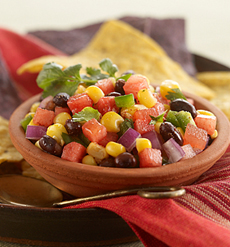
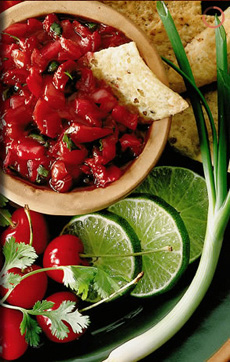
Salsa fresca: delicious, low calorie and brimming with vitamins. Photo by Marjorie Manicke | SXC.
MENU


Salsas
Category Main Page
Articles & Reviews


Main Nibbles
Main Page
Articles & Reviews Of Foods From A To Z


Product Reviews

Main Page
Foods, Beverage, Books
News & More


April 2007
Updated Janaury 2008

Product Reviews / Main Nibbles / Salsas & Dips

Salsa Glossary, Terms & Definitions

Learn About The Different Types Of Salsa


Habla Usted Salsa?

This glossary of salsa terms below has words that describe salsa, related products and ingredients. Not all are Mexican in origin. Refer also to our separate Chile Glossary which details the most common types of chiles.

  • Adobo (ah-DOE-boe): A rich tomato sauce spiced with vinegar and onion, used for cooking.
  • Capsaicin (kap-SAY-uh-sin): An alkaloid produced by, and contained, in chiles; many chiles contain a significant amount, which causes a burning sensation (the amount has historically been measured by the Scoville Scale, high performance liquid chromatography method is now preferred). Capsaicin is present in large quantities in the placental tissue which holds the seeds of the chile, as well as in the internal membranes. It is found to a lesser extent in the other fleshy parts of chiles, but, contrary to popular belief, not in the seeds.
  • Capsicum (KAP-si-kum): The botanical genus of chiles; any of the plants which produce chiles as their fruit; or the chile itself. In Great Britain, bell peppers, which belong to this genus, are called capsicums.
  • Chile (CHEE-lay): The fruit of the capsicum plant. Like the tomato, the chile is a fruit, not a vegetable, because it carries its seeds on the inside. Different chiles are selected for their flavors as well as their heat: a hot, smoky chipotle or a mild, fruity ancho, e.g. In the U.K., the preferred spelling is chilli, which is the original spelling of the word in the Aztec language, Nahuatl. The plural of chile is chiles. The term chile pepper is a misnomer that dates back to Christopher Columbus. When Columbus reached the West Indies, he found the islanders eating chiles. He noted the spiciness of the chiles, and associated them with black pepper.

Jalapeno
The medium-heat jalapeño is the most popular
chile in the U.S.

  • Chile-Head: A lover, collector and eater of hot chiles. Some are hobbyists seeking to learn as much as they can about the growth, preparation and consumption of chiles. Others make or collect varieties of hot sauce collectors. Some collect chile seed. More than a few pursue extremely hot chile flavors.
  • Chili (CHIL-lee): A dish typically made with ground beef, chiles and beans. Chili powder is a mixture of ground, dried chiles and spices used to make chili. The plural of chili is chilies.
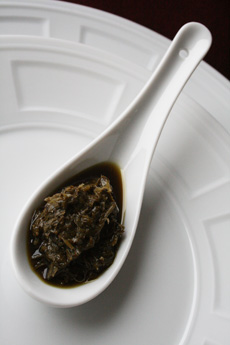
  • Chimichurri (chee-mee-CHOO-ree): A spicy vinegar-parsley sauce that is the leading condiment in Argentina and Uruguay, served with grilled meat. It is made of chopped fresh parsley and onion, seasoned with garlic, oregano, salt, cayenne and black pepper and bound with oil and vinegar.
  • Chipotle (chee-POHT-lay): A fully ripened and smoke-dried jalapeño chile. At the end of the growing season, green jalapeños naturally begin to turn red (see photo above). When the jalapeños are deep red and have lost much of their moisture, they are picked and smoked in a closed chamber for several days until they dry up and look prune-like. Some large processors use large gas dryers or liquid smoke, which produces an inferior chipotle.
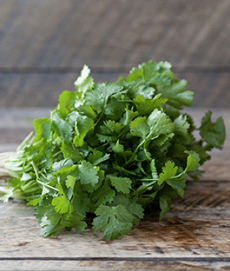
  • Cilantro (sill-AHN-tro): The leaves of the herb coriander, which are used extensively in Mexican cooking and are usually an ingredient in salsa. The term cilantro is often used interchangeably with the term coriander. However, coriander is technically the spice that is the seed of the plant. Cilantro is also called Chinese parsley.
  • Cooked Salsa: Salsa whose ingredients have been cooked at a high temperature for a brief period of time to make the salsa shelf-stable. Cooked salsas are sold in jars or cans and generally have a shelf life of two years. Both red and green salsas can be cooked.

CilantroCilantro, the herb of choice in salsa.

  • Epazote (ay-pah-ZOE-tay): An indigenous herb common to Mexican cooking. The fresh herb has a strong, citrusy aroma and a subtle, sweet flavor. It is used in bean and chili dishes, soups and moles.
  • Guacamole (gwa-kah-MOH-lay): A sauce or dip made by mashing together avocados, tomatoes, chiles, onions, lime juice and cilantro, spiced with chili powder and cayenne pepper. Guacamole can be used as a dip, sauce, topping or side dish.
  • Guasacaca (gwa-sah-KAH-kah): A sauce served with meat and fish in Venezuela. It is similar to guacamole, including avocado, chopped onion and green pepper, garlic, parsley and cilantro. Olive oil and red wine vinegar are added to make a thinner sauce, and habañero is added for spiciness.
  • Mole (moe-LAY): Called the “royal sauce,” mole is made from roasted, rehydrated dried chiles, mixed with spices, unsweetened chocolate and almonds. It is smooth, thick, rich, nutty and pungent. The word comes from the Nahuatl (Aztec language) molli, meaning sauce. There are as many variations of moles as there are curries in India: each region has its own recipes and each family has its proprietary recipe. Two of the most famous: mole negro from Oaxaca, which uses the base ingredients plus peanuts, plantains, cloves, cinnamon, onion, garlic, sesame seeds and five different chiles. Mole poblano from Pueblo uses the base ingredients plus tomatoes, raisins, bread, lard, anise, cloves, cinnamon, three different peppers, garlic, sesame and other ingredients. The sauces accompany beef, chicken, enchiladas, seafood and turkey and are served with rice and tortillas.

Mole Sauce
If you don’t have the time or
inclination to make a mole
sauce
, you can buy this one
in a bottle, by clicking on the link.

  • Molho Malagueta (MOLL-yo mah-la-GWAY-tah): Malagueta is the most common chile in Brazil, and is used to make a spicy vinaigrette that is sprinkled on food. It is made with one cup of fresh or dried malagueta chiles, stems removed and left whole, added to a clean wine bottle with a cup of vinegar. The bottle is topped off with palm oil (since palm oil is very high in fat, olive oil can be substituted). Tabascos or piquins can be substituted for the malaguetas.
  • Pebre (PEB-ray): Salsa de pebre, or pepper sauce, is served with grilled meat in Chile. It can be made with jalapeños, or made hotter with habañeros. Seed and mince 4 jalapeños and combine in a bowl with 1/4 cup fresh lemon juice and 1 tablespoon salt. Let stand 30 minutes and drain. Then add 1/4 cup olive oil, 2 tablespoons each of chopped fresh chives, chopped fresh cilantro, chopped fresh parsley and 3 tablespoons of white wine vinegar. Makes about 2/3 cup.
  • Peri-Peri Sauce: The national condiment of Peru, peri-peri sauce is made in medium to hot levels of spiciness—the more chile, or the hotter variety of chile used, the hotter the sauce. Original peri-peri uses the African bird’s eye chile (the African word for the chile is peri-peri). Milder sauces may use only cayenne and serrano chiles. To a base of vinegar and oil, garlic and lemon juice are added, plus other seasonings, which often include paprika or tomato paste for flavor and color, onions and herb—each company has its own recipe. It is also used as a cooking sauce.
  • Picante (pee-KAHN-tay): “Hot and spicy” in Spanish, from the verb picar, “to sting.” Americans generally know picante sauce as a puréed, thinner version of salsa. Picante sauce was created by Dave Pace, founder of Pace Foods, in 1947 (now owned by Campbell’s Foods).
  • Pico de Gallo (PEE-coe-dee-GAH-lo): Spanish for “rooster’s beak,” it once was eaten between the thumb and finger in a way that resembled a pecking rooster. It is made with finely diced raw tomatoes, onions, jalapeños, lime juice and cilantro. Jicama and other raw ingredients can be added. It differs from salsa fresca and salsa cruda in that the ingredients are uniformly chopped; but the terms are often used interchangeably. Another term used is salsa mexicana (Mexican sauce).

Peri-Peri Sauce
While Portuguese traders broght the bird’s eye chile and peri-peri sauce to Brazil from Africa, it became the favorite condiment of Peru, on the other side of the continent. Here, an authentic peri-peri sauce from Africa.

  • Queso (KAY-so): The Spanish word for cheese. A queso is also a cheese sauce.
  • Recado (ruh-KAH-doh): A spicy paste or dry rub used to season food before and during cooking. There are many different blends. Recado roja, or achiote paste, is Mayan in origin and usually includes allspice, annatto, black pepper, clove, cinnamon, cumin, garlic, oregano and salt. The annatto seeds dye the mixture red, and this gives the meat or vegetables a distinctive red hue.
  • Recaito (reh-kai-EE-toh): A very mild, cilantro-based Mexican seasoning sauce for rice dishes, soups, stews, salsa and a garnish for tacos and burritos. It can be made by sautéing cilantro, garlic, green pepper and onion in olive oil.
  • Ricado (Ree-KAH-doh): A spice blend used to season Mexican salsas verdes, which are made of chiles and tomatillos. The spices can include cinnamon, cocoa, cumin seed and oregano. There is usually a roasting step in the preparation of ricado: the seasonings may be ground first and then roasted, or roasted and then ground to provide a more rounded flavor. Green herbs in the mix, like basil, cilantro and epazote, are not roasted.
  • Salsa (SAL-sah): “A sauce” in Spanish. In the United States, salsa fresca is commonly referred to simply as salsa. However, with a modifier it can mean any type of sauce—salsa de chocolate, for example, is chocolate sauce.
  • Salsa Cruda (CROO-dah): “Raw sauce” or uncooked sauce. Like salsa fresca, it is made with uncooked ingredients: tomatoes, onions, chiles, cilantro and lime juice (other raw ingredients like bell peppers can be added). The difference in terminology is largely regional, although a salsa cruda is less finely chopped than a salsa fresca.
  • Salsa de Arequipa (ah-reh-KEE-pah): A sauce from Arequipa, a city in the Andes Mountains in southern Peru. It is often served with potatoes, which are indigenous to Peru. It is made with aji chiles, shrimp and hard-boiled eggs. Some recipes add nuts; this one uses cheese: In a large bowl, combine 8 dried yellow aji chiles, seeds and stems removed, soaked in water to soften, and puréed (or substitute 6 New Mexican red chiles); 3 Saltine-type crackers or water crackers, crumbled; ¼ cup ground walnuts; ½ cup grated Monterey Jack cheese; ¼ cup vegetable oil; ¼ cup chopped onion; 1 clove mashed garlic; 2 minced hard-boiled eggs; 12 cooked shrimp, peeled and mashed. Mix well into a thick paste. Using a potato masher, drizzle in milk as needed to turn the paste into a thick sauce. Add salt and pepper to taste.
  • Salsa di Mani (MAH-nee): A South American peanut sauce. Different countries use different chiles. One version can be made by sautéing 3 tablespoons of minced onion in 3 tablespoons of butter for two minutes; add 1 tablespoon minced seeded jalapeño chile and 1 tomato, peeled, seeded and coarsely chopped and cook until sauce becomes mushy. Then add 1/2 cup chunky peanut butter and mix well. Remove from heat and slowly add up to 4 tablespoons of water for a pourable consistency. Add salt and pepper to taste.
  • Salsa Fresca (FRES-kah): “Fresh sauce” in Spanish, referring to the uncooked ingredients. Salsa fresca is what Americans typically refer to as salsa. The main ingredients are tomatoes, chiles, onions, and generally, lime juice, although other vegetables can be added. The texture can vary: uncooked salsas can be puréed until smooth, chopped finely (see pico de gallo) or be served semi-chunky, in which case it is called a salsa cruda.
  • Salsa Mexicana (mek-see-KAH-nah): “Mexican sauce” in Spanish. See Pico de Gallo.
  • Salsa Roja (RO-ha): “Red sauce.” The red color comes from a base of tomatoes. Salsa roja can be fresh or cooked. While tomatoes are not a primary salsa ingredient in most of Mexico, there is some usage in salsas made in northern Mexico. Americanized salsa is a tomato-based product.
  • Salsa Taquero (tah-KAIR-oh): Taco sauce.  See Taco Sauce entry.
  • Salsa Verde (VAIR-day): “Green sauce.” This sauce is made with chiles, tomatillos and ricado in Mexico (with cilantro in the U.S.) and is much thinner than a tomato-based salsa roja. A salsa verde can be fresh or cooked.

Salsa Verde and Salsa Roja

Homemade salsa verde and salsa roja. Photo courtesy of Wikipedia.

  • Sofrito (soh-FREE-toh): A sauce made by sautéing annatto seeds in rendered pork fat to turn the oil red; the seeds are then removed. Then chopped onions, green peppers, garlic, pork and various herbs are cooked in the flavored oil until tender. It is used to used to flavor soups, sauces and meat dishes. Italians make a similar mixture, sautéed in olive oil.
  • Taco Sauce: A smooth, thin, pourable sauce made with tomatoes, chiles, vinegar, garlic and salt.
  • Tomatillo (toe-ma-TEE-yo—photo at right): Not a green tomato but a relative of the gooseberry, a tart, green fruit with a papery husk. It is used to make salsa verde.

Tomatillo
The tomatillo.
While it looks like a green tomato,
it grows on a bush like the gooseberry, to which it
is also related, as can be seen by the papery husk.

If you have additions or suggestions for this glossary of salsa terms and definitions, let us know by clicking on the link.


© Copyright 2005-2008 Lifestyle Direct, Inc. All rights reserved. Images are copyright of their respective owners.


Spread The Word: Each icon below links to a site where you can bookmark, share and comment on this article:
Dine52    del.icio.us    ma.gnolia    Newsvine    Yahoo Myweb    BlinkList    simpy    reddit


.