THE NIBBLE (TM) - Great Finds for Foodies (tm)


RSS feed
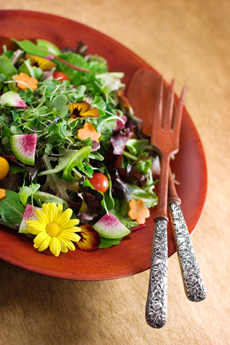
Salad With Edible Flowers
A colorful spring salad is embellished with edible flowers, watermelon radish, heirloom cherry tomatoes and delicate fancy cut carrot pieces. Photo by Kelly Cline.
MENU


Vegetables

Category Main Page
Articles & Reviews


Main Nibbles

Main Page
Articles & Reviews of Foods From A to Z


Product Reviews

Main Page
Food, Beverages, Books,
News & More


ABOUT THE AUTHOR

MELODY LAN is a member of THE NIBBLE™ editorial staff.


April 2006

Product Reviews / Main Nibbles / Vegetables

Edible Flowers: Cook, Grow, Buy

Forget The Vase—These Blossoms Go Directly On Your Plate!


For all the times you’ve sent your mother flowers, how often has she been tempted to taste their distinctive, delicate flavors? Probably never. This Mother’s Day, you can change that: forgo the generic FTD arrangement, and present her with edible flowers. We aren’t referring to herbs; we’re talking actual flowers, the beautiful petals you see in bouquets all the time that are used by the finest restaurants and caterers to season and garnish fine food.

One of the best things about edible flowers is that they transform ordinary food into a dazzling creation. Their colors add vibrancy, and the flavors add zest to any dish. A specialty food on the verge of re-discovery by people beyond the inner sanctum of fine chefs, edible flowers are much more accessible than most people might think.

You may have noticed a posy or two pop up as the occasional cocktail garnish or, less often, sprinkled over a mesclun salad. Beyond that, they seldom make appearances in our food. As fans of edible flowers, we’d love nothing more than for them to break out of these cameo roles and star in a variety of dishes. We hope this paean to edible petals will inspire you to try them in some of your own creations, and give them as gifts to some of your favorite home chefs.       

Flower Power

They may have only had a small part on the U.S. culinary stage, but flowers have played a prominent role in cuisines throughout the world for centuries. Violets have been used by both ancient Egyptians, who crystallized them, and English chefs, who ground them with chicory to make confections. During the Renaissance, audiences of Shakespeare’s plays quenched their thirst with rose-petal water and snacked on delicacies like stewed primroses. Carnation petals are one of the key ingredients in Chartreuse, a green liqueur developed by French monks in the 17th century. Italian and Hispanic cultures stuffed squash blossoms for a hearty dish (and still appear on menus of fine restaurants).

For centuries, flower petals have been widely recognized for their distinctive flavors and artistic qualities, much as fresh vegetables. The flower garden was considered an extension of the vegetable garden, and cooks all over the world sought edible flower petals to enrich and enliven their foods and beverages.

In fact, despite their meager presence in popular American cuisine, edible flowers are popular in other parts of the world. In China and Japan, chrysanthemum petals, a symbol of future joy, are ladled into soup or poured made into tea pitchers—as they have been for more than a millennium. In Mexico, hibiscus flowers are used to make jamaico, a cool drink infusion perfect for refreshment on a hot summer’s day and flavor ice cream and sorbet. Jasmine tea in Asia and mint tea with orange blossoms in North Africa are also popular flower drinks. You’ll see many other food uses in the chart below.
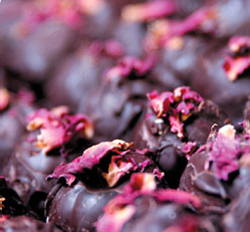
Chocolate with Rose Petals
Rose petals decorate fine chocolates by
Fritz Knipschildt
.

Growing In Popularity?

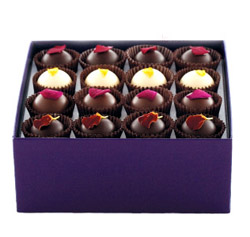
Blossoming Truffles
Blossoming truffles from Vosges Haut Chocolat are decorated with (from top) marigold, nasturtium, rose and orchid petals.

If flowers were such a popular part of cuisine in our English heritage, why has this versatile, beautiful and virtually calorie-free food faded from the our culinary world? As home gardens and personal cooks disappeared after World War I, as food trends changed and more ornate dishes gave way to simpler cuisines prepared by the lady of the house and not by a servant, as food trends changed and caterers and restaurants turned their interests elsewhere. There has been a renewed interest in edible flowers in recent years, which has been encouraging.

Still, we find that edible-flower options in restaurants are limited. With any luck, that will change with time; until then, we’ll have to be content scouring our local farmer’s markets and specialty food shops for flowers to add to our soups, toss in stir-fries and roast with pork tenderloins.

Buying & Growing Edible Flowers

Buying. While some everyday flowers are edible, not all are safe; don’t assume that you can pluck anything from your garden or the arrangement on your table and toss it into a dish. Even if you’re sure a flower is edible, be careful where you get it: don’t count on the local florist as a safe source, since flower-shop flowers are often grown with pesticides. Flowers are only edible if they are either organically grown or treated with organic pesticides like those used on fruits and vegetables.

Growing. Edible flowers are relatively easy to grow, but because you’ll be eating them, you’ll want to pay special attention to their environment. Get to know the basic characteristics of the flowers, and follow manufacturer instructions carefully. Click here to purchase The Edible Flower Garden, five assorted edible flower seeds are included in a gift tin. If gardening is not an option for you but you still want fresh, edible flowers, you can purchase them online from:

If you’d like to share other online sources for edible flowers, click here.

Using Edible Flowers

The possibilities for using edible flowers in food and beverages are as extensive as your imagination. Use the color and flavors of these natural beauties in:

  • Baked Goods: Bake fresh petals into breads, muffins and pastries for hints of floral flavor and hues. They’re especially gorgeous in delicate angel food cakes or cupcakes. You can garnish them with fresh strawberries and whipped cream and a few more blossoms for a stunning dessert.
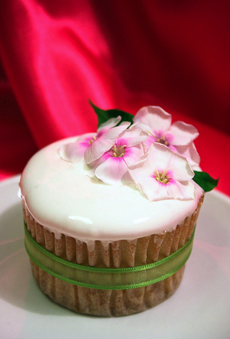
  • CupcakesCandied Petals: Find a recipe for crystallized flower petals. You can use them to accent cakes, puddings, cocktails and as a general garnish for dessert plates. (Photo of cupcakes shown on Denby Pottery Company’s Regency Green dessert plate.)
  • Cocktails, Fizzy Drinks & Hot Beverages: For visual beauty or as a palate pleaser, flowers always look and taste great when dressing up drinks. Float a blossom on top after you’ve poured the drink.
  • General Garnishes: Glamorize other foods from baked potatoes to cupcakes for extra glamour.
  • Ice Cubes: Distribute petals in your ice tray, fill with water, and freeze. Serve the flower ice cubes with iced tea or any chilled beverage. Match petals to blended teas: try white tea with rose ice cubes to cleanse the palate, or black Ceylon tea with violet ice cubes for vitality.
  • Jams, Jellies & Syrups: Some artisanal jelly makers use flowers for extra-special results. You can garnish plain jellies at the table by mixing in petals.
  • Mayonnaise: Add colorful flowers to mayonnaise for stunning lobster, crab, and shrimp salads (peppery nasturtium is a particularly good match).
  • Rubs: Rub crushed petals into game or lamb for bold color and taste. Stir them through couscous for an aromatic dish.
  • Oil & Vinegar: Steep petals in oils and vinegars prior to using to impart flower essences into the condiments. Drizzle the floral-accented base over salads, breads and appetizers. (Note: because of potential bacteria growth, don’t simply add petals or herbs directly to the bottle for long-term infusing.)
  • Soups: Sprinkle flower petals on bisques and soups to garnish with color tones and taste; or stir them in to enhance consistencies.
  • Stir-fries: Chop or sauté petals with meats and vegetables for a fresh twist on a traditional meal.

Types of Edible Flowers

Here are some the most common edible flowers that can easily be incorporated into everyday cooking and garnishing. The photos below are courtesy of Wikipedia.org.

Flower  

Borage: Cucumber-Like

Borage flowers were formerly an essential ingredient in cider or wine. Now, they are used primarily as a garnish, especially for gin-based cocktails, salads, dips and cucumber soups—they have a refreshing, cucumber-like flavor. Their flavor also makes them a delightful accompaniment to poached seafood. The leaves of the plant can be used to season cabbage (two parts cabbage, one part borage).

borage flower

Calendula or Pot Marigold: Saffron-Like

Calendula’s golden petals range from a bitter spiciness to a tangy pepper flavor. The vibrant yellow calendulas are an inexpensive alternative to saffron, though not quite as pungent. They are most commonly used to add golden hues to foods. When sautéed with onions and added to a broth with rice, calendula petals make a rich Spanish paella. The petals are also popular scrambled with eggs or stirred into soups.

calendula

Chamomile: Apple-Like

Chamomile blooms faintly resemble the scent and flavor of freshly cut apples. The petals are frequently mixed into sour cream or pounded into butter, and then added to baked potatoes for a punch of flavor. Chamomile flowers have been used for centuries in tisanes, especially in Europe, Latin America and the U.S., as a calming sleep aid, for fever or stomach treatments and as an anti-inflammatory.

chamomile

Chrysanthemum: Peppery

Chrysanthemums have a faint black pepper flavor crossed with hints of cauliflower. Prized in Asia for their medicinal properties, chrysanthemum flowers are customarily infused to make a flowery herbal tea. Several species are commercially grown in East Asia as a leaf vegetable, known as tung ho. These dark green leaves are often stir-fried with garlic and dried chili peppers.

chrysanthemums

Clover: Anise-Like

Clovers have a sweet, anise-like taste. High in protein, these petals are not easy to digest when raw, but this can be remedied by boiling them in water for 5 to 10 minutes. Dried flowerheads and seedpods are commonly ground up into a nutritious flour and mixed with other foods, or steeped in hot water for a healthy, invigorating tea.

clover
Dandelion: Honey-Like

Dandelions are sweet and honey-like in flavor. The petals contain more iron than spinach and have a high percentage of vitamin A and vitamin C. Eaten raw or cooked, dandelions are often used to make dandelion wine or soft drinks that are consumed before meals to stimulate digestive functions. Sold in most health food stores in a mixture, they are considered an excellent liver-cleansing tonic. “Dandelion and Burdock,” a naturally carbonated beverage made of fermented dandelions and burdock root, has been a long-time popular soft drink in the United Kingdom.

dandelion

Daylilies or Golden Needles: Asparagus-Like

Crunchy and crisp like a lettuce leaf, daylilies have a sweet, mild vegetable flavor, like that of asparagus or zucchini. The flowers of some species are edible and are sold fresh and dried in Asian markets as Golden Needles. They are used in hot and sour soup and moo shu pork.

daylilies

Hibiscus: Cranberry-Like

Cranberry-like in flavor, the hibiscus has an acidic character with citrus overtones. A native of Africa and certain regions of Asia, the flower is often diced and mixed into fruit or vegetable salads. The fleshy blooms are tangy, a great stand-in for seasonal and tropical fruits like mango or papaya.

hibiscus

Lavender: Floral & Smoky

Lavender is sweet and floral in flavor, with hints of smoke. When lavender is dried, it releases its most potent fragrance. (In cooking, use one-third the amount of dried lavender as you would fresh.) In the Mediterranean where it originated, lavender is used in sugars, custards, honeys, cakes, waters and vinegars. Its petals are customarily added to salads, slipped into glasses of champagne, or used as a garnish for sorbets or ice creams. We love to bake with lavender (pound cakes, cookies), use it as a garnish on frosting, and make lavender ice cream and iced tea. Lavender lends itself to savory dishes too, taking rosemary’s place in recipes for things like chunky stews and wine-reduction sauces.

lavendar

Nasturtiums or Nose Twisters: Peppery

Nasturtiums are slightly sweet with peppery notes—similar to that of watercress. These blooms are high in vitamin C and come in hues like cream, scarlet, orange, yellow and two-toned. The pale and bicolor flowers tend to be milder in taste. With a vibrant range of petal colors, these flowers make excellent complements to salads or vegetable dishes. Served as whole flowers or minced, nasturtiums rank as the most popular edible flower for culinary purposes. Whole nasturtiums can be stuffed with mousse, mascarpone or crème fraîche for an impressive appetizer. Try nasturtium mayonnaise with seafood salad. The buds are often pickled and used like capers.

nasturtiums

Pansies or Johnny Jump-Ups: Wintergreen

These petals have a mild, tart wintergreen taste that echoes their sweet, light fragrance. The pansy’s entire bloom may be eaten without extracting pistils or stamens, which make this flower ideal as dessert or salad decor because the blossoms are often served whole. Pansies come in a variety of colors and are a year-round favorite for their delicate fragrance and flavor. An elegant way to serve these flowers is to place them atop a crunchy cracker layered with cream cheese.

pansy flower

Rose: Apple-Like

Most roses are edible but as with all flowers, they must be washed well and be free of chemical pesticides. The image to the right is of the sweetbrier rose, valued for its sharp apple-like fragrance of its foliage. Roses contain so much vitamin C that during World War II, they were eaten as a substitute for citrus fruits. In Middle Eastern cuisine, rose petals are distilled into syrups and rosewater, which are incorporated into pastries and confections.

sweetbrier rose

Squash Blossom: Squash Essence

Squash blossoms of all varieties have a garden-fresh taste. All of the flavors possess a similar sweet, nectar-like squash essence. Mediterranean chefs traditionally remove the pistils and stamens from the blossoms, and stuff the petals with flavored bread crumbs, herbs and ricotta cheese for a hearty, gourmet dish. Like daylily buds, squash blossoms are frequently dipped in a light batter and fried. Acorn, patty pan squash, crookneck squash or zucchini flowers are the most popular edible squash blossoms.

squash flower


© Copyright 2005-2008 Lifestyle Direct, Inc. All rights reserved.  Images are the copyright of their respective owners.


Spread The Word: Each icon below links to a site where you can bookmark, share and comment on this article:
Dine52    del.icio.us    ma.gnolia    Newsvine    Yahoo Myweb    BlinkList    simpy    reddit


.