
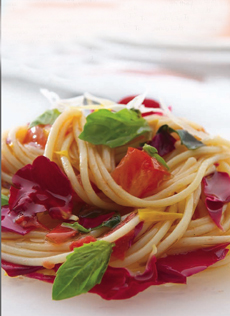
 Spaghetti with rose and sunflower petals. This recipe is in the book, “Spaghetti,” by Carla Bardi
.
|
MELODY LAN is a member of THE NIBBLE editorial staff.
|
|
April 2006
Last Updated April 2018
|
|
Edible Flowers
Page 2: Growing, Buying & Using Edible Flowers
This is Page 2 of a three-page article. Click on the black links below to visit other pages.
Buying & Growing Edible Flowers
Buying
While some everyday flowers are edible, not all are safe; don’t assume that you can pluck anything from your garden or the arrangement on your table and toss it into a dish. Even if you’re sure a flower is edible, be careful where you get it: don’t count on the local florist as a safe source, since flower-shop flowers are often grown with pesticides. Flowers are only edible if they are either organically grown or treated with organic pesticides like those used on fruits and vegetables.
Growing
Edible flowers are relatively easy to grow, but because you’ll be eating them, you’ll want to pay special attention to their environment. Get to know the basic characteristics of the flowers, and follow manufacturer instructions carefully. If you want to grow the flowers, get a copy of The Edible Flower Garden, by Rosalind Creasy. If gardening is not an option for you but you still want fresh, edible flowers, you can purchase them online from:
If you’d like to share other online sources for edible flowers, use the Contact Us link on this page.
|
|
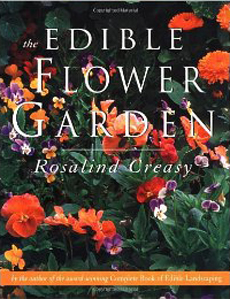
Grow your own edible flowers with guidance from The Edible Flower Garden. |
Using Edible Flowers
The possibilities for using edible flowers in food and beverages are as extensive as your imagination. Use the color and flavors of these natural beauties in:
- Baked Goods: Bake fresh petals into breads, muffins and pastries for hints of floral flavor and hues. They’re especially gorgeous in delicate angel food cakes or cupcakes. You can garnish them with fresh strawberries and whipped cream and a few more blossoms for a stunning dessert.
- Candied Petals: Find a recipe for crystallized flower petals. You can use them to accent cakes, puddings, cocktails and as a general garnish for dessert plates.
- Cocktails, Fizzy Drinks & Hot Beverages: For visual beauty or as a palate pleaser, flowers always look and taste great when dressing up drinks. Float a blossom on top after you’ve poured the drink.
- General Garnishes: Glamorize other foods from baked potatoes to cupcakes for extra glamour.
|
|
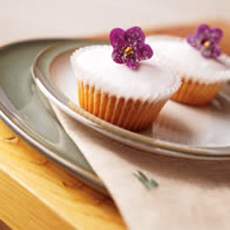
Cupcakes with candied violets, shown on Denby Pottery Company’s Regency Green dessert plate. |
- Ice Cubes: Distribute petals in your ice tray, fill with water, and freeze. Serve the flower ice cubes with iced tea or any chilled beverage. Match petals to blended teas: try white tea with rose ice cubes to cleanse the palate, or black Ceylon tea with violet ice cubes for vitality.
- Jams, Jellies & Syrups: Some artisanal jelly makers use flowers for extra-special results. You can garnish plain jellies at the table by mixing in petals.
- Mayonnaise: Add colorful flowers to mayonnaise for stunning lobster, crab, and shrimp salads (peppery nasturtium is a particularly good match).
- Rubs: Rub crushed petals into game or lamb for bold color and taste. Stir them through couscous for an aromatic dish.
- Oil & Vinegar: Steep petals in oils and vinegars prior to using to impart flower essences into the condiments. Drizzle the floral-accented base over salads, breads and appetizers. (Note: because of potential bacteria growth, don’t simply add petals or herbs directly to the bottle for long-term infusing.)
- Soups: Sprinkle flower petals on bisques and soups to garnish with color tones and taste; or stir them in to enhance consistencies.
- Stir-fries: Chop or sauté petals with meats and vegetables for a fresh twist on a traditional meal.
|
|
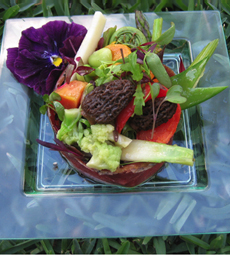
One gorgeous salad: a radicchio boat filled with yellow beets, morels, microgreens, scallion, endive, fiddlehead ferns, Roman cauliflower and a purple posy. Beautiful serving plate available at SweetFlavorFL.com. |
Continue To Page 3: Types Of Edible Flowers
Go To The Article Index Above
Lifestyle Direct, Inc. All rights reserved. Images are the copyright of their respective owners.
|

