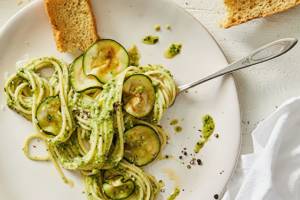
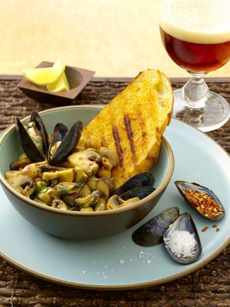
 Turf and Turf: White button and crimini mushrooms with mussels and hazelnuts. Photo courtesy of MushroomInfo.com; the recipe is on the website.
|
|
|
CAITLIN BARRETT is a member of THE NIBBLE editorial staff. She wishes that she could make a joke here about being a “fun guy.”
KAREN HOCHMAN is Editorial Director of THE NIBBLE.
|
|
November 2005
Last Updated October 2025 |
|
Product Reviews / Main Nibbles / Vegetables
Edible Mushroom Types
Page 3: Mushroom Glossary A To C
This is Page 3 of a six-page article on edible mushroom types. Click on the black links below to visit other pages. Check out our many other delicious food glossaries.
Wild & Specialty Mushroom Glossary A To C
Once, we had to wait for glorious mushrooms to come into season to enjoy them fresh, although dried versions are always available to add flavor to soups, stews, and stocks. Today, many varieties are cultivated year-round, transporting us to mushroom heaven. Mushrooms add wonderful flavor and have minimal calories. Experience all of them—the flavors are so different. Here are some of the wild and specialty (formerly wild, now cultivated) mushrooms available in the U.S.
| My Name |
Get To Know Me |
ARMANITA MUSCARIA
Is there a more famous mushroom in popular culture than the Amanita muscaria? The original 1865 black-and-white Alice In Wonderland mushroom shows the caterpillar atop a plain, pale-colored mushroom—not the iconic red and white spotted Amanita muscaria that has since become associated with books and movies. Even in the 1898 hand-colored edition of the book, the mushroom remains a pale beige/tan color with no spots. Lewis Carroll’s text doesn’t specify the type of mushroom. The association with the red-capped variety came later as other illustrators, animators (like Disney), and artists reimagined the scene with the more visually striking red-spotted mushroom. Today, even the mushroom emoji 🍄 is clearly based on Amanita muscaria. Familiar names include fly agaric, fly amanita, and toadstool. Here are the original Alice In Wonderland drawings. |

You can purchase this illustration here.
|
|
BEECH MUSHROOM
Available in brown and white, the beech mushroom grows in bunches of tiny and delicate white stems 1 to 2 inches high, topped with small light brown or cream-colored caps. The flesh of this mushroom is crisp in texture, providing a crunchy yet juicy meat. Its flavor is slightly nutty and sometimes herb-flavored when cooked. Also called clamshell, buna shimeji, and hon shimeji mushrooms. See Bunapi mushroom and clamshell mushroom, below.
|
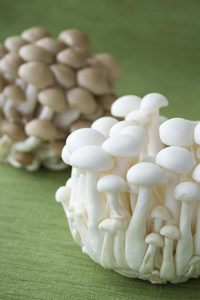
White and brown beech mushrooms from Golden Gourmet Mushrooms. Photo by Claire Freierman | THE NIBBLE. |
|
BLACK CHANTERELLE or BLACK TRUMPET MUSHROOM
A very flavorful mushroom with a trumpet-shaped cap. See trumpet royal mushroom.
|
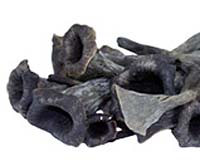
Black trumpet mushrooms. Photo courtesy of MarxFoods.com. |
|
BLACK FOREST MUSHROOM
See shiitake mushroom.
|
|
|
BROWN MUSHROOM
See cremini mushroom.
|
|
BUNAPI MUSHROOM
Bunapi is a trademarked name for the white beech mushroom; white beech is buna shimeji in Japanese. It is a combination of crunchy texture and smooth, nutty flavor. Its firmness stands up well in hearty dishes like stir fries and wild game, and with herbs like thyme and. The White Beech is somewhat bitter in its raw state, but very enjoyable once cooked. Try it in soups, stews, or your favorite sauces. It also makes a great meat substitute in your favorite recipes.
|
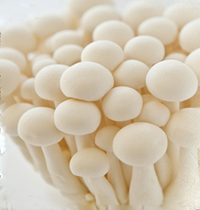
Bunapi or white beech mushrooms. Photo and information courtesy Hokto-Kinoko.com.
|
|
CAULIFLOWER MUSHROOM
Resembling a cauliflower head, this mushroom is very flavorful, but a bit chewy. It is best fried or cooked in soups or stews. Here’s how to forage for it.
|

Cauliflower mushroom. Here’s more about them (photo © Learn Your Land).
|
|
CEP, CÈPE, PORCINI or KING BOLETES MUSHROOM
Robust, meaty cèpes/porcinis can be “normal” size, two inches in diameter, or can grow to a giant eight-inch diameter, when the cap will expand from umbrella-shaped to nearly flat. The color ranges from yellow brown to dark red brown, with a firm, smooth, moist texture. Ancient Greeks and Romans prized these stubby mushrooms with their earthy and somewhat nutty flavor. Today, they are enjoyed as culinary gems all over the world. Prevalent in French cuisine, cèpes are added to tarts and buttery dishes. They are prevalent in Italian sauces, pastas, and risottos. Even the liquid from soaking the dried porcinis is a delicious ingredient in soups and sauces. They are available wild from June through November, but are also cultivated year-round. The heartiest, most savory of dried mushrooms, they are essential in deep-flavored sauces. Their meaty texture and great depth of flavor enable them to be grilled like a steak.
|
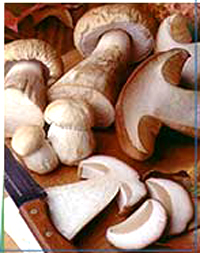
Cépe or porcini mushrooms. Photo courtesy of Fabio Pusterla. |
|
CHANTERELLE or GOLDEN or YELLOW CHANTERELLE MUSHROOM
There are several varieties of chanterelle; the one generally thought of as the chanterelle is the golden or yellow chanterelle. The most delicate and refined of wild mushrooms, chanterelles have notes of apricot in both their scent and the taste—and their color, as well; in addition to the apricot fruitiness, there is a typical mushroom earthiness. They can range from pale orange to a golden apricot color, and can also be recognized by their trumpet-like caps. Chanterelles are tender yet firm, and their wild flavors will shine even when they are used with many ingredients. They are exquisite when breaded and fried. They are available fresh for eight months a year, from the summer through February (and dried year-round). See also black chanterelle and yellowfoot chanterelle mushrooms.
|
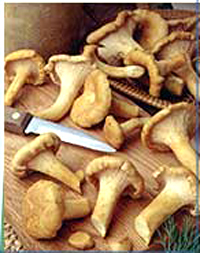
Chanterelle mushrooms. Photo courtesy of Gourmet Mushrooms, Inc. |
|
CHICKEN OF THE WOODS or SULFUR MUSHROOM
Not to be confused with the hen of the woods (Maitake), the chicken of the woods mushroom got its name because it has the texture of cooked chicken, even shredding the way chicken meat does. It is popular with vegetarians who substitute it for chicken. The mushroom is also known as the sulfur shelf mushroom.
|
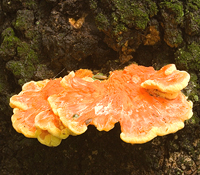
Chicken of the woods mushroom. Photo by Lev Radin | IST. |
|
CHINESE BLACK MUSHROOM
See shiitake mushroom.
|
|
|
CINNAMON CAP MUSHROOM
See forest nameko mushroom.
|
|
|
CLAMSHELL or BEECH MUSHROOM
All varieties of clamshell mushrooms have a taste that is somewhat evocative of the shellfish, but that doesn’t mean that they aren’t a versatile mushroom. They aren’t best eaten raw, but can be blanched quickly and then cooled for use in sandwiches and salads. Clamshell mushrooms pair well with seafood and meats and are excellent for tempura. Look for the brown clamshell and alba clamshell mushrooms (pictured at right).
|
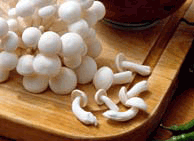
Clamshell mushrooms. Photo courtesy of Gourmet Mushrooms, Inc. |
|
CREMINI or CRIMINI or BROWN MUSHROOM
Creminis are similar in size and shape to the white button mushroom, though tan to brown in color and far meatier and earthier in taste with a firmer texture (they taste similar to button mushrooms). Creminis are actually portobello mushrooms that have been harvested while they are young, while the veil still covers the gill surface. They are excellent uncooked, as crudités or sliced into a salad; and are good stuffed, breaded and fried, sautéed, marinated, and in sauces, stocks, and soups. They’re an especially good choice for kabobs. Creminis cook more firmly and with less shrinkage than classic whites, and are a great complement to any meat or vegetable dish. They are cultivated year-round.
|
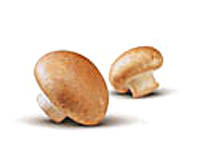
Cremini mushrooms. Photo courtesy of Phillips Mushroom Farms. |
|
CULTIVATED SPECIALTY MUSHROOM
With advances in food technology, numerous wild mushroom species can now be cultivated indoors year-round, instead of being limited to their natural growing seasons, a few months out of the year. While these are often presented as “wild” mushrooms, they do not grow in the wild; the term “wild” is accurate only when applied to mushrooms gathered (foraged‚ wild in the woods. However, cultivated mushrooms are a blessing to all who enjoy specialty mushrooms such as beech, enoki, oyster, portabella, and shiitake year-round.
|
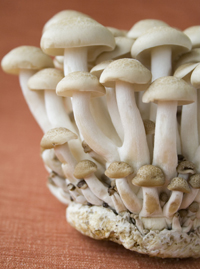
Brown beech mushrooms are one of several formerly wild varieties that are now grown indoors year-round, in an organic matrix. Photo of Golden Gourmet Mushrooms by Claire Freierman | THE NIBBLE.
|
|
CULTIVATED WHITE MUSHROOM or BUTTON MUSHROOM
Classic whites, the old reliables, can always be found at the supermarket, and when there aren’t any fresh ones, there are always (gasp) the canned variety. They have a mild taste and gain flavor as they cook. If you want to make marinated mushrooms, stuffed mushrooms, or slice mushrooms into a salad, they are a cost-effective solution. Sautéed with butter and garlic, they are always a treat. They are cultivated year-round.
|
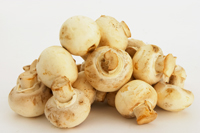
The ubiquitous white or button mushroom. Photo by Paul Cowan | BSP. |
Continue To Page 4: Mushroom Glossary D To O
Go To Article Index Above
Lifestyle Direct, Inc. All rights reserved. Images are the copyright of their respective owners.
|