Advertisement
THE NIBBLE (TM) - Great Finds for Foodies (tm)
  Sign Up | Contact Us | Email To A Friend | Blog  
Twitter RSS feed [?]


sake figures
To your health! Ceramic figures enjoy their glasses of saké. Photo by Neal Horstmeyer | SXC.
MENU


Wine

Category Main Page
Articles & Reviews


Main Nibbles

Main Page
Articles & Reviews Of Foods From A To Z


Product Reviews

Main Page
Food, Beverages, Books,
News & More


October 2005
Updated April 2009

Product Reviews / Main Nibbles / Wine

Japanese Saké Glossary

Page 3: Terms & Definitions M ~ R

This is Page 3 of the four-page Saké Glossary. Learn why saké is different from Japanese rice wine. Click on the black links below to visit other pages.


Click on the letter of the alphabet in this bar to get to a term
without having to scroll manually:

a  b  c  d  e  f  g  h  i  j  k  l  m  n  o  p  q  r  s   t  u  v  w  x  y  z


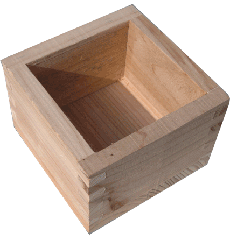
masuMasu: A wooden box, typically made from aromatic cedar but also made in lacquer, from which saké is drunk. The boxes were traditionally used to measure rice as well.

Milling or Polishing: The process of polishing off the external portion of the grain of rice to get to the starch packet at the heart of the grain, which converts into fermentable sugar and then into alcohol. There are three grades of saké based on the percent of the grain milled away: economy (futsu) saké, 30%; premium (ginjo) saké, 40%; ultrapremium saké (daiginjo), 50% or more.

Moto or Syubo: The seed mash.

Namazake: Unpasteurized or raw saké, which needs to be stored cold. Namazake, or “nama,” has a fresh, lively clarity of flavor, described as tangy and refreshing; it is quite different from pasteurized saké. There is a “green quality” and often, an herbaceous aroma from the living enzymes; some actually have a natural green tint. Namazake is also drunk young and edgy. Namazakes are hypersensitive to temperature variation; they must be refrigerated and handled with care. That is why few are exported. All types of saké (junmaishu, honjozo, ginjo-shu and daiginjo-shu) can be made as namazake. Namazakes have more acidity, which makes them good to pair with food that has strong savory qualities and citrus notes.

Nigori Saké or Nigorishu: Classic antique-style saké. This cloudy saké is filtered through a rough weave filtration system, which is how saké was made prior to modern technology (nigori means ”roughly filtered” or ”loosely filtered”). With this rough process, tiny rice particles filter through and settle on the bottom of the bottle like white sediment. While many prefer the crystal-clear saké made possible by modern multiple filtering techniques, others prefer the rough filter, which retains more flavor. The contents are shaken before pouring, creating a milky white saké that is naturally sweet and goes well with spicy cuisines, fried foods and desserts. Nigori saké  is available in economy, premium, and ultrapremium varieties. It higher in alcohol than average sakés, typically 15%.

Rice Wine: Saké is often referred to as “rice wine,” but this is inaccurate: By definition, wine must be fermented from fruit. Rice is fermented from grain, like beer, although the production process is different, and saké produces no carbonation. From a body and flavor perspective, it is closer to wine than beer, although like beer, it is meant to be drunk fresh, and does not age like wine. Saké is not a distilled beverage, and thus is not in any way related to gin, vodka or other spirits.


Continue To Page 4: Terms S Through Z

Go To Page Index Above


© Copyright 2005- 2010 Lifestyle Direct, Inc. All rights reserved. Images are the copyright of their respective owners.


Spread The Word: Each icon below links to a site where you can bookmark, share and comment on this article:
Dine52    del.icio.us    ma.gnolia    Newsvine    Yahoo Myweb    BlinkList    simpy    reddit


.