Glossary Of Natural & Artificial Sweeteners C To K
An asterisk (*) indicates a natural product, i.e., one derived principally from a plant or other natural product.
CANE SUGAR*
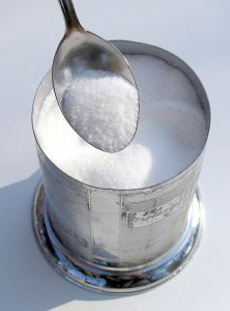
Sugar obtained from refining sugar cane. This sugar, which is the disaccharide sucrose (found in both cane sugar and beet sugar), is called table sugar.
CYCLAMATE
Cyclamate, which used to be in the U.S. versions of Tab and Fresca, has been banned in the U.S. since the 1970, after studies showed a link to bladder cancer in rodents. Many believe the research to be flawed. Cyclamate is legal in Canada and in dozens of other countries and is found in the Canadian Sweet ‘N Low product instead of saccharin; instead, it is saccharin that is banned in Canada. The FDA is reconsidering the reinstatement of cyclamate.
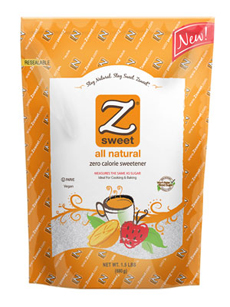
Erythritol, a sugar alcohol, is a natural sweetener that has been made for some time, but not in enough quantity to be marketed to consumers. Its components are recognized as safe by the Food and Drug Administration. Like maltitol, it is a polyol (sugar alcohol) and belongs to a group of carbohydrate-based sweeteners. It is a white crystalline powder with a clean, sweet taste that is similar to sucrose. Erythritol is naturally present in such fruits as grapes and melons, in mushrooms and in fermented foods such as wine, soy sauce and cheese. Unlike maltitol, it does not have a laxative effect. Like maltitol, it is also much pricier than aspartame, sucralose and other sugar substitutes. At just .2 calories per gram, it is considered calorie-free by the FDA.
ZSweet is a granulated sugar substitute made from erythritol, available in bulk (above) and individual packets. If you can’t find it locally, you can buy it online.
FRUCTOSE*
Fructose, along with glucose, is a component of sucrose (table sugar). It is often referred to as fruit sugar because of its presence in fruits. Fructose is also added to foods and beverages in the form of crystalline fructose (made from corn starch) or high fructose corn syrup (HFCS), which is another combination of fructose and glucose. Like sucrose, fructose provides four calories per gram, 16 calories per teaspoon; but it has a low glycemic value. Fructose is sweeter than table sugar, so less is needed as a sweetener.
Glucose is the most common form of sugar, found extensively in the bodies of living things. It occurs abundantly in ripe grapes and in honey; commercially it is produced in great quantities from starch. It is only about half as sweet as cane sugar (sucrose). It is also called dextrose, diabetic sugar, grape sugar and starch sugar.
GLYCEMIC INDEX
Introduced in 1981, the Glycemic Index (GI) is a system that measures the effect of carbohydrates on blood glucose. Carbohydrates that are rapidly digested and absorbed have a high glycemic index; those that are absorbed and digested slowly have a low glycemic index.
Agave nectar GI: 32; 1 teaspon 20
calories; 1.5 times as sweet as sugar
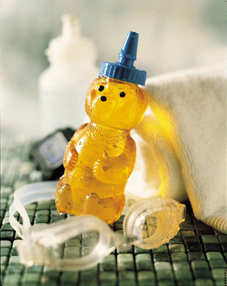
Many people prefer natural honey to refined table sugar. However, it is higher in calories, with a modestly lower GI. Photo courtesy National Honey Board.
HIGH FRUCTOSE CORN SYRUP
(HFCS)
*
High fructose corn syrup (HFCS) is a modified form of corn syrup that has an increased level of fructose. A process developed by Japanese researchers in the 1970s can increase the fructose content of corn syrup to 42%, 55%, or 90%. Because fructose is much sweeter than glucose, the overall sweetness of the syrup is increased and it becomes a more cost-effective than sugar in food processing. Until the 1970s most of the sugar in foods came from sucrose derived from sugar beets or sugar cane, which were 50/50 fructose and glucose. Some nutritionists say that HFCS should be avoided due to its possible links with obesity and diabetes. Also cited as reasons to avoid HFCS are that it is highly refined, that it might be produced from genetically modified corn, that various molds found on corn might leave harmful byproducts in the final product, or that corn products in general should be avoided. Other nutritionists say that HFCS is no more or less harmful than other forms of sugar and that all sugars should be consumed sparingly.
Americans drink lots of high fructose corn syrup.
ISOMALT*
A sugar alcohol that is widely used in sugar-free hard candies, chewing gums and some chocolate. It contains half the sugar and has a low GI response.