LOW-CALORIE SWEETENERS
Low-calorie sweeteners—including zero-calorie sweeteners—provide a sweet taste with few or no accompanying calories. Before being approved by the FDA for use in the United States, sweeteners must undergo extensive safety testing. All FDA-approved low-calorie sweeteners meet the same standard of safety and are safe for consumption by pregnant women and children. Six low-calorie sweeteners are currently approved for use in the United States: acesulfame potassium (Ace-K), aspartame, neotame, saccharin, sucralose, and tagatose. The FDA is considering petitions to approve alitame and cyclamate, both of which have been approved for use in numerous other countries.
If you want to cut back on sugar, there are numerous options in this glossary (photo SXC).
MALTITOL*
Maltitol is a polyol (sugar alcohol) made by hydrogenation of maltose obtained from starch. It is considered to be the best substitute for sucrose. Maltitol has approximately 90% of the sweetness of sugar but just half the calories—2.1 calories per gram as opposed to 4.0 calories per gram for sugar (i.e., it reduces calories by 12% to 15%). Its high sweetness allows it to be used without being mixed with other sweeteners. It gives a creamy texture to food, so it can also be used to replace fat. It works especially well in the production of sugarless sweets: chocolates, hard candies, baked goods, confections, and ice cream. High-end manufacturers also use it in chewing gum, but because it is a more costly product, many manufacturers use other sweeteners.
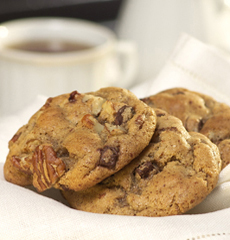
Cookies made with maltitol. You can buy them online. Photo courtesy Charleston Cookies. Read our review.
Maltitol is made from both corn and wheat. The wheat-derived product is said to be of higher quality, in that it causes less gastric distress when consumed in quantity (see sugar alcohol for details). Maltitol is also known under its trade names Maltisorb® and Maltisweet®.
MANNITOL*
A sugar alcohol used in chewing gums and mints.
MONKFRUIT*
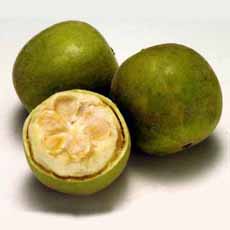
A natural sweetener made from the extract of a small Asian melon, lo han kuo (also spelled lo han guo and luo han kuo, botanic name Siraitia grosvenorii), a sweetener derived from the fruit has been used as a sweetener in China and Southeast Asia for generations. It is 200 to 250 times as sweet as table sugar. A low glycemic index makes it appropriate for diabetics. It is very stable under high temperatures and thus suitable for cooking and baking. It is currently labeled a dietary supplement by the FDA.
Monkfruit, or lo han kuo. Photo by Kasuga Huang |
Wikimedia.
NATURLOSE*
Naturlose,™ is a brand name for a non-food version of tagatose made by Arla Foods, intended for use in cough syrup, lozenges, toothpaste, mouthwash and cosmetics such as lip gloss. The product has been available since the end of 2003.
NEOTAME
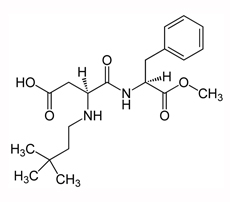
Neotame, made by NutraSweet, is an artificial non-caloric sweetener and flavor enhancer with a clean, sweet, sugar-like taste. In 2002, it was granted approval by the FDA for use in baked goods and desserts, carbonated soft drinks and other beverages, candies, chewing gum, and yogurt and pudding-type products. It is the sweetest of all products, measure for measure, about 8,000 times sweeter than sugar. Neotame is a synthetic derivative of a combination of aspartic acid and phenylalanine—the same two amino acids that are used to make aspartame.
The chemical structure of Neotame. Image courtesy Jü | Wikimedia.
Neotame is more stable than aspartame for cooking and baking. Unlike aspartame, neotame isn’t broken down in the body into the amino acid phenylalanine, which is toxic to people with phenylketonuria (PKU). It is rapidly metabolized and completely eliminated. The FDA Acceptable Daily Intake is 18 mg per kg.† As of this writing, there are no consumer products available in the U.S., due to the recency of neotame’s FDA approval. If this sounds like time enough as of this January 2009 update, note that the petition to the FDA was filed in 1997.
Only after the product was approved five years later did manufacturers begin to think of testing it in products, substituting neotame for their current non-caloric sweeteners. It takes years of product development, consumer testing, and then limited test markets before a manufacturer will risk a roll-out. According to the December 2008 issue of Dr. Janet Starr Hull’s “Alternative Health & Nutrition” newsletter, a number of beverages have “recently” been introduced in Australia and New Zealand, where neotame was approved in August 2001. Here’s how Neotame compares to other sweeteners.
_____________
†FDA-established acceptable daily intake (ADI) limit per kilogram (2.2 pounds) of body weight. Product consumption equivalent for a 150-pound person.
NO SUGAR ADDED
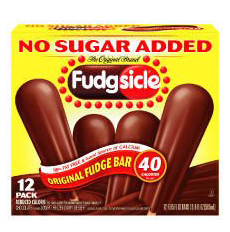
This is not the same as sugar-free; while No Sugar Added products may not contain table sugar (sucrose), they substitute other naturally-occurring sugars such as dextrose, maltose, fructose, sorbitol or lactose. All of these are simple carbohydrates that can raise blood sugar levels, and they have calories. See sugar-free.
POLYOLS*
Sugar alcohols, a group of naturally derived, sugar-free sweeteners. See sugar alcohols.
No sugar has been added, but the product may still contain natural sugars from other ingredients. Photo courtesy Unilever.
PUREVIA*
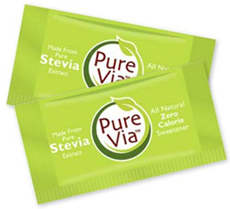
Pepsico’s branded, zero-calorie sweetener is made from rebiana, a compound found in the leaves of the stevia plant. PureVia is an all-natural, zero-calorie sweetener made from the pure, sweet extract of the stevia plant. Its main sweetening ingredient is Rebaudioside A, commonly known as “Reb A,” a high-purity extract that is the sweetest component of the stevia plant.
PureVia, a brand of stevia-based sweetener made by the producers of Equal. You can buy it online in bulk or in packets. Photo courtesy Merisant Company.
REBIANA*
A compound in the leaves of the stevia plant. In July 2007, Coca-Cola and Cargill corporations announced that they had been jointly developing a new low-calorie sweetener, with the working name Rebiana. In December 2008, federal regulators approved two branded versions of rebiana-based sweeteners. Cargill is marketing the sweetener Trivia from Coca-Cola; PepsiCo’s branded rebiana-based sweetener is called PureVia.
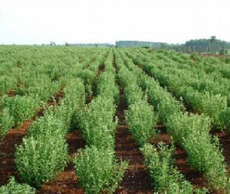
A field of stevia plants, source of rebiana. Photo courtesy Trent Schneid.
REB B
Reb B, or Rebaudioside B, is a natural, zero-calorie sweetener derived from the stevia leaf (Stevia rebaudiana). It is a minor steviol glycoside found in only trace amounts in the plant, but is now commercially produced through a bioconversion process to make it a viable, highly soluble sugar substitute for use in food and beverages. Sweegen’s Bestevia® brand has a coconversion process that is patented and converts other stevia leaf extracts into this specific target molecule. The taste profile of Reb B can differ from other stevia glycosides. I can be used alone or in combination with other stevia sweeteners.



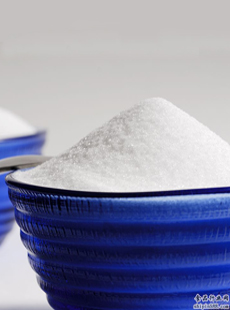 Maltitol, one of the most sugar-like of the sugar alcohols. Photo courtesy SHChemGroup.com.