THE NIBBLE (TM) - Great Finds for Foodies (tm)


RSS feed

Brewed Tea
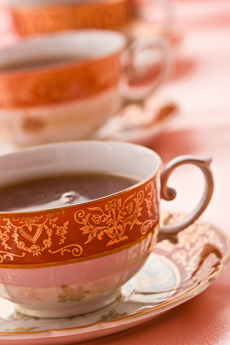
Fine tea should be drunk without milk or sweetener. Photo by Gilbert Tremblay.

MENU


Teas

Category Main Page
Articles & Reviews


Beverages

Category Main Page
Articles & Reviews


Main Nibbles

Main Page
Articles & Reviews Of Foods
From A To Z


Product Reviews

Main Page
Foods, Beverages, Books,
News & More


January 2006

Main Nibbles / Beverages / Teas

Brewing The Perfect Cup Of Tea

Preparing A Superior Cup Of Tea Is An Art And A Science


Much is written about making the perfect cup of tea. With more people investing in fine loose teas, there’s an art and a science to brewing, starting with the vessel.

  • Tea should be brewed in a porcelain, ceramic or glass pot or cup—aluminum can impart a metallic taste in the tea infusion.
  • Never pour tea into a carafe that is also used for coffee. Unless carafes are scrupulously scrubbed after each use—not just washed with soap and water—coffee oils remain and will transfer slight nuances of coffee flavor to the tea.

Detailed information follows on:

Boiling The Water

Always boil fresh-drawn cold water. Purists will let the water flow freely from the faucet for a minute or two to allow it to become fully aerated; this provides the most flavorful tea. Bring the water to a rolling boil, but do not let it continue to boil, as this will boil out the oxygen. Similarly, don’t re-boil previously heated water: the tea will taste flatter because it will no longer be aerated.

  • Black and oolong teas should be brewed with boiling water.
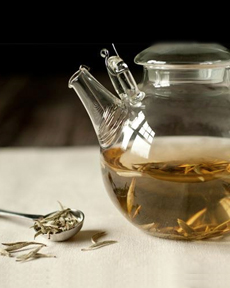
  • Green tea and white teas can get bitter when brewed with boiling water. You can either let boiled water cool for three to five minutes, or let the water heat to just White Teaunder boiling.

Note: The quality of the water is as important as the quality of the tea. If you prefer to drink bottled water over your local tap water, the same flavors you don’t like from the tap will carry over to your tea. Tea is much more subtle in flavor than coffee, where the minor flavors in water are more readily covered up.

  • Consider installing a carbon filter (not an inexpensive screw-on at the faucet, but an under-the-sink model—you can get one for about $200 plus installation). If you drink fine tea straight (without milk and sugar, as it should be drunk), you’ll appreciate the difference.
  • If you don’t have a filter but do have chemical- or mineral-tasting water, use spring water. What you lose in the oxygenation from running tap water you gain in purity of flavor. Water from a spring water dispensing system, e.g. five-gallon containers, will also provide oxygenated water.
  • Soft water is best for tea. Hard water is not ideal: it can leave a film of oil floating in the cup, which is the interaction between the flavonoids in the tea and calcium hydroxide in the water.

Measuring The Tea

A scientist would tell you that the amount of loose tea needed varies among types of tea because because of density. Look at the different leaves you own: some are large and unfurled, others are dense and tightly-packed. A teaspoon of each will not weigh the same.

However, unless you’re set on measuring out your tea in grams, it’s easiest to measure with a regular flatware teaspoon. Use a rounded teaspoon of tea per 8-ounce cup, and add “one for the pot.” The amount of tea may look meager, but it expands three-fold once it is infused.

Brewing The Tea

Perfectionist brewers like to pre-heat the ceramic or glass pot by boiling some boiling water in it, swirling it around, and pouring it out before adding the tea and the brewing water. This helps to keep the tea  hot longer. We use a microwave-safe pot and prefer the modern way of pre-warming the pot: 40 seconds on high.

Tea InfuserAfter you put the leaves in the pot, pour the boiled water over the leaves and put the lid on the pot to retain the heat as the water infuses the leaves (if brewing in a cup, put the saucer or a second saucer over the top of the cup).

Set a kitchen timer and let the tea brew per the schedule below, to extract the maximum amount of flavor from the leaves without extracting bitterness (which can happen when the leaves are infused for an excessive amount of time). The reason there are ranges is that within a preparation of tea (white, green, oolong and black refer to how the tea is treated after it is plucked), there are many varieties (Assam, Ceylon, Earl Grey, English Breakfast, Jasmine, Lapsang Souchong are all different black teas). Some have large leaves, some have small

  • 2 to 3 minutes for white tea @ 200°F
  • 3 to 4 minutes for green teas @ 180°F
  • 4 to 5 minutes for oolong teas @ 190°F
  • 4 to 6 minutes for black teas @ 212°F
  • Herbal teas, which are not made from the tea plant Camellia sinensis but from other plant leaves, roots, and berries, require longer steeping time to infuse their flavors—depending on the particular tea:
    - 5 to 7 minutes for most herbal teas @ 212°F
    - 10 minutes for with rooibos (red bush) teas @ 212°F

In general, tea bags should be steeped for less time because they do not contain whole leaves, and broken pieces brew more quickly. However, some brands of gourmet tea bags do contain whole leaves, so determine what you are brewing.

The strength of tea cannot be judged by its color. Some varieties of tea produce a Glass Of Tealighter liquid (called the liquor) than others. If you are want a stronger tea, use more tea rather than brewing it longer, which won’t add taste but can add bitterness.

Many people like the neatness of brewing loose tea with a tea ball. This works on an individual cup basis, because not much tea is needed and the leaves can unfurl and move around to achieve maximum infusion while constrained within the ball. The largest of the balls, however, don’t provide enough room for an ideal infusion of tea for eight people.

  • Stir the contents with a spoon a few times during the brewing period. This allows the tea to unfurl and move freely in the water.
  • At the end of the brewing period, stir the pot one last time and pour the tea into cups.
  • if your pot does not have a built-in straining mechanism, use a fine tea strainer to catch the leaves.
  • Don’t allow tea to remain in the pot, sitting on leaves. The tea will brew too strong and often gets bitter. Either use an infuser basket or a tea press (one of our favorite is the IngenuiTea from Adagio). Or, strain the remaining tea into a second pot for refills: the fine leaves in the first pot can be re-used for a second brewing (also known as an infusion).

Whichever method is used, the principles of brewing tea are the same.

Using Tea Bags

The basic principles are the same for tea bags. Use two tea bags to make a six-cup pot of tea. Brew for 4 to 5 minutes.

  • Dip the tea bag several times during brewing—the agitation of the leaves inside the bag improves brewing.
  • When the brew time is up, give press the tea bag with a spoon to release the last bit of flavor and color from the tea; then remove and discard the bag.

The Samovar

The Russian method for preparing tea uses a samovar, a specially designed kettle. A small teapot with strong brewed tea is kept warm on a kettle called a samovar, which has is always at the ready with boiled water during the long, cold winter months. Tea is traditionally drunk in a glass, in finer households the glass has a silver holder. The tea concentrate is added to the glass, then hot water from the samovar. Cherry preserves are the sweetener of choice, added with a spoon. During the winter season, water is always boiling in the samovar so that black tea can be enjoyed all day long. Russians often drink tea with rum or vodka in order to keep warm.

Samovar spacer Modern Samovar spacer Tea Glasses
A 19th-century samovar. The small pot on the top holds the tea concentrate and is warmed by a flame underneath. The large urn holds the boiling water and is warmed by a central heating unit. Photo courtesy of Wikipedia.org.

  A modern samovar by Mikasa, is popular with contemporary Russians. “To sit around the samovar” means to have a cup of tea and chat.
  Drink your tea Russian-style in a pewter-handled glass. Add a spoonful of cherry preserves instead of sugar. Simple, elegant lines fit with both modern and classic decors. Click here for more information.

Making Iced Tea

Because ice will dilute the strength of the tea, use double the quantity of either loose tea or tea bags to make a whole pot of strong tea. After brewing, pour into individual ice-filled glasses or a pitcher. Iced tea can be refrigerated. (The correct terminology is iced tea, not ice tea: the tea is served cooled or iced instead of hot.)

Sun Tea

Campers have learned to make sun tea: one places tea bags and water in a glass or plastic container. It sits in the sun for several hours, where solar heat brews the components into a weak tea. This is a method of necessity, not of choice: fine tea needs a fast infusion of boiling or near-boiling water to fully release its aromatic oils and to create a hearty brew.

Serving & Drinking The Tea

After the leaves have fully infused the water, gently stir the tea before pouring it into cups (or, if brewed in a cup, before drinking). Our favorite teapots have built-in strainers. If you have brewed loose leaves in a pot, you can hold a beautiful silver tea strainer between the spout of the pot and the teacup, to catch the leaves that escape. A proper tea service also provides a separate pot of hot water to dilute the brewed tea if it is too strong for a guest’s preference.

Pouring TeaIf all of the brewed tea is not served immediately, pour the remainder into a separate pot so that the leaves do not continue to infuse.

The finest teas are drunk straight, with no additives (milk, sweetener, lemon), so that the connoisseur can appreciate the unique flavor nuances of the tea. A fine tea, brewed properly, is not bitter, weak or too strong and does not require enhancement. Asians, the original tea drinkers, look at Western additions to tea the way Westerners would look at Asians adding sugar and milk to wine.

  • However, there certainly are many inferior teas that need enhancement to make them more palatable.
  • Even with finer teas, from the onset Europeans added sweeteners, just as they sweetened the chocolate beverage that came from Mesoamerica at roughly the same time.
  • Cream is too heavy an additive: it will mask the tea flavors. If using a milk product, stick to whole milk.
  • Green and white teas are traditionally served without milk, and also taste better without it, as do most herb teas.

Learn About Serving Tea

Here are some of our favorite books about serving tea. They’re inexpensive, and each is beautifully illustrated:

Having Tea spacer London Ritz spacer Tea and Etiquette
Having Tea: Recipes and Table Settings, by Tricia Foley and Catherine Calvert. A cookbook and style book with stunning locations plus recipes, menus, table settings, and serving ideas for tea. Go to tea at the Savoy Hotel in London, and a tea dance at London's Waldorf. You’ll want to have tea every day. Click here for more information.
  The London Ritz Book of Afternoon Tea, by Helen Simpson. A book that captures the essence of this traditional British occasion and provides the reader with all the Ritz expertise in the ceremony as well as over 50 recipes, illustrated with passages from Dickens to Oscar Wilde and charming drawings. Click here for more information.
  Tea and Etiquette: Taking Tea for Business and Pleasure, by Dorothea Johnson. The customs and courtesies associated with serving tea as an alternative to the business lunch or dinner, or as a social event. Written by one of America's foremost authorities on etiquette and protocol. Click here for more information.

To see the “Glossary of Tea Terms,” the “History of Tea,” “Tea Facts,” and reviews of our favorite teas, click here.

© Copyright 2005-2008 Lifestyle Direct, Inc.  All rights reserved.  Images are the copyright of their individual owners.


Spread The Word: Each icon below links to a site where you can bookmark, share and comment on this article:
Dine52    del.icio.us    ma.gnolia    Newsvine    Yahoo Myweb    BlinkList    simpy    reddit


.