THE NIBBLE (TM) - Great Finds for Foodies (tm)


RSS feed


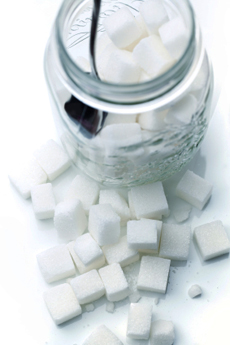
Spoon of SugarA sprinkling of sucrose—good old granulated table sugar. Photo by Stuart Whitmore | SXC.
MENU


Honey, Sugars

& Syrups

Category Main Page
Articles & Reviews


Main Nibbles

Main Page
Articles & Reviews Of Foods From A To Z


Product Reviews

Main Page
Food, Beverages, Books,
News & More


November 2006
Updated October 2007

Product Reviews / Main Nibbles / Honeys, Sugars & Syrups

How Sweet It Is

A Glossary Of Sugars, Syrups And Sweeteners


Who knew there were so many sugars...or syrups? One thing’s for sure...if you want a sweet life, there are plenty of products to flavor it. If you’d like to suggest additional words for inclusion in our dictionary of sugar and syrup terms and definitions, click here. For a look at a sugar specialty company, check out the U.K.’s Billington’s. You also may be interested in our article and glossary on sugar substitutes.

You can click on the letter of the alphabet in the bar below to get to a term
without having to scroll manually.

a  b  c  d  e  f  g  h  i  j  k  l  m  n  o  p  q  r  s  t  u  v  w  x  y  z

This material is copyrighted and cannot be reproduced in whole or in part
without written permission. Write to Editors at TheNibble.com.


Agave: Agave syrup comes from the sap of the maguey cactus, found in Mexico and also used to make tequila. It is about 25% sweeter than sugar, and because of its composition, 90% fructose/10% sucrose, it has a low glycemic index score (40 to 45, which means it affects blood sugar levels less dramatically than regular sugar). It also contains trace minerals such as calcium, iron, magnesium and potassium.

Barbados Sugar: See Muscovado Sugar.

Barley Malt Syrup or Barley Syrup: Made from soaked and sprouted barley, which is then dried and cooked down to a syrup, barley malt syrup tastes a bit like molasses, and it's not as sweet as sugar or honey. It also has a high percentage of maltose, which gives it a low glycemic index score. Mostly used in beer-making and bread-baking, barley syrup tastes a bit like molasses and rice syrup, which can be substituted for it (use 2/3 cup molasses). See also Rice Syrup.

Bar Sugar:  Superfine sugar.

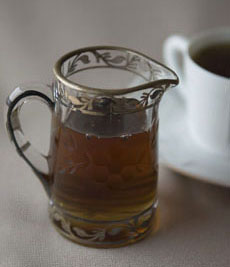
Bar Syrup or Simple Syrup or Sugar Syrup: A mixture of equal parts of sugar and hot water, made by gradually stirring one pound of granulated sugar into 13 ounces of water over a medium heat until the sugar dissolves and the mixture becomes syrupy. Created because granulated syrup would not dissolve easily in bar drinks, it is used in mixed drinks, as well as cooking. Because granulated sugar does not dissolve easily in cold drinks, an effective sweetener is used in syrup form.

Beet Sugar: Sugar derived from sugar beets.  See Sugar Beet.

Berry Sugar: Superfine or Ultrafine Sugar.

Birch Syrup: A sweetener made from the sap of birch trees, much the same way as maple syrup. It is used for pancake or waffle syrup, to make candies, as an ingredient in sauces, glazes, and dressings, and as a flavoring in ice cream, beer, wine and soft drinks.

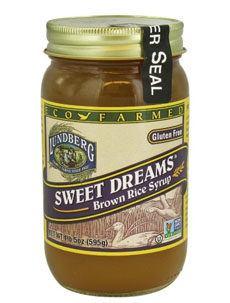
Brown Rice Syrup or Rice Syrup. A low-glycemic syrup (its complex sugars are absorbed more slowly into the bloodstream) that’s about half as sweet as table sugar.  Also called rice bran syrup and rice malt.

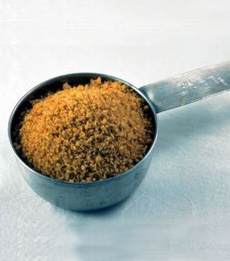
Brown Sugar: Brown sugar is white sugar with some of the molasses added back in. Raw sugar is naturally brown (and called unrefined or natural brown sugar); during the refining process, the molasses in the sugar is spun off into a separate product (molasses is considered a by-product of sugar refining). A substitution for dark brown sugar can be made at home by mixing white granulated sugar using one tablespoon of molasses per cup of white sugar, blending thorough blending will yield dark brown sugar; between one and two teaspoons of molasses per cup for light brown sugar (the ingredients can be added to a recipe without mixing them).  Substituting brown sugar for white sugar in recipes ads misture and a hint of caramel flavor. See these specialty brown sugars: Dark Muscovado, Demerara and Turbinado. Brown sugar is moist, and when the moisture evaporates it will harden. It can be kept in the refrigerator; or else in an airtight jar. If it hardens, it can be softened in the microwave, or by the old-fashioned technique of adding an apple wedge to the bag and waiting a few days for the sugar to soften.

Cane Juice or Evaporated Cane Juice or Unrefined Dehydrated Cane Juice: An organic product, evaporated cane juice is sugar that does not go through the final stages of purification and whitening by chemicals. Evaporated cane juice is not liquid, but crystal form. It is 85% to 95% sucrose, compared to 99% to 100% for regular sugar. The cane is crushed, producing cane juice, which is clariied and concentrated through heating and evaporation; the raw sugar crystals are separated from the remaining syrup (molasses) by centrifuge. TThe result is a minimally processed, full-flavored sweetener that can be substituted for white sugar, used by people who do not want chemicals in their food. With regular sugar, chemicals would then be used used to remove impurities, and whiten the product.

Cane Sugar: Sugar derived from sugar cane. Both beet and cane sugars are 99.95% sucrose; the remaining .05% are trace minerals and proteins. Many bakers claim that this tiny fraction makes a difference, and that cane sugar performs better. In may be true: molasses made from beet sugar is considered too bitter for human consumption and is used for animal feed. See Sugar Cane.

Caster Sugar or Castor Sugar: The British term for what Americans call superfine or ultrafine sugar.

Chinese Sugar or Chinese Rock Sugar:  See Rock Sugar.

Chocolate Syrup: A syrup made from unsweetened cocoa powder, corn syrup and flavorings. It is used to flavor milk, as a sundae topping, and in a broad variety of food preparation and garnishing applications.

Cinnamon Sugar: A mixture of granulated sugar and powdered cinnamon, popular on buttered toast and puddings. It is sold as a commercial mixture, or can be easily made using 1 part cinnamon to 7 parts sugar.

Coarse Sugar or Decorating Sugar: Granulated sugar processed very coarsely for baking with a a larger grain size than regular granulated sugar, that tends not to change color or break down at high temperatures. It can be colored and is similar to sanding sugar, but is a larger grain than sanding sugar. It is used as decoration to give a jewel-like appearance. Also called crystal sugar and crystallized sugar.

Coconut Sugar: A brownish sugar made from the sap of the coconut palm, coconut sugar has a creamy, caramel-like sweetness used primarily for making sweets and desserts, but also in curries and rich sauces for savory dishes. Because it is not highly processed like regular brown sugar, the color, consistency, flavor and level of sweetness can vary from batch to batch, even within the same brand and cooks need to add enough “to taste.” Palm sugar is often used as an interchangeable term, and it can be substituted for coconut sugar; although palm sugar is made from the sap of the palmyra or sugar palm. Brown sugar can be substituted for either; but for sweetening light-colored dishes, plain granulated sugar should be used. See also Palm Sugar.

Coconut Syrup: Found in Hawaii where it’s popular as a pancake syrup and in mixed drinks.

Confectioner’s Sugar or Powdered Sugar: Granulated sugar that has been crushed to a fine powder with 3% cornstarch added to prevent lumping. It dissolves readily and is also used decoratively, as a fine dusting on desserts. Sugar labeled XXXX is slightly finer than that labeled XXX, but they can be used interchangeably. One and three-quarters (packed) cups confectioners’ sugar equals 1 cup granulated sugar. Known as icing sugar in Great Britain (because it is often used in icings) and sucre glace in France.

Corn Syrup: Ubiquitous in the U.S. and not elsewhere, this thick, sweet syrup is known as glucose syrup outside the U.S. and Canada because it is composed mainly of glucose, corn syrup is made from corn starch. It is used to sweeten soft drinks, ice cream, ketchup, breads and many other mass-produced foods. It is made in light and dark corn syrup: the light is almost clear, with a delicate flavor; dark corn syrup has a more pronounced, molasses-like flavor; but they can be used interchangeably in recipes. While some food purists decry the use of corn syrup in recipes, even good manufacturers use it because corn syrup doesn’t crystallize and turn grainy in cold temperatures, so it keeps a good consistency for fudge and caramel sauces and and candies. In mass production, baked goods made with corn syrup are moister and stay fresher longer than those made with sugar. See also High Fructose Corn Syrup.

Crystallized Sugar or Crystal Sugar or Sugar Crystals: See Coarse SugarRock candy is essentially large sugar crystals.

Date Sugar: A sweetener made from ground, dehydrated dates.  It is is high in fiber, and is a good source of vitamins and minerals, including potassium, magnesium, calcium, iron and phosphorus. Date sugar is used in baking and to sprinkle on foods, but does not dissolve when added to liquids.

Decorating Sugar: See Coarse Sugar.

Demerara Sugar: A specialty raw sugar that takes its name from the Demerara colony in Guyana, which was the original source of this type of sugar. It is normally medium brown in color, the natural color of cane sugar, different varieties can be more golden. It has a rich aroma and a crunchy texture and a mild molasses flavor, and can be enjoyed with coffee, cereal, sprinkled on fruit and as a decor on baked goods.

Doughnut Sugar or Snow Sugar or Non-Melting Sugar: A product similar to confectioners’ sugar that doesn’t melt as easily so it can be used on doughnuts and other pastries.

Extra-Fine Granulated Sugar:  Standard table sugar or granulated sugar.

Fructose or Fruit Sugar: A simple sugar found in honey and in fruit. It is much sweeter than sucrose (table sugar from sugar cane or sugar beets). A teaspoon of granulated fructose has about the same number of calories as a teaspoon of granulated sugar, but fructose is roughly twice as sweet. Many diabetics use it since it absorbs more slowly than granulated sugar.

Fruit Syrup: Fresh fruit is slow-cooked with sugar, corn syrup and water to create a fruit-flavored simple syrup. For commercial products, citric acid is generally added to preserve the color. The syrups are used in every way any syrup is used: as a condiment, general food and beverage flavor accent and a food garnish.

Golden Brown Sugar: Light brown sugar.  See Brown Sugar.

Golden Caster Sugar: A light, unrefined, superfine sugar with a subtle buttery taste, that can be used instead of refined white caster (superfine) sugar in shortbread, meringues and sponges.

Golden Icing Sugar: An unrefined specialty sugar with a natural honey color and a more rounded flavor, used for butter cream, cake fillings, dessert pastry, icings and meringues.

Golden Syrup: An amber-colored, multipurpose syrup popular in the U.K. that is used for baking and as an ice cream and pancake topping. Made from evaporated sugar cane juice, it is a by-product of the process of obtaining refined crystallized sugar. It is thicker and more flavorful than light corn syrup.

Granulated Sugar: Table sugar: pure white crystalline sucrose, ground to fine granules. Most of the original flavor and color compounds are removed during processing. Also called extra-fine granulated sugar, fine granulated sugar, regular sugar, standard granulated sugar and table sugar.

Granulated Sugar Cane Juice:  See Sucanat.

High Fructose Corn Syrup (HFCS): A sweeter form of corn syrup made from corn starch in a process developed in the 1970s. It is used by manufacturers as a substitute for ordinary sugar (sucrose) in soft drinks and other consumer goods. HFCS in beverages seems to have the effect of stimulating the appetite. This, coupled with the pure caloric content of beverages sweetened with HFCS, is thought to be a cause of increased levels of obesity.

Honey: Unlike the other syrups on this list, honey is a pure, natural product to which nothing is added; but it meets the definition of a syrup. A sweet and viscous fluid produced by bees and other insects from the nectar of flowers, it can be used in the same cooking, baking, and flavoring applications as other syrups. Its flavor is influenced by the type of plant tapped by the bee (clover, orange blossom, sage etc). Honey consists of equal parts of sucrose and fructose, plus trace minerals and pollen. It is 25% to 50% sweeter than sugar. Along with maple syrup, it is an almost completely unrefined product.

Icing Sugar:  See Confectioners’ Sugar.

Inverted Sugar Syrup: A sucrose-based syrup used largely in commercial food production like baking. It is treated with the enzyme invertase and/or an acid, giving it a more rounded sweetness and preventing crystallization. Golden syrup has undergone a partial inversion.

Jaggery or Palm Sugar or Gur: An unrefined brown sugar made from the palm sap or sugar cane juice with a distinctive sweet, winey fragrance and flavor. Popular in India, it comes in several forms, the most popular being a soft, honey-colored, buttery texture used as a spread and a solid tan cakelike form that crumbles, used to sweeten cereal and other foods.

Java Sugar: See Coconut Sugar.

Karo Syrup:  A brand of dark corn syrup.

Maltose or Malt Sugar: Malt sugar. Not a consumer product, it plays a role in the fermentation of alcohol by converting starch to sugar.

Maple Sugar: Dried and granulated maple syrup. Used on cereal, toast, yogurt, pudding and ice cream.

Maple Syrup: A largely unrefined sweetener made from the sap of maple trees, maple syrup is the boiled sap of the sugar maple tree. It is about 62% sucrose, and is about 60% as sweet as sugar. It is the preferred condiment with pancakes and waffles; a popular glaze for ham, pork, duck and vegetables; and a flavoring in candy and desserts. It can enhance anything from sweet potatoes to martinis. There are many artificially-flavored imitators of the real thing. See our article on the different grades of maple syrup.

Maple Syrup Sugar: Made by boiling the tree sap until the liquid has evaporated and the crystals remain, maple sugar is more concentrated and twice as sweet as white sugar. It is a largely unrefined sugar, since it is only boiled tree sap.

Molasses or Treacle: A thick syrup produced as a by-product during the refining of sugar cane*, molasses is the residue that is left after the sugar crystals are extracted (i.e., molasses is produced when no more sugar may be economically crystallized by conventional means). About 80% of the world’s molasses comes from sugar cane with the remaining 20% coming mainly from sugar beets. The better grades, such as New Orleans drip molasses and Barbados molasses, are unreprocessed and contain more sucrose, making them lighter in color; they are used in cooking and confectionery and in the production of rum. Light molasses comes from the first boiling of the cane; it is also called sweet molasses and is used as pancake syrup or a sweetener. Dark molasses from the second boiling; it is more flavorful and less sweet than light molasses, and often used for gingerbread and spice cookies. Blackstrap, the lowest grade, comes from the third boiling; it is strong and bitter, and mainly used in mixed cattle feed and in the manufacture of industrial alcohol. Sulfured molasses, has had sulfur dioxide added as a preservative (or, the sulfur in the manufacturing process is retained in the molasses). Treacle is the British term for molasses. Molasses is predominantly sucrose, with some glucose and fructose. It is 65% as sweet as sugar.
*Food-grade molasses is made from sugar cane; sugar beet molasses is too bitter.

Molasses Sugar: A specialty soft brown sugar made of natural cane molasses. It has the deepest color and richest flavor of all sugars, and is used in recipes for barbecue, Christmas and dark chocolate cakes, ethnic dishes, marinades and mincemeat.

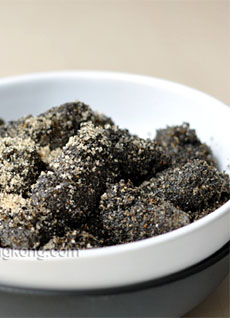
Muscovado Sugar or Dark Muscovado Sugar or Moist Sugar or Barbados Sugar: A specialty raw sugar, moist with a high molasses content and a strong molasses flavor, very dark brown in color, and slightly coarser and stickier than most brown sugars. Popular in cookies, gingerbread and chocolate cake. Unrefined Dark Muscovado is the world’s finest dark brown soft sugar. Its rich taste and natural color add depth to cooking and baking. It is often used in fruit and chocolate cake recipes, marinades, savory sauces and chutneys. Originally an export of the Philippines, muscovado takes its flavor and color from the sugar cane juice it is made from. It also is made into a Light Muscovado variety for biscuits, cakes, savory dishes and toffee sauce.

Natural Brown Sugar: Raw sugar. The molasses is not spun out of the white sugar, but retained. See also Brown Sugar.

Palm Sugar: Sugar produced from the nectar of coconut palm trees. Farmers tap the palm flower spikes to release the juice, which is kettle-boiled until it thickens into a golden sugar. It has a unique flavor with an aroma of smoke and caramel. Also called Coconut Sugar.

Panela or Panocha or Piloncillo: An unbleached and unrefined sweetener made from sugarcane that resembles brown sugar; because it is unprocessed it contains mor minerals than brown sugar, which is a refined product. It is available in a brick that is golden or brown in color, and is made into sweets and hot and cold beverages. Panela is found in Colombia, a variation called piloncillo is found in Mexico and rapadura in Venezuela; they are related to the jaggery of India.

Pancake Syrup: This is generally corn syrup with artificial colors and flavors that emulate maple syrup. Some products contain a small percentage of real maple syrup.

Party Sugar: See Rock Candy and Sugar Crystals.

Powdered Sugar: See Confectioners’ Sugar.

Rapadura: Pure dried sugarcane juice, in the form of a brick. Largely produced at sugarcane plantations in the very warm tropical regions, it was originally created as an easier way to transport sugar. In Venezuela it is an essential ingredient for many recipes; in some parts of the country, it is used instead of refined sugar as a more accessible, cheaper and healthier sweetener.

Raw Sugar or Unrefined Sugar: A variety of raw sugars are made from clarified cane juice, which is boiled down to a crystalline solid with minimal chemical processing: they are in favor with consumers who do not like processed foods. These are unrefined brown sugars, produced by crystallizing evaporated cane juice, then purifying the product slightly. It will contain 85% to 98% sucrose, compared to 99% sucrose for regular granulated (white) sugar. Varieties generally available include demerara, muscovado, and turbinado; the colors range from tan-(turbinado) to brown and dark brown (demerara and muscovado) and have rich and distinctive flavors that enhance recipes. Commercial raw sugars are not produced from beet sugar.

Rice Syrup: Made from soaked and sprouted rice (sometimes a combination of rice and barley), which is dried and cooked down to a thick syrup. Rice syrup contains a high level of maltose, which gives it a low glycemic index. It has a deep, earthy flavor; some people like to flavor chai tea wth it. See also Barley Syrup.

Rock Candy: A simple hard candy made by allowing a concentrated sugar syrup to evaporate slowly until it crystallizes into chunks. The crystals can be formed around strings or small sticks—the latter can be used as stirring sticks for beverages and can be colored and flavored.

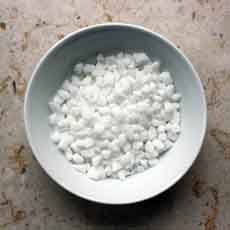
Rock Sugar: Similar to rock candy, rock sugar is made in the form of amber-colored crystals, the result of sugar cooked until it begins to color. It is not as sweet as regular granulated sugar, and is used to sweeten certain Chinese teas and meat glazes. It can be found in the U.S. packaged as party sugar crystals.

Sanding Sugar: Granulated sugar processed to have larger granules that sparkle, for use on baked goods and candies. It is made in white as well as a rainbow of colors.

Sorghum Syrup or Sorghum Molasses:Sorghum is a grain similar to corn that makes a syrup similar to molasses that is popular in the southern United States. It is used as a condiment as well as in recipes instead of molasses.

Squash or Cordial: In the U.K. and Ireland, this is a concentrated, usually fruit-based, syrup to which water is added to produce a drink of the same name. Apple, blackcurrant, lemon, lime and orange are popular flavors, followed by kiwi, peach and strawberry. (In the West Indies “squash” refers to a lime juice drink, similar to lemonade.)

Stevia: An herb native to Paraguay that is naturally sweet and has been used as a sweetener and flavor enhancer for centuries. It is non-caloric and the number-one artificial sweetener in Japan. In the U.S. it is officially labeled a “dietary supplement” due to lobbying by the artificial sweetener industry,

Sucanat: Non-refined cane sugar, i.e. unrefined natural sugar, that has not had the molasses removed from it (which would make it refined white sugar). It is essentially pure dried (dehydrated) sugar cane juice. Sucanat is generally accepted as a substitute for brown sugar. Unlike regular brown sugar, sucanat is grainy instead of crystalline. It ia also known as granulated sugar cane juice. The name sucanat is a truncated form of Sugar Cane Natural.

Sucrose: Ordinary table sugar, extracted from sugar cane and sugar beets.

Sugar Beet: While the sugar beet is thought to have supplied sugar to much of Europe for some time, it is a relatively recent sweetener: Since the dawn of man, the Western world has relied primarily on honey. Beets have been cultivated since antiquity, but only around 1590 did a French botanist extract a sweet syrup from beetroot. It was not widely adapted, and shortly after, cane sugar began to arrive from the Caribbean. In 1807, during the Napoleonic Wars, the British began a blockade of France, preventing the import of cane sugar, among other goods; in 1812, a sugar extraction process for beets was developed that was suitable for industrial application.

Sugar Beet Syrup: An unrefined sugary syrup with the consistency of honey, produced from sugar beet mash. In Germany, particularly the Rhineland area, it is used as a spread for sandwiches as well as a sweetener for sauces, cakes and desserts.

Sugar Cane: A bamboo-like segmented stalk that grows 8 to 24 feet high, its sap is a chief source of sugar. Sugar cane is a tall Southeast Asian grass that grows in tropical climates (Asia, Africa and South America), whereas the sugar beet has its origin in the temperate climates (Europe and North America). Sugar cane originated on the island of New Guinea in the South Pacific and was widely used in ancient India and China, since the 4th centure B.C.E. It was brought to the West through Arab trade with the East in the 8th century C.E. and was cultivated in the Persian Empire; the Arabs brought it to Europe through Medieval Spain, and the first Spanish explorers carried it to the New World. Prior to the introduction of sugar, the only sweetener was honey. To get sugar, the cane is crushed, producing cane juice, which is clariied and concentrated through heating and evaporation; the raw sugar crystals are separated from the remaining syrup (molasses) by centrifuge. Chemicals are used to remove impurities, whiten the product, and crystallize it into the perfect size. In the end, what began as 14% sucrose is now 99% to 100% sucrose, or table sugar. The processing of sugar from sugar beets was perfected in the 1800s, which meant that people in non-tropical climates could grow their own sugar.

Sugar Crystals or Party Sugar: Unrefined decorative crystals of sugar used for coffee. They can be a natural golden color or colored in any variety of festive hues. Their crunchy texture and flavor also make them a versatile topping for cookies and ice cream. See also Rock Candy.

Sugar Syrup: See Bar Syrup.

Superfine or Ultrafine Sugar: A very finely ground granulated sugar used in baking. Similar to the English Castor Sugar. An instantly-dissolving sugar for cold beverages, meringues, and mousses. One can convert standard standard granulated sugar to superfine sugar in a food processor or blender by pulsing for a minute.

Syrup: In cooking, syrup is defined as a thick, viscous, sticky liquid that contains a large amount of dissolved sugars which do not have a tendency to crystallize. They can be made of fruit or other plant juices boiled with sugar, or with a sugar base, water, and natural or artificial flavorings. The word syrup comes from the Arabic sharab, meaning beverage. In pharmacology, concentrated sugar and water solutions are used as a base for medicines. The Latin word siropus, which yielded sirop in Old French and sirup in Middle English, was derived from sharab, the Arabic word for syrup.

Table Sugar: See Granulated Sugar.

Turbinado Sugar: A specialty brown sugar cane extract whose name derives because it is created when spun in a cylinder or turbine while being sprayed. It is considered a raw sugar, similar to but more refined than Demerara. White sugar is the result of removing the molasses from Turbinado sugar, and brown sugar is the result of adding molasses to white sugar. Turbinado sugar is large-grained and paler than brown sugar (it is actually golden brown in color) with a honey-like flavor, and can be substituted for it in recipes, to top cereal (try it on oatmeal), crème brûlée, or in coffee.

Unrefined Sugar and Sweeetener: Unrefined cane sugar is made from raw sugar; the nutrients, flavor and color have not been removed. Barley malt, raw honey, maple syrup and rice syrup are also considered unrefined sweeteners, since they undergo minimal processing during production. Although a better choice than refined sweeteners, they still provide calories and should be consumed in moderation. See also Raw sugar.

Vanilla Sugar: Vanilla-flavored granulated sugar. It can be purchased commercially or made by placing a vanilla bean in a sealed pound canister of granulated sugar for at least week.

White Sugar: Granulated sugar.


© Copyright 2005- 2008 Lifestyle Direct, Inc. All rights reserved. Images are the copyright of their respective owners.


Spread The Word: Each icon below links to a site where you can bookmark, share and comment on this article:
Dine52    del.icio.us    ma.gnolia    Newsvine    Yahoo Myweb    BlinkList    simpy    reddit


.