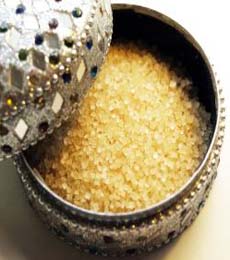
 Most natural, unrefined sugars will have a light to medium brown tint. Note that “brown sugar” is a processed product, not natural sugar. Photo courtesy MorgueFile. Most natural, unrefined sugars will have a light to medium brown tint. Note that “brown sugar” is a processed product, not natural sugar. Photo courtesy MorgueFile.
November 2006
Last Updated May 2026
|
|
Different Kinds Of Sugars: A Glossary Of Sugar & Syrup Types
Page 5: Natural Sugar & Other Terms From N To R
This is Page 5 of a seven-page glossary of different kinds of sugars. Click on the black links below to visit other pages. Check out all of the fabulous food glossaries.
This material is copyrighted and cannot be reproduced in whole or in part.
You are welcome to link to it.
NATURAL BROWN SUGAR
Also called raw sugar. The molasses is not spun out of the white sugar, but retained. See also brown sugar, which is a refined (not natural or raw) sugar product.
NATURAL SUGAR
This term refers to unrefined sugar. Unrefined cane sugar is made from raw sugar; the nutrients, flavor, and color have not been removed. Barley malt, raw honey, maple syrup, and rice syrup are also considered unrefined sweeteners, since they undergo minimal processing during production. See also raw sugar.
NIBBED SUGAR
A coarse sugar. See sanding sugar.
NON-MELTING TOPPING SUGAR
A fine, powdery sugar similar to confectioners’ sugar, snow white non-melting topping sugar won’t melt or dissolve with time, ensuring the baked goods retain a snowy surface.
|
ORGANIC SUGAR
Sugar made from 100% USDA-certified organic sugar cane, which is grown and produced without the use of herbicides, pesticides, or chemicals. Read more about organic sugar.
PALM SUGAR
Sugar that’s produced from the nectar of the palmyra or sugar palm tree. Farmers tap the palm flower spikes to release the juice, which is kettle-boiled until it thickens into a golden sugar. It has a unique flavor with an aroma of smoke and caramel. Palm sugar is very similar to coconut sugar; the chief difference is that coconut sugar is made from the sap of the coconut palm.
|
|
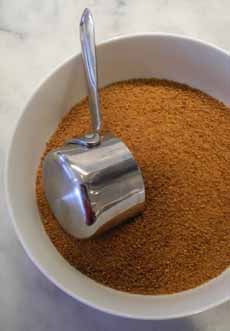
Palm sugar photo courtesy The City Cook, which has a detailed discussion of it. |
|
PANELA or PANOCHA or
PILONCILLO
An unbleached and unrefined sweetener made from sugar cane that resembles brown sugar; because it is unprocessed, it contains more minerals than brown sugar, which is a refined product. It is available in a brick that is golden or brown in color, and is made into sweets and hot and cold beverages. Panela is found in Colombia, a variation called piloncillo is found in Mexico, and rapadura is made in Venezuela; they are related to the jaggery of India and to muscovado sugar.
|
|
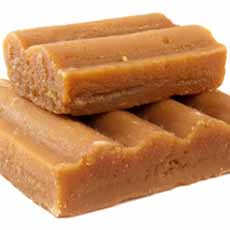
Panela photo courtesy Querica Vida.
|
|
PANCAKE SYRUP
This is generally corn syrup with artificial colors and flavors that emulate maple syrup. Some products contain a small percentage of real maple syrup.
PARTY SUGAR
See rock candy and sugar crystals.
PEARL SUGAR
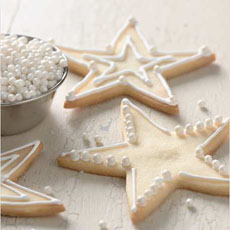
Pearl sugar is not the same as sugar pearls, which are decorations for cookies, as in the photo below. The most common pearl sugars are:
- Belgian pearl sugar, with much larger granules that are used to provide the crunch in Liege waffles.
- They are not interchangeable in recipes.
|
|
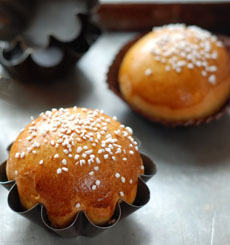
Above: Pearl sugar decorates brioche (photo courtesy Simply So Good). Below: Sugar pearls, used to decorate cakes and cookies (photo courtesy King Arthur
Flour)
.
|
|
POPPING SUGAR
Popping sugar is a product of molecular gastronomy. It was invented in 1956 by William A. Mitchell, a food chemist for the General Foods Corporation. He was researching a way to make powdered instant soft drinks when he discovered how to make sugar pop (with the addition of carbon dioxide). But since his invention did not create a powdered soft drink, the company put it aside. More than 20 years later, in 1976, another food chemist thought to add flavors to the sugar and sell it as candy (Pop Rocks). It is now available to pastry chefs.
|
|
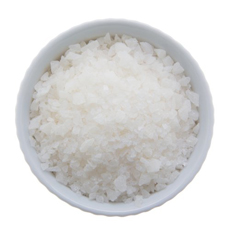
Popping sugar. Photo courtesy
Modernist Pantry.
|
To make popping sugar, the sugar is melted and then cooled down in the presence of pressurized carbon dioxide so that gas is trapped in the sugar bits. When the sugar bits later melt in the mouth (or are bitten into), the carbon dioxide is released with a popping effect. Consumers can have fun with it by sprinkling it onto cereal, puddings, and ice cream.
POWDERED SUGAR
See confectioners’ sugar.
|
RAPADURA or MUSCOVADO SUGAR
Pure dried sugar cane juice is often found in brick form, but due to growing popularity among specialty food buyers, it is now available in granulated form. Largely produced at sugar cane plantations in the very warm tropical regions, the brick was originally created as an easier way to transport sugar. In Venezuela, it is an essential ingredient for many recipes; in some parts of the country, it is used instead of refined sugar as a more accessible, cheaper, and healthier sweetener. Like other raw sugars, rapadura sugar keeps its molasses content and thus all the vitamins and minerals in the natural, unrefined sugar cane juice. See also muscovado sugar.
|
|
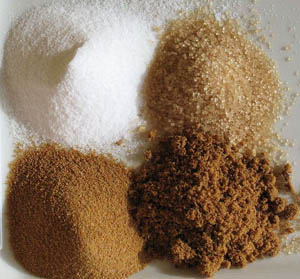
From top left, clockwise: white sugar, light brown sugar, dark brown sugar, rapadura sugar. Photo by Romain Behar | Wikimedia.
|
|
RAW SUGAR
Raw sugars are unrefined brown sugars (they can be from yellow to brown in color). A variety of raw sugars are made by crystallizing evaporated cane juice, which is boiled down to a crystalline solid, then purifying the product slightly (with minimal chemical processing). The “original” sugar was brown; as with rice, flour, and other foods, over time, as man devised refining techniques, the more labor-intensive and expensive “white” foods became preferred by the elite who could afford them, even though, ironically, they have less flavor (and we now know that they have much less nutritive value as well).
|
|
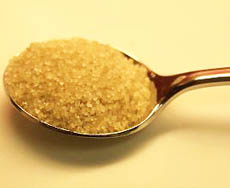
Raw sugar. Photo by J. Gabriel | SXC.
|
Raw sugar appeals to consumers who do not like processed foods, and/or who like the more complex flavors and better nutrition. These are unrefined brown sugars, which will contain 85% to 98% sucrose, compared to 99% sucrose for regular granulated (white) sugar. Varieties generally available include demerara, muscovado, and turbinado; the colors range from tan (turbinado) to brown and dark brown (demerara and muscovado), and have rich and distinctive flavors that enhance recipes. Commercial raw sugars are not produced from beet sugar. See also, whole sweeteners.
RICE SYRUP
Made from soaked and sprouted rice (sometimes a combination of rice and barley), which is dried and cooked down to a thick syrup. Rice syrup contains a high level of maltose, which gives it a low glycemic index. It has a deep, earthy flavor; some people like to flavor chai tea with it. See also barley syrup.
ROCK CANDY
A simple hard candy that’s made by allowing a concentrated sugar syrup to evaporate slowly until it crystallizes into chunks. The crystals can be formed around strings or small sticks—the latter can be used as stirring sticks for beverages and can be colored and flavored.
ROCK SUGAR
Similar to rock candy, rock sugar is made in the form of amber-colored crystals, the result of sugar cooked until it begins to color. It’s not as sweet as regular granulated sugar and is used to sweeten certain Chinese teas and meat glazes. It can be found in the U.S. packaged as party sugar crystals.
|
|
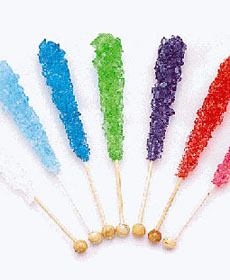
Rock candy swizzle sticks from
OldNaplesChocolate.com.
|
Continue To Page 6: Terms Beginning With S
Go To The Article Index Above
|