THE NIBBLE (TM) - Great Finds for Foodies (tm)


RSS feed
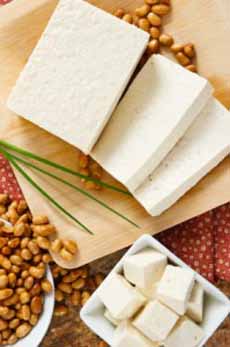
tofu blocks
Tofu easily soaks up any flavors it is paired with, turning into tasty dishes from breakfast through dessert. Photo by Sarah J. Gim.
MENU


NutriNibbles

Main Page

Delicious Foods for Health,
Wellness & Fitness


Product Reviews

Main Page

Foods, Beverages, Books,

News & More


Home Page


about the author

MELODY LAN enjoys getting her soy protein from fried cubes of tofu drizzled with soy sauce.


January 2006

Product Reviews / NutriNibbles


All About Tofu

Healthy, Versatile: The New Yogurt?


Tofu can be a misunderstood food.  Some people have purchased it without knowing how to prepare it, and find it bland; or they haven’t realized that different recipes require different textures of tofu, and have used the wrong kind with disastrous results. But tofu is on the brink of a breakthrough. It was not all that long ago—the 1960’s,  in fact—that yogurt was looked upon as a food for health food fanatics, available only at health food stores. The people who today see tofu as the domain of Asian cooks and vegetarians may, a few years hence, see it as a versatile healthy food that, like yogurt, can easily be incorporated into any meal, including dessert.

Tofu, or bean curd, is a soft cheese-like food made that is made by curdling soy milk with a coagulant*. The curds are pressed into rectangular or square blocks, similar to the way cheese is made with milk curds. Tofu is made in a variety of textures—soft, firm, and extra-firm—that have different purposes. Most tofu is made from organic soybeans.

*Usually a salt: calcium sulfate (gypsum), Nigari (magnesium chloride plus other salts and trace elements), or gluconolactone. Cheese is usually coagulated with rennet, which is extracted from the lining of calves’ stomachs.

Tofu is an exceptional food—not only because it is highly nutritious, but because it can be prepared in such a remarkably wide variety of ways. The uses for tofu are limited only by a chef’s imagination. From a health and nutrition standpoint, tofu is an easily digestible protein, low in fat and sodium, and a good source of B vitamins and calcium plus and isoflavones. Tofu is sold in supermarkets, health food stores and at many greengrocers. It is also easy to make at home with soy milk.

So easy to incorporate into any dish or snack, even by novice cooks, we can start our new year’s resolution of eating healthy without any pain.

History

Legend has it that tofu was made by accident when a Chinese chef added nigari, a natural ocean water mineral (a seaweed extract now used as a coagulant to make soy milk curds), to flavor a soybean puree. Instead of flavored soybeans, he ended up with the bean curd that we call tofu.

Extremely popular in Asia, the history of tofu goes back more than 2,000 years, to the Han Dynasty of China. Archaeologists deduce that soymilk and tofu, two staples of Chinese cuisine, were first prepared in Northern China in the second century B.C. From China, tofu was introduced into Korea, and reached Japan in the eighth century A.D. Many centuries later, the first tofu factory in America was founded in 1878 in San Francisco, to meet the needs of the burgeoning Chinese population. It remained a localized artisanal product, and wasn’t packaged and offered in U.S. supermarkets until 1958.

tofu cubesCubes of tofu cooked in brown
sauce.
Photo courtesy of Wikipedia.org.

While the soy industry began with small family-run concerns that went door-to-door selling tofu or soymilk in their vicinities (not unlike local home milk deliveries in the U.S.), over the past two decades, food manufacturers and restaurants worldwide have embraced tofu’s culinary versatility and the growth of vegetarian and vegan lifestyles plus medically-necessitated food substitutions. A vast range of tofu-based products now replace the dairy and meats in familiar American foods, like ice cream, burgers, and salads. These days, it’s almost hard to imagine a time when we had few tofu choices.

How Tofu is Made

soybeans
Uncooked Soybeans
. Photo courtesy of Denver Tofu Co.

Traditionally, tofu is made by soaking, pulverizing, and cooking soybeans in a soymilk maker; then adding a coagulant. The soymilk solidifies into large blocks of tofu that are cut into smaller blocks. The process is very similar to how milk is made into cheese.

Tofu is perishable and needs to be kept in water, which should be changed daily. Silken tofu does not need to be kept in water, but does require refrigeration.


Nasoya TofuIn 1985, Mori-Nu, a California-based silken tofu manufacturer, invented an aseptic system that packages bacteria in cardboard containers. The tofu can be stored without refrigeration for up to a year if unopened, while remaining light, creamy, and fresh-tasting (it must be refrigerated after opening).

Types of Tofu

There are distinctively two types of tofu: traditional Chinese-style tofu and Japanese-style silken tofu.

  • Both styles are available in the same degrees of firmness or texture, a function of the water retained in the tofu: soft, firm, extra firm, and sometimes super firm. Though Chinese-style and Japanese-style tofu are available in the same textures, Japanese-style silken tofu, no matter its firmness, is much more delicate and susceptible to breaking apart.
  • There are also “lite” tofu, which contains less calories and fat or “organic” tofu produced by FDA organic standards.
  • Chinese-style tofu, doufu, is made the traditional way and tends to be spongier because the slurry is not drained before it solidifies.
  • Japanese tofu, kinugoshi, is referred to as “silken tofu” because of its fine, creamy, and custard-like texture, as if “strained through silk.” Made from soymilk that is filtered before any coagulant is added, Japanese tofu is produced similarly to yogurt—protein is not hardened into curds, so the soymilk and whey remain together. 

Each type of tofu has a different purpose in cooking, and there are numerous cookbooks dedicated to the topic. What you plan to make will dictate the kind of tofu you need to buy. You don’t want silken tofu to melt in your stir-fry and a chunky tofu cheesecake won’t exactly be a palate-pleaser.

  • Silken tofu is ideal for recipes that call for blending, like dips and sauces, sweets like puddings, and beverages (smoothies and shakes). It is used to make lower-fat, vegan versions of yogurt, sour cream, cream cheese, and mayonnaise.
  • Soft tofu has the consistency of al dente pasta. It can be mashed or scrambled, or can substitute for a low-carb version of pasta.
  • Firm tofu is delicious in omelets (or egg-free scrambles) or as fillings for dumplings.
  • Firm and Extra-Firm tofu are used here tofu needs to keep its texture after it is sliced and diced: for hearty main entrees like stir-fries, stews, or even as fried appetizers—dishes that need substantial protein substitutes in place of meat. The blocks can be split and turned into a tofu version of stuffed shells.   
Density Tofu

Extra Firm is dense and contains the least water. It holds its shape and has a meaty texture, which makes it great for dishes like stews or casseroles. Extra firm tofu also has the most protein and fat content.

extra firm tofu

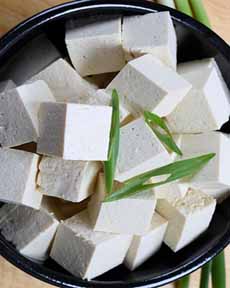
Firm also maintains its shape, but is not as thick in consistency as Extra Firm. It is a good substitute for dairy products like cubes if mozzarella cheese?

firm tofu

Soft it is much more pliable and can crumble easily. It is creamy like pudding, but firm like Jell-O®, which works well as a sauce or salad dressing. This tofu can reduce or substitute the amount of egg used in a recipe or replace sour cream or yogurt. It is lower in both protein and fat.

soft tofu

Silken is very fine and smooth in texture. It is available in extra firm, firm and soft, but is creamier and more delicate than any other tofu. It can be used as traditional tofu, but must be handled much more carefully, as they all can break apart easily when cooking.

silken
 

How to Store Tofu

If you are buying fresh tofu, make sure that the tofu blocks are immersed in clean water and have no dried-out splotches. Boxed tofu has an expiration date.

  • Whether fresh or opened from a box, tofu can be stored in the refrigerator for up to one week if it is submerged in water, which must be changed daily to ensure freshness.
  • If tofu is left out for a few hours, take a moist towel and cover the block to preserve moisture.

If you can’t eat what you have while it’s a its peak, it can be frozen.

Why You Should Eat More Tofu

Whether you try your own hand in preparation, eat the delicious tofu dishes in Asian restaurants, or substitute tofu scallion spread for cream cheese on your next bagel, it pays to add more tofu to your diet.

  • Health Benefits. According to the American Heart Association, heart disease is the leading cause of death in the U.S.; in October 1999, the U.S. Food & Drug Administration (FDA) announced that 25 grams of soy protein a day helps fight coronary heart disease. The FDA allows the health claim labels on foods that contain at least 6.25 grams of soy protein per serving and are low in fat, cholesterol and sodium. (Four ounces of firm tofu generally contain about 13 grams of soy protein.) Research reviewed by the FDA shows that soy protein, when included in a low-fat and low-cholesterol diet, lowers total cholesterol and low-density lipoprotein (LDL) cholesterol levels, without adversely effecting high-density lipoprotein (HDL) cholesterol levels. According to the FDA, clinical studies have shown that consumption of soy compared to other protein, such as those from milk or meat, lowers total and LDL cholesterol.

    Universities and health researchers continue to conduct tests to show the positive correlation between eating soy-based foods and lowering the risk of clogged arteries, heart disease, and even diabetes. More recent studies have explored the sub-nutrients of soy and tofu, finding that consuming soy isoflavones can reduce chances of cancer. Where tofu is regularly part of meals, like China and Japan, statistics show that these people suffer only 10 percent of the cancer and heart disease that Americans do.
  • Protein. Per the above, if you’re concerned that you’re not getting enough protein in your diet, tofu is an accessible (and inexpensive!) source. Tofu also contains 9 essential amino acids and is also free of saturated fat or cholesterol.
  • Estrogen. Asian women don’t suffer the side effects of menopause like Western women do, including hot flashes and osteoporosis, thanks to estrogen- and calcium-packed soy.
  • Low-Calorie. Tofu has from 15 to 23 calories an ounce, depending on the texture and density. The more firm, the more dense and less water, the more calories per ounce. The next closest protein values, white fish like haddock and flounder are 31-33 calories and ounce, and skinless white meat chicken is 40 calories an ounce. A large egg white has 17 calories and 3.6 grams of protein; but the entire egg has 59 calories and 6.5 grams of protein. (One ounce of tofu, chicken, or fish equates to 28.35 grams, but they are not 100% protein.)
  • Digestibility. Tofu is a stomach-friendly food: the manufacturing process removes the fibers from soy beans, making it easily digestible food. If you’re under the weather or have an upset stomach for other reasons, tofu provides nutrition without compounding the problem.

According to a soy survey done in 2004 by Opinion Research, 44 percent of respondents like foods that are natural, nutritious, convenient and taste good, but feel that such foods are hard to find. It’s hard to disagree that tofu is easy to find, and easy to work into every part of the day—even tasty tofu chip snacks!

Click here to read A Day with Tofu, about delicious tofu products we enjoy all through the day.


Recent Articles From Our NutriNibbles™ News Feed:

Subscribing notifies you whenever there are
new additions to the NutriNibbles™ section.


Subscribe to THE NIBBLE™ NutriNibbles™ by Email


© Copyright 2005-2008 Lifestyle Direct, Inc.  All rights reserved.  Images are the copyright of their respective owners.


Spread The Word: Each icon below links to a site where you can bookmark, share and comment on this article:
Dine52    del.icio.us    ma.gnolia    Newsvine    Yahoo Myweb    BlinkList    simpy    reddit


.