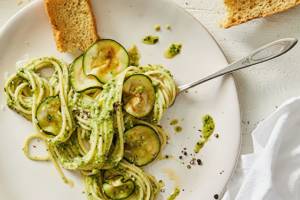
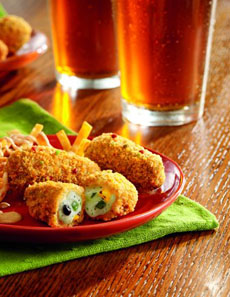
 Many chiles are stuffed, from the non-hot bell pepper to the spicy jalapeño, above. Check out jalapeño poppers. Photo courtesy Anchor Poppers.
October 2005
Last Updated April 2012
|
|
Product Reviews / Main Nibbles / Seasonings
Cooking With Chiles
Page 2: Chile Pepper Glossary
This is Page 2 of an eight-page article. Click on the black links below to visit other pages. See our entire collection of food glossaries.
This glossary is protected by copyright and cannot be reproduced in whole or part.
Cooking With Chiles
Chiles are available fresh, dried, smoked and roasted. More than 100 varietals are available commercially, although most are grown in limited quantities. Chiles are fruits: like tomatoes and all fruits (except the strawberry), they carry their seeds on the inside. While Americans tend to think of chiles simply as hot, each has a specific fruit flavors: apricot, cocoa, nutty, plum raisin, sweet et al.
- When cooking with chiles, it is important to pick the chile that fits the desired culinary effect. It may be necessary to blend several different chiles and test extensively. Chile influences change with each ingredient added to a recipe. Some moles use five different chiles!
- To “cool off” after eating too much hot stuff, milk, not water or beer, is the antidote. Yogurt or sour cream works even better. Eating some bread or rice will help to soak up some of the capsaicins as well. Capsaicins are not water-soluble; they’re fatty molecules.
|
|
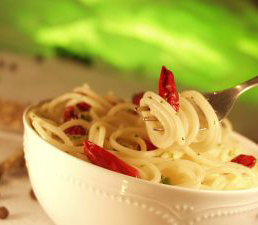
Some like it hot: A dish of spaghetti with chiles gives new meaning to the term, “fire-eaters.” |
- Always wear gloves when cutting hot chiles, then remove them and wash them. Inadvertently touching the eyes with any particle of capsaicin left on one’s fingertips will be excruciating.
Continue To Page 3: The Scoville Scale
Go To Article Index Above
Lifestyle Direct, Inc. All rights reserved. Images are the copyright of their respective owners.
|