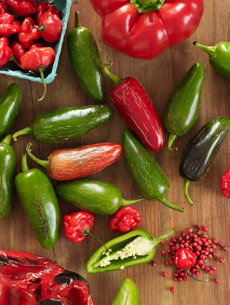
 A mix of chiles: From top, habanero, red bell pepper, red and green jalapeño chiles, and pink peppercorns (which are not chiles), and roasted red pepper. Photo courtesy Rick’s Picks gourmet pickles.
October 2005
Last Updated April 2026
|
|
Product Reviews / Main Nibbles / Seasonings
Types Of Chiles
Chile Glossary Page 5: Types Of Chiles ~ C
This is Page 5 of an eight-page article on the different types of chiles. Click on the black links below to see other pages. Take a look at our entire collection of food glossaries, covering almost every category of food.
This glossary is protected by copyright and cannot be reproduced in whole or in part. You are welcome to link to it.
|
CAPSAICIN
One of the chemical compounds in hot chiles, along with four related capsaicinoids that cause the burning sensation. At the stem end of the pod, glands secrete the capsaicin, which then spreads throughout, but most of the capsaicin is found in the interior ribs that divide the chambers of the chile, and to which the seeds are attached; the seeds also contain capsaicin. The amount varies very significantly by variety and is measured in Scoville Heat Units (SHUs).
CAPSAICINOID
See capsaicin.
|
CAPSICUM
|
Capsicum is the botanical species that includes the bell pepper as well as hot chiles. The word Capsicum comes from the Greek kapsimo, meaning “to bite” (a reference to pungency or heat).
- Capsicum annuum L. includes sweet bell peppers, cayenne, jalapeno, paprika, pimento, and other red peppers.
- Capsicum baccatum includes ají amarillo, ají limon, criolla sella, and other chiles.
- Capsicum chinense includes the habanero from Havana, as well as the yellow lantern chili. C. chinense chiles are well known for their high heat. While the species is called “Chinese,” the fruits are native to the Americas.
- Capsicum frutescens L. includes many of the hotter varieties, including the bhut jolokia/naga jolokia, bird’s eye, malagueta, tabasco, and Thai chiles.
|
|
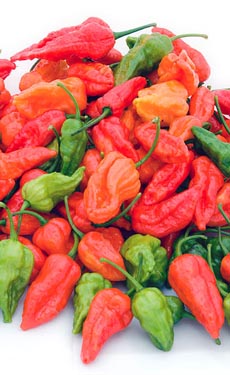
Naga jolokia, currently the world’s hottest chile, is shown at different stages of ripeness. Photo by Xaime Méndez | Wikimedia. |
- Capsicum pubescens, which includes the rocoto chile. Pubescens means “hairy” in Latin; these chiles have fuzzy/hairy leaves.
- Capsicum praetermissum, which includes the cumari chile of Brazil, bears tiny fruits reminiscent of a pequin chile. The plant is hairy, almost like Capsicum pubescens.
CAPSICUMS
In the U.K., Australia, and New Zealand, bell peppers are called capsicums.
CAROLINA REAPER
Specifically engineered over the course of 10 years to be hot enough to strip the paint off your car, these chiles are no joke. For all the hype and hyperbole, they are every bit as hot, if not hotter, than you would think. Ranging from 1.6 - 2.2 million Scoville Heat Units, they don't just taste like fire, they taste like napalm.” Here’s more about them.

Carolina Reaper super-hot chiles (photo © Hannah Kaminsky | Bittersweet Blog).
|
|
CASCABEL CHILE
The cascabel is a small, round, hot chile that is prized for the hot, burning sensation that it produces in the mouth when consumed. Flavorful and smoky with an acidic bite, it’s used primarily for sauces and soups. Cascabel is the Spanish word for “rattle”; when dried, the chile makes a rattling noise and as can be used for percussion. The plant can grow to more than one meter and grows in the wild on the Pacific coast of Mexico.
|
|

Cascabel chiles (Gemini Photo). |
CAYENNE
Cayenne pepper is a red chile with medium heat—6 on a scale of 10—used to flavor spicy dishes; its name comes from the city of Cayenne in French Guyana, and it owes its fame to the Portuguese sailors who carried it back to Europe, Asia, and India on their voyages. It is most commonly sold as a fine red powder, a blend of the fruits of several cultivated varieties of the Capsicum baccatum and Capsicum frutescens species of the nightshade family. The fruits are either dried and ground or pulped and baked into cakes, which are then ground and sifted to make the powder. It is generally rated at 30,000 to 50,000 Scoville Units. The name is derived from the Tupi word kyinha, literally “hot pepper.” Cayenne is popular in dips, salsas, and other sauces, soups, and stews, where it adds heat, but not much flavor or scent, provided by other chili powders.

Cayenne chiles (photo © Storico | NYC).
|
GOLDEN CAYENNE CHILE
The golden cousin of the conventional red cayenne chile, these fruits pack heat when they grow to a size of 4 to 6 inches long. They are used in Cajun, Creole, and Southwestern cuisines. Golden cayenne chiles can be substituted for habanero, jalapeño, and serrano chiles. They can be dried and ground into a pretty golden chile powder, to use directly or as part of a curry powder mix.
|
|
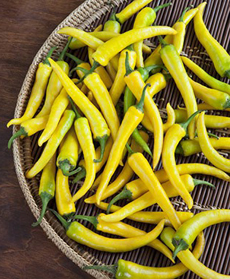
Golden cayenne chiles. Photo courtesy Bonnie Plants. |
|
CHERRY PEPPER or HUNGARIAN
CHERRY PEPPER
A small, round pepper, Capsicum annuum cerasiforme, that is 1 to 2 inches in diameter and bright red in color. It has a slightly sweet flavor that can range from mild to medium-hot (2,500 to 5,000 Scoville Heat Units). Known for their bright color and, usually, a mild-to-moderate sweet-and-spicy flavor, they are often pickled and used in antipastos, on sandwiches, or stuffed with cheese or meat
|
|

Cherry pepper (Gemini Photo). |
|
CHILACA CHILE
The chilaca is the fresh version of the pasilla chile or chile negro, which is its dried form. It is similar, but not identical to, the poblano chile. They are 5 to 6 inches long and about 1" wide. Fresh chilaca adds depth to red enchilada sauce and salsas. The dried form, pasilla, is an important ingredient in traditional mole sauce. The chile is mild, 1,000–2,000 Scoville Heat Units.
|
|

Chilaca chiles (photo © Botanical Interests). |
|
CHILE
The dominant Spanish word for peppers, although the native Indian term aji is used in some countries like Chile, whose name is unrelated to the pepper. The word chile comes from Nahuatl (the Aztec language).
CHILE HEAD
A lover, collector, and eater of hot chiles. Some are hobbyists seeking to learn as much as they can about the growth, preparation, and consumption of chiles. Others make or collect varieties of hot sauce. Some collect chile seeds. More than a few pursue extremely hot chile flavors.
|
|
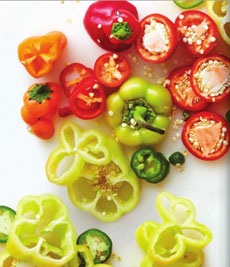
Assorted chiles. Photo courtesy Melissas.com.
|
CHILE NEGRO
See chilaca chile, above.
CHILE PEPPER
The name given to hot peppers in the U.S., a variation of the Nahuatl (Aztec) word chilli. The term is a misnomer: Christopher Columbus, upon tasting chillis for the first time, thought the spicy-hot ingredient was a variation of the Indian pepper, Piper nigrum, which he knew from the Old World. The name combined the new world word, chilli, with the [inaccurate] old world word, pepper.
|
CHILIES IN ADOBO SAUCE
Adobo is a spicy tomato-vinegar sauce; the chiles are usually chipotles, which are smoked red jalapeño chiles. The chiles are ground and combined with spices and other seasonings (bay leaf, garlic, onions, oregano, paprika, salt, and a pinch of sugar), vinegar, tomato purée, and ancho chiles into a red sauce called adobo sauce. It is typically used as a meat marinade. You can find chilies in adobo sauce in supermarkets and online. See chipotle in adobo, below.
CHILLI/CHILLIE
The name given to hot pepper varieties in Australia, New Zealand, the U.K., Ireland, and Canada. Chilli is the word for chile peppers in the Mexican native language, Nahuatl, used by the Aztecs and other peoples.
CHILTEPÍN CHILE
This may be the first domesticated chile, grown in central Mexico 6,000 to 7,000 years ago. The word combines the Nahuatl words chilli and tepin, directly translating to “small pepper.” Ripe red chiltepíns have a lot of heat but it dissipates quickly. Still, don’t touch them with bare hands. Green chiltepíns are pickled with herbs and turned into other condiments for meat and fish, including olive relish and raw salsa. Chiltepíns grow wild throughout northern Mexico and the American Southwest. Texas declared it the state’s official native pepper in 1997.
|
|
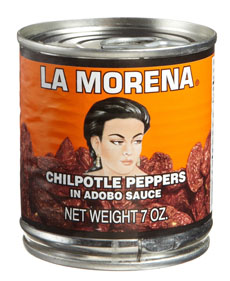
Chipotle: a dried, smoked jalapeño. Photo courtesy Fiery-Foods.com.
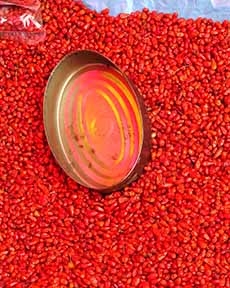
Tiny chiltepíin chiles (photo by Adam Jones, Ph.D. | Global Photo Archive | CC BY 2.0 License).
|
|
CHIPOTLE
A chipotle is a red (ripe) jalapeño that has been dried and smoked to yield a rich, smoky flavor with a nutty finish (some have notes of chocolate). It has a medium heat level, 6 on a scale of 10. The flesh is thick, so it is best in slow-cooked dishes like soups and stews, or vegetable and meat dishes where it adds its own “meaty” depth of flavor. Chipotles are believed to have originated near the ancient city of Tenochtitlan, the capital city of the Aztecs. Chipotle is used in adobo sauce as well as in stews and casseroles. Try it in mayonnaise!
|
|
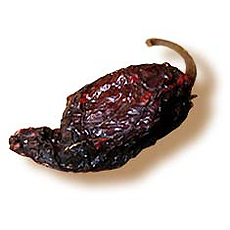
Chipotle: a dried, smoked jalapeño. Photo courtesy Firey-Foods.com.
|
|
CHIPOTLES IN ADOBO
While this preparation can be made from scratch, most cooks purchase canned chipotles in adobo, sauce is a thin tomato sauce seasoned with garlic, vinegar, salt, and spices. The chipotles are stewed in the sauce. See chiles in adobo, above.
See also New Mexico chile.
|
|
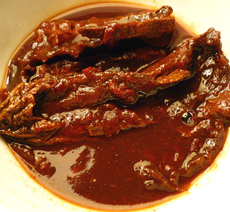
Chipotles in adobo. Photo by Badagnani | Wikimedia.
|
|
CUBANELLE or CUBAN PEPPER
The cubanelle is a sweet chile that is most often used when unripe and has a light yellowish-green color (it will turn bright red if allowed to ripen). Cubanellles generally measure about 1000 on the Scoville scale. You can substitute heat-free bell peppers, banana chiles, or Anaheim chiles (hotter).
CUMARI CHILE
Originating in Brazil, this uncommon, wild hot chile is perhaps the only member of the Capsicum genus C. praetermissium. The chiles are extremely aromatic and very fruity; the plant has hairy/fuzzy leaves, like C. pubescens. The fruits are tiny, like pequins.
|
|
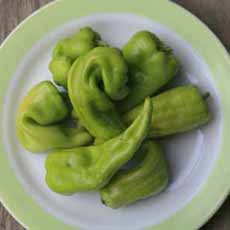
Cubanelle chiles. Photo courtesy Andy Griffin.
|
Continue To Page 6: Chile Glossary D To J
Go To The Article Index Above
Lifestyle Direct, Inc. All rights reserved. Images are the copyright of their respective owners.
|